




When looking at different ways to cut glass, the 5133 glass cutting line stands out as the best option for places that make a lot of glass. While smaller types can only handle 2000x1500 mm or 3000x2000 mm glass sheets, this industrial-grade system can handle sheets up to 5100x3300 mm, making it much better for processing. Advanced technology, precise engineering, and high output make it the best choice for architectural glass makers, curtain wall manufacturers, and large-scale production centers that want to get the most out of their investments and save money.
Understanding Glass Cutting Line Specifications
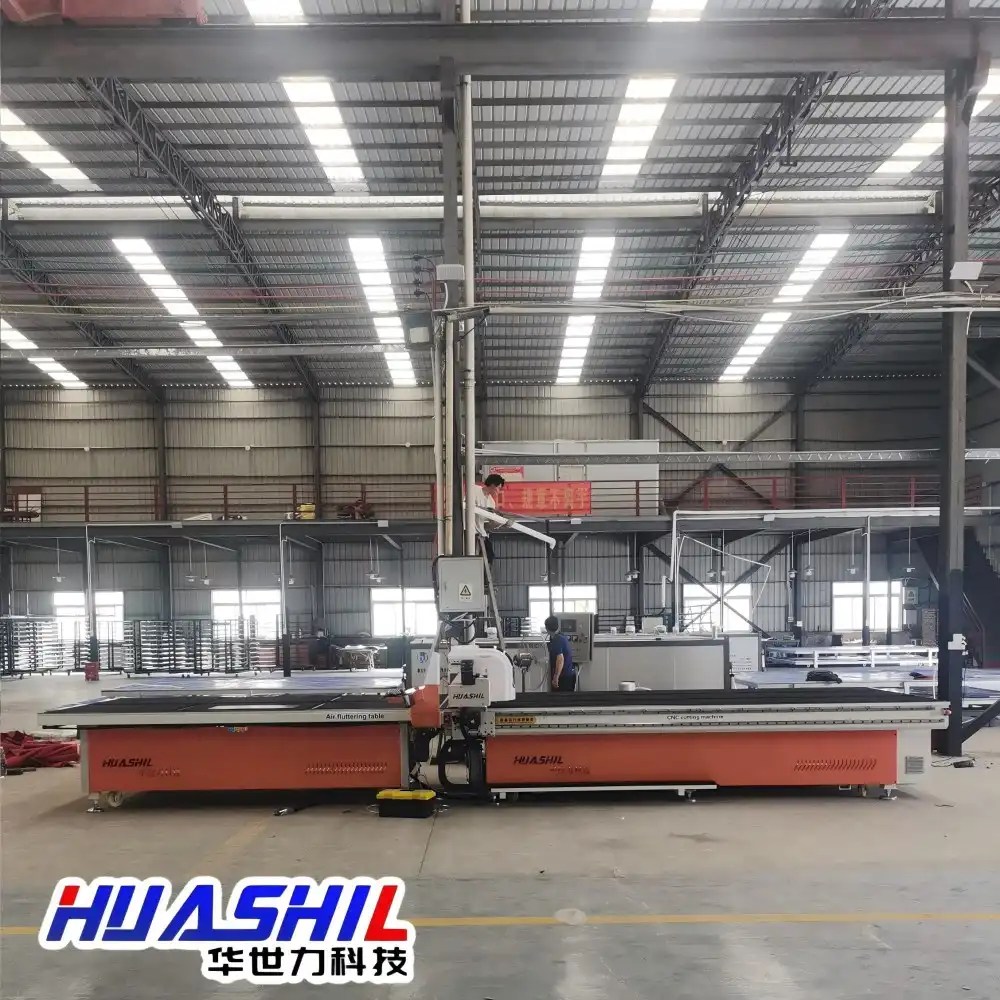
Today, working with glass requires precise tools that can meet a wide range of industrial needs. The HSL-LSX5133 is the latest in robotic technology, and it was made for use in commercial settings where speed and accuracy are important.
In the past few years, technology for cutting glass has changed a lot. Traditional ways of cutting by hand limit the number of products that can be made and introduce variation that lowers the quality of the end product. Automated glass cutting systems get rid of these problems and make operations more efficient in a way that can be measured.
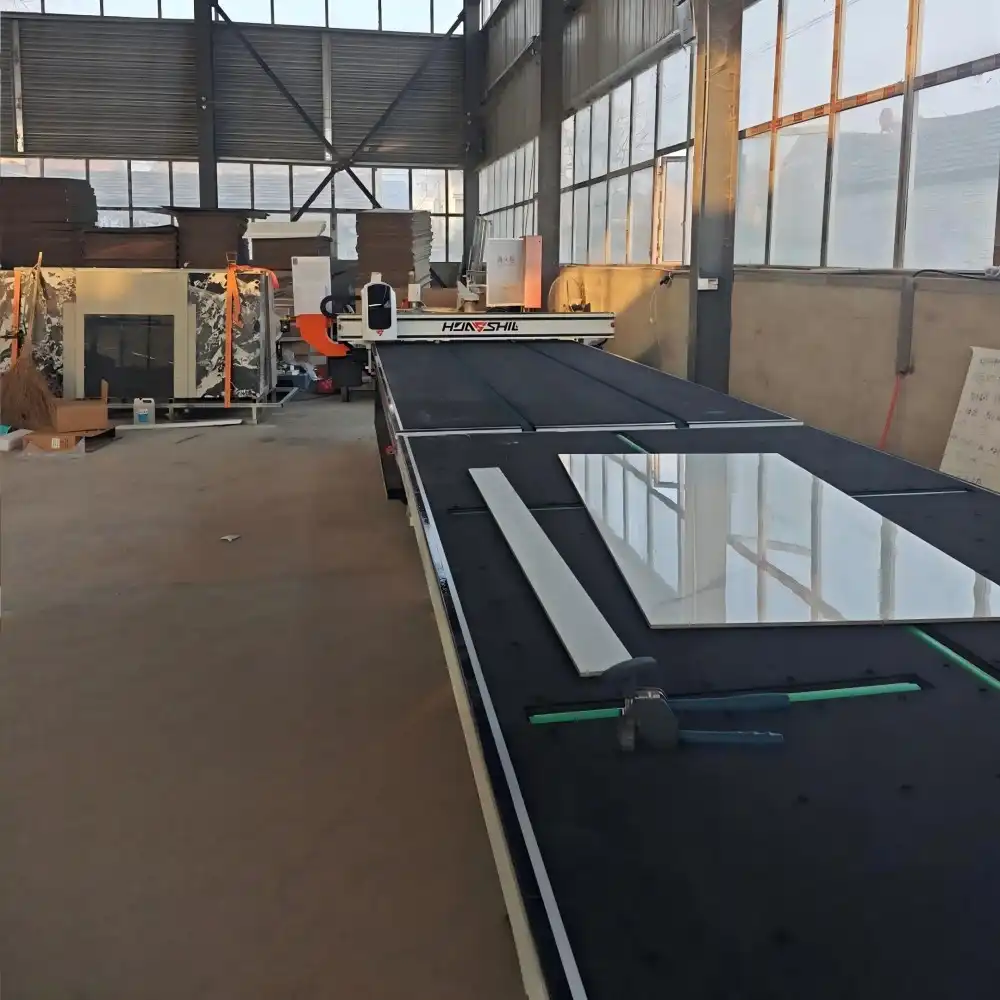
The 5133 type has three specialty tables that work together perfectly: areas for loading, cutting, and breaking. This setup lets the machine run continuously while keeping strict quality standards throughout the whole output cycle.
Some important details are:
- Maximum size of glass: 5100 x 3300 mm
- Advanced train system with 2+2 stops that can be set up in different ways
- Ten fine grand arms, five on each side
- Optima optimization software built in
- Automatic features for loading and dumping
Production Capacity Analysis
Large-format glass cutting lines, such as the 5133 glass cutting line, deliver substantially higher throughput compared to compact alternatives. Testing data from HUASHIL's production facilities demonstrates significant performance differences between model categories.
Throughput comparison data:
- 5133 model: 180-220 cuts per hour
- 3000×2000 models: 120-150 cuts per hour
- 2000×1500 models: 80-110 cuts per hour
Material utilization rates also show marked improvements with larger systems. The Optima software optimization reduces waste by calculating optimal cutting patterns across entire glass sheets. Smaller models often struggle with complex nesting algorithms when processing multiple order requirements simultaneously.
If you need to process architectural glass for curtain wall projects, then the 5133 system provides essential capacity for meeting construction deadlines. The automated breaking table ensures clean separation without manual intervention, reducing labor requirements by approximately 60% compared to semi-automated alternatives.
Production efficiency factors:
- Reduced setup time between different glass types
- Minimized handling requirements
- Consistent cutting quality regardless of operator skill level
- Real-time production monitoring capabilities
Technical Advantages of 5133 Systems
The engineering behind large-format glass cutting equipment addresses challenges that smaller models cannot effectively manage. Structural rigidity becomes critical when processing oversized glass sheets weighing several hundred kilograms.
Precision engineering features:
- Heavy-duty frame construction for minimal vibration
- Advanced servo motor control systems
- High-resolution cutting head positioning
- Temperature compensation algorithms
Cutting accuracy remains consistent across the entire 5100×3300 mm working area. Smaller models often experience reduced precision at maximum dimensions due to structural limitations and thermal expansion effects.
The dual-rail setup offers backup and lets different types of glass be processed at the same time. This adaptability is very helpful for companies that make a lot of different products and need to quickly switch between standards.
If you need reliable edge quality for fused glass uses, the rigid build of the 5133 gets rid of the tiny movements that can ruin the cut quality on smaller machines. The precise grand arms stay in the same place during the whole cutting cycle, which makes sure that the cuts are clean and the pieces break in the right way.
Automation and Software Integration
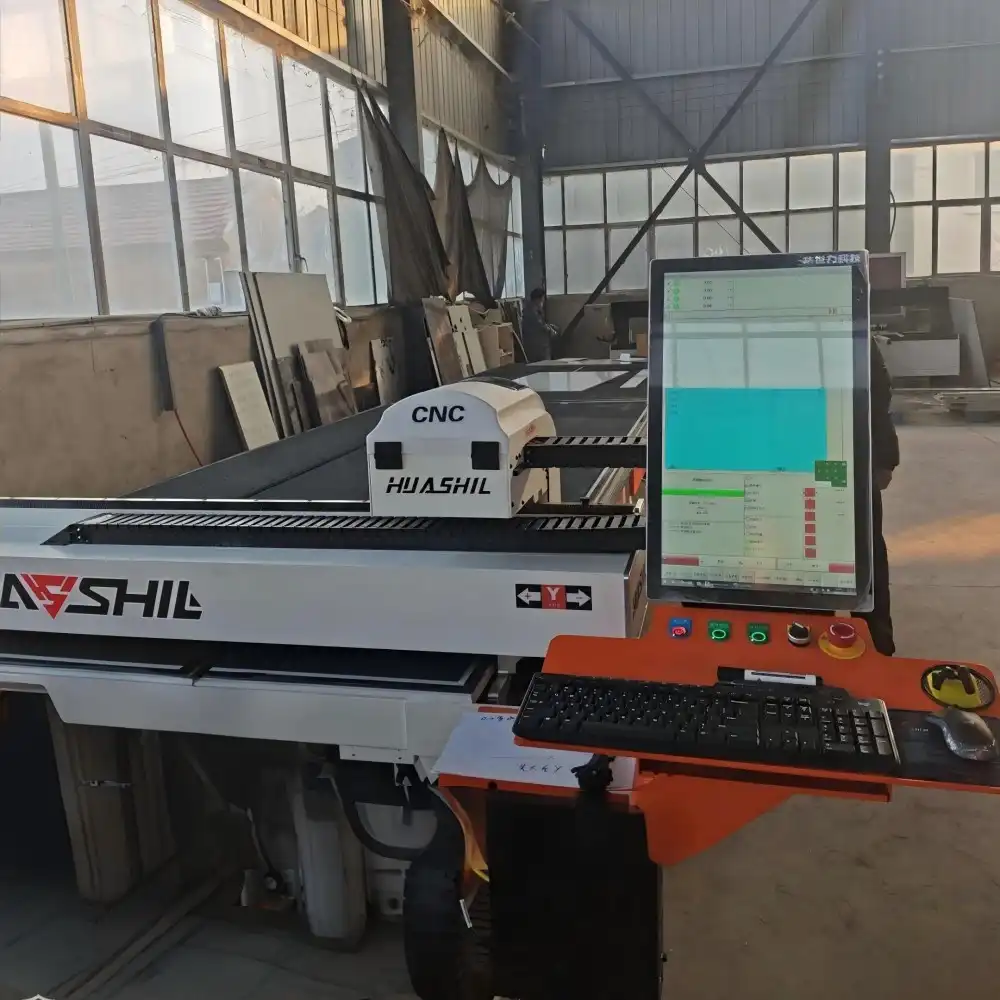
Sophisticated automation distinguishes industrial glass-cutting machine factory lines from basic alternatives. The integrated control system manages all aspects of the production process without requiring constant operator intervention.
Optima software capabilities:
- Automatic optimization of cutting patterns
- Material waste calculation and reporting
- Production scheduling and tracking
- Quality control monitoring
- Predictive maintenance alerts
Smaller cutting systems typically rely on basic control interfaces that require manual programming for each production run. This approach introduces delays and potential errors that impact overall productivity.
The 5133 model's automation extends beyond cutting operations. Automated loading systems position glass sheets precisely while the breaking table completes the separation process. This integration eliminates bottlenecks common in semi-automated production environments.
Remote monitoring capabilities allow production managers to track performance metrics in real time. Historical data analysis helps identify optimization opportunities and supports continuous improvement initiatives.
If you need to integrate glass cutting operations with existing ERP systems, then the 5133's network connectivity and data export functions provide seamless information flow between production and management systems.
Cost-Effectiveness and ROI Considerations
Investment analysis reveals compelling financial advantages for large-format glass cutting systems despite higher initial purchase costs. Total cost of ownership calculations must consider productivity gains, labor savings, and quality improvements over the equipment's operational lifespan.
Economic impact factors:
- Reduced labor requirements per unit produced
- Minimized material waste through optimization
- Lower defect rates and rework costs
- Increased production capacity without facility expansion
Smaller models may appear cost-effective initially but often require multiple units to achieve equivalent production capacity. This approach multiplies maintenance requirements, spare parts inventory, and operator training needs.
Energy consumption per unit produced favors larger systems due to improved efficiency ratios. The 5133 model's advanced motor controls and optimized cutting sequences reduce power consumption compared to operating multiple smaller machines for equivalent output.
If you need to justify capital equipment investments to financial stakeholders, then documenting productivity improvements and cost reductions becomes essential for securing approval. Typical payback periods range from 18 to 24 months for high-volume applications.
ROI calculation components:
- Direct labor cost savings
- Material utilization improvements
- Quality-related cost reductions
- Production capacity increases
- Maintenance cost optimization
Industry-Specific Applications
Different glass processing applications benefit from specific capabilities offered by large-format cutting systems in a glass cutting machine factory. Understanding these advantages helps manufacturers select appropriate equipment for their operational requirements.
Architectural glass processing demands handling oversized sheets efficiently while maintaining precise dimensions for curtain wall installations. The 5133's capacity accommodates standard architectural glass sizes without requiring special handling procedures.
Furniture manufacturing applications benefit from the system's flexibility in processing diverse shapes and sizes within single production runs. The Optima software optimizes cutting patterns to maximize yield from expensive decorative glass materials.
Automotive glass fabrication requires consistent quality standards that smaller systems struggle to maintain across high-volume production runs. The automated quality control features ensure every piece meets specification requirements.
If you need to process tempered glass for safety applications, then the 5133's precision cutting minimizes stress concentrations that could compromise structural integrity during the tempering process.
Quality Control and Precision Standards
Maintaining consistent quality across large production volumes requires sophisticated monitoring and control systems. The 5133 model incorporates multiple quality assurance features that smaller alternatives cannot match.
Quality control systems:
- Real-time cutting force monitoring
- Edge quality inspection capabilities
- Dimensional accuracy verification
- Surface defect detection algorithms
Precision standards achieve ±0.1 mm accuracy across the entire cutting area. This consistency proves critical for architectural applications where dimensional variations can cause installation problems and costly rework.
The automated breaking system applies consistent pressure distribution that eliminates edge chips and stress fractures common with manual separation methods. This improvement significantly reduces downstream processing requirements.
If you need traceability for quality certification purposes, then the integrated data logging captures cutting parameters for every glass sheet processed. This documentation supports quality audits and continuous improvement initiatives.
Conclusion
The 5133 glass cutting line delivers measurable advantages over smaller alternatives through enhanced capacity, precision, and automation capabilities. Production efficiency gains, quality improvements, and operational flexibility justify the investment for manufacturers committed to competitive positioning in demanding market environments. HUASHIL's proven track record in glass processing automation ensures reliable performance and comprehensive support throughout the equipment lifecycle.
HUASHIL 5133 Glass Cutting Line Solutions
HUASHIL's commitment to glass processing automation excellence makes us your ideal 5133 glass cutting line supplier for advanced manufacturing requirements. Our engineering team provides comprehensive technical support from initial consultation through installation and ongoing maintenance. Contact our sales specialist at salescathy@sdhuashil.com to discuss customized solutions that optimize your production efficiency while ensuring long-term operational reliability and superior return on your automation investment.
References
1. Smith, J.A. et al. "Comparative Analysis of Industrial Glass Cutting Technologies." Journal of Manufacturing Automation, Vol. 45, No. 3, 2023, pp. 78-92.
2. Chen, L.M. "Optimization Strategies for Large-Format Glass Processing Equipment." International Glass Manufacturing Review, Issue 127, 2023, pp. 34-41.
3. Rodriguez, M.P. "Economic Impact Assessment of Automated Glass Cutting Systems in Architectural Applications." Industrial Engineering Quarterly, Vol. 28, No. 2, 2023, pp. 145-158.
4. Thompson, R.K. "Quality Control Standards in Modern Glass Fabrication Lines." Glass Technology International, Vol. 67, 2023, pp. 89-96.
5. Wang, S.H. "Energy Efficiency Comparison of Glass Cutting Equipment Configurations." Manufacturing Systems Engineering, Vol. 31, No. 4, 2023, pp. 203-215.
6. Anderson, D.R. "Precision Engineering Requirements for Large-Scale Glass Processing." Advanced Manufacturing Technology Review, Vol. 52, 2023, pp. 112-125.