




Finding a cheap automated glass loader is a unique task for makers who want to improve their operations without spending too much. The glass loader has changed over time from simple tools for moving glass by hand to complex automatic systems with smart controls, precise mechanics, and safety rules. Purchasing teams today have to weigh the cost of initial capital investment against the benefits of increased efficiency over time, all while making sure that the equipment is reliable and can be adjusted to meet changing output needs. This balancing act is what decides whether investing in technology really adds value or just costs a lot and hurts the company's ability to compete.
Understanding the Cost vs Performance Challenge in Automated Glass Loaders
Defining the Budget Constraints and Efficiency Goals
Every plant manager has to deal with this problem: buying high-tech automation equipment promises to make the business more efficient and less reliant on workers, but the initial costs can be too high for most people to afford. For small to medium-sized companies that work with building glass and furniture, spending a lot of money on tools for handling glass needs to be carefully thought out. Production leaders have to show clear return on investment timelines, which are usually between 18 and 36 months, based on the size of the operation. This figure takes into account saving time, increasing output, lowering waste, and improving quality consistency.
Identifying Key Cost Drivers in Automation Technology
Acquiring something costs more when it's more complicated. Basic glass loaders with standard vacuum lifts and linear motion systems are a lot cheaper than ones with air float technology, advanced sensor arrays, and built-in broken tables. Maintenance costs keep going up as the equipment wears out, especially when extra parts are hard to find or expert help isn't good enough. Costs for downtime are secret costs that many buying managers don't think about when they first do their analysis. When a glass loader fails and stops a whole production line, it costs a lot more than the price of the equipment itself. Scalability requirements add another layer, as buildings that want to grow need flexible systems that can handle increased capacity without having to be completely replaced.
Balancing Immediate Investment with Long-Term Value
When procurement managers look at automation choices, they shouldn't just look at the purchase price; they should also look at the total cost of ownership. A system that isn't too expensive but needs to be fixed often and causes regular output delays ends up costing more than better equipment that comes with full support packages. Many of our clients have come to this conclusion after having operational problems with the tools they chose based on the lowest price. The approval process in the finance department is helped by thorough cost models that show how investing in technology cuts down on labor costs, raises the quality of products, increases production capacity, and improves material yield.
Core Components and Features that Affect Affordability and Performance
Mechanical Design: Robotic Systems and Movement Mechanisms
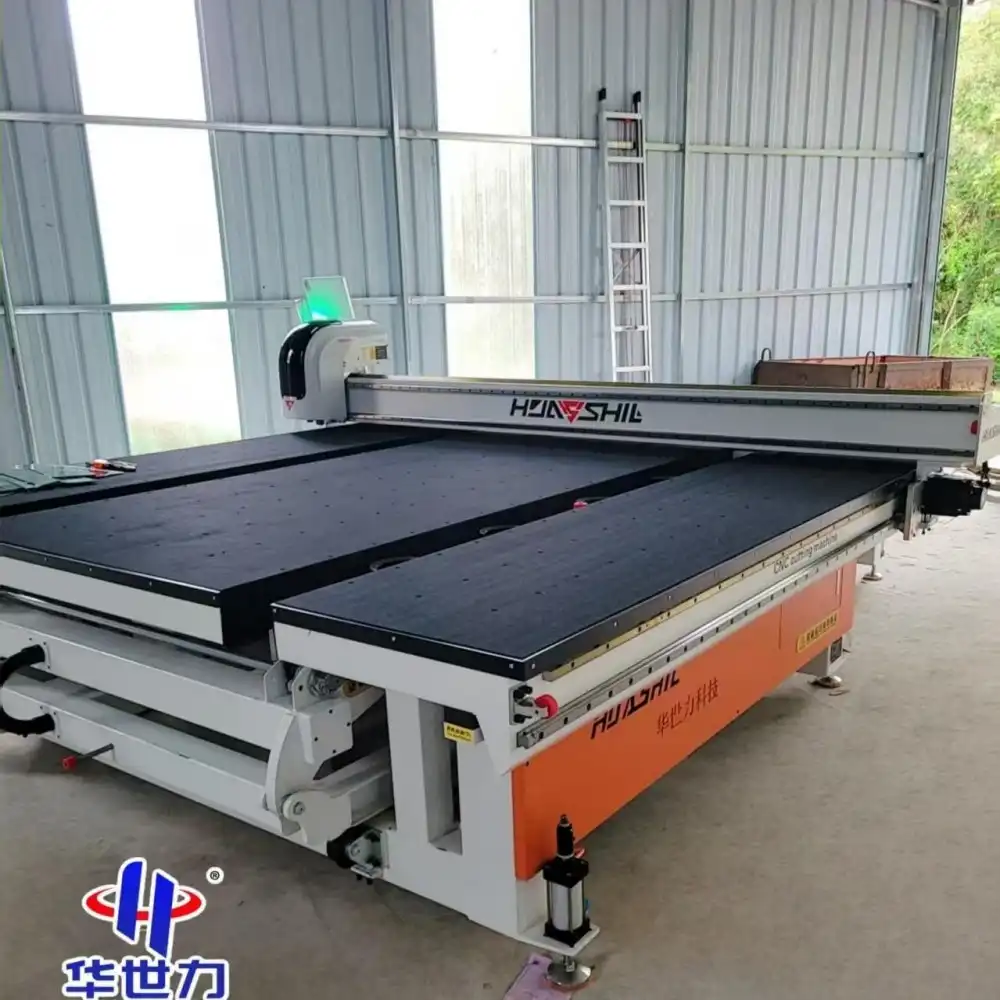
Both potential and cost structure are based on the mechanical basis. Advanced robotic arm systems are very flexible and can work with a wide range of glass sizes and positions, but they are very expensive. Tracked moving platforms, like the one in our HSL-SPT3624 model, let you walk around in any direction with a remote control. They are easy to use and don't cost a lot of money. This tracked loader design lets workers place equipment perfectly without having to pay a lot of money for rails or follow a set plan. The air float system is another important mechanical part that lets big glass sheets up to 3660x2440mm be handled carefully without damaging the surface. These mechanical decisions have a direct effect on the price of tools and determine how flexible operations can be and how efficiently they can make things.
Control Systems and Software Integration Capabilities
Programmable logic controllers are the smart part that connects the loader, such as those provided by automatic glass loading machine manufacturers, to the cutting tools upstream and the processing stations downstream. Modern control systems make it easy to program changes for different types of glass, which cuts down on the time needed to switch between production runs. Communication with building management systems is possible through software integration features that send production data, maintenance alerts, and performance measurements. The level of complexity of these control systems has a big effect on the cost of the equipment. However, interfaces that are easier to use usually work better and require less training for operators. Engineering managers need to figure out if the extra costs of more advanced software features are worth the extra work they do to boost productivity.
Safety Features and Material Protection Standards
Safety features keep both the workers and the expensive glass inventory safe. Complete systems have emergency stop buttons, motion sensors that can tell when people are nearby, load tracking that stops machines from being too heavy, and automatic shutdown procedures that can handle problems with the way they're working. These features cost more, but they are necessary to meet insurance and government rules. Glass doesn't break when it's being handled because of material safety features, especially vacuum pad design and pressure control. The CE and ISO9001 certifications, which are common on high-quality tools like our glass loader, show that they meet international quality and safety standards. These certifications give procurement managers written proof of buying reasons and risk management practices.
Evaluating Available Solutions: Comparison and Selection Guide
Market Overview and Pricing Landscape
The market for glass loader includes everything from low-cost systems that cost around $40,000 to high-end, fully integrated production lines that cost over $300,000. Basic equipment can usually only handle a few different sizes of glass, can only lift things with a vacuum and not with air float, and can only be moved by hand instead of using electricity. Our HSL-SPT3624 is in the middle of the range of options. It has air floating systems, tracked movement that can be controlled from a distance, built-in breaking tables, and the ability to accommodate standard glass sizes. Premium systems have fully automated loading routines, robotic placement, quality checking built in, and easy connection to ERP systems. By understanding this scenario, procurement teams can find the right level of capability to meet real production needs without over-specifying equipment features.
Feature Prioritization for Return on Investment
For every task, not every advanced function is worth the extra cost. Complex robotic positioning systems made for complex car glass contours don't help a small furniture glass maker that mostly makes standard rectangular shapes. On the other hand, curtain wall fabricators who work with a wide range of building requirements gain a lot from being able to move and change panels quickly. Technical managers should give more weight to features that directly fix problems with output, quality, or processes that require a lot of work. The breaking table function built into our glass loader design is an example of a useful feature that boosts output right away by combining two tasks onto one platform. The integration cuts down on the number of steps needed to move materials, lowers the risk of breaking them during transport, and improves the overall speed of the process.
Real-World Implementation Success
A medium-sized shower door maker in the Midwest just put in place a cheap glass loader that looks a lot like our HSL-SPT3624 setup. In their old way of handling things by hand, three people had to load, place, and move the glass to the cutting tools. With the automated system, only one person was needed to oversee the loading process and run the cutting activities at the same time. In addition to saving money on labor, the plant saw a 37% drop in broken glass during handling, which greatly increased the amount of material that was produced. The amount of goods that could be made went up by 23% without the need for more space or extra shifts. The total implementation costs were recovered in twenty-one months, which was a lot faster than their original three-year payback goal. This case shows how properly defined technology can bring in real money that goes beyond what was predicted in theory.
Optimizing Procurement Strategy for Automated Glass Loaders
Defining Precise Production Requirements
A thorough description of requirements is the first step in effective buying. The necessary processing capacity and cycle time are based on the production amount. Size and weight limits for glass are set by its measurements and weight ranges. Handling mechanisms are chosen based on the types of glass that are handled, such as tempered, laminated, covered, or standard float glass. The structure of a facility limits the size of the equipment's area, its range of motion, and its ability to work with other production equipment. The engineering managers who do this research write thorough specification papers that make it possible to compare vendors accurately and avoid costly mistakes where equipment capabilities don't match up with real operational needs.
Strategic Vendor Selection and Negotiation Approaches
Evaluation of a vendor goes beyond just looking at the equipment specs; it also looks at things like stability, support, and the possibility of forming a relationship. We suggest that procurement teams look at how experienced the seller is with similar projects, look at customer reviews from similar businesses, and look at the infrastructure for after-sales support. Delivery schedules have a big effect on project planning, especially when there are a lot of installs or extensions to plan. Payment terms are very different, but usually there is a thirty to forty percent payment, and the rest is due when the job is finished, or acceptance testing is done. Letters of Credit are often used in international trade because they provide security for both parties. A strategic discussion talks about more than just the price of the item being bought. It also includes things like installation help, training programs for operators, guarantee coverage, spare parts prices, and promises for quick technical support responses.
Ensuring Long-Term Performance Through Support Agreements
The level of maintenance and the supply of parts have a big impact on how long equipment lasts. Comprehensive maintenance agreements set up schedules for preventative maintenance, special access to expert help, and fixed costs for ongoing care of equipment. Training programs make sure that workers know how to properly use tools, do regular upkeep, and figure out what's wrong. These programs cut down on operational mistakes that damage tools or lower the level of production. The supply of spare parts is a very important factor to think about, especially when buying a glass loader from other countries. Knowing how to get parts, how long it usually takes to get them, and what to keep in stock can help you avoid long periods of downtime when you need to replace a part. These support factors play a big role in figuring out the total cost of ownership and should be given a lot of thought when decisions are being made about purchases.
Future Trends and Innovations in Affordable Automated Glass Loaders
Artificial Intelligence and Predictive Maintenance Integration
New technologies are changing what robotic equipment can do and how much it costs. Artificial intelligence systems look at trends in operational data to find the best processing settings, guess what maintenance needs to be done before they happen, and use machine learning algorithms to keep making things more efficient. These features cut down on unnecessary downtime, make parts last longer, and make the best use of energy. Predictive maintenance is especially helpful for the glass loader because it shows how parts wear and how that affects the safety and quality of the work that is done. As these technologies get better and cheaper, they will be able to be used on mid-range tools instead of just high-end ones.
Industry 4.0 and Connected Manufacturing Ecosystems
As the industrial sector goes digital, it builds production ecosystems that are linked together. For example, equipment can talk to facility management systems about its operating state, performance measures, and maintenance needs. Glass loader with IoT devices and the ability to connect to these environments work with no problems, showing how production is going, finding bottlenecks, and letting you make decisions based on data to improve things. With this connectivity, equipment sellers can access working data, find problems, and often fix them without having to come to the site. These features lower the cost of help while also speeding up responses and making solutions work better.
Customization and Flexible Manufacturing Solutions
More and more, the market wants flexible automation solutions that can be used for a wide range of production needs instead of strict systems that are only good for one use. Modular equipment designs let you add more features gradually as your production needs change. This method lowers the amount of starting cash needed and offers growth paths that are in line with how the business grows. OEM and ODM manufacturing agreements make it possible to customize tools to solve specific operational problems or work with custom production methods. Through optimized processes that aren't possible with normal equipment setups, these partnerships give businesses a competitive edge. Along with standard specs, purchasing managers should look at how flexible and customizable a seller is.
Conclusion
To find the best balance between price and performance in a glass loader, you need to look at more than just the purchase price. You also need to think about the total cost of ownership, operating efficiency, and how well the equipment fits with your production goals. The decision framework needs to include technical details that meet the needs of present production while also being able to grow in the future. The quality of the tools should be a top priority, but so should the vendor's ability to assist, the availability of parts, and their willingness to work with you. Intelligent systems, connected manufacturing, and flexible customization are some of the technology trends that are changing the equipment scene. These changes are giving mid-market manufacturers access to features that were once only available to big operations. For procurement to go well, there must be clear standards, a careful review of all vendors, and a strategic view that sees investment in automation as essential for manufacturing processes to be competitive.
FAQ
Q1: What factors most significantly impact glass loader pricing?
The price of equipment is mostly based on how complicated the mechanics are, how complex the control system is, how much weight it can hold, and any extras that come with it, like air floating systems or built-in braking tables. Certifications like CE and ISO9001 cost more, but they are necessary to make sure of quality and safety. Total investment is also affected by the need for customization, help with installation, and full guarantee packages. Mid-range computers usually cost between sixty thousand dollars and one hundred twenty thousand dollars, but this depends on the features and assistance that come with them.
Q2: How quickly can automated glass loading equipment deliver return on investment?
The time it takes to get a return on investment (ROI) varies from 18 to 36 months, based on the amount of work done, the amount of money saved on labor, the amount of waste reduced, and the productivity improvement. Faster results are seen in higher-volume processes that require a lot of manual work. Full cost planning that includes direct labor savings, less breakage, higher capacity, and better quality gives correct forecasts that support the need to buy.
Q3: What maintenance requirements should facilities anticipate?
As part of routine maintenance, the vacuum system is checked, mechanical parts are oiled, the control system is updated, and safety features are tested. Comprehensive maintenance agreements usually call for preventative service visits every three months and thorough checks once a year. Items that wear out quickly, like vacuum pads, filters, and sensors, should be in the spare parts collection. Proper maintenance greatly increases the life of tools and stops expensive, unexpected downtime.
Partner with HUASHIL for Reliable Glass Loader Solutions
Shandong Huashil Automation Technology offers a glass loader that is both affordable and effective, thanks to its decades of experience in production and customer-focused service. Our HSL-SPT3624 model is a great example of this theory. It has air flotation technology, tracked movement that can be controlled from a distance in all directions, built-in breaking tables, and the ability to hold glass sheets up to 3660x2440mm. It is also CE and ISO9001 certified. As a well-known company that makes glass loaders, we help our customers throughout the whole lifetime of their equipment by providing full installation support, user training, quick technical support, and a steady supply of spare parts. Email our team at salescathy@sdhuashil.com to talk about your unique production needs and find out how our automatic glass handling solutions can help you run your business more efficiently while staying within your budget.
References
1. Anderson, M. (2021). Automation in Glass Manufacturing: Cost-Benefit Analysis and Implementation Strategies. Industrial Press.
2. Chen, L., & Roberts, P. (2022). Material Handling Automation: Selection Criteria for Glass Processing Equipment. Journal of Manufacturing Technology, 48(3), 127-145.
3. European Glass Technology Institute. (2020). Safety Standards and Best Practices for Automated Glass Handling Systems. Brussels: EGTI Publications.
4. Morrison, K. (2023). Total Cost of Ownership Models for Industrial Automation Equipment. Production Engineering Quarterly, 35(2), 89-106.
5. Schmidt, H., & Yamamoto, T. (2022). Industry 4.0 Integration in Glass Processing: Technologies and Implementation Roadmaps. Springer.
6. Wilson, R. (2021). Predictive Maintenance and IoT Applications in Material Handling Automation. International Journal of Smart Manufacturing, 12(4), 312-328.