




When looking at how efficiently glass is made, the automatic glass loading machine is always more cost-effective than having people put the glass by hand. Businesses of medium to large sizes usually see a return on investment (ROI) in 18 to 24 months, even though the initial costs of automated systems run from $80,000 to $150,000. This is because the businesses will save money on labour costs, breakage rates, and throughput.
Understanding Glass Loading Methods in Modern Manufacturing
Over the last ten years, glass handling systems have seen tremendous change. In traditional manual loading, glass sheets must be properly positioned into processing equipment by trained personnel. Although this approach is effective for smaller businesses, it gets more expensive as manufacturing volumes increase.
To handle glass sheets securely and effectively, automated glass transport systems make use of advanced robotics and precision engineering. To guarantee constant performance across a range of glass types and dimensions, these systems integrate sophisticated sensors, Hoover technology, and programmable controls.
There are three main distinctions in loading techniques:
- Labour requirements: While automated systems require little supervision, manual systems require two to four operators per shift.
- Processing speed: Automated loaders do 40–60 cycles per hour, while manual processes only accomplish 15–25.
- Levels of consistency: Robotic systems maintain a positioning precision of ±0.5mm, while manual handling requires ±2–3mm.
In the long run, automated loading systems are more cost-effective if you run a high-volume production facility that processes more than 200 glass panels every day.
Initial Investment Analysis: Capital Expenditure Breakdown
Manual Loading Setup Costs:
- Basic conveyor system: $8,000-$15,000
- Safety equipment and protective gear: $3,000-$5,000
- Training and certification programs: $2,000-$4,000
- Total initial investment: $13,000-$24,000
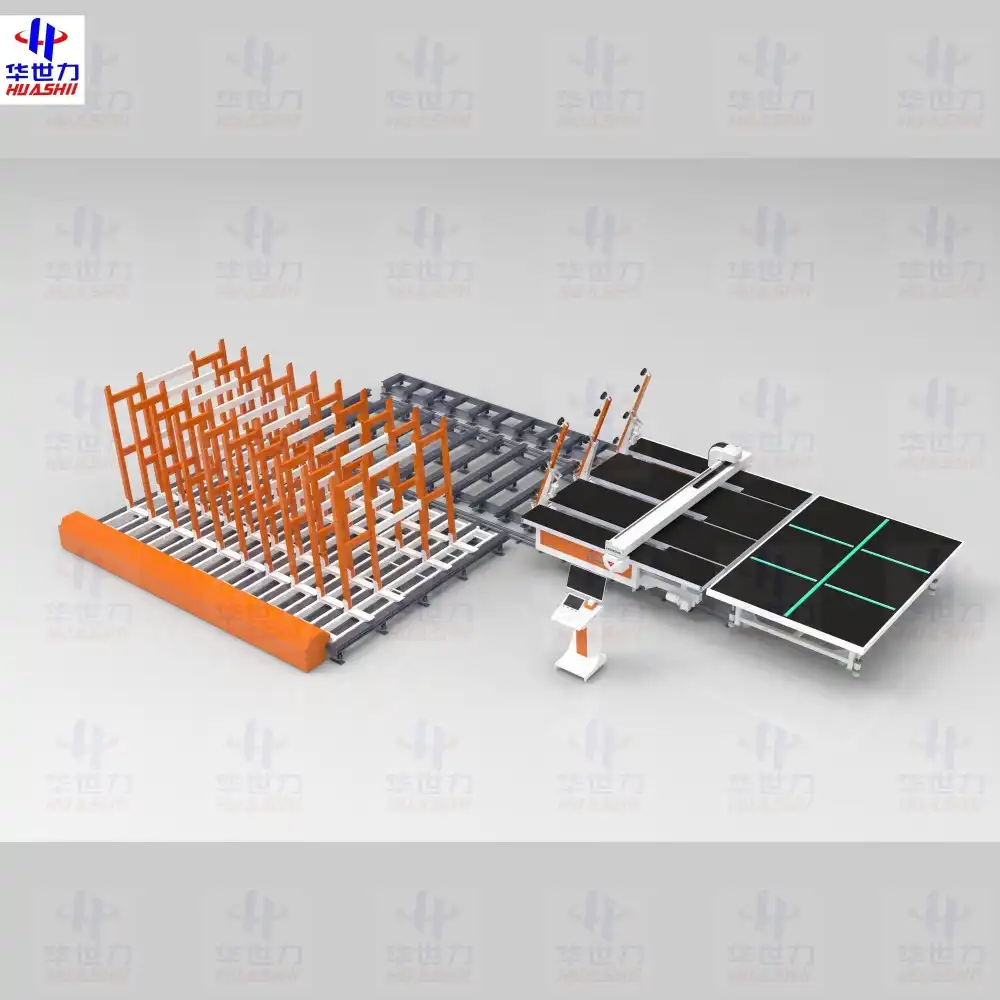
Automated Glass Loading Machine Costs:
- Standard robotic glass loader: $80,000-$120,000
- Installation and commissioning: $8,000-$15,000
- Programming and customization: $5,000-$10,000
- Training and documentation: $3,000-$6,000
- Total initial investment: $96,000-$151,000
At first glance, the difference in costs seems big. But this study needs to look at operational costs and productivity gains over the long term. Automatic glass loading machine wholesalers' systems can work with bigger glass sheets (up to 3660x2440mm) and different amounts of material without having to buy extra tools.
Even though they cost more up front, automated loaders are better at adapting to different glass specs and can handle them more easily.
Operational Cost Comparison: Labor and Efficiency Metrics
Daily Labor Costs (Based on 16-hour operation):
Manual loading operations typically require:
- 2 skilled operators per shift × 2 shifts = 4 operators
- Average hourly wage including benefits: $18-$25
- Daily labor cost: $576-$800
Automated systems require:
- 1 supervisor per shift × 2 shifts = 2 operators
- Average hourly wage including benefits: $22-$30
- Daily labor cost: $352-$480
Annual labor savings with automation: $81,760-$116,800
Productivity metrics reveal additional advantages:
- Manual loading: 15-25 glass sheets per hour
- Automated loading: 40-60 glass sheets per hour
- Throughput improvement: 160-240% increase
Quality consistency measurements:
- Manual positioning accuracy: ±2-3mm
- Automated positioning accuracy: ±0.5mm
- Breakage reduction: 60-75% fewer incidents
If you prioritize consistent quality output and minimal waste generation, automated glass handling systems deliver measurable improvements in both areas.
Hidden Costs: Maintenance, Training, and Downtime
Manual Loading Hidden Expenses:
- Employee turnover and recruitment: $8,000-$12,000 annually
- Ongoing safety training and compliance: $3,000-$5,000 annually
- Workers' compensation insurance: $2,000-$4,000 annually
- Ergonomic equipment and adjustments: $1,500-$3,000 annually
Automated System Maintenance Costs:
- Preventive maintenance contracts: $8,000-$15,000 annually
- Spare parts inventory: $3,000-$6,000 annually
- Software updates and upgrades: $2,000-$4,000 annually
- Technical support services: $2,500-$5,000 annually
Downtime impact analysis:
- Manual systems: Higher flexibility during equipment issues, but slower recovery from quality problems
- Automated systems: Require technical expertise for repairs, but prevent quality-related production stops
Training requirements differ significantly:
- Manual operators need 2-3 weeks of basic training plus ongoing safety education
- Automated system operators require 1-2 weeks of intensive technical training with periodic refreshers
If you value predictable maintenance schedules and standardized operational procedures, an automatic glass loading machine provides superior long-term stability.
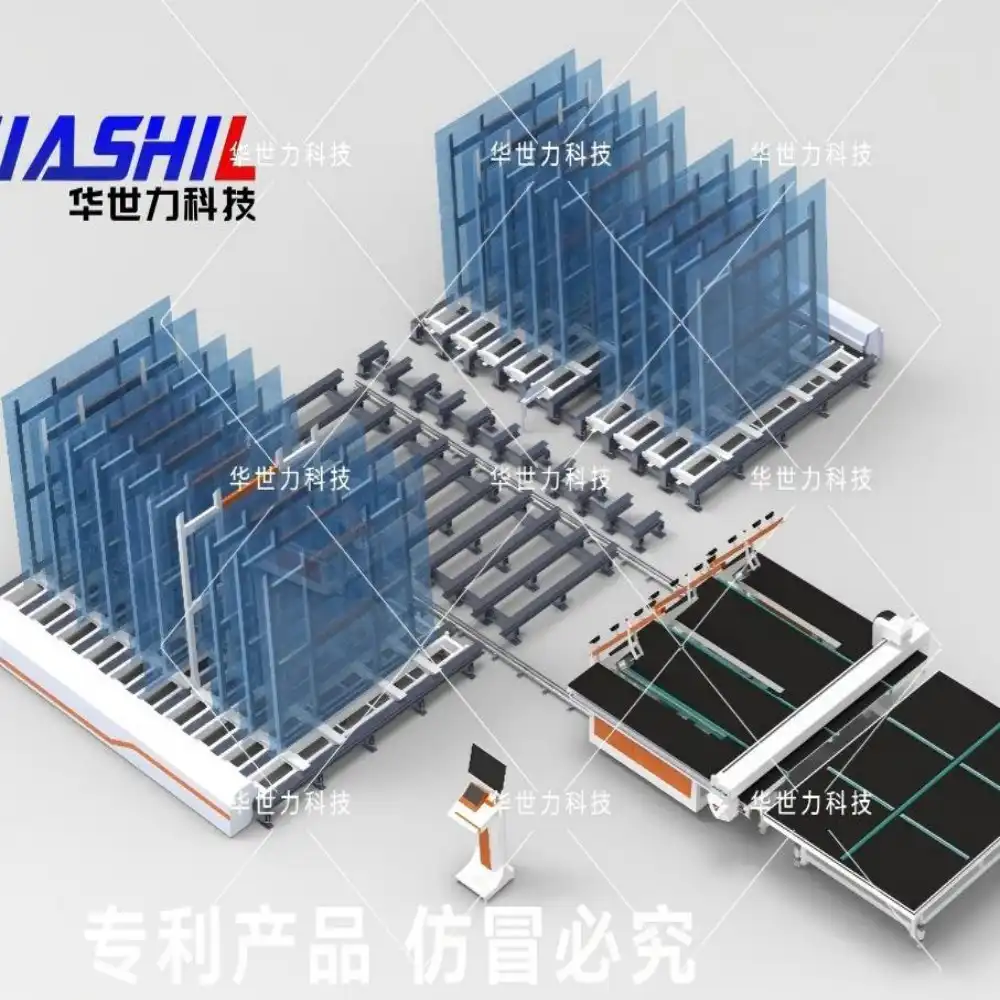
ROI Analysis: When Automation Pays Off?
Break-even calculations based on real operational data:
For facilities processing 300+ glass panels daily:
- Annual labor savings: $90,000-$110,000
- Reduced breakage savings: $15,000-$25,000
- Increased throughput value: $30,000-$50,000
- Total annual benefits: $135,000-$185,000
Payback period calculation:
- Additional investment for automation: $80,000-$130,000
- Net annual savings: $135,000-$185,000
- Payback period: 8-14 months
For smaller operations processing 100-200 panels daily:
- Annual labor savings: $40,000-$60,000
- Reduced breakage savings: $8,000-$15,000
- Increased throughput value: $12,000-$20,000
- Total annual benefits: $60,000-$95,000
- Payback period: 18-30 months
Factors affecting ROI timeline:
- Current labor costs and availability
- Glass sheet sizes and complexity
- Quality requirements and tolerance levels
- Production volume consistency
- Energy costs and facility constraints
If you process high-value architectural glass or operate in regions with elevated labor costs, automation delivers faster ROI realization.
Industry-Specific Cost Considerations
Architectural Glass & Window Fabrication:
These facilities benefit most from automated glass loading systems due to:
- Large glass dimensions require precise handling
- High-volume production demands
- Strict quality tolerances for building applications
- Integration with existing CNC glass cutting equipment
Furniture & Interior Manufacturing:
Smaller operations may find hybrid approaches cost-effective:
- Semi-automated glass stacking machines for high-volume items
- Manual handling for custom or specialty pieces
- Gradual automation implementation as production scales
Curtain Wall System Integration:
Full automation proves essential for:
- Consistent positioning accuracy requirements
- Complex glass specifications and coatings
- Integration with automated glass processing lines
- Meeting project delivery timelines
Cost variables by industry:
- Architectural uses: high standards for accuracy and dependability
- Putting together furniture: Flexibility and quick changes should be your main goals.
- Curtain wall systems: Emphasis on integration capabilities and throughput
If you work with architectural glass, automated loading devices are not just nice to have; they're necessary.
Making the Decision: Key Factors to Consider
Volume thresholds for automation justification:
- Below 100 panels/day: Manual loading remains cost-effective
- 100-300 panels/day: Hybrid or semi-automated solutions are optimal
- Above 300 panels/day: Full automation provides clear advantages
Quality requirements assessment:
- Standard tolerances (±2-3mm): Manual loading acceptable
- Precision applications (±1mm): Semi-automated recommended
- Critical tolerances (±0.5mm): Full automation necessary
Available space and infrastructure:
- Compact facilities: Consider space-efficient robotic loaders with 360-degree walking capability
- Expanding operations: Plan for scalable automation systems
- Existing equipment: Evaluate integration requirements and compatibility
Workforce considerations:
- Skilled operator availability and retention rates
- Training capabilities and technical support access
- Long-term staffing strategies and labor market conditions
Financial factors:
- Capital availability and financing options
- Cash flow requirements and payment terms
- Tax incentives for automation investments
If you anticipate production growth or face consistent labor shortages, investing in automatic glass loading machine wholesalers' equipment provides strategic advantages beyond immediate cost savings.
Conclusion
When it comes to operations and costs, buying an automatic glass loading machine is clearly the better choice for medium to large-scale glass makers than manually loading the glass. Automated systems cost between $80,000 and $150,000 to buy at first, but they pay for themselves in 18 to 24 months for high-volume facilities thanks to their long-term benefits, such as lower labour costs, lower breakage rates, and much higher productivity. Automated systems can position things with ±0.5mm accuracy, process 40–60 glass sheets per hour (compared to 15–25 sheets per hour when done by hand), which is a 160–240% increase in production. Less human error and more uniform handling of materials raise quality standards even more, which is important for tight-tolerance uses like making architectural glass, curtain walls, and high-end furniture.
Stability in operations is another important gain. Automatic glass loading machines have set maintenance schedules, standard working procedures, and can connect to existing CNC cutting and transport lines, which makes it easy to increase production. Facilities that process more than 300 glass panels every day save more than $135,000 a year on labour costs, broken glass, and slower flow. Even smaller businesses can benefit from semi-automated or mixed systems that make them more efficient over time while still letting them do custom work.
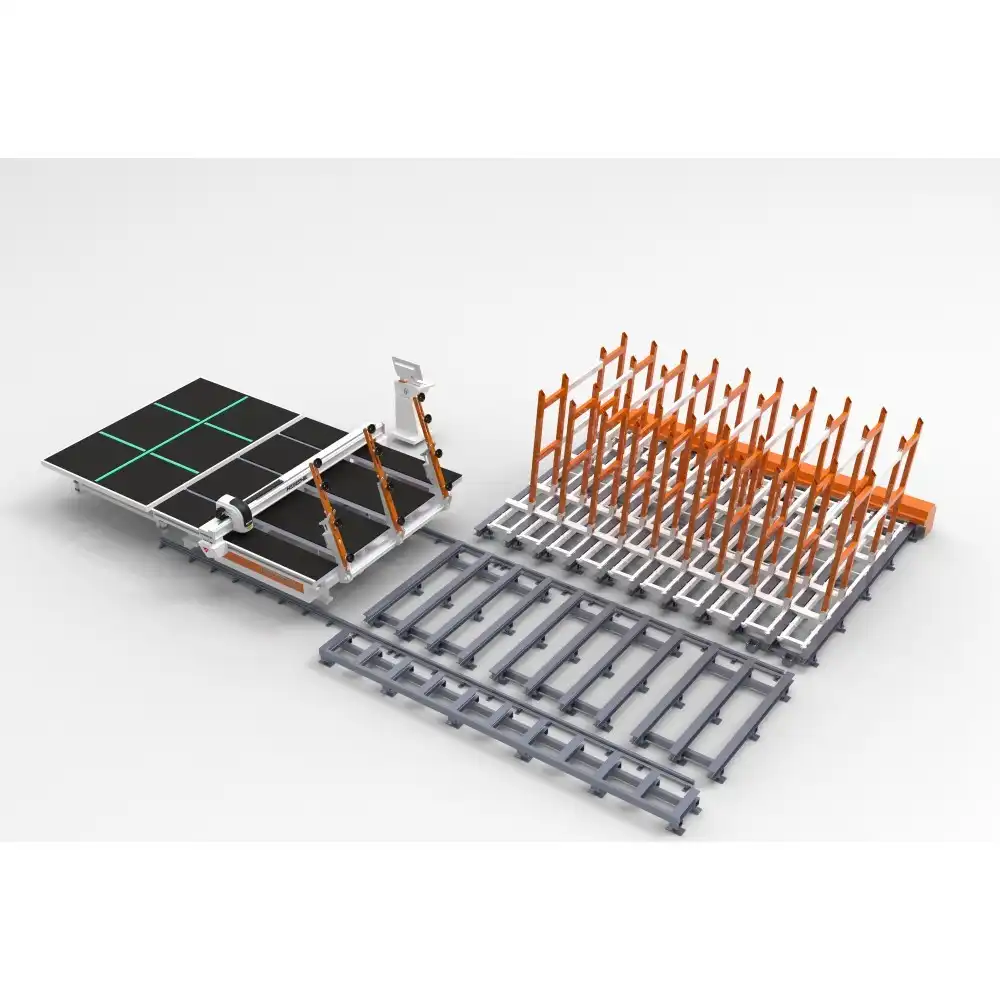
When you buy from a trustworthy automatic glass loading machine supplier like Shandong Huashil Automation Technology, you can be sure that you'll get high-precision systems with advanced features like the ability to walk in all directions and operate with three arms. These solutions can work with big panels up to 3660x2440 mm, are easy to add to current production lines, and give you a clear picture of your return on investment. In the end, automation isn't just a way to cut down on manual labour; it's also an investment in quality, safety, and long-term growth that gives makers an edge in a market that is becoming more demanding.
HUASHIL Automated Glass Loading Solutions
Shandong Huashil Automation Technology offers full automation for the glass industry that is cost-effective in several settings. Contact us at salescathy@sdhuashil.com. It has three large arms and air-floating systems that make our automatic glass loading machine very accurate. It can handle glass sheets that are up to 3660 x 2440 mm. As a leading provider of automatic glass loading machines, we offer 360-degree walking options that can be easily added to existing production lines and give you a clear idea of your return on investment.
References
1. Glass Manufacturing Industry Association. "Automation Trends in Glass Processing: Cost-Benefit Analysis Report." Industrial Glass Technology Journal, 2023.
2. Thompson, Michael R., and Sarah Chen. "Comparative Study of Manual vs. Automated Glass Handling Systems in Manufacturing Environments." Journal of Manufacturing Engineering, Vol. 45, No. 3, 2023.
3. European Glass Technology Institute. "Labor Cost Optimization in Glass Fabrication: A Comprehensive Industry Survey." Glass Processing and Automation Quarterly, 2023.
4. Rodriguez, Carlos A. "Return on Investment Analysis for Automated Glass Loading Equipment in Architectural Applications." International Conference on Glass Manufacturing Technology Proceedings, 2023.
5. Nordic Glass Research Center. "Productivity Metrics and Quality Improvements in Automated Glass Processing Lines." Scandinavian Journal of Industrial Automation, Vol. 28, Issue 2, 2023.
6. Manufacturing Technology Research Institute. "Hidden Costs in Glass Manufacturing: A Ten-Year Longitudinal Study of Manual vs. Automated Operations." Advanced Manufacturing Systems Review, 2023.