




When looking at CNC glass cutting equipment for commercial use, it's important to know exactly what you need so you can make smart investment choices. Modern glassmaking plants need automatic systems that can keep the accuracy high while increasing output. When plant managers, engineering teams, and procurement workers are looking for advanced glass cutting systems, this complete buying guide covers all the important things they need to think about. Making smart choices about equipment has a direct effect on your facility's ability to compete in today's tough industrial environment. This includes planning production capacity and long-term running costs.
Understanding Your Production Requirements
Determining your facility's cutting volume represents the starting point for equipment selection. Daily production targets influence everything from machine specifications to automation levels. Glass fabrication plants processing architectural panels require different capabilities compared to furniture manufacturers handling decorative pieces.
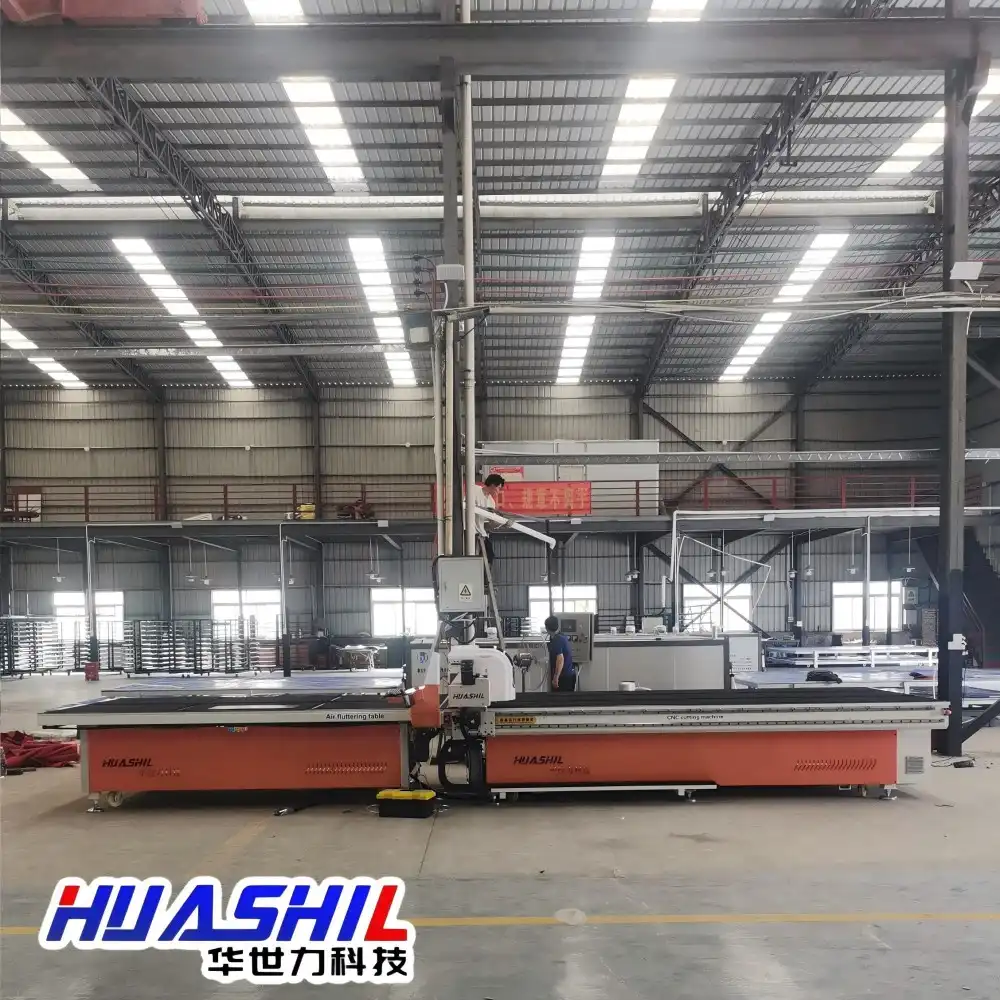
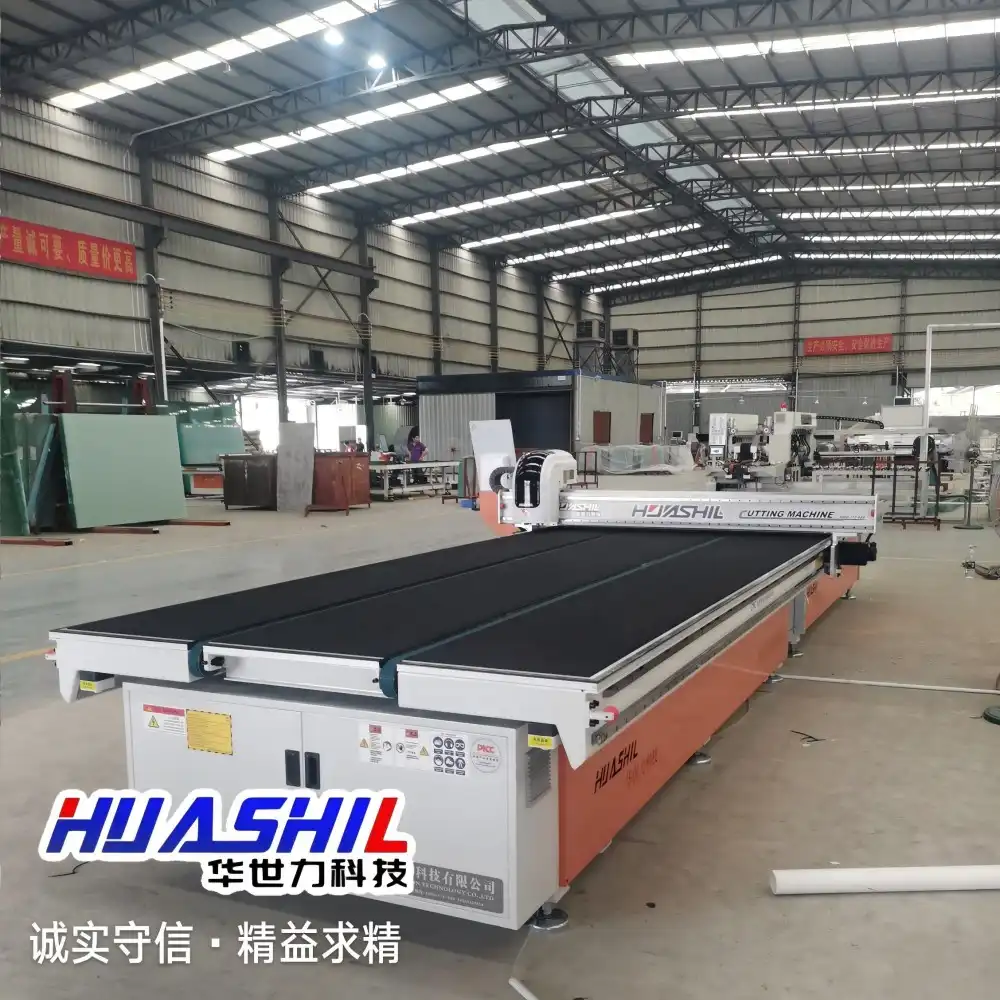
Maximum glass dimensions significantly impact equipment choices. The HSL-YTJ3826 model accommodates sheets up to 3660×2440 mm, serving most architectural and furniture applications effectively. Larger curtain wall projects may demand expanded cutting areas, while shower door production typically works within standard dimensions.
Thickness requirements vary considerably across applications. Processing capabilities spanning 2-19 mm cover architectural glazing, automotive components, and furniture applications. Thicker specialty glass demands enhanced cutting systems with additional pressure control features.
Material handling considerations extend beyond basic cutting functions. Automated loading systems reduce labor costs while improving workplace safety. Air flotation systems protect glass surfaces during processing, particularly crucial for high-end architectural projects where surface quality determines final acceptance.
Essential Technical Specifications to Evaluate
In all glass production uses, the quality of the tools is determined by how precisely they cut. Advanced CNC glass cutting equipment systems keep errors within ±0.1 mm, so results are always the same no matter how skilled the operator is. When it comes to car glass and smart mirrors, where exact specs are needed for component assembly, the need for precision grows.
How much technology there is is directly linked to how often things are made and how much work costs. Fully automatic systems load, cut, recognize edges, and dump everything on their own. Small businesses can save money and get better results with semi-automated tools than with human labor.
How well processes run and how flexible plans can be are both affected by how well software can be integrated. The Optima optimization tool makes the best use of the material by finding out the best ways to cut it. Modern systems use CAD tools to make it easy to go from designing something to making it.
How fast a machine can be used and how much it costs to keep depend on how stable it is. Strong construction and precision parts make sure that the machine will keep running smoothly even in tough industrial conditions. Moving things is easy with synchronous belt conveyor systems, and noises that could affect cutting accuracy are cut down.
How many workers need to be trained and how flexible production can be depend on how complex the control system is. These days' CNC glass cuts have simple settings that make them easier to learn. The ability to run tools from any angle and other features of remote controls make them more useful because they let workers do more than one thing at once.
Critical Features for Modern Glass Processing
Automatic edge-finding technology cuts down on setup time and makes sure that the pieces are in the right place. It is very helpful to have this function when working with odd-shaped glass or sheets of different sizes during production runs.
Pressure control methods change the cutting force based on the type and thickness of the glass. Automatic adjustment keeps the cut quality the same across all uses and stops damage to the material. When working with toughened or tempered glass, this skill becomes very important.
Adding a breaking table speeds up the cutting process by letting you decide how the cut pieces are separated. This trait makes it easier to handle while still ensuring accuracy during the last step of separation.
Air float devices support sensitive glass surfaces while they are being worked on, which keeps them from getting scratches that could lower the quality of the end product. That's why this technology is so important for high-end building uses that need perfect surfaces.
Optimization software figures out the best way to cut materials so that the most of them are used. Advanced programs look at the direction of the glass grains, the patterns of stress, and how to minimize waste to cut down on material costs by a large amount.
Cost Analysis and Return on Investment
The initial cost of buying CNC glass cutting equipment is only one part of the total costs of owning it. Installation, training, a fair price glass transport table line, and operational costs are added to the initial costs. But the benefits of technology usually make the investment worth it because it saves money on labor costs and makes things run more smoothly.
Improving how materials are used saves a lot of money over the life of an item. When compared to cutting by hand, optimization tools can boost output by 15 to 25 percent. For businesses that do a lot of work, these savings usually cover the cost of the tools within 18 to 24 months.
In the long run, it saves money to cut down on labor costs. Machines that do work for you reduce the need for people and get rid of differences in quality that depend on skill. It is possible for one person to run several automatic cutting lines at the same time. This lets a lot more work get done.
You should think about how much the tools you pick will cost to keep. Strong building and good parts allow for low fix costs and little downtime. Planned repairs keep technology in good shape and make it last longer.
How much energy a facility uses affects its running costs, especially for facilities that handle a lot of work. Modern CNC systems make the best use of power by using efficient drive systems and sleep modes when they're not being used.
Installation and Support Considerations
Site preparation requirements vary based on equipment specifications. The HSL-YTJ3826's 5550×4925 mm footprint requires adequate floor space plus service access areas. Foundation requirements depend on machine weight and vibration characteristics.
Training programs ensure operators maximize equipment capabilities while maintaining safety standards. Comprehensive training covers basic operation, maintenance procedures, and troubleshooting techniques. Advanced programs include optimization software usage and custom cutting pattern development.
Technical support availability affects production continuity. Reliable suppliers provide remote diagnostic capabilities, reducing response times when issues arise. Local service networks ensure rapid parts availability and on-site support when required.
Warranty coverage protects investment while indicating manufacturer confidence in equipment quality. Standard warranties typically cover major components for 12-18 months, with extended coverage available for critical production applications.
Spare parts availability ensures minimal production disruptions. Established manufacturers maintain inventory for commonly replaced components while providing delivery schedules for specialized parts.
Compliance and Safety Standards
CE certification ensures CNC glass cutting equipment meets European safety and performance standards. This certification provides confidence in electrical safety, mechanical integrity, electromagnetic compatibility, and the fair price glass transport table line.
ISO 9001 certification demonstrates manufacturer commitment to quality management systems. This standard ensures consistent production processes and continuous improvement programs.
Safety features protect operators while maintaining productivity. Emergency stops, safety interlocks, and protective barriers prevent accidents during normal operation and maintenance activities.
Environmental compliance addresses noise levels, emissions, and waste management. Modern equipment designs minimize environmental impact while meeting local regulatory requirements.
Selecting the Right Supplier
Manufacturing experience indicates supplier capability and reliability. Established companies with proven track records provide confidence in equipment quality and long-term support availability.
Export experience demonstrates international quality standards and service capabilities. Suppliers serving global markets understand diverse application requirements and regulatory compliance needs.
Customer references provide real-world performance data and satisfaction levels. Speaking with existing users reveals actual operating experiences, including productivity gains and support quality.
Technical expertise ensures proper equipment selection and optimization. Knowledgeable suppliers help match equipment capabilities with specific application requirements, avoiding over-specification or inadequate performance.
Service network coverage affects ongoing support quality. Local representatives provide faster response times and better understanding of regional market requirements.
Conclusion
Selecting optimal CNC glass cutting equipment requires careful evaluation of production requirements, technical specifications, and long-term operational considerations. Modern automated systems deliver significant advantages in precision, efficiency, and cost reduction compared to traditional cutting methods. Success depends on matching equipment capabilities with specific application needs while considering installation, training, and support requirements. Quality suppliers provide comprehensive solutions that extend beyond equipment delivery to include ongoing technical support and service. Investment in advanced glass cutting technology positions manufacturers for competitive advantage through improved quality, reduced costs, and enhanced production flexibility.
Partner with HUASHIL for Advanced Glass Cutting Solutions
HUASHIL combines decades of automation expertise with cutting-edge CNC glass cutting equipment design and manufacturing excellence. Our comprehensive solutions address every aspect of modern glass processing, from individual machines to complete production lines. Contact our team at salescathy@sdhuashil.com to discuss your specific requirements and discover how our advanced glass cutting technology can transform your manufacturing capabilities.
References
1. Glass Manufacturing Industry Technology Assessment - International Glass Manufacturing Institute, 2023
2. Automation in Glass Processing: Trends and Applications - Journal of Glass Technology, Vol. 64, Issue 3
3. CNC Machine Tool Selection Criteria for Industrial Applications - Manufacturing Engineering Society Technical Paper
4. Cost-Benefit Analysis of Automated Glass Processing Equipment - Industrial Engineering Quarterly Review
5. Safety Standards for CNC Glass Cutting Equipment - International Safety Equipment Association Guidelines
6. Optimization Software Applications in Glass Manufacturing - Computer-Aided Manufacturing Research Institute