




Through advanced robotic technology and precise engineering, the 5133 glass cutting line changes the way yield control is done in the glass production industry. Compared to cutting by hand, this automated method cuts down on waste by up to 15% while keeping the same level of quality. The HSL-LSX5133 model has three specialized tables for loading, cutting, and breaking glass. It also comes with Optima optimization software to make the best use of glass and reduce mistakes during production. This makes it an important purchase for glass makers who want to make more money.
Understanding Yield Challenges in Glass Cutting Operations
Glass cutting operations face numerous yield control challenges that directly impact profitability and production efficiency. Traditional manual cutting methods often result in inconsistent measurements, leading to material waste and quality variations that can compromise entire production runs.
Manual Error Impact on Production Efficiency
Human mistake factors that are introduced by manual glass cutting methods have a big effect on yield rates. When using small tools, it's hard for operators to keep the pressure, cutting angles, and accuracy of measurements the same over a large amount of work. Because of these differences, makers have to throw away a lot of processed glass because the sizes don't match up. This has a direct effect on material costs and delivery times.
When hand cutting is used, production sites often report waste rates of more than 8 to 12 percent. The cost of all this waste added up, along with the need for more workers and longer working times, makes operations very inefficient, which hurts competitiveness in tough markets like architectural glass and car applications.
Measurement Inaccuracies and Material Wastage
When working with big sheets of glass on the 5133 glass cutting line, it gets harder and harder to get accurate measurements. The accuracy of traditional measuring tools isn't good enough for the tight tolerances needed in modern building and car tasks. Small mistakes in measuring add up during the cutting process, making pieces that are too big or too small to meet the requirements.
Material waste includes more than just mistakes in cutting. It also includes damage from handling, bad storage, and shipping. To keep glass sheets up to 5100x3300mm from breaking or getting damaged along the edges, which would make the whole sheet useless, they need to be handled with special tools and placed precisely.
How the 5133 Glass Cutting Line Works to Enhance Yield Control?
The HSL-LSX5133 cutting line uses advanced automation technology to solve common yield control problems. This is done through smart process management and precise engineering. This combined system takes raw glass sheets and cuts them into pieces of the right size while reducing waste and making the best use of the materials.
Advanced Three-Table Configuration System
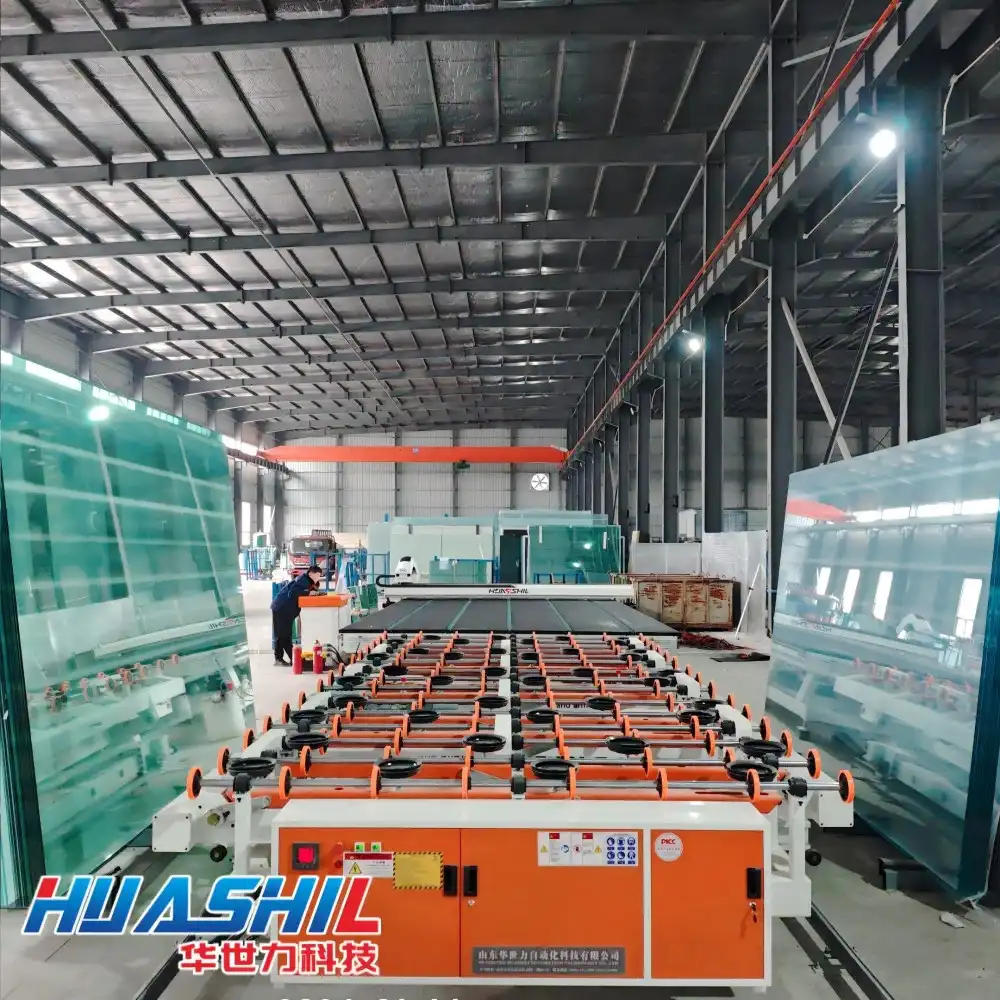
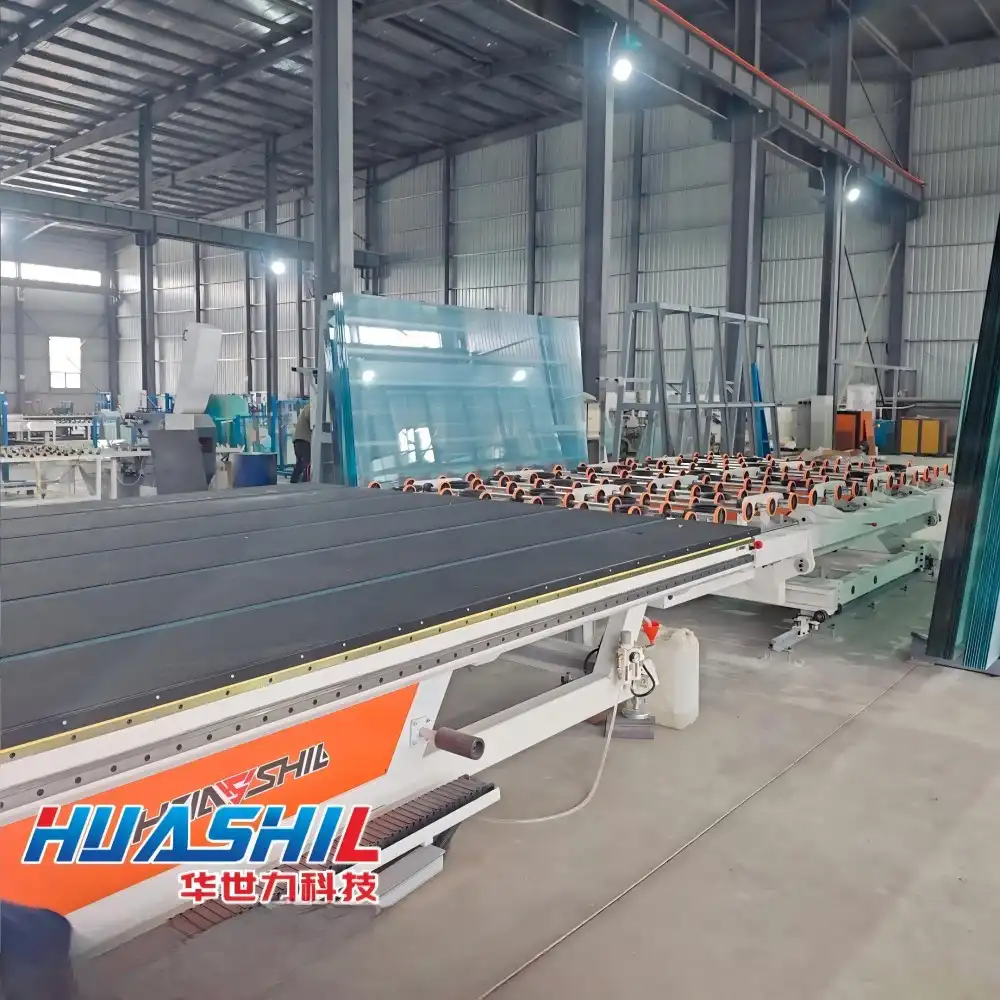
The cutting line has a special three-table layout with areas for loading, cutting, and breaking that work together without any problems. The loading table takes in raw glass sheets and exactly places them for processing. The computer-controlled cutting heads on the cutting table do the scoring. The breaking table finishes the separate process by applying constant pressure, which makes sure that the edges are clean and the measurements are correct.
With five big arms on each side, each table has multiple adjustment systems that make it very stable and easy to move large glass sheets. The above- and underground train system makes it easy to move materials from one stop to another and keeps them perfectly aligned during the cutting process. This setup gets rid of the need to move things by hand between processes, which lowers the risk of breaking things and keeps the quality of the processing constant.
Optima Optimization Software Integration
The Optima optimization software is the smart heart of the 5133 glass cutting line. It figures out the best cutting patterns by looking at the size and shape of the glass sheets and what needs to be cut. This software figures out the best way to arrange several pieces inside a single sheet of glass so that the maximum amount of material is used while still meeting the needed limits for size.
The system can change the cutting settings based on the thickness, type, and climate of the glass because it can be monitored in real time. The software keeps detailed records of production and makes detailed return reports that help production managers find ways to improve performance and see how it changes over time.
Precision Control Through 2+2 Station Configuration
Because the 2+2 station setup is customizable, it can be used for a wide range of output needs while still meeting quality standards. This setup lets several glass sheets be processed at the same time, which boosts output without lowering safety or precise standards.
The system can handle both high-volume standard production and custom construction needs because the placement of the stations can be changed to handle different glass sizes and cutting patterns. The automatic station coordination makes sure that timing and placement are always correct, which is impossible to do by hand.
Key Benefits of the 5133 Glass Cutting Line for Industrial Use
To meet the needs of a competitive market, industrial glass handling needs to be very accurate, reliable, and efficient. The automated cutting line makes measurable gains in many areas of operations, which has a direct effect on both customer happiness and profit.
Enhanced Accuracy and Reduced Material Waste
Dimensional limits are always within ±0.5 mm with automated cutting technology, which is a big improvement over hand cutting. This level of accuracy lowers the number of rejections and rework jobs that need to be done, which makes it easier for makers to meet strict standards for architectural and car glass.
Material utilization can be raised by 10 to 15 percent by improving cutting patterns and lowering damage from handling. When handling large amounts, these changes have a big effect on the economy because less waste means higher profit margins and the ability to offer competitive prices.
The following benefits show how the cutting line improves the efficiency of production:
- Consistent Quality Standards: When you automate cutting, the skill of the operator doesn't change, so every piece meets the exact measurements that were set, even if the production number or shift changes.
- Less time spent setting up: Computer-controlled positioning and cutting factors get rid of the need for manual measurements and setup, which cuts the time it takes to switch between goods by up to 60%.
- Better safety performance: automated handling lowers the risk of operators being hurt by glass cuts and heavy lifting, making the workplace safer while keeping productivity high.
These operational changes help glass makers with some of their biggest problems while also giving them a clear return on their investment through lower costs and higher output.
Higher Throughput and Production Optimization
Because it can run continuously and has shorter cycle times, the 5133 glass cutting line greatly improves the amount of goods that can be made. Processing speeds of up to 12 meters per minute are possible, based on the thickness of the glass and how complicated the cut is. This is a big improvement over doing things by hand.
The system can handle glass sheets without stopping for breaks or shift changes because it can run continuously. This makes the best use of the equipment and helps meet tight delivery deadlines. The combined material handling system gets rid of the problems that come with moving and placing things by hand.
Maintenance-Friendly Design and Long-Term Reliability
Built-in diagnostics in the cutting line send out repair warnings ahead of time, which avoids unplanned downtime and increases the life of the equipment. Regular maintenance tasks can be done without the need for expert technicians or long shutdown times when service points are easily accessible and parts are designed to fit together in a modular way.
Standardizing parts across all of HUASHIL's product lines makes sure that extra parts are always available and cuts down on the amount of inventory that is needed for upkeep tasks. Technical support materials and training programs make it possible for building maintenance teams to do regular maintenance tasks on their own.
Comparing the 5133 Glass Cutting Line with Other Models and Market Solutions
When buying, teams look at automated glass cutting options, knowing who the competitors are helps them make smart choices. The HSL-LSX5133 is clearly better than older models and other choices on the market, thanks to its improved technology integration and better performance.
Performance Advantages Over Previous Models
The current system has faster working speeds, more accurate measurements, and the ability to work with larger glass sizes than older cutting line models. The biggest job that can be processed is 5100x3300mm, which is big enough for building glass needs that smaller systems can't handle well.
Improvements of 20 to 25 percent in energy efficiency over earlier models lower running costs and support efforts to be more environmentally friendly. Cutting patterns that are optimized and advanced motor control systems keep power use to a minimum without affecting working speed or quality standards.
Competitive Market Position
A study of the market shows that the automatic cutting line is the best deal because it has low prices, full after-sales support, and the ability to be customized. Unlike rivals who mostly offer standard solutions, HUASHIL gives customers a lot of ways to make their products exactly how they need them.
Client reviews always talk about how reliable the 5133 glass cutting line is, how easy it is to use, and how helpful the technical support staff is as key differences. Production sites say that they get their money back in 18 to 24 months by being more efficient and throwing away less, which is a high return on investment compared to other options.
Procurement Considerations and Customization Options
Different budgets can be met by flexible price systems that offer finance options, discounts for large orders, and programs that start slowly and build up over time. Custom configuration choices let owners make the system work best for their building, the type of glass they are using, and the amount of output they need to do without affecting its performance.
Standard setups usually have delivery times between 12 and 16 weeks, but there are faster choices for those who need them right away. Installation and commissioning help make sure that new systems work well with old ones and don't get in the way of current activities too much.
Procurement and After-Sales Support: Ensuring Optimal Yield Control Investment
For automatic glass cutting technology to be successfully implemented, it needs full support from the time it is bought until it is used. Strategic source selection and careful planning for after the sale make sure that the investment is well spent and that operating risks are kept to a minimum.
Authorized Dealer Network and Product Authentication
When you work with authorized HUASHIL dealers, you can be sure that you will get original goods, factory warranties, and certified expert support. Authorized dealers talk to engineering teams directly, so they can give you correct technical specs and the ability to make changes that illegal sellers can't.
Product authentication verification steps keep buyers safe from fake equipment that looks like the real thing but doesn't have the fine engineering and high-quality parts that real systems do. Genuine equipment comes with full instructions, proof that it was tested at the factory, and guarantees that extra parts will be available for long periods of time.
Comprehensive Service Contracts and Technical Support
There are different kinds of service contracts, from basic guarantee coverage to full maintenance plans for the 5133 glass cutting line that cover preventative maintenance, emergency fixes, and services that make the system run better. Extended service agreements let you plan for repair costs and make sure that the system works at its best for the whole life of the equipment.
Technical support includes remote troubleshooting, on-site service, and training programs for operators that help build teams get the most out of the system. Support in multiple languages and area service centers make sure that people can get help quickly, no matter where they are or what time zone they are in.
Strategic Procurement Practices for Maximum ROI
Negotiating a bulk order can save a lot of money for businesses that plan to set up multiple sites or work with other businesses to buy things together. Volume savings, which vary from 8 to 15% based on the size of the order and when it needs to be delivered, make group buying a good choice for business sites or trade groups.
A full evaluation process should include site visits, tours of reference facilities, and a thorough total cost of ownership study that looks at how much the equipment will cost to install, train, maintain, and run over its predicted lifetime. Proper evaluation makes sure that the best system is chosen and that expensive changes don't have to be made after installation.
Conclusion
The automatic glass cutting technology is a big step forward in how modern glass factories can control yield. The cutting line solves common problems by using precise engineering, smart optimization software, and a lot of automated features. It also makes it easier to use materials, make things more quickly, and make sure the quality is always the same. By investing strategically in this technology, glass makers can become more competitive and keep making money in global markets that are very demanding.
FAQ
Q1: What maintenance requirements does the cutting line have?
As part of routine upkeep, the machine is cleaned every day, the moving parts are oiled once a week, and the alignment is checked every month. Schedules for preventive maintenance usually need 4 to 6 hours a month for simple tasks that can be done by building maintenance teams with some training.
Certified techs do full checks once a year to make sure the precision stays high and to spot any possible wear on parts before they break. When advised methods are followed, maintenance costs should not be more than 2% to 3% of the initial investment in the equipment each year.
Q2: How does the system integrate with existing factory automation?
Standard industrial communication protocols, such as Ethernet, Profibus, and Modbus, can be used with the cutting line to make it easy to connect to current production execution systems. Interface compatibility lets source and downstream processes work together to make the flow of materials more efficient.
Custom interface programming takes into account the needs of each location and the automation systems that are already in place. Integration services include writing, testing, and training for operators to make sure that the new system works well with the present ones.
Q3: What safety features are included in the cutting line?
Full safety systems have emergency stop buttons, safety barriers, and automated danger recognition that keep workers from touching moving parts or glass edges. When safety hurdles are open or safety conditions are not met, safety interlocks stop the system from working.
Operator training programs stress the importance of following the right safety steps and emergency reaction plans. Safety meets foreign standards, such as the requirements set by OSHA for workplace automation equipment and the CE mark.
Contact HUASHIL for Your Glass Processing Solution
HUASHIL has a lot of knowledge and tried-and-true automation solutions that procurement managers and tech teams can use to improve the way they cut glass. Our technical experts give thorough talks, assessments of customization, and detailed plans that are based on the unique needs of the production and the limitations of the facility.
HUASHIL is a known 5133 glass cutting line maker with installations all over the world. This is because we are dedicated to new ideas and customer satisfaction. Please email our sales team at salescathy@sdhuashil.com for full technical details, pricing, and execution schedules that work with your plans to increase production or improve equipment.
References
1. Industrial Automation in Glass Manufacturing: Trends and Technologies, Journal of Manufacturing Systems, 2023
2. Yield Optimization Strategies for Glass Processing Operations, Glass Manufacturing Industry Report, 2023
3. Automated Cutting Systems: Performance Analysis and ROI Considerations, Industrial Engineering Quarterly, 2022
4. Quality Control in Architectural Glass Production, Construction Materials Technology, 2023
5. Energy Efficiency in Glass Manufacturing Equipment, Sustainable Manufacturing Review, 2022
6. Safety Standards for Industrial Glass Processing Automation, Occupational Safety and Manufacturing, 2023