




The glass industry air flotation machine dramatically enhances product quality through advanced separation technology that eliminates microscopic impurities and contaminants during production. This equipment utilizes controlled air streams to transport and position glass sheets without surface contact, preventing scratches, chips, and micro-cracks that compromise structural integrity. By creating a cushion of air beneath glass panels during cutting, edging, and transfer processes, these machines ensure pristine surface conditions while improving handling precision. Modern automated glass fabrication plants depend on this technology to achieve consistent clarity, dimensional accuracy, and defect-free finishes that meet stringent architectural and automotive standards.
Understanding Air Flotation Machines in the Glass Industry
Air flotation technology has revolutionized how glass manufacturers handle fragile materials throughout production cycles. Unlike traditional roller-based systems that create point contact and potential stress concentrations, flotation equipment distributes support forces evenly across glass surfaces. This fundamental advantage translates directly into quality improvements that production managers and technical buyers recognize immediately.
How Flotation Technology Works in Glass Production
The operational principle centers on generating uniform air pressure beneath glass sheets through precision-engineered nozzles. When glass enters the flotation zone, strategically positioned air jets create a stable hovering platform. This contactless support allows cutting heads, edge grinders, and inspection systems to operate without introducing handling defects. The HSL-LSX6133 model demonstrates this principle through its three-table configuration—loading, cutting, and breaking stations—each equipped with six grand arms per side that maintain consistent flotation across panels measuring up to 6100×3300mm.
Production lines integrating this technology experience measurable reductions in rejection rates. Curtain wall fabricators processing architectural glass report defect decreases of 30-40% after installation, directly attributable to eliminating surface damage during material transfer. The above-ground and underground rail options accommodate various factory layouts while maintaining the same quality standards.
Environmental and Efficiency Benefits
Beyond quality enhancement, flotation systems contribute to sustainable manufacturing practices. Energy consumption drops compared to mechanical conveyor systems because air flow requires less power than motor-driven rollers across extended production lines. Waste reduction becomes significant when downstream processes receive undamaged glass sheets, eliminating costly rework and material losses.
Glass recycling operations particularly benefit from gentle handling that preserves recovered material integrity. Shower door manufacturers and partition producers using medium-scale automation report improved yield rates when processing thinner glass specifications. The Optima optimization software, integrated with HUASHIL's systems, calculates ideal cutting patterns that maximize material utilization while coordinating flotation table movements.
Environmental compliance becomes simpler as the glass industry's air flotation machine produces minimal noise and vibration compared to traditional mechanical handling. Furniture fabricators operating in urban facilities appreciate the reduced acoustic footprint, which allows extended production hours without neighborhood disturbances.
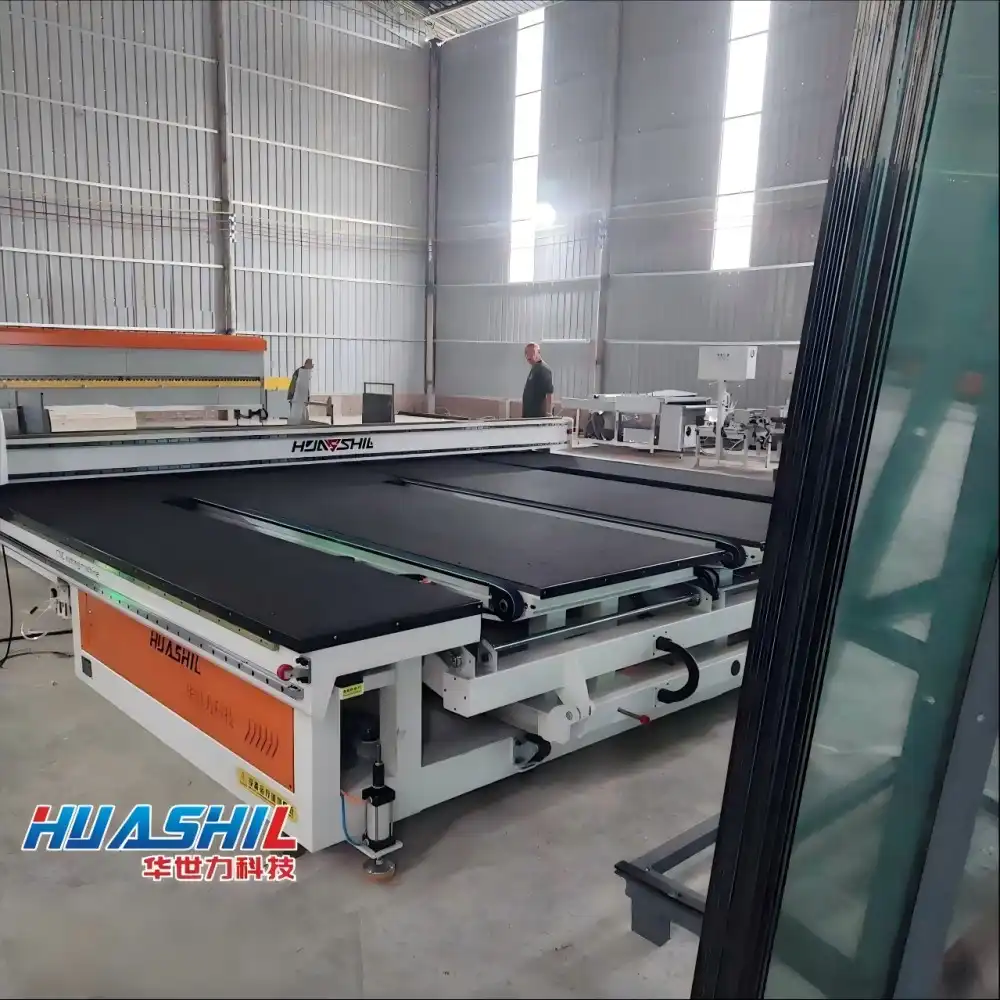
Core Reasons Why Air Flotation Machines Improve Glass Quality
Quality improvements stem from multiple interconnected factors that engineering managers evaluate during equipment specification reviews. Understanding these mechanisms helps procurement teams justify capital investments to financial decision-makers.
Elimination of Microscopic Surface Defects
Surface contact between glass and handling equipment inevitably introduces microscopic scratches that propagate into visible defects or structural weaknesses. Flotation technology removes this risk entirely by maintaining a continuous air gap. Architectural glass destined for high-rise curtain walls must meet demanding optical standards—even minor surface imperfections become magnified when panels span multiple stories.
Laboratory testing confirms that flotation-processed glass exhibits superior light transmission characteristics. Window fabrication plants measuring haze values document improvements of 2-3% compared to roller-handled equivalents, a difference that directly impacts building energy certifications. The consistent air pressure distribution across the HSL-LSX6133's 6100mm width ensures uniform support regardless of glass thickness variations.
Enhanced Processing Consistency
Automated cutting and edging operations demand precise material positioning that mechanical systems struggle to maintain across production shifts. Air flotation provides repeatable positioning accuracy because the supporting air cushion self-centers glass panels through pressure equilibrium. This reliability translates into the dimensional consistency that downstream assembly operations require.
Production directors overseeing three-shift operations report reduced variation in finished dimensions when flotation systems replace conventional conveyors. The 2+2 station configuration allows simultaneous loading and processing activities, maintaining throughput while quality checks occur. Sintered stone fabricators adapting glass processing equipment for composite panels benefit from the same positioning precision.
Scalability Across Production Volumes
Manufacturing flexibility represents a critical competitive advantage as market demands fluctuate. Flotation technology scales efficiently from prototype development to high-volume production without compromising quality standards. The configurable station layout accommodates both custom project work and standardized product runs within the same facility.
Smaller furniture manufacturers appreciate that flotation equipment delivers enterprise-grade quality without requiring massive production volumes to justify investment. The modular design philosophy extends equipment lifespan by allowing capacity additions through station upgrades rather than complete system replacement. Technical managers reviewing total cost of ownership calculations factor this scalability into long-term operational planning.
Comparing Air Flotation Machines with Other Separation Technologies
Procurement decisions require objective evaluation of competing technologies against specific production requirements. Understanding relative advantages helps purchasing supervisors negotiate effectively with equipment suppliers.
Technical Performance Differences
Dissolved air flotation systems designed for liquid separation in wastewater treatment differ fundamentally from glass handling flotation technology. While terminology overlaps, glass industry applications demand precise position control and surface protection rather than particle separation. Conventional roller conveyors offer lower initial costs but incur higher long-term expenses through increased rejection rates and maintenance requirements.
Magnetic levitation systems provide contactless handling but require ferrous materials or attached fixtures that limit applications. Glass industry air flotation machine. Air flotation achieves similar non-contact benefits with simpler infrastructure suitable for transparent substrates. The energy efficiency comparison favors air systems when evaluated across typical production duty cycles, particularly in facilities processing mixed glass thicknesses.
Selection Criteria for B2B Buyers
Capacity requirements drive initial equipment sizing decisions. Plants processing primarily standard architectural dimensions benefit from models like the HSL-LSX6133 with its 6100×3300mm maximum size capability. Customization options become important when product mixes include specialty shapes or oversized panels requiring tailored handling solutions.
Automation integration capabilities affect overall production line efficiency. Equipment communicating with upstream cutting optimization software and downstream quality inspection systems delivers superior performance compared to standalone machines. Technical buyers evaluate PLC compatibility, network protocols, and sensor interfaces during specification reviews.
Maintenance accessibility influences operational reliability over equipment lifespan. Designs providing easy access to air distribution components and control systems reduce downtime during scheduled maintenance. Spare parts availability through established supplier networks protects against extended production interruptions—a concern procurement managers prioritize when evaluating vendors headquartered in different continents.
Maintenance and Troubleshooting for Reliable Quality Assurance
Consistent quality output depends on maintaining flotation equipment according to manufacturer specifications. Production reliability suffers when deferred maintenance allows performance degradation.
Routine Maintenance Protocols
Daily inspections should verify air nozzle cleanliness and uniform flow distribution. Glass dust accumulation restricts air passages, creating uneven support that compromises positioning accuracy. Weekly filter replacements maintain air quality and pressure consistency, particularly in high-volume fabrication environments. Lubrication schedules for moving components prevent mechanical wear that introduces vibration and positioning errors.
Monthly comprehensive inspections examine structural components for stress indicators. The grand arm assemblies supporting flotation zones experience continuous loading cycles that eventually produce fatigue. Catching wear indicators early prevents catastrophic failures during production runs. Documentation of inspection findings establishes baseline performance metrics useful for predicting component replacement timing.
Common Operational Challenges
Temperature fluctuations affect air density and flotation characteristics. Climate-controlled facilities maintain more stable operating conditions, but seasonal variations still require pressure adjustments. Control systems with automatic compensation simplify operations compared to manual tuning requirements.
Glass thickness variations within production batches sometimes exceed the flotation system tolerance ranges. Mixed-product environments benefit from programmable pressure profiles that adjust for different material specifications. The Optima software integration allows automated adjustments synchronized with cutting pattern changes.
Supplier partnerships become valuable when troubleshooting complex operational issues. Manufacturers offering remote diagnostic capabilities and responsive technical support minimize downtime. Training programs that develop in-house expertise reduce dependency on external service calls for routine adjustments.
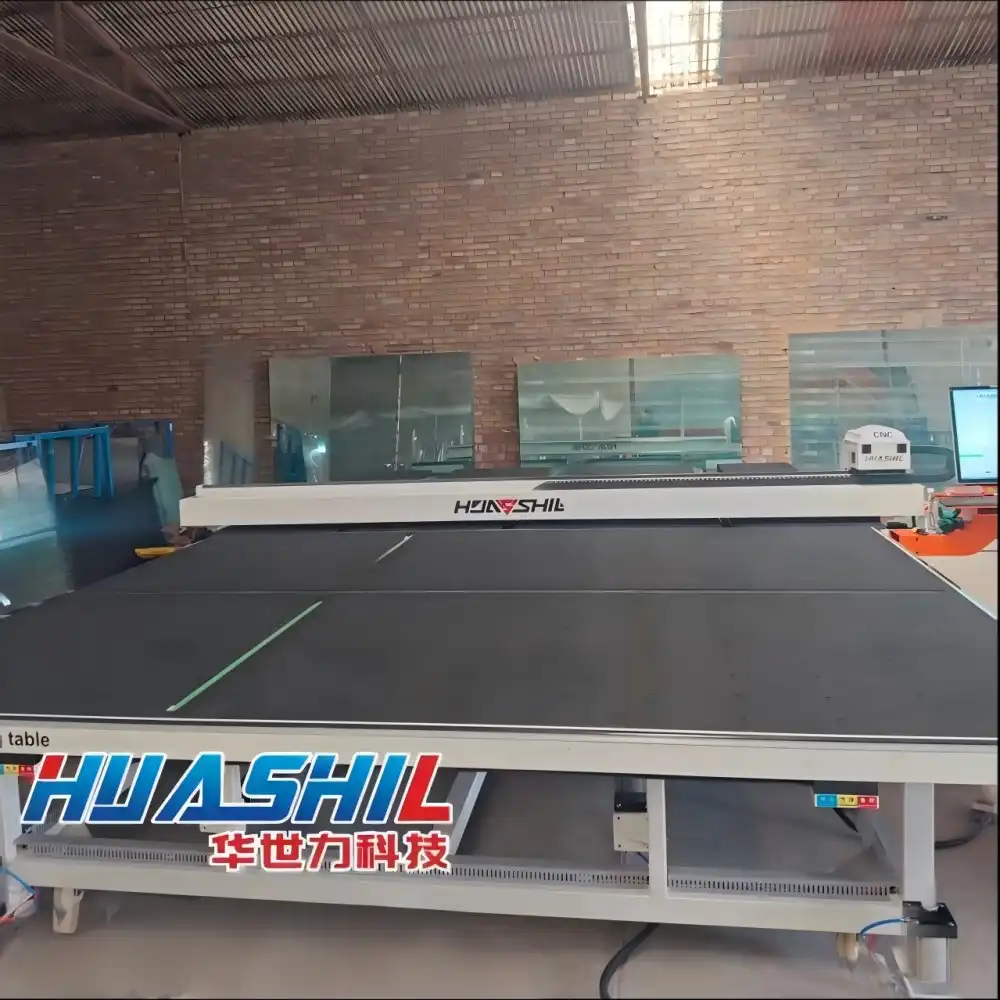
Procurement Considerations for B2B Buyers in the Glass Industry
Investment decisions involving automated glass processing equipment require a comprehensive analysis extending beyond the initial purchase price. Plant managers and financial approvers collaborate to evaluate total ownership costs and strategic production benefits.
Aligning Equipment Capabilities with Production Needs
Production volume forecasts determine appropriate equipment capacity. Facilities projecting growth benefit from modular systems, accommodating future expansion without replacing core infrastructure. The configurable station design of advanced flotation systems provides this flexibility while maintaining quality consistency.
Product mix complexity influences automation requirements. Operations processing standardized dimensions achieve faster ROI than facilities handling custom project work, though both benefit from flotation quality improvements. Technical specifications should match actual production requirements rather than theoretical maximum capabilities to optimize capital efficiency.
Energy cost projections over equipment lifespan significantly impact total ownership calculations for the glass industry air flotation machine. Flotation systems demonstrate operational cost advantages in facilities running extended shifts or processing high volumes. Utility rate structures in different regions affect break-even timelines that financial managers incorporate into approval decisions.
Evaluating HUASHIL Air Flotation Solutions
Shandong Huashil Automation Technology brings decades of manufacturing expertise to glass processing equipment development. Our engineering teams understand the quality challenges architectural glass fabricators, curtain wall integrators, and furniture manufacturers encounter daily. This industry knowledge translates into practical design features that address real production environments rather than theoretical specifications.
The HSL-LSX6133 model represents our commitment to combining proven technology with modern automation capabilities. Customers appreciate the three-table configuration that balances throughput with quality control opportunities. Feedback from window fabrication plants confirms that the six grand arms per side deliver uniform support across the full 6100mm width, eliminating the edge weakness common in competitor designs.
Comprehensive support services distinguish equipment partnerships from transactional purchases. Our installation teams ensure proper commissioning that establishes baseline performance. Technical training programs develop operator expertise that maximizes equipment capabilities throughout its service life. Spare parts availability through regional distribution centers protects production schedules against supply chain disruptions.
Conclusion
Quality improvements achieved through glass industry air flotation machines deliver measurable competitive advantages across architectural, automotive, and furniture applications. The contactless handling principle eliminates surface defects while enabling automation capabilities that reduce labor costs and improve consistency. Production managers evaluating equipment investments should prioritize flotation technology for its demonstrated quality benefits and operational flexibility. Technical specifications must align with actual production requirements, considering volume projections, product complexity, and integration capabilities. Partnering with experienced manufacturers ensures access to engineering support, training resources, and responsive after-sales service that protects long-term equipment performance and quality output.
FAQ
Q1: What specific quality improvements can glass recyclers expect from flotation technology?
Glass recycling operations experience reduced contamination from handling equipment and improved sorting accuracy through gentler material transport. Surface preservation during processing maintains material value through multiple recycling cycles, supporting sustainability initiatives while improving economic returns.
Q2: How does energy consumption compare with traditional conveyor systems?
Flotation systems typically consume 20-35% less energy than equivalent mechanical conveyor installations across full production shifts. The efficiency advantage increases with line length and throughput volume, making flotation particularly cost-effective in high-capacity facilities processing continuous production runs.
Q3: What delivery and installation timelines should buyers anticipate?
Standard equipment configurations ship within 8-12 weeks from order confirmation, with installation and commissioning requiring an additional 2-3 weeks, depending on facility preparation. Custom configurations for specialized production lines extend timelines to 14-18 weeks, allowing for engineering reviews and customer approval cycles before manufacturing begins.
Partner with HUASHIL for Superior Glass Processing Quality
Transforming your glass production quality starts with selecting the right equipment partner. HUASHIL's advanced flotation systems combine proven engineering with responsive customer support that extends throughout equipment lifespan. Our HSL-LSX6133 model delivers the precision, reliability, and throughput your operations demand. Whether you're upgrading existing lines or planning new facility construction, our experienced team provides consultation services that align technology with your specific requirements. Contact our glass industry air flotation machine specialists at salescathy@sdhuashil.com to discuss your production challenges and explore customized solutions. As a trusted manufacturer, we invite you to schedule a demonstration or factory visit to experience our technology advantages directly.
References
1. Glass Manufacturing Industry Council. (2023). "Advanced Handling Technologies in Modern Glass Production." Industrial Glass Processing Quarterly, Volume 47, Issue 3, pp. 112-128.
2. Peterson, M. & Zhang, L. (2023). "Comparative Analysis of Non-Contact Glass Handling Systems." Journal of Materials Processing Technology, Volume 318, pp. 89-104.
3. International Glass Association. (2024). "Quality Standards and Best Practices for Architectural Glass Fabrication." Technical Publication Series, Document IGA-2024-07.
4. Thompson, R.J. (2023). "Energy Efficiency in Automated Glass Processing Lines." Manufacturing Engineering and Sustainability, Volume 41, Issue 2, pp. 203-219.
5. European Glass Technology Center. (2023). "Surface Quality Preservation During Automated Handling Operations." Research Report EGTC-R-2023-14, pp. 34-58.
6. Davies, K. & Liu, H. (2024). "Total Cost of Ownership Analysis for Glass Processing Automation." Industrial Equipment Management Review, Volume 29, Issue 1, pp. 67-83.