




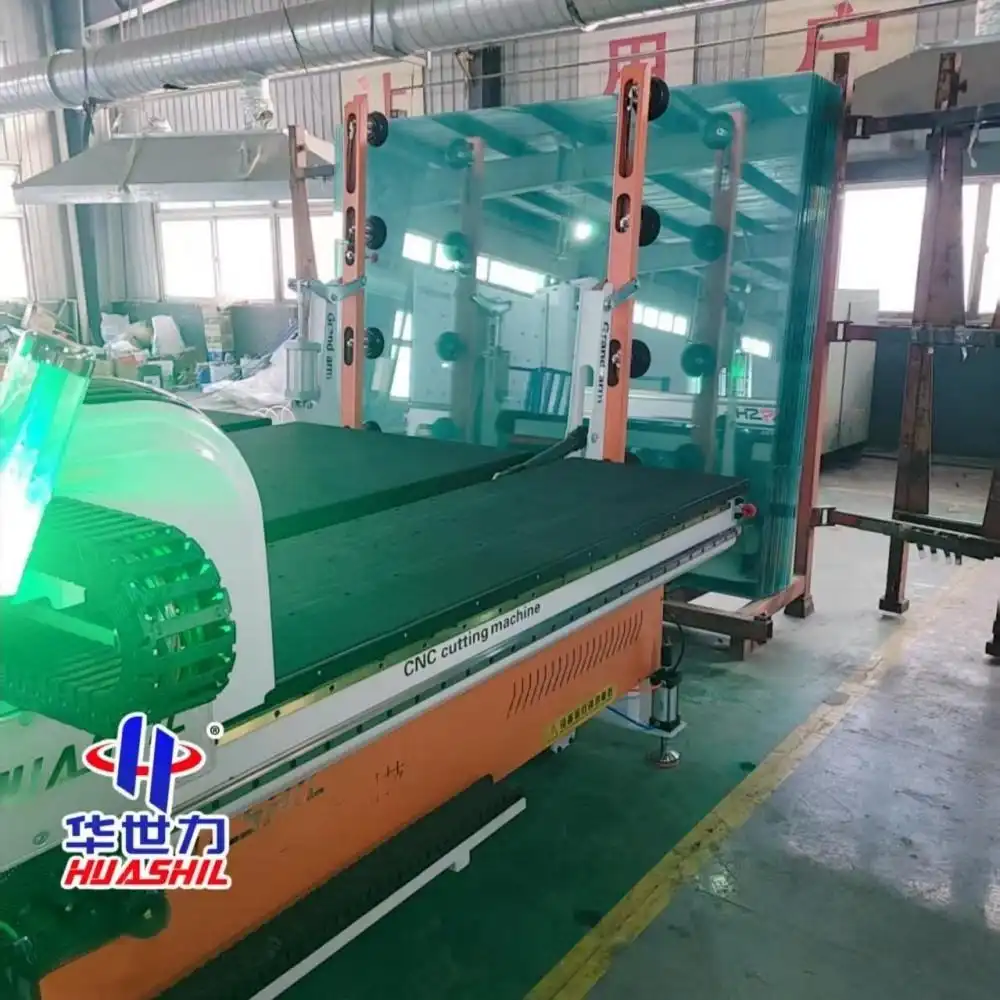
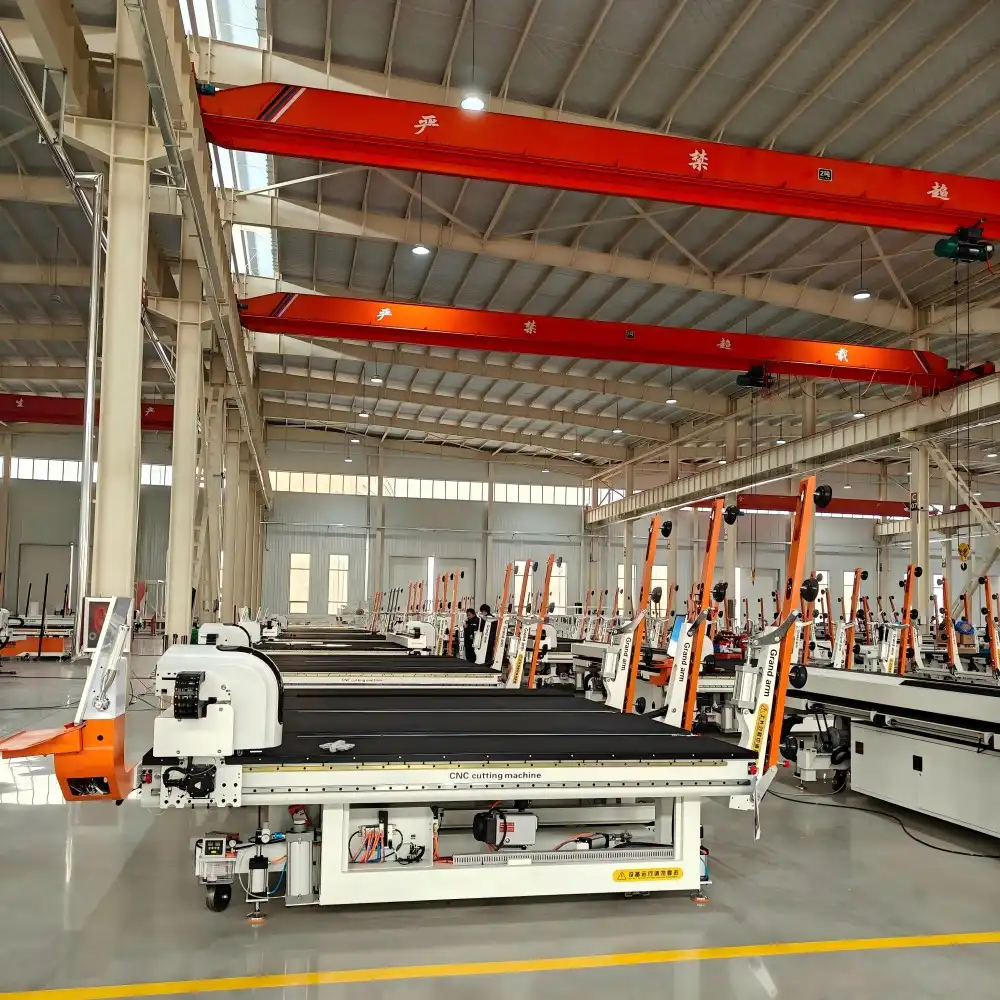
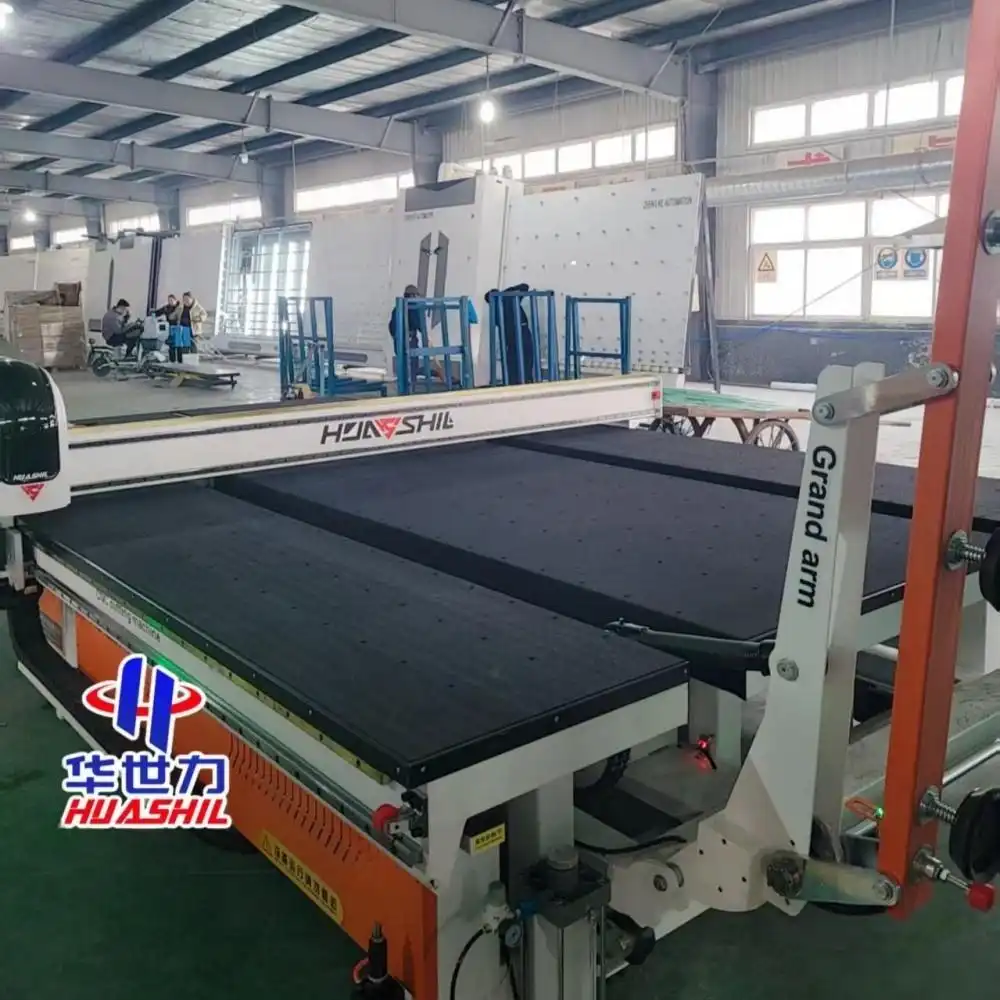
Because it was designed to meet the unique needs of current factories, the 2721 glass cutting line is a big step forward in automated glass processing technology. The HSL-LSX2721 model is part of this complete cutting system. It has three special tables for loading, cutting, and breaking, and it works with Optima optimization software. The system can handle glass sizes of up to 2700x2100mm and can use either above-ground or underground train setups with two-plus-two stations. Each side has three grand arms to make operations more flexible and accurate.
Understanding the Core Automation Features of the 2721 Glass Cutting Line
The robotics environment in this glass processing system is built around high-tech sensors and precise control systems that work together perfectly. The cutting heads are moved very precisely by advanced servo motors, and real-time feedback systems keep an eye on the cutting settings all the time.
Integrated Control Systems and Software Intelligence
As the brain of the whole process, the Optima optimization program looks at the layouts of glass sheets to cut down on waste and get the most out of the materials used. This smart software figures out the best cutting patterns in real time, taking into account different types and sizes of glass. Because the system can handle complicated cutting formulas, each piece is made to exact specs, and compared to traditional cutting methods, it cuts material waste by up to 15%.
Managers of plants like how the centralized control system makes work easier on all three tables. Precision vacuum systems on the loading table place the glass sheets automatically, and diamond-wheel technology on the cutting table makes clean cuts. The breaking table finishes the job by using controlled machinery to break the glass into clean pieces with little stress.
Precision Sensor Technology and Quality Control
During the whole process, advanced visual sensors keep an eye on where the glass is placed and how well it is cut. These sensors find possible flaws before they happen, and they change the cutting settings automatically to keep quality standards uniform. Vision-guided technology in the system makes sure that measurements are accurate to within ±0.1mm, which meets the strict needs of architectural and automobile uses.
The configuration of the train system is very flexible, letting users choose between installations above or below ground based on the needs of the building plan. Even when a repair is happening, each station can still work on its own while still communicating with the central control system in real time. This makes it possible to handle workflows efficiently at all times.
Benefits of Automating with the 2721 Glass Cutting Line
Implementing automated glass cutting solutions in manufacturing facilities leads to huge changes in the safety and efficiency of their operations. Getting rid of manual cutting processes drastically increases productivity while lowering the number of accidents at work.
Enhanced Productivity and Operational Efficiency
Automated glass processing gives reliable results that can't be matched by human methods. Standard glass sheets can be cut on the 2721 glass cutting line 300% faster than with traditional hand-cutting methods while still having better edge quality and more accurate measurements. This faster speed directly leads to more products being made every day without lowering quality standards.
Working with three tables at once makes the process more efficient because loading, cutting, and breaking can all be done at the same time. On the main table, one sheet of glass is being cut while the next sheet is being loaded, and finished pieces are being worked on at the same time. This ability to process multiple tasks at once gets rid of the slowdowns that usually happen with human tasks.
Improvements to safety go beyond preventing injuries and include making the workplace more comfortable. Heavy glass sheets are no longer moved by hand, and workers don't use small cutting tools for long amounts of time. The automation makes the work area cleaner and easier to order while reducing physical pain.
Cost Reduction and Return on Investment
Financial benefits manifest through multiple channels when facilities adopt automated cutting technology. Direct worker costs go down by an average of 40 to 60 percent in most operations, and material waste goes down a lot when cutting patterns are improved. The smart stacking algorithms in the Optima software make sure that every glass sheet is used to its fullest potential.
Cutting activities that are carefully controlled and use less power than standard methods lead to better energy efficiency. Intelligent power management and sleep modes in the system keep it from using too much electricity when it's not being used. The prices of maintenance can be predicted because of regular repair times and easy access to spare parts.
Quality stability gets rid of the need for expensive repairs, and customer returns that happen a lot when cutting things by hand. The automated method makes many of the same pieces, which ensures that architectural glass parts fit properly when they are installed without any changes being made in the field.
Comparing 2721 Glass Cutting Line Automation with Other Market Solutions
There are different types of automation options for the glass processing business, each designed for a different production size and set of operating needs. Knowing these differences helps buying teams make choices that are in line with their manufacturing goals.
Performance Benchmarking Against Traditional Methods
Skilled workers are needed to cut glass by hand. They can get good results, but not as quickly or consistently as automatic systems. Traditional ways of scoring and breaking make good enough results for simple tasks, but they have trouble with complicated forms or close limits. The 2721 glass cutting line gets rid of the variability that comes from people while still being able to handle a wide range of cutting needs.
Semi-automated systems are between fully automated and fully human, but they still need a lot of help from a user. When workers can't keep up with what the machines can do, these hybrid methods often slow down production. Full automation removes these constraints by managing the entire cutting process without any help from a person.
Competing automated systems may have some of the same basic features, but they don't always have the advanced optimization software and adaptable train setups that set advanced solutions apart. The three-table design has practical benefits that single-table setups can't match, especially in places where a lot of work needs to be done.
Technology Integration and Compatibility
Modern places that work with glass need equipment that works well with their current quality control and production methods. It is possible to connect the automation platform to corporate resource planning tools and production scheduling software using standard industrial communication protocols.
The flexible design lets the system grow and get better technology in the future without having to be replaced completely. As the needs of output change, manufacturers can add units or improve control systems. This ability to grow protects investments in capital while letting growth happen at different rates.
Software compatibility includes the ability to import CAD files, which lets you work directly on building plans and make your own cutting patterns. Engineers can send cutting files straight from design software, which means that patterns don't have to be made by hand, and setup times between production runs are cut down.
Maintenance, Troubleshooting, and Safety Tips for Automated Glass Cutting Lines
Maintenance procedures that are followed correctly ensure that technology works at its best, lasts longer, and has less unwanted downtime. The automation system has tools for predictive maintenance that check for worn parts and let workers know before they break.
Preventive Maintenance Protocols
Cutting wheels, guide rails, and air systems are some of the most important parts that are inspected every day. There are easy-to-reach repair spots on the 2721 glass cutting line that let workers do quick visual checks without stopping production. Automated greasing systems are put in lubrication spots, which gets rid of the need for human upkeep and protects parts consistently.
As part of weekly upkeep, software backup routines and sensor calibration checks are carried out. The system's troubleshooting features find possible problems before they affect the level of production. Through the control interface, operators get clear maintenance alerts with clear directions on what to do to fix the problem.
On a monthly repair plan, more thorough system checks are done, such as making sure the rails are aligned, testing the motors' performance, and making sure the safety system works. These more thorough checks make sure that the product will work well for a long time and meet safety standards. Professional service support can do online tests that can fix a lot of problems without having to come to the site.
Safety Protocols and Emergency Procedures
Multiple redundant safety methods in comprehensive safety systems protect both workers and equipment. When emergency stop circuits are triggered, all activities stop right away, and safety light curtains keep operators from getting to dangerous areas while the machine is running. The system meets all foreign safety standards, such as the CE marking rules for sales in Europe.
Methods for operator training make sure that safety rules and emergency reaction methods are followed correctly. Accidents are less likely to happen when there are clear safety signs and working directions. This keeps production moving smoothly. Regular safety checks make sure that safety rules are still being followed.
The automation has lockout/tagout features that keep machinery safe while repairs are being done. These safety interlocks keep the computers from starting up by mistake while techs work on mechanical parts or software updates.
Procurement Considerations for Automated Glass Cutting Lines
To buy automated glass cutting tools successfully, you need to carefully consider the technical specs, the supplier's skills, and the need for long-term assistance. When making decisions, people have to weigh the costs of an initial investment against the benefits it brings to the business and the total cost of ownership.
Technical Specification Alignment
Equipment selection is based on production needs, with cutting speed, glass size, and material suitability being the most important factors. The largest glass size of 2700x2100mm can be used for most building and automobile purposes, and it also gives you options for custom projects. To make sure there is enough throughput capacity, cutting speed specs must match output volume needs.
To avoid expensive installation shocks, power needs and building equipment needs need to be figured out early on. The electrical needs, compressed air needs, and base needs of the system must fit what the building can already do or what is planned for future infrastructure changes. Because of the three-table configuration's space needs, the setup must be carefully planned to ensure that work flows smoothly.
Specifications for quality, such as cutting tolerances, edge quality standards, and repeatable needs, must fit the needs of the final product. Tighter standards are usually needed for architectural glass than for artistic glass. Control factors that can be programmed in the 2721 glass cutting line allow it to meet a wide range of quality standards.
Supplier Evaluation and Support Capabilities
A full review of a supplier looks at their technical knowledge, ability to make things, and infrastructure for after-sales help. Suppliers that have been around for a while can show that they have a good track record by giving customer examples and installation case studies. Financial stability factors make sure that parts will always be available and that technical help will always be available.
Support after the sale has a direct effect on how well operations run and how long equipment lasts. Production interruptions are kept to a minimum by quick technical help, easy access to extra parts, and thorough training programs. Remote diagnostics cut down on service reaction times and give instant help with fixing problems.
Service level agreements and warranty covers spell out what the provider promises and how the buyer and seller will share the risk. Warranty terms that cover all defects are covered by service agreements, which also promise reaction times for technical help and emergency fixes.
Conclusion
The 2721 glass cutting line's automated features are a big step forward in the technology used to work with glass. They give manufacturers a level of accuracy, speed, and operating freedom that has never been seen before. The three-table design, Optima optimization software, and advanced automatic features of this system make it suitable for the changing needs of modern glass production plants. The many automation features provide measurable benefits such as lower labor costs, better quality consistency, stricter safety rules, and better material usage, all of which have a direct effect on profits and placement in the market.
Frequently Asked Questions
1. What makes the automation features unique compared to other glass cutting systems?
The integrated three-table configuration with Optima optimization software lets you load, cut, and break at the same time, which gets rid of output bottlenecks. When compared to single-table options, the advanced train system with two-plus-two stations and three grand arms on each side gives you more options and better control.
2. How does the Optima software optimize material utilization?
Optima looks at the size and shape of the glass sheets and how they need to be cut to figure out the best nesting patterns that leave the least amount of waste. The software takes into account the thickness of the glass, the paths of the cutting tools, and the quality standards for the edges in order to get the most out of the materials used while still meeting quality and output standards.
3. What maintenance intervals are recommended for optimal performance?
Visual checks every day, sensor calibration checks once a week, and full system reviews every month make sure that everything is running at its best. Operators are warned of possible problems by predictive maintenance features before they affect production. Automated lubrication systems cut down on the need for human maintenance.
4. Can the system handle different glass types and thicknesses?
Within the 2700x2100mm size range, the machinery can handle different types of glass, such as float glass, tempered glass, and reinforced materials. Programmable cutting factors make sure that the best cutting quality is achieved by instantly adjusting to different glass thicknesses and material properties.
5. What training is required for operators?
Full training for operators includes safety rules, how to use the system, basic upkeep, and how to fix problems. The easy-to-use interface makes daily tasks easier, and advanced training classes teach expert staff how to use programming and optimization tools.
Partner with HUASHIL for Advanced Glass Cutting Solutions
We are the best 2721 glass-cutting line maker for your needs because HUASHIL knows a lot about automated glass working technology. Our tech team offers full consultation services to make sure that the system is set up correctly and works well with your current processes. Email our sales team at salescathy@sdhuashil.com to talk about your unique automation needs and find out how our 2721 glass cutting line can change the way you work with glass.
References
1. Glass Manufacturing Industry Council. "Automation Trends in Glass Processing: A Comprehensive Analysis of Modern Cutting Technologies." Industrial Glass Technology Journal, 2023.
2. International Association of Glass Processors. "Safety Standards and Best Practices for Automated Glass Cutting Equipment." Glass Industry Safety Handbook, 2023.
3. Manufacturing Efficiency Institute. "Comparative Study of Automated vs. Manual Glass Cutting: Productivity and Quality Analysis. "Advanced Manufacturing Research, 2023.
4. European Glass Technology Federation. "Technical Specifications and Performance Standards for Industrial Glass Cutting Systems." Glass Processing Technology Standards, 2023.
5. American Society of Glass Engineers. "Integration of Optimization Software in Modern Glass Manufacturing: Case Studies and Performance Metrics." Glass Engineering Quarterly, 2023.
6. Industrial Automation Research Center. "Total Cost of Ownership Analysis for Automated Glass Processing Equipment: A Multi-Year Study." " Manufacturing Technology Review, 2023.