




To buy a 3826 glass cutting machine, you need to carefully plan your finances and think about your long-term goals. This automatic system is made for precise glass processing, and it usually requires a big investment, both in terms of the cost to buy it and the cost to run it. Procurement teams can make smart decisions that meet production goals and budget limits when they have a full picture of the costs involved, such as buying and installing machinery, training workers on how to use it, keeping it in good shape, and the possible return on investment. We'll look at both the obvious and the less obvious costs of putting this cutting-edge technology to use in your glass fabrication business.
Understanding 3826 Glass Cutting Machine Automation and Control Systems
In modern glass processing, automated solutions are becoming more and more important because they provide consistent precision while reducing the need for human labor. HUASHIL's HSL-YTJ3826 is a complete solution for automating glass cutting. It combines multiple processing steps into a single production area. Architectural glass fabricators, curtain wall manufacturers, furniture glass manufacturers, and automotive glass processors who regularly work with medium to large format panels can use this system, which can handle glass sheets up to 3660×2440mm.
Core Automation Components
There are several coordinated subsystems that make up the HSL-YTJ3826's workflow: loading, cutting, edge detection, pressure control, and breaking. At each station, specialized tasks are performed that, when combined, turn raw glass sheets into precisely sized parts. The loading system receives new materials and places them correctly so they can be processed later. The cutting system uses precise scoring mechanisms that run patterns optimized by Optima software, which analyzes each order to make the best use of materials and reduce waste. The breaking table then uses controlled pressure to cleanly separate pieces that have been scored.
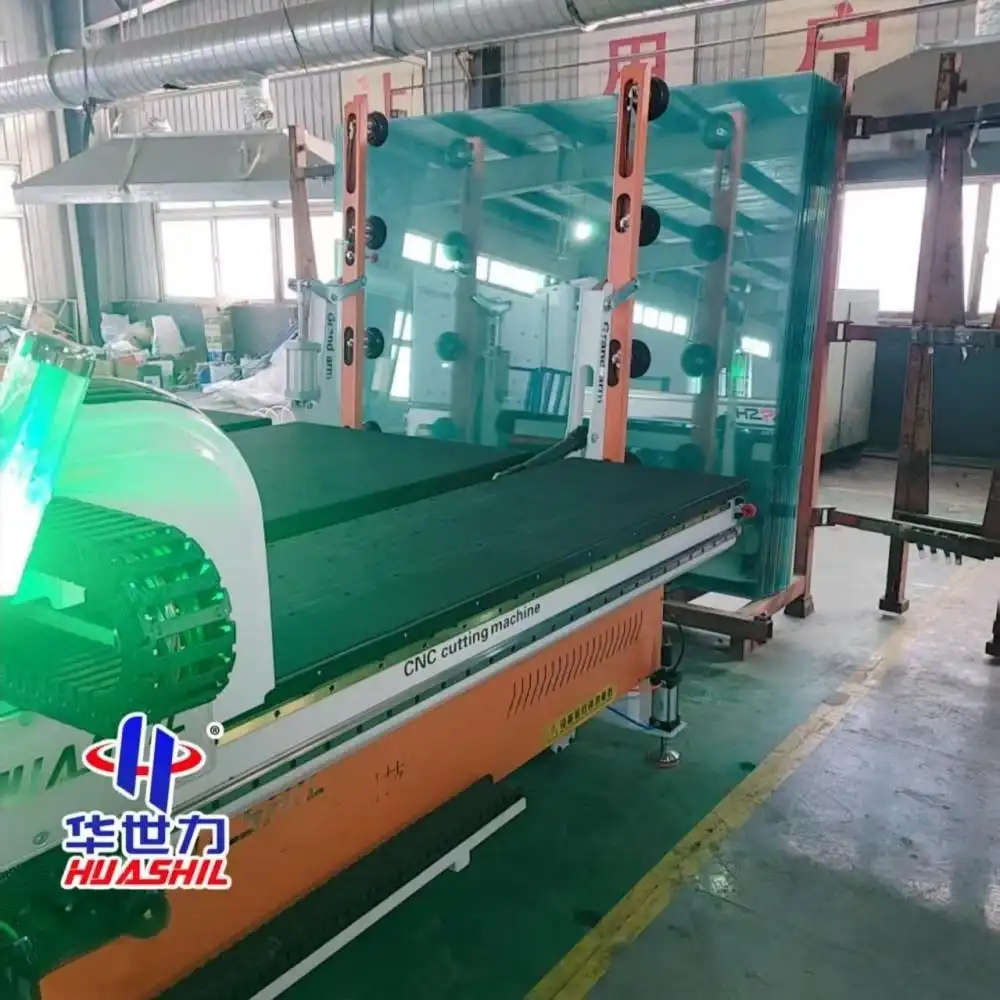
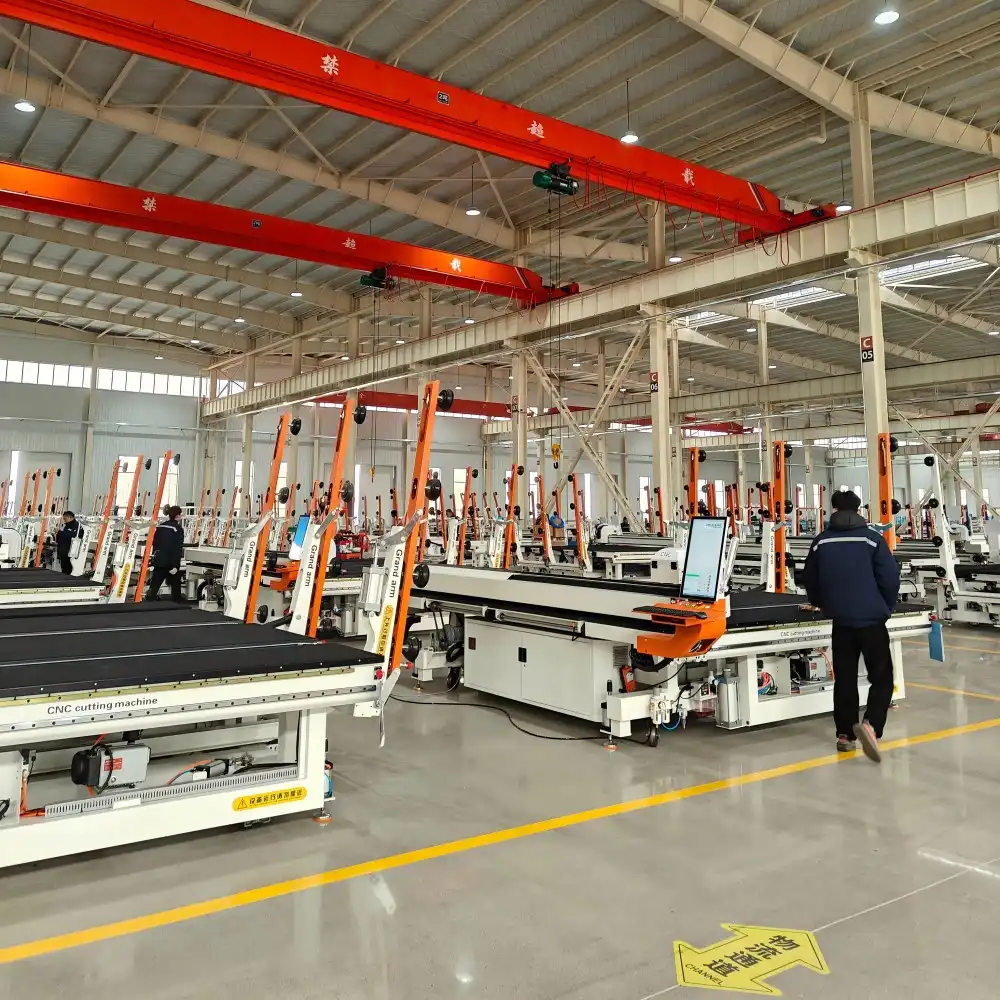
Because the configuration is flexible, operators can use different rail arrangements based on the layout of the facility and the flow of materials they need to move. The multi-station layout provides flexible work areas that let multiple tasks be done at the same time, which boosts output without lowering quality. The machine's holding arms secure glass sheets firmly and lower the risk of breaking them as they move from one stage of processing to the next.
Air Flotation and Material Handling Technology
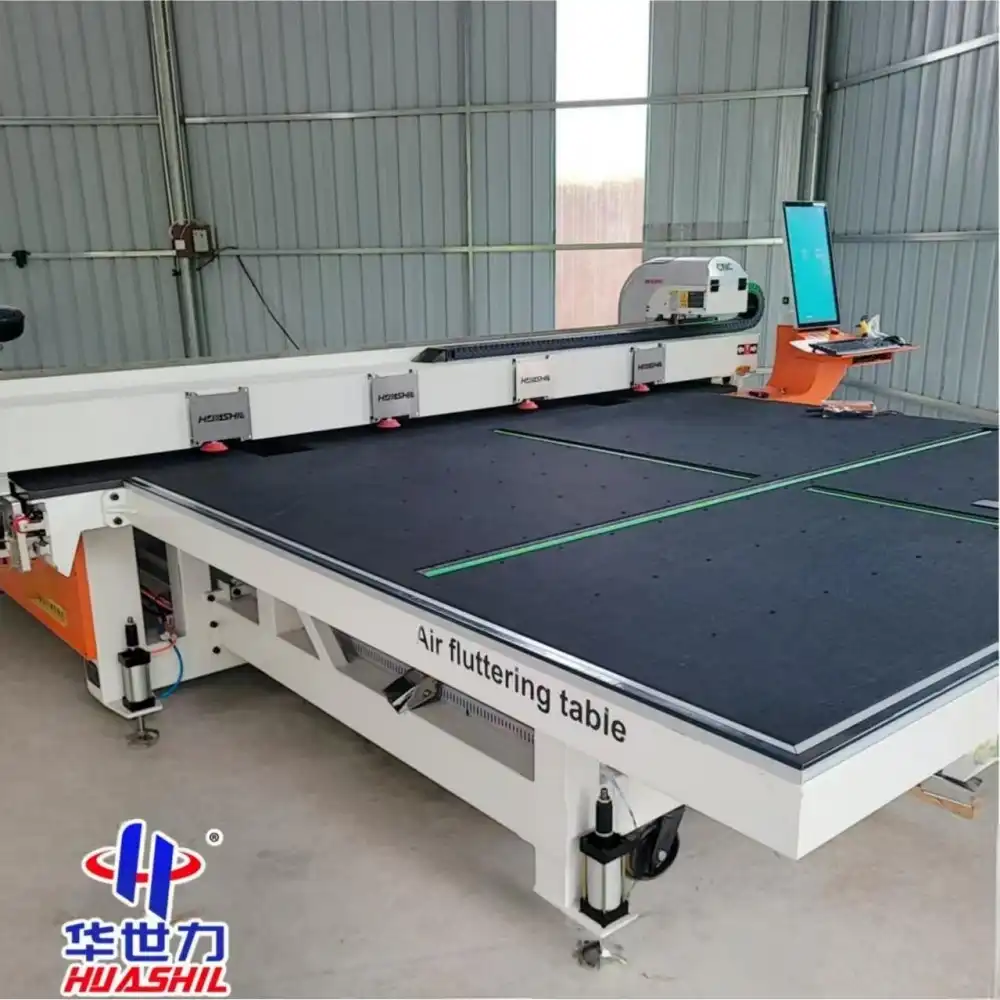
Moving heavy glass sheets safely represents one of the biggest operational challenges in fabrication plants. The HSL-YTJ3826 addresses this through an advanced air flotation system that creates a thin cushion of air beneath glass panels, allowing operators to position even large sheets with minimal physical effort. This system reduces the risk of surface scratches and edge chips during positioning, protecting both material investment and worker safety.
Glass conveying utilizes synchronous belt systems that maintain consistent speed across the entire cutting table. This synchronized movement prevents stress concentration points that could cause breakage during cutting operations. The breaking table integration allows completed cuts to be separated immediately without additional handling, streamlining the workflow from raw material to finished pieces.
Remote Operation Capabilities
The 360-degree remote control walking function enables operators to manage the cutting process from safe distances, particularly valuable when processing large architectural panels or handling Low-E coated glass that requires specialized environmental conditions. This remote capability also facilitates multi-machine supervision, allowing experienced technicians to oversee several cutting stations simultaneously—a configuration increasingly common in high-efficiency fabrication facilities.
The combination of CE and ISO9001 certifications demonstrates compliance with international safety and quality management standards, providing procurement managers with third-party validation of manufacturing consistency and equipment reliability. These certifications carry particular weight in contract negotiations with architectural firms and construction system integrators who require documented compliance for project specifications.
How 3826 Automation Solves Common Glass Cutting Challenges?
Manual and semi-automated cutting operations face persistent issues that directly impact profitability and production capacity. Understanding how advanced automation addresses these challenges helps justify capital equipment investments.
Eliminating Inconsistency and Material Waste
Traditional cutting methods depend heavily on operator skill, creating variability in cut quality across shifts and between different technicians. This inconsistency leads to increased rejection rates and customer complaints. A mid-sized curtain wall fabricator in the Midwest reported reducing their defect rate from 4.7% to 0.8% within three months of implementing HSL-YTJ3826 automation, translating to annual savings exceeding $127,000 in material costs alone.
The automated pressure control system continuously adjusts cutting force throughout each score line, compensating for variations in glass composition and internal stress patterns. This dynamic adjustment prevents both incomplete scores (requiring secondary cutting) and excessive pressure (causing immediate breakage or delayed fractures). The result is a consistent, clean separation across diverse glass types—from standard float glass to tempered and Low-E coated products.
Protecting Workers and Reducing Insurance Costs
Glass handling and cutting operations with the 3826 glass cutting machine present significant injury risks. Sharp edges, heavy panels, and breakage hazards contribute to higher workers' compensation insurance premiums for fabrication facilities. The HSL-YTJ3826's automation features substantially reduce direct worker exposure to these hazards.
The air flotation system eliminates the need for manual lifting and sliding of heavy sheets, reducing back strain and pinch point injuries. Automatic loading arms position material without requiring workers to lean over cutting tables or reach across moving components. Remote operation capability allows personnel to maintain safe distances during cutting cycles, particularly when processing oversized architectural panels.
A glass processor in Pennsylvania documented a 68% reduction in recordable safety incidents during their first year after installing automated cutting systems, resulting in lower insurance premiums that contributed an additional $34,000 annually toward equipment ROI.
Increasing Throughput Without Additional Labor
Production capacity constraints often force fabricators to choose between expensive facility expansion and turning away orders. Automation offers a third option: extracting significantly more output from existing floor space.
The HSL-YTJ3826's automated edge-finding and pressure control eliminate manual measurement and setup time between cuts. The Optima software instantly generates optimal cutting patterns from digital orders, removing the planning bottleneck that often delays production starts. Synchronized material handling allows continuous operation without waiting for manual repositioning.
These efficiency gains compound throughout production shifts. A furniture glass manufacturer in North Carolina measured their average cycle time reduction at 43% per panel after automation implementation, enabling them to fulfill a 30% increase in order volume without adding production shifts or hiring additional cutting operators.
Maximizing Performance and Maintenance of 3826 Automated Systems
Equipment acquisition represents only the beginning of value creation. Operational excellence requires ongoing attention to optimization opportunities and preventive maintenance disciplines.
Performance Optimization Strategies
Even well-engineered systems contain hidden capacity waiting to be unlocked through systematic improvement efforts. The Optima optimization software receives periodic updates that incorporate refined cutting algorithms and expanded material libraries. Installing these updates—typically released quarterly—ensures the system leverages the latest efficiency innovations without hardware modifications.
Sensor recalibration addresses the gradual drift that occurs in all measurement systems over time. The HSL-YTJ3826's edge-finding and pressure control sensors maintain accuracy through scheduled recalibration every six months, a straightforward procedure documented in the maintenance manual. Facilities that diligently follow calibration schedules report sustained cutting precision, while those deferring calibration experience gradually increasing waste rates that erode profitability.
Operator training extends beyond initial system familiarization. Advanced techniques for material-specific parameter adjustment, troubleshooting minor issues without technical support, and recognizing early warning signs of component wear significantly impact overall equipment effectiveness. Annual refresher training sessions keep skills sharp and introduce operators to new capabilities added through software updates.
Preventive Maintenance Protocols
The difference between reactive and preventive maintenance philosophies shows clearly in uptime statistics and total cost of ownership. Scheduled inspections catch developing problems before they cause failures, allowing repairs during planned downtime rather than emergency production interruptions.
Critical wear components require monitoring at prescribed intervals. Cutting wheel condition affects both cut quality and breakage rates; replacement at recommended usage thresholds prevents the false economy of extended service that increases waste. Synchronous belt tension impacts material positioning accuracy; quarterly tension checks and adjustments maintain specification tolerances. Air flotation system filters require monthly cleaning to sustain proper airflow—a simple task that prevents expensive blower motor failures.
Lubrication schedules for linear guides and bearing assemblies follow manufacturer specifications developed through engineering analysis. Under-lubrication accelerates wear and increases friction; over-lubrication attracts contaminants that damage precision surfaces. Following documented procedures protects these critical motion systems throughout their design life.
Data-Driven Continuous Improvement
Modern automation systems generate operational data that reveals improvement opportunities invisible to casual observation. The HSL-YTJ3826's integrated monitoring captures cycle times, material utilization rates, and quality metrics across every production run. Analyzing this data identifies patterns that inform process refinements.
Tracking waste percentages by glass type and thickness reveals whether cutting parameters need adjustment for specific materials. Monitoring average cycle times by operator highlights training needs or best practices worth standardizing. Documenting downtime quantifies the business impact of various failure modes, guiding spare parts inventory decisions and maintenance schedule prioritization.
Facilities that embrace data analytics typically achieve 12-18% efficiency improvements beyond initial automation gains within their first two years of operation. This continuous improvement culture transforms equipment from static assets into evolving competitive advantages that compound value throughout ownership lifecycles.
Procurement Guide: Buying 3826 Glass Cutting Machines for B2B Clients
Strategic equipment acquisition requires evaluating multiple dimensions beyond initial purchase price. Understanding the complete ownership picture enables decisions that deliver long-term value.
Evaluating Total Cost of Ownership
The 3826 glass cutting machine's list price represents roughly 60-70% of true acquisition costs when accounting for installation, training, spare parts inventory, and first-year maintenance. Comprehensive procurement analysis includes these additional elements to avoid budget surprises.
Installation requirements vary by facility infrastructure. The HSL-YTJ3826 needs adequate electrical service (verify voltage and phase compatibility), compressed air supply for pneumatic systems (minimum specifications documented in technical literature), and structural flooring capable of supporting the combined weight of machine and material. Some facilities incur modification costs addressing these requirements; others possess ready infrastructure.
Training investment ensures operators and maintenance personnel can fully utilize system capabilities. Most suppliers provide initial training as part of equipment delivery, but verifying the scope prevents assumptions. Does training cover basic operation only, or does it include advanced optimization techniques and routine maintenance procedures? Are training materials provided in formats suitable for ongoing reference and new employee onboarding?
Spare parts strategy balances inventory carrying costs against downtime risks. Critical components with long lead times or high failure impact justify on-site storage. The HSL-YTJ3826 uses standardized components for many systems, reducing spare parts complexity compared to proprietary designs. Clarifying parts availability and typical delivery timeframes during procurement negotiations prevents future production interruptions.
Supplier Selection and Support Capabilities
Equipment reliability depends not only on design quality but also on supplier support infrastructure. Evaluating supplier capabilities across several dimensions protects long-term interests.
Technical support responsiveness directly impacts downtime duration when issues arise. What are typical response times for phone support? Is remote diagnostic capability available to resolve problems without site visits? Are field service technicians located within a reasonable travel distance for urgent situations? These practical considerations affect real-world equipment effectiveness.
Warranty terms vary significantly across suppliers. Standard coverage typically includes 12 months for parts and labor, but confirming specific terms prevents misunderstandings. What components fall outside the standard warranty? Are wear items like cutting wheels excluded? Does warranty coverage require specific maintenance procedures or the use of OEM parts? Understanding these details clarifies actual risk allocation.
HUASHIL brings years of manufacturing experience and established global service networks to equipment partnerships. Our ISO9001 certification demonstrates a commitment to consistent quality management across production processes. CE certification confirms compliance with safety standards governing equipment sold into regulated markets. These credentials provide confidence when evaluating suppliers without extensive personal experience in equipment procurement.
Customization and OEM Integration Opportunities
Standard equipment configurations suit many applications, but customization options create opportunities for competitive differentiation or specialized market service. The HSL-YTJ3826 platform accepts modifications addressing specific operational requirements.
OEM partners building complete glass processing lines often require control system integration with upstream and downstream equipment. The HSL-YTJ3826's open architecture supports communication protocols enabling coordinated operation across multi-stage production systems. Material tracking through barcode or RFID systems can trigger automatic cutting pattern selection, eliminating manual data entry and reducing error rates.
Bulk order negotiations for multiple machines or complete production lines justify investment in detailed needs analysis and custom engineering. These discussions explore workflow optimization opportunities extending beyond individual machine performance to comprehensive facility design. Volume commitments often unlock preferential pricing, extended warranty terms, or value-added services like on-site commissioning support and advanced operator training.
Conclusion
Automated glass cutting technology has matured from specialized luxury to an essential competitive tool across architectural, automotive, furniture, and decorative glass markets. The 3826 glass cutting machine delivers comprehensive automation addressing the core challenges facing modern fabrication operations: inconsistent quality, safety risks, labor constraints, and capacity limitations. Its integration of intelligent optimization software, precision control systems, and practical material handling features creates measurable value through reduced waste, increased throughput, and improved workplace safety. Procurement teams evaluating equipment investments benefit from examining total ownership costs, supplier support capabilities, and alignment between machine specifications and operational requirements rather than focusing narrowly on purchase price considerations.
FAQ
Q1 What safety features are integrated into 3826 automated cutting systems?
Safety systems built into the HSL-YTJ3826 include emergency stop controls positioned at multiple locations around the machine perimeter, allowing operators to halt operation instantly from any working position. Light curtains and safety interlocks prevent cutting cycles from initiating when personnel are detected within hazardous zones. The remote control operation capability allows supervisors to manage cutting processes from safe distances, particularly valuable when handling large architectural panels. Protective guarding around moving components prevents accidental contact with drive systems and cutting heads during operation. These multi-layered safety features substantially reduce injury risks compared to manual cutting methods.
Q2 Can the 3826 be customized for different glass types and specialized applications?
The HSL-YTJ3826 platform supports extensive customization addressing specific material types and production requirements. Control parameters can be adjusted for laminated glass, Low-E coated products, tempered glass, and specialty decorative materials, with settings stored in the Optima software for quick recall. The integrated Low-E film removal system can be configured for various coating types and edge preparation specifications required by different insulating glass assembly processes. Hardware modifications accommodate special tooling for pattern cutting, hole drilling integration, or edge processing equipment coordination. OEM partners building complete glass processing lines benefit from control system integration options, enabling seamless communication with upstream cutting optimization software and downstream material tracking systems.
Q3 What are typical lead times and warranty coverage for 3826 equipment purchases?
Standard lead times for HSL-YTJ3826 equipment range from 6-10 weeks from order confirmation, depending on customization requirements and current production schedules. Rush orders may be accommodated with shorter delivery timelines when manufacturing capacity permits, though this typically involves expedited fees. Standard warranty coverage includes 12 months of parts and labor protection from initial commissioning, covering manufacturing defects and component failures under normal operating conditions. Wear items such as cutting wheels and belts are excluded from warranty coverage as their lifespan depends on usage intensity and material characteristics. Extended warranty programs are available for facilities requiring longer coverage periods or comprehensive service agreements, including preventive maintenance and priority technical support.
Partner with HUASHIL for Advanced Glass Cutting Automation
Upgrading your glass fabrication capabilities starts with connecting to experienced automation specialists who understand your production challenges. At HUASHIL, we combine decades of manufacturing expertise with responsive technical support designed specifically for architectural glass plants, curtain wall integrators, furniture manufacturers, and decorative glass specialists. Our HSL-YTJ3826 automated cutting system delivers proven performance backed by CE and ISO9001 certifications, providing the reliability your procurement decisions demand. Whether you need detailed technical specifications, customized configurations for specialized applications, or guidance evaluating how automation fits your operational requirements, our team provides consultative support without pressure tactics. Contact our specialists at salescathy@sdhuashil.com to discuss your specific needs, request performance data, or arrange demonstration opportunities. As an established 3826 glass cutting machine manufacturer, we're prepared to support your success through equipment selection, installation, training, and ongoing optimization partnerships.
References
1. Anderson, M. & Roberts, P. (2021). Automation Technology in Architectural Glass Manufacturing: Performance Benchmarks and Implementation Strategies. Industrial Glass Processing Journal, Vol. 34, pp. 127-145.
2. Chen, L., Mitchell, D., & Torres, R. (2022). Cost-Benefit Analysis of Automated vs. Manual Glass Cutting Systems in Medium-Scale Fabrication Facilities. Manufacturing Efficiency Quarterly, Vol. 18, No. 3, pp. 89-112.
3. European Glass Industry Association (2023). Safety Standards and Best Practices for Automated Glass Processing Equipment. Brussels: EGIA Technical Publications.
4. Hoffman, K. (2022). Optimizing Material Utilization Through Advanced Cutting Software: A Comparative Study. Glass Technology International, Vol. 29, pp. 201-218.
5. National Glass Association (2023). Equipment Procurement Guidelines for Glass Fabrication Facilities. Vienna, VA: NGA Industry Resources.
6. Zhang, W., Kumar, S., & Feldman, J. (2021). Total Cost of Ownership Analysis for Capital Equipment in Glass Processing Operations. Journal of Manufacturing Investment, Vol. 45, No. 2, pp. 67-91.