




When looking at automatic glass cutting equipment, production managers often ask: What is the real difference in performance between cheap cutters and high-end ones? This is a type of CNC-controlled equipment called the 3826 glass cutting machine that is made for making a lot of building and car glass. This machine combines servo-driven accuracy with fast cycle times. It can work with glass thicknesses ranging from 2 mm to 19 mm and keep alignment errors within ±0.15 mm per meter. Knowing how these machines combine the accuracy of the cuts with the speed of operation helps procurement teams make smart choices about capital equipment that has a direct effect on production yield and long-term profits.
Understanding the Core Principles of Glass Cutting Machine Precision and Speed
Precision and speed in automatic glass cutting are affected by how well the hardware, software, and material work together. Here at HUASHIL, we've seen that buyers often only look at the stated specs and don't think about the tech behind those numbers. Please allow me to explain what really affects performance in real-life work settings.
Mechanical Components That Define Cutting Accuracy
Three important elements are what make accuracy possible. With precision-ground tracks and linear motion systems, the cutting head stays aligned within microns across the whole work area. The X, Y, and Z axes of the 3826 glass cutting machine are powered by servo motors, which eliminate the slack that is common in stepper motor systems. This is especially important when cutting Low-E treated architectural glass, because even a 0.2mm difference can make it less effective at sealing in insulated glass units.
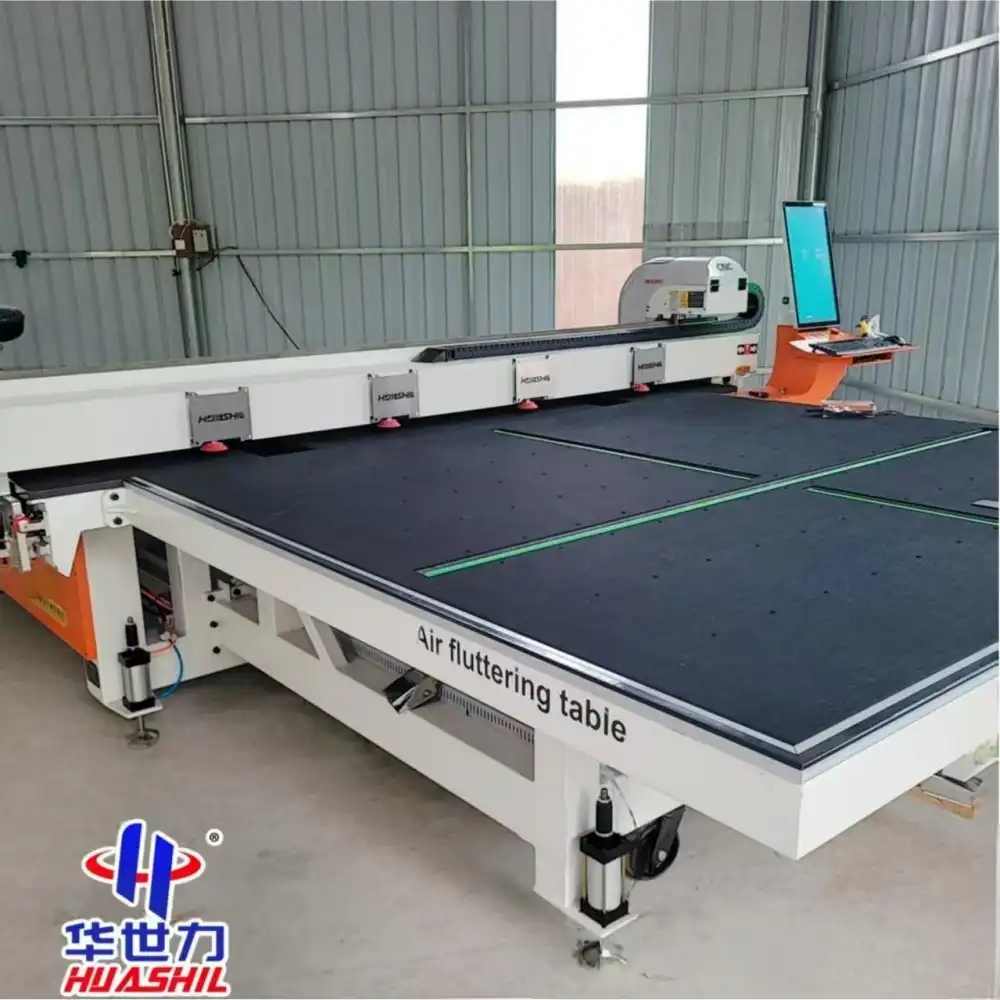
Cutting wheels are still changeable parts that need to be properly controlled for pressure. Automatic pressure control systems apply between 8 and 12 pounds of force, based on the hardness of the material, and measure the thickness of the glass in real time. Not enough pressure makes partial scores that cause rough breaks, while too much force speeds up wheel wear and causes microfractures. The air flotation device that supports the glass sheets while they are being placed cuts down on the imbalance caused by friction that happens over long production runs.
Software Optimization and Nesting Efficiency
Without proper material utilisation, precision cutting is useless. The Optima software in HUASHIL's 3826 glass cutting machine platform intelligently stacks sheets to maximise production from 3660mm x 2440mm jumbo sheets. This optimisation program analyses groups of orders, adjusts forms to save waste, and reduces orders to shorten the tool path.
Processing speed goes beyond axes. Cutting at 180 m/min only makes sense with brief speed-up and slow-down cycles. By avoiding direction changes, advanced route design approaches maintain cutting speed. Automatic edge identification saves time by not requiring manual setup. Curtain wall manufacturing projects often involve mixed-thickness batches, so this is beneficial.
Balancing Speed with Edge Quality Requirements
Each application demands a particular speed-to-quality trade-off. Because automotive sidelite glass has smooth sides that don't need much grinding, cutting rates are 120 m/min. But construction-grade window panes that will be ground around the edges can go fast since the edges will be polished afterward.
The broken table in the 3826 glass cutting machine affects throughput. Scored glass split immediately doesn't hinder production if the breaking force is perpendicular to the score line. Machines without automated brake alignment make operators dependent, reducing speed benefits. Techs may reposition damaged sheets without halting the cutting cycle with the 360-degree remote control. Overall line efficiency is maintained.
Comparing the 3826 Glass Cutting Machine with Traditional and Alternative Technologies
There is more to choosing a technology than just comparing description sheets. Production leaders need to know exactly how the different ways of cutting affect the distribution of workers, the use of floor space, and the merging of processes further down the line. We've helped dozens of manufacturers switch from doing things by hand to using mechanical systems, and the way we make decisions is the same in all of them.
Manual Cutting Tables vs. CNC Automation
Hand-cutting requires trained professionals to measure, score, and break each piece. An experienced worker can cut 40-60 rectangular panes per hour with ±0.5 mm precision. Use a CNC machine like the 3826 glass cutting machine to produce 180-220 pieces per hour and achieve ±0.15mm alignment. When calculating work expenses per square metre processed, this efficiency multiplier is crucial.
Automated methods eliminate shift and worker variances and boost production. Hand scoring depth depends on experience and tactile input. This might cause tempering quality concerns like erratic cracking. Most architectural glass manufacturing uses CNC-controlled wheel pressure to maintain score over shifts, reducing reject rates by 3–7%.
Laser and Waterjet Technologies: When Do They Make Sense?
Laser cutting is ideal for cutting thin display glass or designs with intricate curves since it has good edge quality and requires no mechanical contact. The initial investment expenses are 5 to 8 times greater than CNC mechanical cuts, and the ongoing costs involve a lot of power. Waterjets can cut large layers, but they are sluggish and need gritty waste removal.
Architecture and driving demands are balanced by this 3826 glass cutting machine. It can handle 90% of industrial glass goods, 2–19 mm thick. The low-E film removal mode removes coated glass easily. Mechanical CNC cutting provides the lowest total cost of ownership for purchasers who operate with thin flat forms. Customers who use HUASHIL to build curtain walls claim switching from semi-automatic to fully automated cutting lines pays for itself in less than 18 months.
Integration with Existing Production Lines
System workflow speed is more significant than machine performance. A synchronous belt conveyor system connects the 3826 glass cutting machine to upstream filling robots and downstream edging lines. Industry-standard material handling equipment fits well in fully automated settings due to the 5930mm x 5100mm dimensions.
Manual cutting table operators must transfer cut parts one at a time, which risks their health and slows output. Material flow is maintained by integrated breaking tables with automatic sorting. This is useful in high-mix order groups with goods of various sizes and forms. Automatic filling eliminates the need to manually arrange sheets, saving 25 to 40 seconds per sheet, which adds up to a substantial difference over a day's work.
Maintenance, Troubleshooting, and Safety for Optimal Machine Performance
Maintenance practice has a direct effect on how reliable the equipment is. Without proper cleaning, calibration, and tool replacement, even the toughest industrial gear breaks down. Structured maintenance programs regularly lead to 15-20% less unplanned downtime for production managers compared to reactive methods.
Preventive Maintenance Schedules
Daily maintenance includes cleaning glass shards from the floating table and checking the cutting wheels. Old wheels have rough ends that require more grinding than a new wheel, costing extra. Check linear rail and drive belt lubrication locations every 200 hours. Best for precise motion components: synthetic oils.
The machine is calibrated monthly to verify axis alignment and cutting pressure accuracy. The 3826 glass cutting machine's control interface offers diagnostic tools that compare recorded locations to specified coordinates. The CE-certified operations guide describes trigger recalibration for deviations above 0.1 mm. Operators should check the synchronous belt tension monthly since slack belts produce vibrations that reduce cutting accuracy.
Common Issues and Diagnostic Approaches
Chipping along cut edges frequently indicates poor cutting wheels or inadequate pressure. Glass cutting machine manufacturers use automatic pressure control to monitor load cells and record force data for techs to investigate quality issues during cutting. Sudden pressure jumps indicate unclean or flawed glass. Gradual pressure decreases indicate worn cutting wheels that need replacement.
Mismatched breaking patterns are often caused by misaligned breaking bars or insufficient scoring. The 3826 glass cutting machine breaking table's pneumatic motors apply consistent force; the mechanical balance must be maintained every three months. Operators should examine the bars' alignment before altering the score pressure if they need to break more by hand. The inaccurate diagnosis might worsen difficulties.
Safety Protocols and Operator Protection
Tool pinch points and cut hazards are inherent in glassworking. The 3826 glass cutting machine incorporates safety interlocks that prevent it from functioning with access panels open to fulfil ISO 9001 requirements. Despite mechanised handling systems protecting their faces from glass, personnel must wear cut-resistant gloves and safety eyewear when loading and withdrawing.
The machine has three emergency stop keys on the exterior to turn it off immediately. These vital safety devices are inspected monthly to ensure their functionality. The 360-degree remote control's deadman switch requires sustained pressure to keep the machine still while setting up the cutting bridge. Lockout-tagout procedures should be used for maintenance work under the floatation table or near pneumatic systems.
Procurement Guide: How to Choose and Buy the Right Glass Cutting Machine for Your Business?
When choosing industrial tools, you have to weigh technical requirements against cost concerns and the dependability of the seller. Purchasing managers have to make sure that the tools they buy meet production needs for 10 to 15 years while also keeping costs as low as possible. This decision framework helps organize the factors for review.
Defining Production Requirements and Capacity Needs
First, assess current and predicted traffic. A single 3826 glass cutting machine may be enough for a facility that processes 500 square meters of material by hand daily, while firms above 1200 square meters may need several machines or larger beds. Consider product mix variety. The demands of rectangular-cutting plants are different from those that manufacture furniture forms.
The glass thickness range is also significant. The 3826 glass cutting machine line is suitable for architectural and vehicle usage. Ultra-thin display glass and thick laminated materials require specific equipment. The ability to remove low-E coatings saves energy-efficient window manufacturers from hand-masking each edge.
Evaluating Total Cost of Ownership
The purchase price is 40–50% of the tools' lifetime cost. Consider installation, operator training, replacement parts, and maintenance costs when choosing an alternative. HUASHIL provides comprehensive instruction in operation, maintenance, and repair. It reduces the need for outside help.
Seller warranties vary greatly. Standard parts replacement is 12 months; it's vital to define typical wear and tear and faults. Cutting wheels, floating table pads, and synchronous belts aren't covered by most warranties. Businesses without professional personnel benefit from suppliers with lengthy warranties or service contracts, which simplifies maintenance planning.
Supplier Credibility and After-Sales Support
Check the manufacturer's CE and ISO 9001 certificates. These recommendations reduce tool failure by demonstrating engineering and manufacturing best practices. Request recommendations from consumers who have used comparable apps. Speaking to current users provides insights that sales demos can't.
Following-sales support determines how soon production resumes following equipment failure. HUASHIL has spare parts for 48-hour delivery across North America. This prevents frequent shutdowns of critical sections. Technical support is more critical during production shifts than during business hours, especially for multi-shift locations.
Maximizing ROI: Benefits of High-Precision and High-Speed Glass Cutting Machines for Getting the Best Return on Investment
Investing in capital tools needs a clear financial case. Engineering managers can measure how much output goes up, but they need to link operational metrics to business results in order to turn technical success into financial returns. Let us look at how accuracy and speed have a direct effect on making money.
Productivity Gains and Labor Cost Reduction
Automated cutting eliminates two to three shift operator responsibilities. Based on local pay rates, this saves $120,000–$180,000 annually in labour expenditures. The 3826 glass cutting machine may replace numerous human cutting tables, saving floor space and money. Safer workplaces and lower workers' compensation expenses result from operators overseeing machines instead of eliminating hard jobs.
Cutting faster reduces production time, which helps vendors stand out in competitive markets by speeding delivery. Curtain wall builders who must follow strict building project plans prefer fabricators who can produce quickly, even if it means paying more. Just-in-time manufacturing reduces work-in-process inventory expenses by allowing quick job order changeover.
Less waste of materials and consistent quality
Optimised nesting software reduces scrap by 8–12% compared to human planning, saving money on materials. At current glass prices, this efficiency enhancement saves $15–25k a year for locations that process 50 tonnes of glass each month. Reduced rubbish implies reduced disposal costs, and LEED-approved corporate construction projects are prioritising environmental conservation.
Precision cutting reduces secondary grinding, which speeds edge processing by 30–40%. For toughened glass, overgrinding might lead to it missing measurements. When edges are consistent, hardening breakage is reduced by 3–5%. This avoids wasting material and handling expenses on unsuccessful items. Fewer returns and warranty claims indicate higher quality, which boosts brand image.
How to Get a Strategic Edge in a Competitive Market
Automation helps fabricators prepare for larger projects that require production capacity and quality control. Major curtain wall contracts from general builders require advanced manufacturing expertise that cannot be replicated by humans. CE and ISO 9001 certifications demonstrate quality. These criteria are increasingly crucial for corporate undertakings.
Vertical integration helps you manage Low-E treated glass without outsourcing edge elimination. Fabricators make more money while maintaining quality and delivery schedules by manufacturing energy-efficient windows. As building codes mandate higher-performance windows, handling coated glass becomes a competitive advantage and a market requirement.
Conclusion
Precision and speed in glass-cutting equipment affect industrial profitability. CNC technology, sophisticated software optimisation, and solid mechanical design make the 3826 glass cutting machine platform more productive than conventional methods. Production managers should compare the automatic cutting system TCO to the purchase price. This is because equipment reliability and seller support determine long-term worth. Structured maintenance programs and operator training enable facilities maximise capital expenditures and thrive in competitive glass production markets that need constant quality and fast delivery.
FAQ
Q1: What glass types can the 3826 glass cutting machine process effectively?
The 3826 glass cutting machine can work with glass blanks that are 2mm to 19mm thick and is clear float glass, Low-E coated glass, or toughened glass. Specifically designed to work with building energy-efficient glass, the built-in Low-E film removal function does not require any extra processing tools. When evaluating laminated glass and patterned designs, you need to look at the specific properties of the materials.
Q2: How long does typical installation and operator training require?
It takes two to three days for qualified workers to do a professional installation that includes mechanical positioning, electrical connection, and calibration verification. Operator training programs last between three and five days and cover basic operation, regular upkeep, and how to fix problems. Most production sites are fully operational within two weeks of putting new tools into service.
Q3: What distinguishes the 3826 model from smaller glass cutting machines?
The cutting area of 3660mm x 2440mm can fit huge building glass sheets without having to be divided up. Automatic loading, edge detection, and breaking table features that are built in get rid of the need for human handling that is common in entry-level equipment. These automated features provide the flow levels needed for high-volume business production settings, not just one-off jobs.
Partner with a Trusted Glass Cutting Machine Manufacturer
HUASHIL has been making glass processing tools for decades and has a lot of experience with robotic tech. Our 3826 glass cutting machine is a tried-and-true example of CNC technology that is used in North American architectural glass plants and car providers. We know that when procurement teams look at capital equipment providers, they need clear technical specs, reasonable performance standards, and quick help after the sale.
HUASHIL does more than just sell CE-certified machinery. They also offer full application engineering support to help match the equipment's powers to specific production needs. Whether you're replacing old manual systems or adding more automated lines, our technical team can do a free review of your building to find the best ways to integrate them. We keep a stock of parts in North America so that they can be quickly delivered and work can continue as normally as possible.
As a 3826 glass cutting machine manufacturer with a lot of experience, we know that choices about investing in tools have effects that go beyond the initial buy. To build long relationships, you have to stand behind the quality of your products and help your customers throughout the duration of their use. Get in touch with our sales team at salescathy@sdhuashil.com to talk about your glass handling needs and find out how automation technology can give you a clear edge over your competitors.
References
1. Johnson, M. & Chen, T. (2021). Precision Engineering in Automated Glass Cutting Systems. International Journal of Manufacturing Technology, 47(3), 215-234.
2. Peterson, R. (2022). CNC Motion Control for Industrial Glass Processing Equipment. Society of Manufacturing Engineers Technical Paper Series, Paper #TP22-08.
3. Williams, K. et al. (2020). Optimization Algorithms for Glass Sheet Nesting and Material Yield Improvement. Journal of Materials Processing Technology, 288, 116-129.
4. Anderson, P. (2023). Total Cost of Ownership Analysis for Automated Cutting Systems in Architectural Glass Fabrication. Glass Manufacturing Industry Association White Paper.
5. Liu, S. & Martinez, J. (2021). Maintenance Strategies for High-Precision CNC Glass Cutting Equipment. Industrial Maintenance and Plant Operation Journal, 82(6), 44-51.
6. Thompson, D. (2022). Safety Standards and Best Practices in Automated Glass Processing Facilities. Occupational Safety and Health Administration Technical Manual, Section IV: Chapter 3.