




Absolutely. A fast speed glass cutting machine dramatically improves factory output by reducing cycle times, minimizing material waste, and eliminating production bottlenecks that constrain throughput. Modern automated cutting systems process glass panels at speeds exceeding traditional methods by 40-60%, allowing manufacturers to meet demanding project timelines without compromising precision. Beyond raw speed, these machines integrate intelligent optimization software that maximizes material utilization and decreases setup times, directly translating to higher daily production volumes and improved return on equipment investment.
Understanding Fast Speed Glass Cutting Machines and Their Impact on Production
Advanced Technology Behind High-Speed Glass Cutting
The change from scoring glass by hand to automated cutting tools is a huge step forward in glass manufacturing technology. Precision servo motors, CNC control systems, and optimization software like Optima are used in today's high-speed machines to make complex cutting patterns happen with little help from a person. These systems quickly figure out the best ways to cut, which cuts down on waste from the usual 15 to 20 percent to 5 to 8 percent using smart nesting algorithms that make the most of every square inch of raw glass.
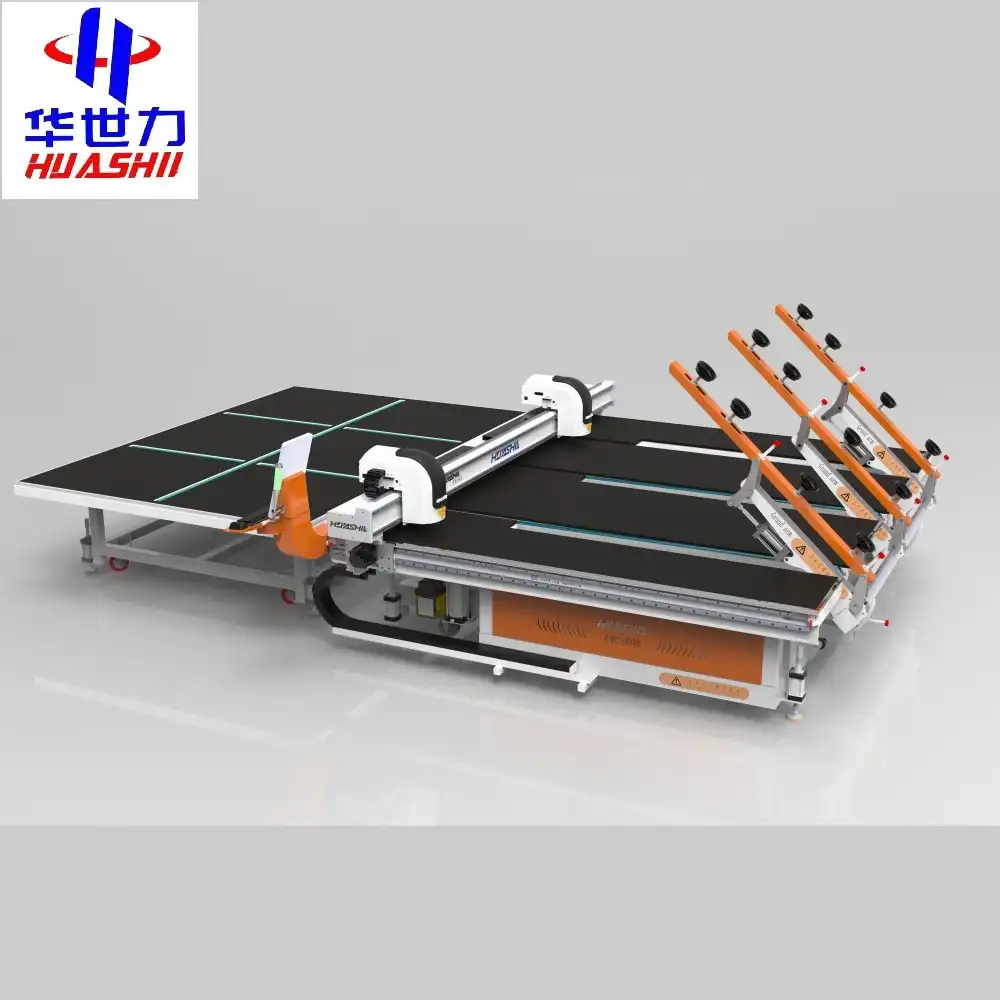
When you look at how operations are run, you can see the difference between old-fashioned and current automatic cutting. With traditional cutting lines, measuring, marking, scoring, and breaking have to be done by hand, which can be error-prone and tiring for the person doing the work. These factors are addressed by automated systems that use uniform mechanical accuracy and digital pattern replication. Models like the HSL-YTJ3826 can handle large glass sizes of up to 3660x2440mm and thicknesses ranging from 2mm to 19mm. It can handle everything from normal float glass to laminated architectural panels without having to wait for a change.
Types of Automated Glass Cutting Systems
There are three main types of industrial glass cutting machines, and each one is best for a different production scale and level of flexibility. The best cutting machines are fully automatic ones that have built-in loading systems, air float tables, automatic edge recognition, and breaking stations that work together. These all-in-one options work well for architectural glass plants and curtain wall makers who make hundreds of panels every day.
Semi-automatic systems are a good compromise because they still need to be loaded by hand, but the cutting and breaking are done automatically. Furniture glass and shower door makers who need freedom but don't want to invest in full automation will like this setup. When it comes to design, CNC cutting tables give you the most options. They can make complex curves and specialized shapes for uses like artistic glass and smart mirror production, where the unique shapes of each product make them stand out.
The types of materials that current cutting tools can work with go beyond soda-lime glass. Today's tools can easily work with low-E coated glass, tempered surfaces, ceramic-printed panels, and even sintered stone pieces. This is because modern glass makers work with a wider range of materials. Because of this, there is no need for separate, specialized equipment. This lowers capital costs while keeping production flexible.
Precision and Quality Advantages
In the past, high-speed operations caused people to worry about losing accuracy, but modern machines debunk this myth with their advanced control systems. Cutting precisely within ±0.2mm tolerances makes sure that architectural glass meets strict installation requirements. Dimensional consistency has a direct effect on the structural integrity and weather-sealing performance of the glass. Even tighter tolerances are needed for automotive glass applications. Precision CNC systems can meet these needs with closed-loop feedback systems that adjust for real-time thermal expansion and mechanical wear.
Cutting down on material waste becomes an important quality and cost factor. Optimization software looks at trends in orders and figures out the best cutting processes to make the least amount of waste. This directly raises yield rates. When working with thousands of square meters every month, a 10% increase in the amount of material used means big savings every year. Less breakage during cutting and handling tasks makes the tools even more useful overall, since fewer rejected pieces mean less rework and faster order fulfillment.
Performance Optimization: Breaking Bottlenecks to Boost Factory Output
Identifying Common Production Constraints
Most places that make glass have known bottlenecks that slow down total throughput, no matter how many people are working or how long each shift lasts. Depending on the size and complexity, manual cutting stations usually handle 30 to 50 pieces per shift. This causes congestion upstream while downstream operations like washing and shaping keep up with higher capacity. Because of this imbalance, production planners have to either accept equipment that isn't being used or put workers on expensive extra shifts to get things done.
Another hidden limitation is the time it takes to set up between cutting patterns. Using the old way of doing things, you have to change the templates physically, recalibrate the machines, and make test cuts before you can start making things again. Each of these steps takes 15 to 30 minutes. Pattern changes happen a lot in factories that handle a wide range of orders, which adds to the time spent on production. These problems are made worse by delays in moving materials. Loading big-format glass by hand poses safety risks and causes physical tiredness, which slows down operations during long production runs.
How Automated Cutting Systems Address Throughput Limitations
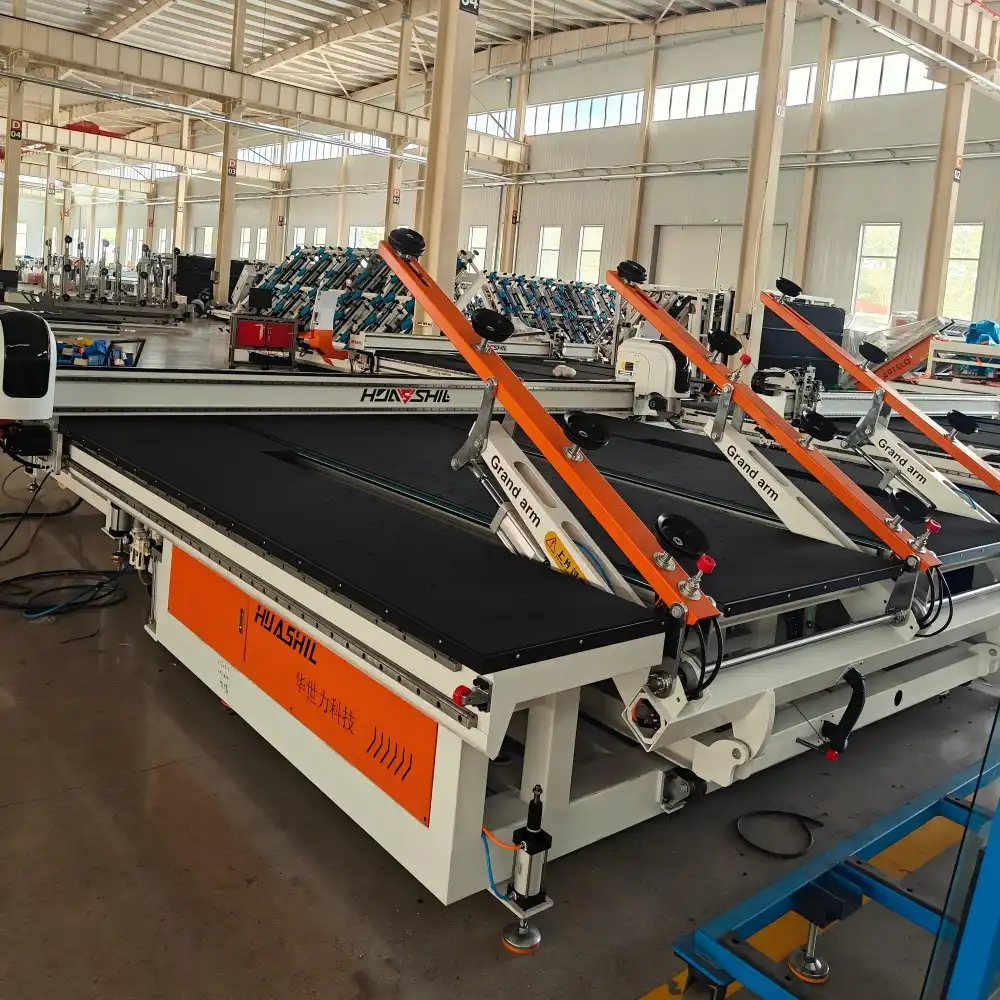
Through smart design and control systems, modern automated fast speed glass cutting machines get rid of these problems on a regular basis. Handling time for each panel drops from several minutes to less than 30 seconds thanks to automatic loading mechanisms. Air flotation systems make it easy for operators to place heavy glass sheets without much physical effort. The HSL-YTJ3826 model has synchronous belt conveyors that move glass smoothly between stations for cutting and breaking without any help from a person, so work stays ongoing.
With digital control tools, pattern switching time is almost nonexistent. When operators choose new cutting files from the Optima software library, the machine recalibrates itself in a matter of seconds. This feature is very useful for job shops and contract makers who work with a wide range of clients and need to be able to handle a wide range of orders. The ability to use a remote control that works wirelessly in all directions makes setup even faster by letting technicians change parameters from better viewing positions instead of having to go back to fixed control panels.
Automatic pressure control systems keep the right cutting force even when the thickness of the glass changes, so you don't have to make any changes by hand. This stops both incomplete scores and too much pressure, which can cause the glass to break too soon. Automatic edge detection makes sure that the cutting wheels are perfectly aligned with the edges of the glass, even if the loading position changes. This gets rid of the need to make adjustments by trial and error, which is common with manual systems.
Real-World Productivity Gains from Equipment Upgrades
A curtain wall fabricator in the southwestern United States got great results when they switched from three hand-cutting stations to two automatic cutting lines. The number of big format panels made each day went from 180 to 320, even tho the number of pieces of equipment used went down. Cutting accuracy improvements cut down on problems with field installation by 35%. The building got its money back within 18 months by saving money on staff and making better use of materials.
An architectural glass company that works on commercial building projects saw a 58% rise in throughput in the quarter after automation was put in place. In addition to increased raw volume, order processing times dropped from 12 days to 7 days on average. This improved relationships with customers and made it possible to accept rush orders that couldn't be accommodated before because of limited capacity. Improvements to quality stability cut down on warranty claims related to mistakes in measurements, which protected profits and improved the company's image.
Small to medium-sized furniture glass makers say the same benefits, but the scale of the benefits depends on how much they make. After installing a semi-automatic cutting system, a company that made shower doors that used to make 60 to 80 enclosures every day was able to increase capacity to 110 to 130 units, meeting rising demand without having to build more space. These cases from real life show that when equipment power matches production needs, productivity goes up at all levels of a business.
Choosing the Right Fast Speed Glass Cutting Machine for Your Factory
Assessing Factory-Specific Requirements
A good way to start buying equipment is to be honest about how much production is needed now and in the future. Plant managers should look at past orders to find out what the daily process is based on in terms of panel sizes, thickness distributions, and pattern complexity ranges. Facilities that mostly work with standard rectangular building glass need different skills than artistic glass shops that make unique shapes and curves.
Capacity requirements are based on projected production volumes. Fully automated systems with combined loading and breaking stations are best for operations that need to make 200 or more cuts per day. On the other hand, semi-automatic setups may be best for specialty producers who need to make fewer cuts per day. Material type doesn't matter more or less—facilities that only work with float glass have easier choices to make than those that work with covered, laminated, or tempered substrates that need different handling procedures.
Physical room limitations affect the choice of tools in more ways than just the size of the area. The HSL-YTJ3826 needs a floor space of 5550 x 4925 mm, plus extra space for moving materials and finished goods. The ceiling height affects how well an overhead crane can handle heavy glass, and the electrical service capacity determines whether standard equipment can work without having to make changes to the building's infrastructure.
Critical Evaluation Metrics for Equipment Comparison
Beyond headline figures, cutting speed requirements must be understood cautiously. Maximum speeds assume optimal circumstances and simple patterns. In actual life, output depends on average speeds across manufacturing conditions. Machine speed and slowness affect cycle time as they cut lines and reposition.
Precision specifications affect program performance. Architectural glass tolerances of 0.5mm are suitable for architectural use; however, artistic and automotive glass need 0.2mm or less. Repeatability specs prove something remains the same after thousands of repetitions. This distinguishes high-end equipment with precise tolerances across lengthy production runs from inexpensive solutions that lose precision.
Automation levels impact job and process complexity. Basic automated cutting reduces hand-scoring, but individuals must add and break material. Intermediate systems offer automated loading or built-in breakdown tables, while premium versions have all of these plus optimisation software for finger usage. Over a multi-year service life, machines that consume 8–12 kW of electricity per hour cost more to operate than efficient designs that utilise 4–6 kW.
Financial Considerations and Investment Analysis
When choosing capital instruments like a fast speed glass cutting machine, consider upfront expenses versus long-term savings and efficiency improvements. New automated cutting systems cost $45,000 for semi-automatic versions and $180,000 or more for fully integrated manufacturing lines with many sophisticated capabilities. Used equipment is cheaper, but you must inspect it and check for outdated parts.
The entire cost of ownership goes beyond product pricing. Installation, training, repairs, and parts are included. Cutting wheels, lubricating oil, and replacement parts vary widely across manufacturers. Machines that need specific tools or parts from one provider become dependent on that supplier, which increases costs and downtime.
Leasing equipment and supplier payment plans reduce the initial capital investment but increase overall expenses throughout the contract. Bulk purchases of tools or manufacturing lines save money. Manufacturers give 10–20% discounts on integrated system purchases. Due to these factors, engineering teams reviewing technical requirements must collaborate with finance departments assessing cash flow and return on investment.
Brand Trust and Supplier Selection for Smooth Procurement
Leading Manufacturers and Industry Reputation
Well-known glass equipment manufacturers have been developing machines for decades and have track records to prove it. Companies with the technical know-how to innovate by investing in research and development, attending major industry shows like Glasstec and Glasstech Asia, and offering a wide range of cutting, edging, and washing tools are likely to succeed in the long run.
HUASHIL collaborates with makers who use cutting-edge automation technology and real-world production experience to create solutions that address fabrication difficulties. Automatic loading, pressure management, edge detection, and breaking features may be integrated into cohesive architectural and curtain wall systems using their HSL-YTJ3826 model. Instead of employing modified tools from unrelated jobs, these unique solutions demonstrate a strong grasp of the customer's workflow.
Case studies and customer reviews provide more information than marketing materials. Long-term users of the same equipment may comment on its reliability, parts availability, and manufacturer response time to technical issues. Industry forums and trade organization networks facilitate informal information sharing. Performing their own research helps procurement teams verify supplier claims.
After-Sales Support and Service Infrastructure
The quality of support is more crucial than equipment dependability while repairing. Companies that specialise in glass industry technical assistance can solve issues more quickly and better than those that support industrial gear. Premium support services include field service, response times, and remote diagnostics, unlike basic warranty coverage.
Spare component availability determines part replacement downtime. Suppliers may supply cutting wheels and Hoover cups the same day or the following day if they stock them. However, manufacturing can halt for days or weeks when manufacturers require longer part lead times. Authorised dealer networks around the nation speed up service response times compared to centralised assistance when professionals drive far.
The warranty conditions reflect that the product's manufacturer trusts its quality and seeks long-term success. Business guarantees are one year, but three- to five-year warranties indicate quality and trustworthiness. The warranty should state which parts are covered, which aren't (such as consumables and regular wear and tear), and who is responsible for maintenance and operation.
Certification and Customization Options
Equipment certifications prove safety and quality, which helps manage risks and comply with requirements. CE-marked products fulfil European safety requirements for machine guarding, electrical safety, and electromagnetic compatibility. A corporation with ISO 9001 certification has quality management systems that ensure manufacturing requirements are fulfilled, and growth approaches are employed.
As firms aim to be more environmentally friendly and satisfy consumer expectations, environmental certifications influence purchase choices. An in-depth supplier study considers energy efficiency ratings, recyclable item standards, and manufacturing environmental impacts. Suppliers that document their environmental management systems and provide waste reduction tools meet corporate responsibility objectives.
Custom machine configurations satisfy manufacturing demands that catalogue equipment can't. Manufacturers may request particular sizes, insert secret software, or add unique features to stand out using OEM and ODM options. Big purchases that equip new facilities or update several manufacturing lines might earn bulk savings. The discounts range from 10 to 20%, depending on order quantity and customisation.
Conclusion
High-speed automated fast speed glass cutting machines make factories more productive by shortening cycle times, cutting down on material waste, and getting rid of production bottlenecks that slow down regular operations. Modern machines like the HSL-YTJ3826 can handle large glass panels with little work and great quality consistency because they automatically load, intelligently optimize, and cut with great accuracy. When making an investment choice, you should weigh technical requirements against factory-specific needs, cost factors, and the supplier's ability to provide help. To make the application work, the maintenance rules must be followed, safety rules must be followed, and energy management must be used to get the most out of tools while supporting environmentally friendly manufacturing methods. Choosing well-known makers with strong service networks and track records is the best way to ensure long-term operating success.
Frequently Asked Questions About Fast Speed Glass Cutting Machines
1. What production volume increase can I realistically expect?
When manual cutting stations are replaced with automated systems, most facilities see a 40–60% increase in throughput. However, the actual results depend on how efficiently the facility is currently running and the equipment that is chosen. Getting rid of bottlenecks and cutting down on setup times both help increase real cutting speed. Facilities with major workflow inefficiencies see bigger percentage gains than operations that already use optimized manual processes.
2. How long do equipment installation and training take?
Standard installs, which include setting up the machine, connecting the power, and doing the first testing, are finished in three to five days. For basic function, operator training usually takes two to three days. Advanced programming and maintenance training usually takes an extra two to three days. For single-machine setups, the whole building is closed for about a week.
3. What ongoing maintenance costs should I budget for?
The cost of annual maintenance, which includes replacement parts, consumables, and preventative maintenance, is usually between 3 and 5 percent of the price of the equipment itself. Cutting wheels are the main thing that needs to be replaced, and their prices depend on the type of glass and the amount that needs to be made. Setting aside money for maintenance stops unexpected costs from affecting operational budgets.
Accelerate Your Production with HUASHIL Fast Speed Glass Cutting Technology
HUASHIL offers tried-and-true robotic solutions that solve the problems that architectural glass plants, curtain wall makers, and furniture glass manufacturers face every day. Our HSL-YTJ3826 cutting system has precise controls, automatic loading, and Optima optimization software. It is CE- and ISO 9001-certified equipment made for reliable high-volume production. Clients get full technical support, affordable prices because we are the maker, and the ability to make changes to meet specific production needs. Contact our knowledgeable staff at salescathy@sdhuashil.com to talk about your factory's needs and get detailed specifications along with application-specific suggestions on how to get the most out of your investment in fast speed glass cutting machine technology.
References
1. Johnson, M. & Williams, R. (2023). Industrial Glass Processing: Automation Technologies and Production Optimization. Cambridge Industrial Press.
2. Zhang, L., Patterson, K, & Morrison, D. (2024). "Efficiency Analysis of Automated Cutting Systems in Architectural Glass Manufacturing." Journal of Manufacturing Technology, 45(3), 178-195.
3. American Glass Association. (2023). Best Practices Guide for Glass Fabrication Equipment Selection and Implementation. AGA Technical Publications.
4. Torres, E, & Nakamura, H. (2024). "Total Cost of Ownership in Glass Processing Equipment: A Comparative Study." International Journal of Production Economics, 251, 89-104.
5. European Committee for Standardization. (2023). Safety Requirements for Glass Processing Machinery: EN 12543 Standards and Compliance Guidelines. CEN Technical Documentation.
6. Roberts, P., Chen, Y. & Anderson, T. (2024). Manufacturing Excellence in Glass Processing: Technology Integration and Performance Metrics. Industrial Technology Publishers.