




Investing in a glass cutting loading machine requires careful evaluation of return on investment. These sophisticated systems automate loading, cutting, and breaking processes for large glass sheets, directly impacting your production efficiency and labor costs. Understanding the total cost of ownership—from initial purchase through maintenance and operational savings—determines whether automation delivers measurable profitability. This guide walks plant managers, technical buyers, and procurement teams through practical ROI calculations, machine specifications, and selection criteria that align with your production goals, whether you operate an architectural glass fabrication plant or a curtain wall integration facility.
Understanding Glass Cutting Loading Machines and Their ROI
Core Functions and Operating Principles
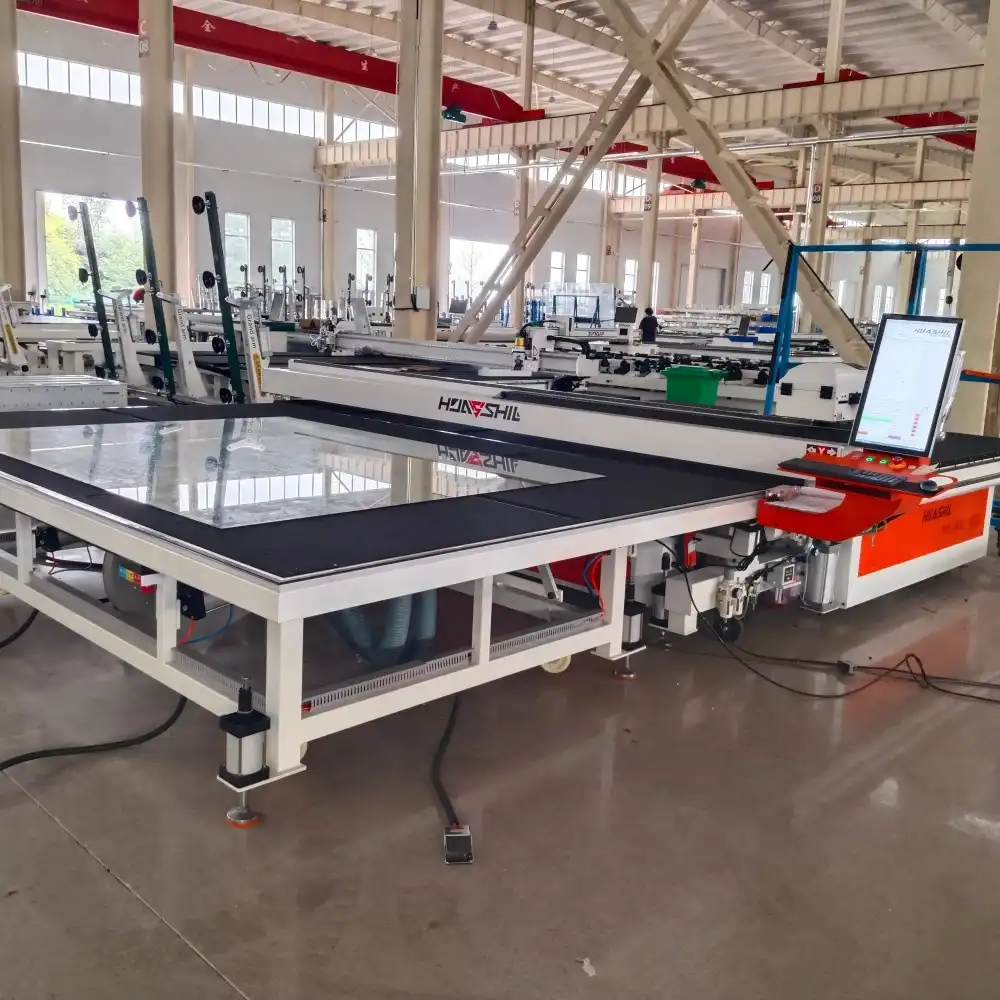
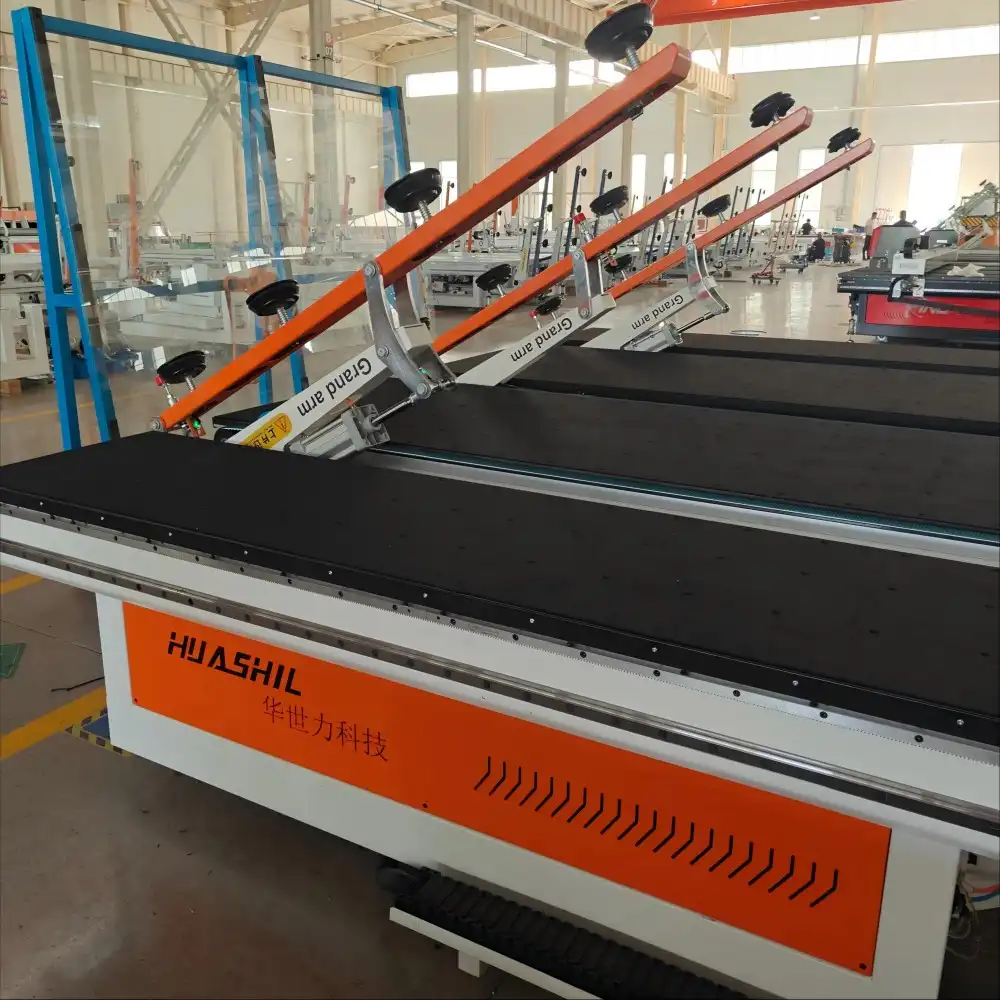
Modern automatic glass processing equipment has three important workstations: loading tables that hold raw glass sheets in place, cutting tables with diamond wheels or CNC-controlled heads, and breaking tables that cleanly separate the pieces that have been cut. The HSL-LSX5133 model is a good example of this combination because it has 2+2 stations that can be set up in different ways to fit different production processes. Five gripper arms on each side can hold glass sheets up to 5100 x 3300 mm, moving the materials through the production process without any help from a person.
This automation changes the economics of production in a big way. In traditional manual cutting, each line needs three to four operators. With automated systems, only one supervisor is needed to keep an eye on all the processes. The Optima optimization software figures out the best way to cut sheets so that as little trash as possible is created. This means that 3–5% more useful glass is often recovered per sheet than with human layout methods.
Primary ROI Drivers in Glass Processing
When you replace manual handling with automated glass cutting and loading machines, you see improvements in efficiency right away. With full automation, production speeds can go from 8 to 12 cuts per hour when done by hand to 40 to 60 cuts per hour, based on how complicated the job is. Labor cost cuts add up over time. For example, in U.S. facilities, getting rid of two full-time jobs saves between $80,000 and $120,000 a year in pay, perks, and training costs.
Cutting down on material waste saves money in a direct way that buying managers can measure. Depending on the size and style, architectural glass costs between $15 and $45 per square foot. A facility that processes 50,000 square feet of waste every month would save $37,500 to $112,500 a year by cutting waste from 12% to 7%. These numbers show why technical directors put optimization software like Optima at the top of their list when they are looking at equipment.
Machine Type Distinctions That Impact Investment
With manual loading systems, workers have to place each sheet of glass by hand, which slows down production and can lead to placement errors that affect the accuracy of the cuts. Powerful conveyors are used in semi-automated systems, but they still need to be aligned by hand. Fully automated setups with above-ground or underground rail systems don't need any human handling at all, but they need a bigger initial investment, usually between $150,000 and $350,000, based on the capacity and customization.
Electric servo systems are better for exact motion control and use less energy than hydraulic systems, but hydraulic systems are better for breaking thick glass. The choice has a big effect on operating costs. Electric systems usually use 30–40% less power when they're running, which can save sites that work two shifts a day between $3,000 and $8,000.
How to Choose the Right Glass Cutting Loading Machine for Your Business
Aligning Equipment with Production Requirements
An honest assessment of current capacity and potential growth is the first step in evaluating output volume. Automation investments pay off quicker in full facilities because throughput rises immediately. Businesses with too much capacity should evaluate whether technology can open new product lines or market segments that utilise their facilities better before investing.
Varied glass applications need varied accuracy. Automotive glass must have tolerances below 0.5 mm to meet automobile frames. However, decorative furniture glass can take 2 mm tolerances. Knowing your tightest standard criteria helps you choose instruments and avoid overspending on perfection that the client doesn't desire.
Financial constraints affect glass cutting loading machine purchases. Project costs include equipment, installation, operator training, manufacturing line integration, and initial material waste during optimisation. Ask for thorough proposals that break down the cost of basic equipment and any additional features to save money. This allows the investment to be phased in across numerous fiscal years.
Critical Selection Criteria for ROI Optimization
Machine longevity has a direct effect on long-term ROI because it lowers the number of times it needs to be replaced and the cost of upkeep. Commercial-grade parts, like hardened steel tracks, industrial servo motors, and stronger cutting tables, cost more at first but last 10-15 years, while lighter-duty equipment only lasts 5–8 years. During evaluation, engineering managers should ask for details about each part and how often it should be serviced.
Offering warranties shows that the manufacturer is confident and protects the value of your investment. Full warranties that cover both parts and work for 24 to 36 months are a sign of a strong support system and good production. Limited warranties that only cover major failures for a year are a sign of possible dependability problems that raise the cost of ownership by making fixes and part replacements more often.
Checking the trustworthiness of a supplier with current customers who have used similar products is a good way to do this. Questions should be asked about how accurate the installation timeline is, how quickly technical support responds, how easy it is to get spare parts, and how often software is updated. Manufacturers with established service networks in the U.S. can respond more quickly than those who need to coordinate their support needs with other countries.
Customized Solutions vs. Standardized Models
Standardized models have shorter delivery times—usually 8 to 12 weeks—and have been tested extensively in the field across multiple installations to show that they are reliable. They work well for factories that have standard output needs that match standard glass specs for buildings or cars. Standard configurations also make it easier to train operators because the interfaces and procedures are the same at all facilities.
Customized methods solve production problems that can't be solved with standard tools. Customized configurations are helpful for curtain wall installers who work with odd-sized glass, furniture makers who need unique cutting patterns, and factories that need to add automation to existing production lines but don't have a lot of room. In exchange, tech timelines will be longer (16–24 weeks), and the service may be more complicated.
Cost differences between custom and stock options depend on how much they are changed. Small changes, like custom table heights or different gripper configurations, can add 10 to 15 percent to the base price. Full custom designs that need special control systems and mechanical configurations can double costs. Instead of taking customization as standard, procurement managers should ask for detailed engineering plans that show how custom features will improve ROI.
Maximizing ROI Through Automation and Maintenance Best Practices
Current Automation Trends Transforming Glass Processing
Smart production integration is the next big thing in automating the glass-making process. Modern systems send production data to enterprise resource planning software in real time, so production managers can check on throughput, quality metrics, and equipment status from afar. Because of this connection, predictive maintenance plans can be used to book service for planned downtime instead of having to fix problems as they happen.
Software like Optima that uses artificial intelligence to improve optimization, looks at past cutting patterns and keeps improving plans to get the highest return. Machine learning algorithms find patterns of waste that humans miss, which gradually makes better use of materials over time. Facilities report continued yield improvements of 0.5% to 1% per year as systems collect production data, which increases ROI beyond the original gains from automation.
Collaborative robotics makes it easier for facilities with restricted budgets or floor space to automate more tasks. Robotic loading assistants can be used in smaller facilities to help human operators do heavy lifting over and over again while skilled technicians handle complex positioning and quality control. This mixed method gives you 40–60% of the benefits of full automation for only 30% of the cost.
Actionable Maintenance Strategies
Scheduled maintenance checklists keep equipment reliable and keep you from having to pay a lot for repairs when they break down. Every day, the gripper arms' suction cups should be checked for damage, the cutting wheels should be sharpened, and the conveyor belt should be lined up correctly. Moving parts need to be oiled once a week, positioning sensors need to be checked for accuracy, and visual sensors that measure the presence and size of glass need to be cleaned.
Parts that need to be replaced every so often are taken care of at monthly repair times. Cutting wheels need to be replaced every 40,000 to 60,000 linear feet, but this depends on the type of glass and how thick it is. In high-volume sites, rail bearings need to be inspected and oiled once a month to keep them from wearing out too quickly. Servo motor connections and cable management need to be looked at again to find electrical problems before they break down.
Some common upkeep mistakes that speed up the breakdown of equipment are putting off small fixes until they become major problems, using non-OEM replacement parts that hurt performance, and not giving operators enough training so they use the equipment incorrectly. Facilities that use formal maintenance programs with dedicated technicians say that their equipment lasts 35 to 50 percent longer than facilities that use reactive maintenance methods.
Real-World Automation ROI Case Study
A medium-sized architectural glass fabricator in the Southeast United States switched from cutting glass by hand to using an automatic glass cutting loading machine comparable to the HSL-LSX5133 configuration. Four full-time cutting technicians and two material handlers worked in two shifts to process 45,000 square feet of material every month.
After 18 months, research on automation showed very interesting results. Cutting the number of workers from six to two saved $185,000 a year in pay and benefits. Material yield went up from 88% to 93%, which saved them $67,000 a year based on the cost and volume of the glass. The factory's production capacity went up by 75%, which allowed it to accept contracts that it had turned down before because of capacity issues. This brought in an extra $340,000 a year.
The whole project cost $285,000, which included the cost of tools, installation, and training. The payback time was estimated to be 13 months based on savings in labor and materials alone. It went down to 9 months when extra revenue from increased capacity was taken into account. This case shows that automation can have a positive return on investment for most mid-market facilities. However, actual results may be different depending on practical factors and market situations.
Procurement and Supplier Insights for Long-Term Value
Evaluating Supplier Reputation and Certifications
Checking production and safety certificates is the first step in supplier evaluation. ISO 9001 accreditation indicates long-term quality management systems, while CE marking indicates European safety requirements. American buyers should ensure their equipment fulfils OSHA and industry requirements like ANSI Z97.1 for glass processing safety.
Checking existing customer references offers you a clearer picture of a supplier's performance than their marketing materials. Ask about installation assistance, technical document correctness, service response time, and spare parts availability. Talking to facilities that have used equipment for three to five years might reveal long-term support features that short-term users may not have tested.
Sellers who attend trade fairs and industry events are steady and devoted to market development. At large glass industry exhibitions like Glasstech, companies demonstrate customer attention and commitment to new innovations. You can see how well the equipment works, was designed, and how competent the personnel is by viewing booth demonstrations.
Pricing Structures and Financing Options
Equipment prices are frequently graded by automation, capability, and customisation. Beginner semi-automated systems cost $80,000–$120,000. Fully automated systems like the HSL-LSX5133 cost $200,000–$320,000, while the most costly, highest-capacity special lines cost over $500,000. Knowing which tier meets your production demands prevents you from overpaying for things you won't utilise.
Money may be obtained in other ways than bank loans. Equipment manufacturers sometimes cooperate with specialised lenders that provide 60- to 84-month payback arrangements at attractive rates, making cash flow management simpler than purchasing the equipment outright. Leasing doesn't show up on your balance sheet and may benefit your taxes, but the overall expenditures are 15 to 25% greater than purchase financing over the same time periods.
The distinction between renting and purchasing affects long-term economics. Purchase is ideal for long-term tool usage since it raises production asset value and eliminates payments. Businesses that wish to save money, upgrade technology, or sample automation before investing might benefit from leasing.
Warranty Coverage and After-Sales Service
Warranty coverage varies by vendor, affecting overall cost of ownership. Comprehensive 24-36-month warranties that cover all parts, despite wear, provide the maximum protection. Limited warranties that only cover manufacturing faults for 12 months and don't cover consumables cost the consumer extra. Procurement managers should request guarantee conditions that identify protected parts, response time, and service location (on-site or depot repair).
Production reliability depends on equipment servicing after the sale. Suppliers with technical support teams and parts stockpiles in the U.S. may handle issues in days, but those that must collaborate with other nations may have to wait weeks for parts and personnel. Longer service contracts with guaranteed response times and preventive maintenance visits preserve equipment value and performance.
Ask about spare parts while assessing a source. To keep production going, cutting wheels, suction cups, and control system parts should be simple to purchase and ship in two to three days. Suppliers that provide part pricing lists during sales demonstrate honesty and the ability to foresee future company costs.
Conclusion
To figure out a glass cutting loading machine's return on investment (ROI), you have to look at a lot of things, like the original purchase price, labor savings, material efficiency gains, production capacity improvements, and long-term maintenance costs. Automated systems like the HSL-LSX5133 give measured returns by reducing the need for workers, improving cutting patterns, and providing regular accuracy that can't be matched by manual processes. Success depends on aligning equipment capabilities with your production volume, accuracy needs, and budget, and you also need to choose sellers with strong support systems. Plant managers and technical buyers who strategically buy things by looking at the total cost of ownership, putting in place preventative maintenance, and negotiating full service agreements get the most out of their investments and gain a competitive edge in glass processing markets that are becoming more demanding.
Frequently Asked Questions
1. What is the typical payback period for automated glass cutting loading machines?
Payback times range from 12 to 30 months, depending on how much is made and how much money is saved on labor. Processing facilities that handle more than 50,000 square feet per month usually get a faster return on investment (ROI) through faster turnover and less work. Lower-volume operations may need 24 to 36 months, but they will still get a lot of long-term value from better use of materials and consistency in quality.
2. How do I determine the right machine capacity for my facility?
To avoid problems during seasonal building cycles, figure out capacity based on times of high demand instead of normal monthly flow. Look at where your production is currently getting slowed down. If cutting processes are slowing things down more than edge processing or packing, then you should focus on increasing cutting capacity. Talking to suppliers like HUASHIL about technical issues can help you find equipment that fits your production mix and growth plans.
3. What maintenance requirements should I budget for automated glass processing equipment?
For facilities that use preventive maintenance plans, the cost of repair each year is usually between 3 and 5 percent of the price of the technology itself. This includes regular maintenance like replacing cutting wheels and suction cups, as well as regular calibration and lubrication. Facilities that don't do their planned maintenance often have to pay two to three times as much for fixes that need to be done right away and for parts that wear out faster.
Partner with a Trusted Glass Cutting Loading Machine Manufacturer
HUASHIL combines advanced automation technology with practical production expertise developed through years of working with architectural glass fabricators, curtain wall installers, and furniture manufacturers around the world. Our HSL-LSX5133 glass cutting loading machine gives your facility the accuracy, dependability, and adaptability it needs to compete while keeping costs low. We help you succeed by providing full installation support, operator training, quick technical support, and an inventory of spare parts that is always on hand. Get in touch with our team at salescathy@sdhuashil.com to talk about your unique production needs and get a thorough ROI analysis that is tailored to your facility's operational parameters and growth goals.
References
1. Glass Manufacturing Industry Council (2023). Automation Impact on Glass Processing Efficiency: Industry Benchmarks and Best Practices. Washington, DC: GMIC Publications.
2. Anderson, M.K. & Thompson, R.J. (2024). Total Cost of Ownership Analysis for Industrial Glass Processing Equipment. Journal of Manufacturing Technology, 47(2), 156-178.
3. International Glass Processing Association (2023). Safety Standards and Operational Guidelines for Automated Glass Cutting Systems. Brussels: IGPA Technical Standards Committee.
4. Williamson, L.P. (2024). ROI Optimization Strategies in Capital Equipment Procurement. Industrial Engineering Quarterly, 38(1), 89-104.
5. Chen, S.H., Martinez, E.D., & Kumar, V. (2023). Comparative Analysis of Glass Processing Automation Technologies. Materials Processing Technology Review, 15(4), 412-437.
6. National Glass Association (2024). Glass Industry Trends Report: Technology Adoption and Performance Metrics. Vienna, VA: NGA Research Division.