




Through computerised numerical control technologies, glass production has changed dramatically. CNC glass cutting equipment makes glass processing more precise, efficient, and scalable than manual processes. The automated technologies allow architectural glass factories, curtain wall makers, and furniture fabricators to cut intricate designs with little waste and maximum output. As demand for custom-shaped glass goods rises worldwide, producers use CNC technology to stay competitive and cut labour costs. This detailed study discusses how automated glass cutting machines overhaul manufacturing routines, what procurement managers should consider before buying, and future industry trends.
Understanding CNC Glass Cutting Equipment in Modern Glass Factories
CNC glass cutting technology has replaced old-fashioned manual scoring and breaking. Computer design files direct motorised cutting heads to cut glass sheets to the micron level. This method eliminates human error, thus thousands of units get the same results. When producing automotive parts or windscreens, dimension constraints impact safety and fit.
The transition from traditional methods accelerated in the early 2000s as processing speeds increased and equipment prices decreased. Our tools have cutting-edge detection and material optimisation in one manufacturing line. Glass is pricey, thus this combination is crucial. Improving nesting algorithms to reduce scrap from 8% to 2% may save a medium-sized factory tens of thousands of dollars annually.
Types of Automated Glass Processing Systems
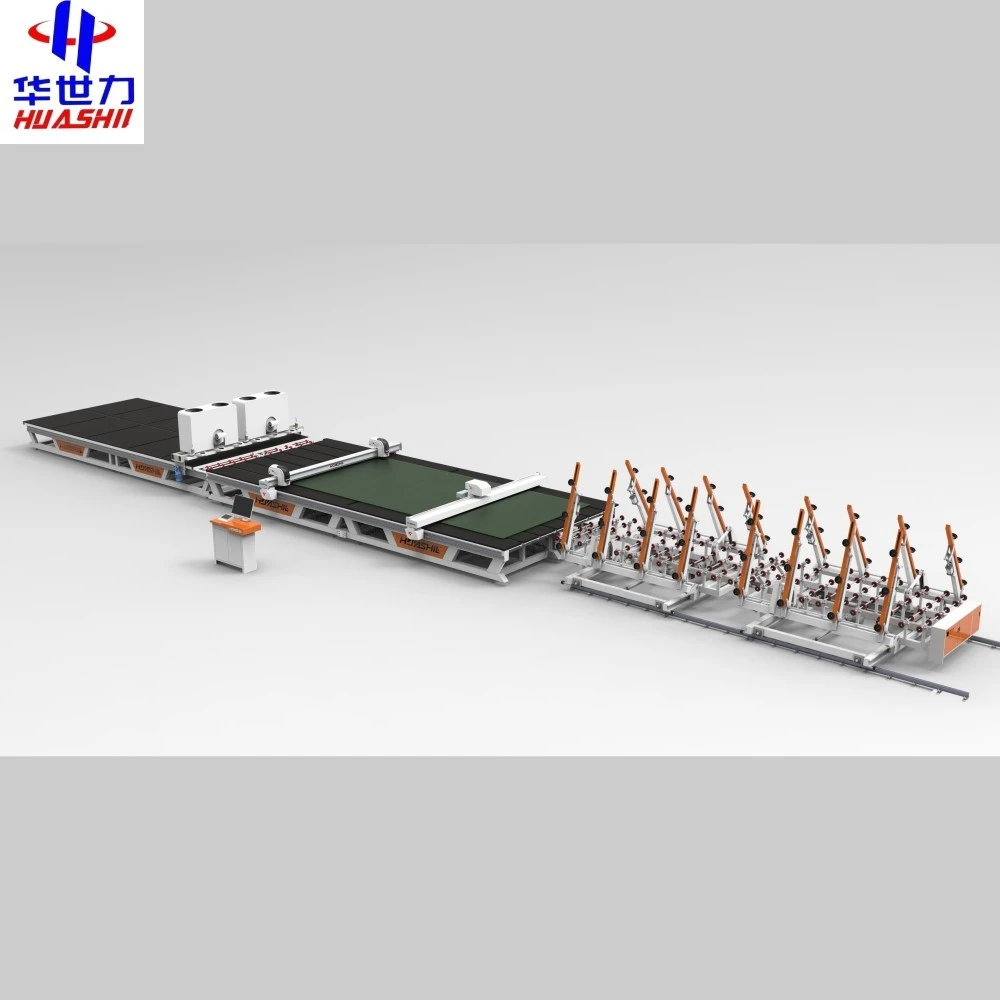
Automated cutting machines vary in form and function. Stationary bridge-type tools with sturdy cutting tables are typical in high-volume manufacturing. Glass sheets are processed on these tables. Large architectural glass panels are straightforward for these machines. The HSL-YTJ3826 can handle 3660x2440mm sheets, suitable for business structures.
Portable units allow personnel to carry the machine to huge glass sheets instead of lugging heavy materials for smaller or specialised projects. Waterjet cuts employ high-pressure abrasive streams to cut intricate tempered glass structures that can't withstand mechanical stress. Laser cutting produces beautiful edges for art, but it costs more than mechanical scoring.
Efficiency Gains Through Automation
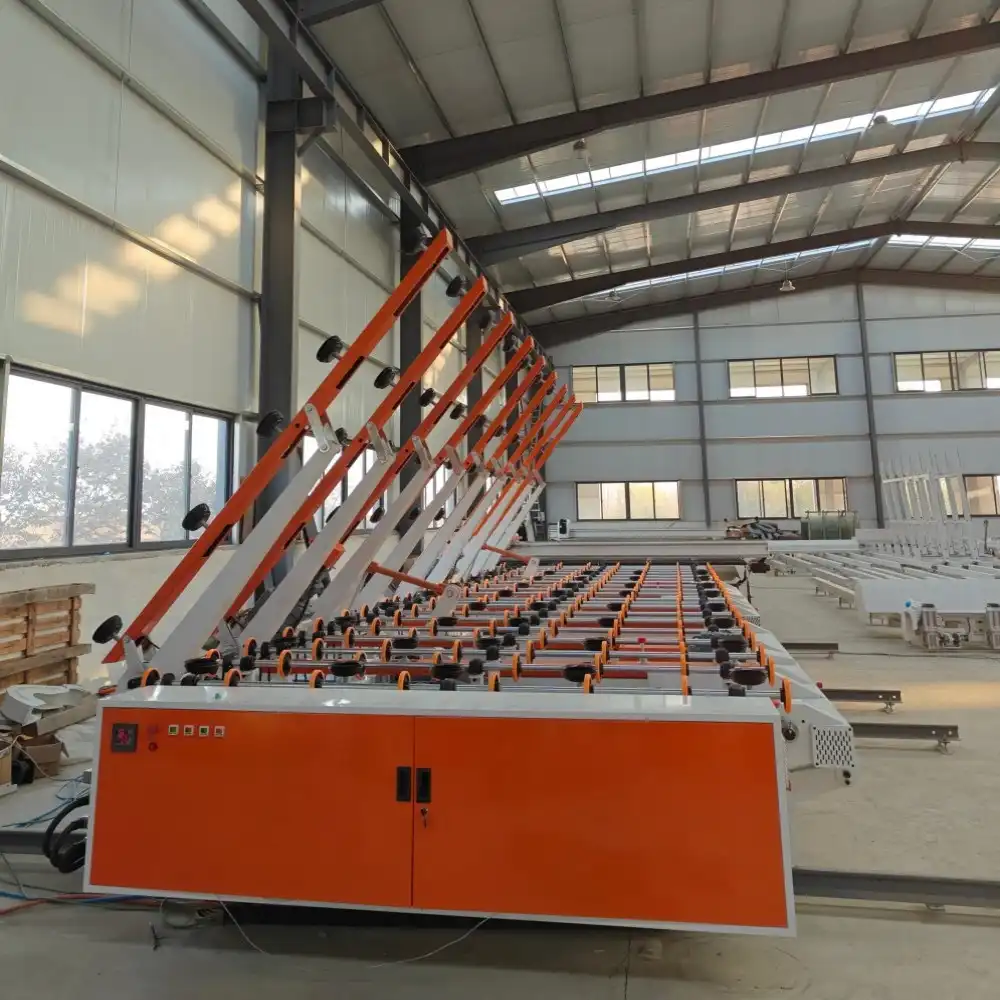
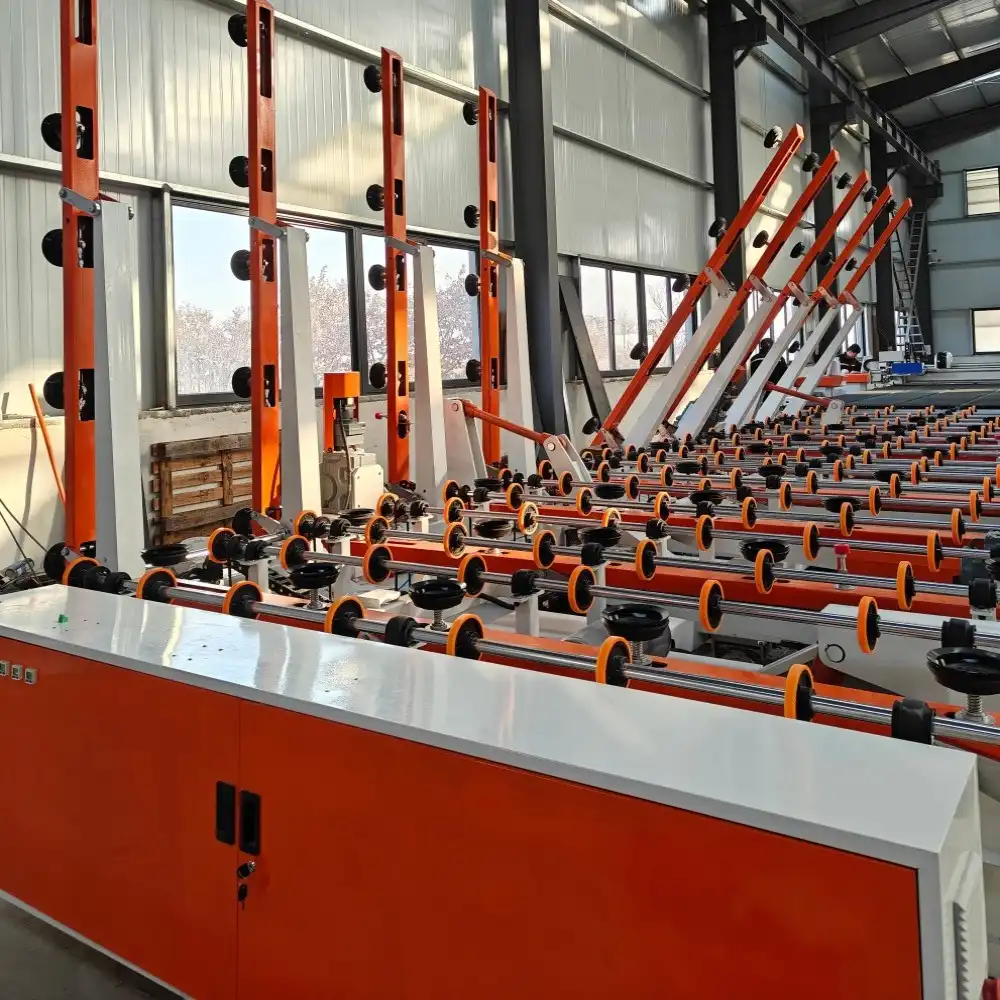
Production speeds up in numerous ways. Automated filling methods save worker fatigue and injury by not manually moving huge glass sheets. HSL-YTJ3826 automates filling using air flotation and synchronous belt conveyors. Workers can lift hundreds of pounds of sheets easily.
Automatic systems make 60–80 cuts per hour with uniform quality, whereas manual workers make 10–15 cuts depending on how hard the task is. This four- to six-fold rise equals more daily work or fewer personnel. Automatic edge finding aligns sheets, and pressure control adjusts cutting force for varying glass thicknesses (2–19 mm in professional equipment) to preserve cut quality and reduce setup time.
Optima nesting software reduces waste, another economic aspect. To optimise material utilisation, optimisation programs plan future order cutting patterns. This usually earns 5–7% more than hand-planning. This upgrade pays for itself in 24–36 months for enterprises handling $50,000 in glass monthly.
Key Applications of CNC Glass Cutting Equipment in Glass Factories
CNC glass cutting equipment serves several industries with varied demands. Architectural glass processing comprises curtain walls, windows, and doors for commercial and residential structures. This is the largest application group. Parts fitting into metal frame systems require precise dimensional consistency, with tolerances often less than ±0.5mm.
The auto industry uses computer-cut windscreens, side windows, and rear windows. These pieces need intricate forms and precise edges to accommodate weatherstripping and bonding adhesives. For popular automobile models, production numbers reach tens of thousands, making automation economically necessary. Plastic layers join two sheets to make laminated glass. Cutting equipment needs particular tools and pressure control to cut this glass.
Furniture and Interior Component Manufacturing
Glass furniture makers are part of a rising business that is automating. Custom shapes and creative edge treatments on tables, shelves, shower walls, and partition systems are becoming increasingly widespread, which are difficult to produce manually. In one pass, curved grinding wheels allow CNC cutters to cut and polish sides without extra labour.
New accuracy uses, like smart displays and dynamic display panels, are crucial. Because they feature electrical equipment under glass, cameras, sensors, and displays require precise cutting. Cutting by hand is risky because dimensional errors larger than 0.3 mm might ruin pricey electrical parts. Automated systems that employ cameras to locate material edges may follow pre-programmed cutting lines within 0.1 mm.
Integration with Production Line Systems
Many modern glass companies employ fully integrated production lines that link cutting and downstream operations. Moving systems transport machine-cut parts to cleaning, edge grinding, tempering, and finishing stations. The combination needs ordinary machine-to-machine communication. Industrial Ethernet or fieldbus networks are typical.
Software integration matters as much as the connectivity. Machine controllers receive cutting pattern work instructions from production management systems without human data entry. The Optima program uses inventory systems to track material utilisation vs. orders. This exhibits real-time production. These improved methods avoid costly authoring mistakes and behind-the-scenes work.
Quality-controlled automation influences customer satisfaction and expense. Seasoning is easy with few rejections when cuts are correct. Architectural glassmakers need uniformity since field changes are expensive and time-consuming.
Evaluating CNC Glass Cutting Equipment: How to Make the Right Procurement Decision?
Procurement must consider numerous variables while choosing CNC glass cutting equipment. Precision is key when cutting. While machine specifications normally stipulate repeatability of ±0.1mm to ±0.3mm, efficacy depends on machine stiffness, controls, and external conditions such as temperature changes. Requesting sample cuts of the glass you plan to use gives you more performance knowledge than catalogue standards.
Energy use affects long-term operational costs, especially in high-volume businesses. Previous hydraulic systems used 30–40 kW, whereas modern cutting equipment with servo-driven cutting heads and efficient vacuum systems uses 15–25 kW. Over 20 years, energy might cost more than the equipment. This makes efficiency research smart financially.
Comparing Technology Alternatives
CNC mechanical cutting competes with laser and waterjet, both advantageous. Mechanical scoring and breaking is the most common way to treat large volumes of float glass because of its fast cycle times and low running costs, especially since new cutting wheels cost $5 to $15 each. This works nicely for heated glass straight cuts and basic shapes. It can't handle treated toughened glass and tight radius bends.
Laser cutting generates better lines with less chipping, making it ideal for creative tasks with visible edges. Operational costs are higher due to 30–60 kW of energy, assist gas, and optical component maintenance. Heat stress from lasers breaks glass, restricting material use.
Waterjet cutting works on most glass, even toughened, because it doesn't stress it. This aids retrofitting and other speciality work. Abrasive slurry storage and wastewater treatment aggravate concerns. It requires $20 to $40 of abrasive every hour, pump repair, and cuts slower than mechanical systems, making it pricey.
Financial Considerations and Return on Investment
New CNC glass cutting systems range from $80,000 to $400,000 for high-capacity lines with loading and breaking systems. The mid-range HSL-YTJ3826 suits medium to big businesses. Included are remote control, edge detection, air flotation, and automatic loading, along with a fair price glass transport table line. A 5550x4925mm industrial building with an abundance of material-moving space.
Goals for an ROI study include reducing labour costs, material waste, productivity, and quality, which lowers rework. A $180,000 system may replace two manual cutting stations, saving $85,000 in labour and $25,000 in material waste. This means the straightforward payback period is 1.6 years, and the revenue growth advantages from higher capacity are significantly bigger.
Payment options include direct purchase, capital leases, and operational leases. Equipment manufacturers and speciality lenders provide 24-72 months. Interest rates depend on down payment and credit score. Leasing saves taxes and funds other projects. Over time, leasing costs more than buying.
Warranty, Support Infrastructure
Capital tools require post-sale assistance to achieve their potential. Comprehensive 12- to 24-month warranties provide basic security, but timely assistance is more important. Ask the vendor if they ship US or international parts. Knowing this difference when a $150 cutting wheel bearing fails and stops output is critical.
CE and ISO9001 guarantee safety and quality. The HSL-YTJ3826 meets European safety and worldwide quality standards with both marks. With these requirements, you're less likely to get sued and get affordable insurance.
Provide technical help by phone, email, and increasingly, internet-connected computers with remote troubleshooting. Video assistance may fix many difficulties without an expert, minimising downtime. Installation training impacts equipment utilisation. Poor training underutilises advanced features, and slight mistakes damage portions faster.
Best Practices for Maintaining and Enhancing CNC Glass Cutting Equipment Performance
Systematic maintenance enhances the life of CNC glass cutting equipment. Daily activities should include cleaning glass from cutting tables and conveyor belts, testing cutting wheels, and filling air systems with oil. These quick 15–20-minute tasks prevent most blunders. Glass dust is abrasive and accelerates wear on linear guides and ball screws, lowering accuracy.
Weekly maintenance gives everyday activities purpose. Operators should use test patterns to align the cutting, modify pressure settings if the cut quality deteriorates, and monitor synchronous belt tension. Bending might affect conveyor belt placement, thus it requires particular caution. Monthly checkups should include measuring essential measurements, calibrating sensors, and testing safety interlocks by qualified specialists.
Troubleshooting Common Operational Issues
Poor cut quality is usually caused by ageing cutting wheels, incorrect pressure settings, or filthy cutting oil. Wheels should be replaced if cut edge chips exceed 0.5 mm or the wheel width falls below the required. This normally happens after 5,000 to 15,000 meters of cutting, depending on the glass kind and thickness. Too little pressure causes partial scores that need too much breaking power, while too much causes severe fractures that spread unpredictably.
The breaking table's utility affects workmanship and safety. The glass should split along the scored lines easily. If parts need to be pounded or pressured to separate, the score level or breaking bar height may be off. The HSL-YTJ3826 includes a 360-degree-adjustable breaking table. This makes shattering glass safer by reducing the risk of flying glass.
Edge detection accuracy decreases with glass dust or optical scratches on sensors. Automatic edge identification machines align glass edges to within a few micrometres using cameras or laser sensors. Cleaning sensor windows monthly and protecting them from rough surfaces maintains accuracy. Following the equipment recommendations for recalibration will fix the edge detection that behaves weirdly.
Safety Protocols and Regulatory Compliance
Protecting against dangers from automated glass-cutting machines. Glass fragments that fly off during cutting can severely cut; shelters with latched doors prevent operators from contacting the machine. For equipment guarding, OSHA requires all control locations to have easy-to-reach emergency stop buttons.
Workers must wear hearing protection while cutting since noise levels typically exceed 85 dB. Dust collection systems increase cutting quality and safeguard your lungs by removing trash. This is crucial when working with metal oxide-containing polished or coloured glass. ANSI-compliant ventilation ensures safe air exchange rates.
Operator training should include work skills and emergency procedures. Knowing how to properly clear sticky glass, what to do if the power goes out during a cut, and lockout/tagout for repair helps prevent injuries. Annual refresher training ensures operators are following the regulations and teaches them new procedures or tools. Training completion documentation proves compliance during workplace safety assessments.
Future Trends and Innovations in CNC Glass Cutting for Glass Manufacturing
CNC glass cutting equipment's biggest trend is AI. Machine learning systems analyse historical cutting data to determine the ideal settings for each glass type, thickness, and environment. This flexible control maintains cut quality even when material or air temperature fluctuates, which is usually done manually.
Predictive repair powered by IoT is another advance. Sensors that measure sound, temperature, and power utilisation can detect failing parts early. Equipment transmits diagnostic data to vendors when it breaks. Suppliers can organise repairs or dispatch replacement parts before malfunctions interrupt production. Proactive maintenance reduces unplanned downtime by 30–50% in production, according to studies.
Sustainability and Energy Efficiency Advances
Environmental concerns promote more efficient processing. Variable-frequency motors use electricity dependent on the load. This saves energy during calm or light-duty activities. Regenerative braking systems recycle kinetic energy into the building's electrical systems when mobility stops. These devices consume 20–30% less energy than instruments from 10 years ago.
When combined, water recovery systems and waterjet equipment save money and the environment. Closed-loop filtering removes abrasive particles and glass fines, reusing 90% or more of process water. This helps in areas with low water or expensive public water prices. Recycling glass garbage into cullet for remelting completes sustainability, but particular systems must gather varied sizes and colours.
Robotic material handling is becoming more handy with CNC cutting equipment. Six-axis robots with vacuum suction end-effectors can load glass sheets, remove cut pieces and pack completed parts independently. Businesses that work shifts without lighting or with heavy glass that can't be handled by hand benefit from this approach. Building robotic systems costs $100,000 to $300,000, but high-volume businesses should invest since they reduce labour and boost throughput.
Strategic Procurement in an Evolving Market
Due to the rapid pace of technological advancement, it's hard to determine whether to acquire cutting-edge equipment at high costs or tried-and-true technology at cheaper rates when manufacturers retire outdated models. Our actions now will affect our competitiveness for 15–20 years due to equipment lifecycles. A balanced approach involves assessing existing demands and leveraging modular architecture and software-updatable settings to expand the system.
Building connections with equipment vendors instead of merely buying from them has long-term benefits. Suppliers who care about their customers' success provide superior professional advice, guarantee parts availability, and provide better terms on upgrades and new equipment. Industry exhibitions like Glasstech Asia enable you to meet individuals and check out equipment through live demos.
The total cost of ownership throughout the life of the equipment is more accurate than the purchase price. Low-cost equipment may use more energy, need more maintenance, or have costlier consumables. For accurate financial analysis, contact vendors for running cost estimates based on existing installations. Current equipment users' references provide fair performance data that validates the maker's claims.
Conclusion
Building glass, automobile parts and ornamental objects are created differently with automated glass producing technologies. CNC glass cutting technology provides fabricators the accuracy, speed, and stability they need to satisfy clients' rising expectations and make a profit. The HSL-YTJ3826 and comparable systems that combine automated loading, edge detection, and optimisation software enable glass businesses to solve production challenges. Smart buying selections, assessing present needs against future development, and regular maintenance will maximise these large capital expenditures. Early adopters will acquire competitive advantages that will define leadership in the next decades as AI, predictive maintenance, and robotic integration improve.
FAQ
Q1: What advantages do CNC systems offer over manual glass cutting methods?
Four to six times as much can be cut by CNC glass cutting equipment as by hand, and the measurements are always accurate to within ±0.2mm. Through efficient nesting patterns, material waste drops by 5–7%, and labour costs drop by a lot because one person can watch the equipment process dozens of pieces an hour. Eliminating the need to repeatedly move heavy glass sheets by hand greatly improves safety and lowers the number of injuries that happen at work.
Q2: How do I select appropriate equipment for a mid-sized glass fabrication facility?
Check the largest size of glass sheets you normally work with. For example, the HSL-YTJ3826 can handle sheets that are 3660mm x 2440mm, which is a good size for most building uses. Check the thickness range needs; tools that work with 2mm to 19mm glass can handle float glass up to thick laminated goods. Think about whether the cost of automatic loading is worth it based on worker rates and output numbers. Check the software's compatibility to make sure it works with current process systems.
Q3: What maintenance practices extend equipment lifespan and preserve cutting precision?
Abrasive wear can be avoided by cleaning glass debris off tables and guides every day. Instead of waiting for the wheels to break completely, replace them when edge chips get bigger than 0.5 mm. When test patterns are used for monthly calibration checks, errors in accuracy can be found early on, when easy changes can restore performance. Professional inspections by experienced techs once a year take care of complicated mechanical and electrical systems, stopping disasters before they happen.
Transform Your Glass Factory Production with Advanced CNC Glass Cutting Equipment from HUASHIL
Are you ready to change the way you work with glass? Architectural glass, curtain wall, and furniture making are just a few of the industries that HUASHIL can help with. Our HSL-YTJ3826 model has Optima optimisation software that supports automatic loading, edge recognition, and air flotation systems. These are technologies that have been used in hundreds of sites around the world and have been proven to work. As an expert maker of CNC glass cutting equipment, we offer complete systems that include setup, training for operators, and quick technical support. Our CE and ISO9001 certifications make sure that the quality meets standards, and our full guarantee covers your investment. Email our team at salescathy@sdhuashil.com to talk about your unique production needs and get thorough technical plans that show how HUASHIL tools can help you increase output while lowering running costs.
References
1. Anderson, M., & Chen, L. (2021). Automation in Modern Glass Manufacturing: Technological Advances and Economic Impacts. Industrial Processing Systems Quarterly, 34(2), 112-145.
2. European Glass Technology Institute. (2020). Comparative Analysis of Glass Cutting Methods: Mechanical, Laser, and Waterjet Technologies. Technical Report Series, Volume 18.
3. Johnson, R. P. (2022). Precision Glass Processing: Equipment Selection and Maintenance Best Practices. Manufacturing Engineering Press, Third Edition.
4. National Safety Council Glass Industry Division. (2021). Workplace Safety Guidelines for Automated Glass Cutting Operations. Occupational Health Standards Publication.
5. Roberts, K., & Martinez, S. (2023). Total Cost of Ownership Analysis for Capital Glass Processing Equipment. Journal of Manufacturing Economics, 29(4), 78-94.
6. Wang, H., Thompson, D., & Lee, J. (2022). Artificial Intelligence Applications in Glass Manufacturing Automation. International Journal of Advanced Manufacturing Technology, 118(7-8), 2847-2863.