




When evaluating cutting equipment for your production floor, the gap between a fast speed glass cutting machine and a standard model is substantial. High-speed automated cutters process larger glass volumes with tighter tolerances, while standard machines suit lower-output or budget-constrained operations. Understanding these differences helps plant managers, engineers, and procurement teams select equipment that matches their throughput goals, material requirements, and long-term cost expectations — without overspending on capability they don't need or underinvesting in a bottleneck.
Understanding Fast Speed Glass Cutting Machines vs. Standard Models
What Sets Them Apart at the Core
Traditional glass cutting machines use scoring-and-breaking processes, requiring more user involvement. They suit low-volume businesses and rectangular cutting. CNC motion control, automatic edge-finding, and intelligent optimization software enable high-speed automated glass cutters to tackle complicated layouts at greater production rates.
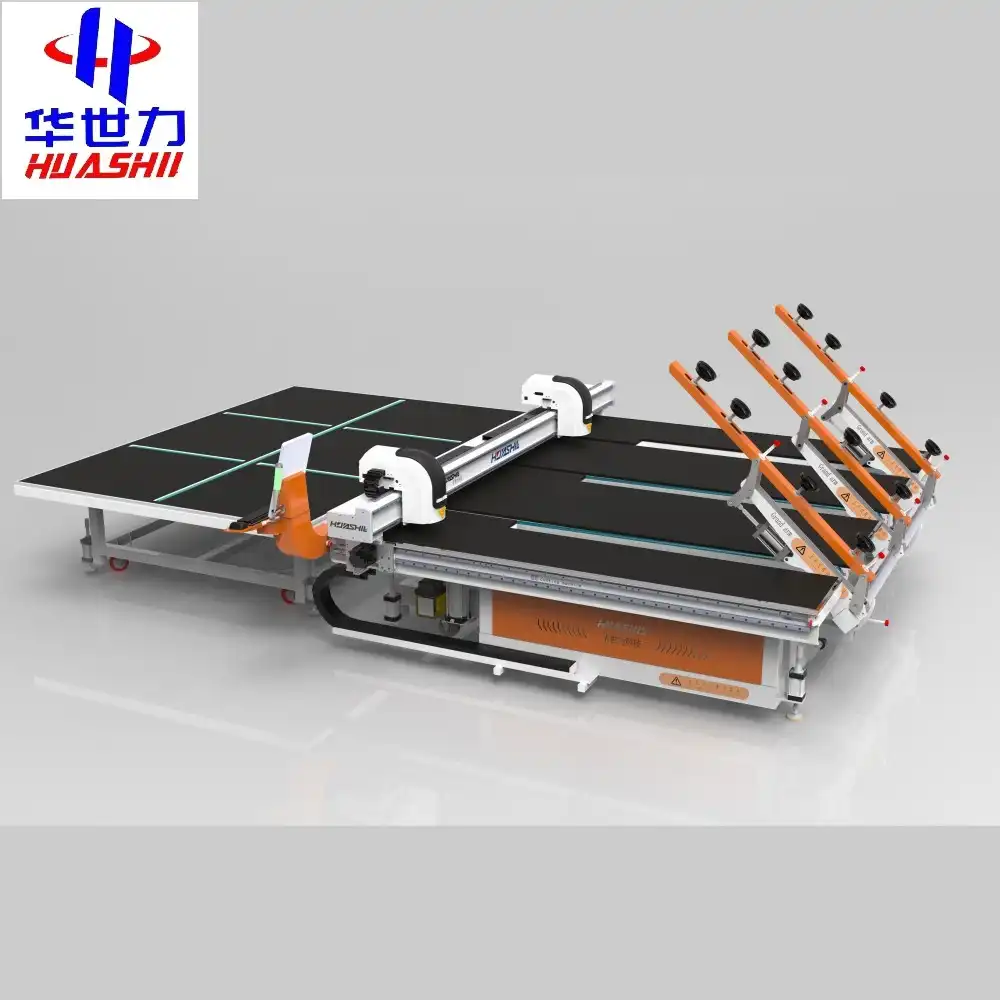
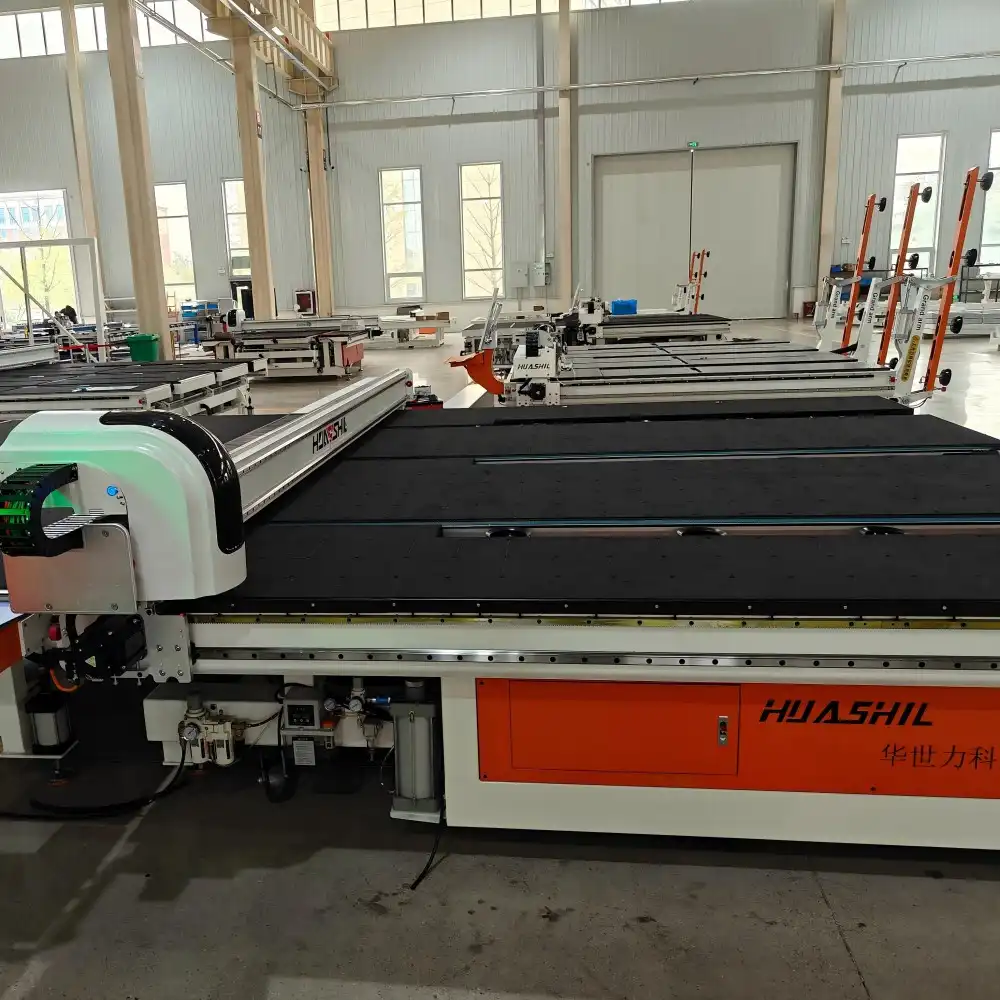
HUASHIL HSL-YTJ3826 shows this progression. One machine footprint of 5550×4925 mm can take glass sheets up to 3660×2440 mm and cut thicknesses from 2 to 19 mm, covering architectural panels, shower enclosures, curtain wall components, and furniture glass.
Deep automation is the clearest divide. Standard versions need manual glass positioning and pressure adjustment. Automatic loading, pressure management, and air flotation technologies eliminate contact damage while moving large-format or thin decorative glass on automated high-speed lines.
Performance and Efficiency Differences
Throughput, Precision, and Downtime
Production splits these divisions more than any other factor. Automatic CNC glass cutting lines can handle hundreds of sheets every shift with consistent edge quality.
The HSL-YTJ3826 uses Optima software to find the best material-efficient cutting arrangement before scoring. According to Freedonia Group (2022), optimum nesting software alone may save raw glass waste by 8–15% over human layout design. Material costs drop after every production run.
Real-time monitoring reduces downtime on fast computers. Automatic pressure control adjusts cutting force based on glass thickness, eliminating fast speed glass cutting machine trial-and-error. This eliminates micro-cracks, rejected parts, and rework labor, lowering annual production costs.
Integration with Industry 4.0 enhances these benefits. When a high-speed cutting line connects to upstream inventory systems and downstream edge or tempering lines, scheduling becomes proactive, and managers can check yield rates without walking the floor.
Evaluation of Features and Technical Advantages
Technical Capabilities That Matter in Practice
The feature set of an automated glass cutting system either justifies or disqualifies the investment, depending on your production profile. Here are the core advantages that distinguish high-speed automated machines from standard models:
- Automatic loading system: Eliminates manual sheet placement, reducing labor requirements and handling damage on large-format glass up to 3660×2440 mm.
- Air flotation table: Glass glides on a cushion of air during positioning, preventing surface scratches — critical for low-e coated or decorative glass where surface integrity affects product value.
- Automatic edge-finding: The machine locates the glass edge independently, removing alignment errors that operators introduce when positioning sheets manually.
- Integrated breaking table: Scoring and breaking occur within the same station, condensing two workflow steps and shortening cycle time per sheet.
- 360-degree remote control walking: Operators can monitor and control the cutting process from any position around the machine, improving both safety and workflow flexibility.
- Synchronous belt conveying: Glass transfers between stations at a consistent speed without slippage, maintaining cut-line registration from score to break.
These capabilities directly address production problems that standard machines cannot solve at scale. A curtain wall fabricator processing 500+ panels per day cannot afford alignment errors or manual repositioning delays. A furniture glass manufacturer running custom shapes needs automatic pressure adjustment to avoid chipping delicate edges. The HSL-YTJ3826 handles both scenarios within its standard configuration.
CE and ISO 9001 certifications confirm that the machine meets European safety directives and international quality management standards — documentation that procurement teams and project owners require before approving capital equipment purchases.
Procurement Considerations for B2B Buyers
Aligning Investment with Production Volume and Total Cost
Total cost of ownership (TCO) is more important than upfront pricing when comparing a normal cutter to an automated high-speed line. Standard fast-speed glass cutting machines are cheaper to buy but require more effort, material waste, and manual recalibration. Automated systems amortize premiums via decreased labor, scrap, and service intervals.
High-speed automated lines pay for themselves faster than purchasers expect for architectural glass factories or curtain wall fabricators with consistent daily volumes. Standard machines work for furniture glass businesses with shorter batches when task variation is high and volume per SKU is low.
Equally important is customization support. HUASHIL offers OEM and ODM versions for the HSL-YTJ3826, tailored to line layouts, upstream loading, and downstream conveying heights. Purchase managers comparing several suppliers should obtain after-sales support schedules, spare parts availability promises, and remote technical help, along with the basic price estimate.
HUASHIL accepts deposit plus final payment or Letter of Credit conditions for overseas automated glass cutting equipment purchasers.
Maintenance and Operational Best Practices
Keeping Your Cutting Line at Peak Performance
Automated cutting equipment rewards disciplined maintenance. The air flotation system requires periodic inspection of air holes and surface cleanliness to sustain smooth glass movement. Scoring wheels need regular replacement schedules based on linear meters cut rather than calendar time, since wear rates vary with glass thickness and composition.
Operator training should cover emergency stop procedures, pressure control overrides, and the basics of Optima software parameter adjustment. Well-trained operators catch early signs of wheel wear or conveyor belt tension drift before they generate rejects — a proactive habit that standard machine operators often develop by necessity but automated line operators must build deliberately.
Energy consumption is a practical sustainability metric. High-speed machines running full shifts benefit from scheduled maintenance windows that align with off-peak energy hours, reducing both operational costs and grid demand. HUASHIL's technical support team provides installation guidance and remote troubleshooting assistance to help facilities establish these routines from day one.
Conclusion
The decision between a fast speed glass cutting machine and a standard model ultimately comes down to production volume, material complexity, and long-term cost priorities. For high-output fabricators in architectural glass, curtain wall, or furniture manufacturing, automated systems like the HUASHIL HSL-YTJ3826 deliver measurable advantages in throughput, material yield, and labor efficiency. Standard machines remain appropriate for lower-volume or simpler cutting tasks. Matching the machine to the production requirement — not the reverse — is the principle that protects capital investment.
FAQ
1. How does a high-speed glass cutting machine improve production efficiency?
Automated systems like the HSL-YTJ3826 use optimization software, automatic loading, and integrated braking tables to eliminate manual steps between operations. This compresses cycle times and sustains output consistency across full production shifts without adding labor headcount.
2. What glass thicknesses can the HSL-YTJ3826 handle?
The machine processes glass from 2 mm to 19 mm, covering thin decorative glass, standard float glass, and thick architectural panels within a single configuration.
3. What certifications does the HUASHIL cutting machine carry?
The HSL-YTJ3826 holds CE certification and ISO 9001 quality management certification, meeting international safety and quality benchmarks required by most industrial procurement processes.
4. How does Optima software reduce material waste?
Optima calculates the most efficient cutting layout across each glass sheet before scoring begins, minimizing offcuts and maximizing usable yield per sheet — a direct reduction in raw material cost per finished unit.
5. Is after-sales support available for international buyers?
HUASHIL provides remote technical support, spare parts supply, and installation assistance for international customers. Buyers can reach the team directly at salescathy@sdhuashil.com to discuss support terms before purchase.
Request a Customized Quote from HUASHIL — Fast Speed Glass Cutting Machine Supplier
HUASHIL brings years of manufacturing and export experience to every automated glass cutting line we produce. The HSL-YTJ3826 combines CE-certified reliability, Optima software intelligence, and full automation features designed to increase your throughput and reduce waste. Whether you are evaluating a single fast speed glass cutting machineor a complete fabrication line, our team is ready to provide technical documentation, commercial proposals, and tailored configurations. Contact us at salescathy@sdhuashil.com to start the conversation.
References
1. Freedonia Group. Glass Processing Equipment: Global Market Analysis. 2022.
2. Glass International. Automation Trends in Flat Glass Fabrication. 2021.
3. Journal of Manufacturing Science and Engineering — ASME. CNC Motion Control in Precision Glass Cutting Applications. 2020.
4. Glass for Europe. Flat Glass Industry: Energy Efficiency and Sustainability Report. 2022.
5. International Journal of Advanced Manufacturing Technology. Optimization Algorithms for Sheet Material Nesting and Waste Reduction. 2019.
6. CE Marking Association. CE Certification Requirements for Industrial Machinery Under the Machinery Directive 2006/42/EC. 2021.