




Ranked by typical payback, the four stages of glass manufacturing automation run in this order: automated material handling first, automated cutting, processing, and inspection second, PLC and SCADA integration third, and a fully smart factory last. Handling usually returns the investment fastest because it cuts manual lifting, breakage, and idle time. Cutting and inspection follow, improving yield and consistency. Integration and smart factory projects cost more and take longer, yet they add traceability and planning strength. Your own labor cost, output, and scrap rate decide the final order, so I recommend testing every estimate against your plant data.
Why Payback Should Guide Glass Manufacturing Automation
Treat Automation as a Staged Investment
In my opinion, there is a greater potential for danger when a large number of facilities purchase automation for the production of glass at the same time. A strategy that is broken down into phases is more effective. A significant amount of money is required to repair anything. You keep a record of everything that occurs and put money aside in order to pay for the subsequent stage. People are gravitating toward automated handling, processing, inspection, and data gathering because it helps them save money, makes it more difficult to do safety responsibilities, and shortens the amount of time it takes to deliver products. While adjustments are being made, the plant manager is able to keep things operating smoothly with the assistance of a plan. Rather than a single substantial request for financial assistance, there are a number of smaller requests. Everyone has a certain objective in mind for the individual who contributes the money. Those who are interested in making a purchase may also compare estimates step by stage rather than comparing them to a single price.
What Payback Actually Measures
This is the amount of time that will be required for savings and additional funds to meet the cost of the equipment. More items that can be sold, fewer broken sheets, less downtime, and greater quality, which means less work has to be performed, are the five sources of these advantages in a glass factory. Fewer hours worked, more products that can be sold, and fewer broken sheets are the other sources. Additionally, take into consideration the prices of things. It makes no difference how inexpensive something is; the cost of repairs, training, and more components may soon add up to a significant amount of money. The fact that each engineer and buyer is aware of something that the other is not enables them to do the calculations more effectively jointly.
Why Your Own Data Comes First
The identical amount of money must be repaid by each and every company. The quantity of garbage produced, the number of goods manufactured, the frequency with which tools are used, and the size of the shifts that are put up all have a role in the events that take place. One facility that produces regular quantities over the course of three shifts will only get one return, whereas another plant that produces modest quantities for each individual client will receive a distinct return. Before you ask for rates, you should make a note of the number of operator hours that are recorded on each sheet, the frequency with which breaks occur, the amount of time it takes to swap over, and the amount of time that the machine is down each month. An overarching hope may be transformed into a statement that can be put to the test with the help of these data. The IEC 61131-3 standard from 2013 discusses languages that may be used to program items such as computers and other electronic devices. Because of this, engineers are able to discuss and evaluate various concepts for automating the glass production process.
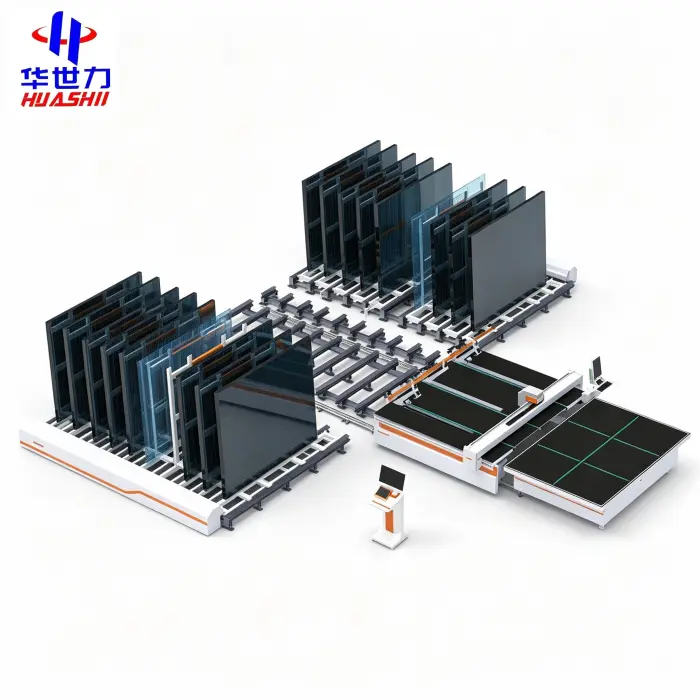
The Four Automation Stages Ranked by Payback
Stage 1: Automated Material Handling
Glass manufacturing automation handling comes first because it comes right after damage and work. In this step, we'll talk about vacuum lifts, conveyors, transfer tables, turning systems, safety monitors, and robots that can load and unload. It can be hard to work on other things when you have to lift big sheets over and over again. Even though it's easier with help, it still needs more than one person to run. Some machines move sheets along a set path with the help of a person. Fully robotic cells, on the other hand, need more money and programming to work with fewer people. Most of the time, plants that make a lot of things and have more than one shift get their money back here the fastest. As OSHA warned in 2007, it is very important to keep workers away from moving parts. To do this, make sure you have guards and scanners ready from the start.
Stage 2: Automated Cutting, Processing, and Inspection
In the second step, the machine is put in the middle of the run. Things like CNC edging, drilling, washing, tracking barcodes, and machine vision can help make things more accurate and keep them running longer. This is how this stage looks in our HSL-YTJ3829. It can cut glass up to 3660 mm x 2800 mm and 2 mm thick up to 19 mm thick. The machine puts the weight on itself, starts the press, and looks for edges by itself. An app called Optima makes the plans for cutting. In order to split the glass, synchronous belts move it, an air-floating system holds it in place, and a breaking table does the work. You can also walk around in a circle and steer the unit with a remote control. There should be clear rules about how often and how well inspection tools should be set up so that they help the person who is using them the most.
Stage 3: PLC, SCADA, and Production-Line Integration
A control and information layer connects the machines in the third stage. SCADAs have screens, alarms, a history of trends, and production reports that keep an eye on the line. A PLC keeps a machine running all the time. From one machine to another, jobs, recipes, and good results are sent. This means you don't have to do as much work by hand. You can quickly tell if something is wrong by reading the speed, temperature, and pressure. When the scale is bigger, it takes longer to get paid. You should think about old hardware, how to talk to each other, how to test and train people, and who owns the program. The NIST Special Publication 800-82 Revision 3 (2023) is about the safety of industrial control systems. Read it to make sure hacking was always part of the plan.
Stage 4: Smart, Fully Integrated Glass Factory
Orders, quality records, maintenance, energy use, and the flow of goods into and out of the building are all brought together in the fourth step. A lot of important parts of it are the Internet of Things (IoT), the links between MES and ERP, robotics, machine vision, automated storage, and digital scheduling. ISA-95, which came out in 2010, makes it clear how data can be shared between business systems and plant control systems. Builders can now use the same language to talk to each other. Some of the benefits that go beyond just saving time are being able to trace, plan, and keep track of how much energy is used per unit. It takes the longest to pay off because it costs a lot and needs strong, skilled staff. This is the best time for a business that does a lot of work and always sells the same things. Most plants are made up of stages one and two.
Comparing the Stages, Choosing Equipment, and Avoiding Mistakes
How the Four Stages Compare and Where to Start
It's best to take care of things when there's a lot to do, someone could get hurt, or something is about to break. The next step in glass manufacturing automation is usually to cut, process, and check. You'll get more output, more volume, and less rework after taking these steps. They pay off quickly and fairly. It costs more to connect PLC and SCADA together, but it makes things better, more reliable, and easier to use. A smart factory is the best way to make money in the long run. It takes the most time to earn back its value. Things could go in a different direction. In a new building job, tools for cutting and moving things around may be put in at the same time. In a repair job, on the other hand, machines that are already in good shape might be put together first. After looking at the list, figure out which bottleneck costs the most. The HSL-YTJ3829 can cut sheets that are between 2 and 19 mm thick and 3660 mm long.
Evaluate the Supplier, Not Just the Machine
A good review of a seller looks at more than just the prices. For the HSL-YTJ3829, ask for the CE and ISO9001 stamps. ISO 9001:2015 spells out what a quality management system must do. It's not just time. It also says that you are in charge of everything. It's important to get clear business plans with buy-back terms and know how long you'll have to wait for spare parts for repairs. Find out how to set up the machine and teach the workers how to use it. Also, see if you can get OEM or ODM services in case your plan calls for them. Picks for single tools are made most of the time in a few weeks. Tech work, site checks, and getting the money passed can make it take three to six months for full lines.
Roll Out in Phases and Avoid Costly Mistakes
I believe you should first look at the flow of things like trash, breaks, materials, and changes. Next, test your technical and financial assumptions on a small scale to see how well they work. One example is filling that is done automatically and plans the layout of the cuts. Once it works, use shared recipes, job data, and alarms to link processes that are close to each other. There should be plant acceptance testing, site acceptance testing, user training, and a review of key performance indicators (KPIs) after launch as part of each step. Not having enough time or workers who aren't trained can't be fixed by a fast cutter, so most people buy one before they figure out what the real issue is. Some people only look at the price and don't try it out with different types of glass. To figure out ROI, use data from the business and keep expected gains separate from wins that are guaranteed.
Conclusion
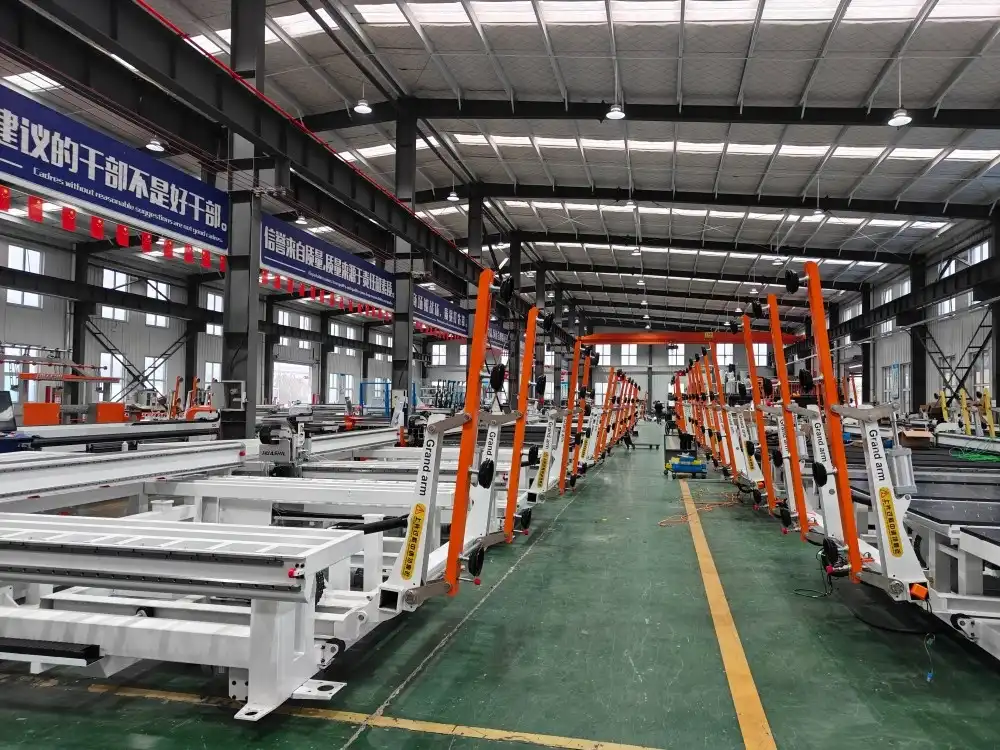
It works best to take small steps and check your work after each one when making things out of glass. A lot of the time, moving things around in glass manufacturing automation pays for itself by reducing damage and heavy lifting. After being cut, processed, and checked, the yield and quality will be better. At this stage, the HSL-YTJ3829 does a good job. It can handle sheets that are up to 3660 x 2800 mm and between 2 and 19 mm thick. Of course, it loads, controls pressure, and finds edges on its own. It costs more to combine PLC and SCADA, but it gives you more information and more uptime. Still, a smart plant is the best in terms of value for money and long-term worth. What kinds of goods are made, how much they cost, how many are made, and how much it costs to own everything all affect the real results. It should compare the score to its own data before putting money into a plant.
FAQ: Glass Manufacturing Automation
1. What is glass manufacturing automation?
Glass manufacturing automation means more robots, sensors, software, and tools will be used to move, cut, process, check, and track glass. People will not have to do as much work by hand. There are many kinds of scopes, from a single cutter that loads itself to a smart factory where everything works together.
2. Why does material handling often pay back first?
When you handle things, you break them less, move them more than once, and wait less between steps. A lot of people work in factories that make many things, so the money saved adds up quickly. The exact time will still rely on how long their shifts are and how much they charge.
3. How do PLC and SCADA differ?
A PLC is always in charge of a machine. It keeps an eye on many machines and shows records, alarms, and trends. Most lines that connect to each other use both.
4. What should I ask a supplier before buying?
Check the processing time, the software, the safety features, the certificates, the spare parts, the training, the guarantee, and the time it takes for service to respond. Check out the software, the cycle time, the range of thicknesses, and the largest glass size. The HSL-YTJ3829 can work with sizes up to 19 mm thick and 3660 x 2800 mm. It has the CE and ISO9001 marks on it.
Plan the Right Glass Manufacturing Automation Stage with HUASHIL
Pick the step that will save you the most money first. In Shandong, HUASHIL is a company that helps the glass business by providing glass manufacturing automation. They make the HSL-YTJ3829, and it's approved by both CE and ISO9001. You may also pick OEM. We'll look over your glass sizes, thickness range, and daily output after you send them to salescathy@sdhuashil.com.
References
1. International Federation of Robotics, World Robotics Report, 2023
2. Occupational Safety and Health Administration, Safeguarding Equipment and Protecting Employees from Amputations, 2007
3. National Institute of Standards and Technology, Special Publication 800-82 Revision 3, Guide to Operational Technology (OT) Security, 2023
4. International Society of Automation, ANSI/ISA-95 Enterprise-Control System Integration, 2010
5. International Organization for Standardization, ISO 9001:2015 Quality Management Systems, 2015
6. International Electrotechnical Commission, IEC 61131-3 Programmable Controllers, Programming Languages, 2013