




A mobile glass cutter machine is a portable device that scores, places, and breaks glass sheets with controlled precision. It is well suited for factories requiring flexibility in architecture and big-format capability, but without a huge permanent line. I am talking to customers that make architectural glass, curtain walls, furniture, and shower doors, and the same questions come up over and over again. How big, how accurate, and how much support? This article will explain how the HUASHIL HSL-LSX6133 cuts sheets up to 6100 × 3300 mm, and how to assess any machine before you purchase.
How a Mobile Glass Cutter Machine Works
The Score-and-Break Principle
A regulated score is the first step in glass cutting. A cutting wheel makes a small imperfection on the surface. Bending tension along that line leads to a neat fracture through the sheet. Shelby’s writings on glass science explain the relationship between surface defects and fracture. Only if wheel pressure, position, and sheet support are steady can a machine repeat successful cuts. And that’s why table design is as important as the cutting head. When I discuss this with engineers, I tell them to look at a mobile glass cutter not just by its stated speed, but by how flat and stable it keeps the sheet.
Three Tables, One Workflow
The HSL-LSX6133 has three tables: loading table, cutting table, and breaking table. The operators put the sheet on the loading table, and the sheet goes to the cutting table for scoring and the breaking table to separate the pieces along the score lines. “Each step has its own space so handling steps are short and well defined.” That division makes the process simpler to teach, oversee, and assess for plant management. It provides engineers with unambiguous places to verify whether a dimension wanders.
Optima Software and Cutting Layouts
The layout design is important since glass is usually the most expense of a work. The HSL-LSX6133 employs Optima, an optimization program that places your essential parts on each sheet to minimize waste. With big sheets, good layouts are what matter most; every wasted strip costs actual money. I would propose emailing us a typical cut list from your facility. We may then explain how the program can accommodate your order mix from basic window lites to unique furniture and partition sizes.
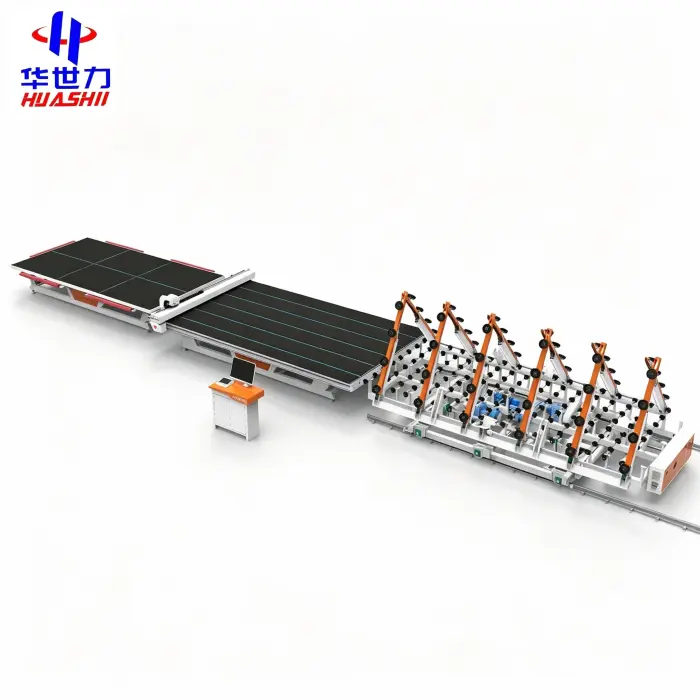
HSL-LSX6133 Configuration and Specifications
Maximum Glass Size of 6100 × 3300 mm
The HSL-LSX6133 processes glass up to 6100 × 3300 mm. That's around 20 feet by 10.8 feet in U.S. measures. These sheet sizes are suitable for curtain wall panels, big partitions, and giant architectural lites. They also bring up practical considerations: the width of the doors, the height of the ceiling, the lifting capability of the crane or vacuum lifter, and the area surrounding the mobile glass cutter machine. I would advise purchasers to map out the sheet route from storage to the loading table before buying. A quick layout assessment by our experts may uncover clearance difficulties before the equipment is delivered.
Above-Ground or Under-Ground Rail
You are able to position the rail above ground or beneath ground. An above-ground rail means you don't have to dig into the floor, which is useful if you lease a facility or want to transfer equipment later. The subway rail also helps maintain the walking and cart route flatter, which is important when workers traverse the machine area often. The proper decision relies on your floor condition, plant design, and traffic flow. Send us your plan, and our engineers will visit your site to determine the best rail type for you.
2+2 Stations and Six Grand Arms per Side
The station configuration is 2+2, and may be arranged to suit your workflow. Each side has six great arms. Long sheets require support at multiple spots; therefore, I would advise asking for a video demonstration of how the arms operate with your glass sizes. Configurable stations also enable a plant to configure the machine to its product mix rather than change its workflow to match the equipment. That flexibility is appealing to integrators who construct bespoke lines for projects.
Choosing a Mobile Glass Cutter Machine for Your Plant
Match the Machine to Your Industry and Role
Every buyer interprets a spec sheet differently. Architectural glass plants and curtain wall integrators are concerned with high format capacity and reproducible configurations. For furniture, shower door, and partition producers, unique sizes and fast changeovers are important. Plant managers look at production and labor; engineers look at accuracy. HUASHIL reports ±0.1 mm precision for their mobile glass cutting machine line. Price, warranty, and delivery are considered by procurement and finance departments. Check your varieties of glass against ASTM C1036 for flat glass. ASTM C1048 covers heat-toughened and completely tempered glass that normally cannot be cut after treatment. So cut first and temper afterward.
Compare Mobile and Stationary Options
Between the manual tools and the massive fixed lines, there is a mobility system. It requires less permanent infrastructure, accommodates space constraints, and provides reliable outcomes with less operator fatigue than hand cutting.” For operations with continuous, high-volume production and automated loading and breakout, a fixed line may still be appropriate. Smaller firms may begin with a tiny glass cutting machine, which is good for compact floor space and low volume. I would suggest looking at production goals, sheet sizes, manpower, and floor space all together. By matching the machine to actual workload, you avoid paying for capacity you will never utilize.
Total Cost, Delivery, and Support
Price is only one component of the choice. The total cost of ownership also includes installation, operator training, maintenance, replacement parts, and downtime. Ask for delivery terms in writing, such as EXW, FOB, or CIF. Common payment conditions for foreign orders include a deposit with full payment, or a letter of credit. Decisions on individual mobile glass cutter machines may frequently take weeks, while whole lines and specialized systems might take three to six months because of technical assessment, site visits, and budget approval. HUASHIL supports OEM and ODM demands to enable integrators to establish project lines.
Operation, Maintenance, and Safety
Daily Operating Checks
Safe outcomes start before the first sheet is cut. Inspect cutting wheels, rails, table supports, sensors, electrical connections, and emergency stop buttons. Ensure the glass is clean and well fitted. Then specify the glass type, thickness, and design in the program. “Always test the first piece when working with unknown glass.” Watch for chipping, vibration, or skipped scores while the machine cuts. Break and measure dimensions and straightness, noting down findings. These records let you catch drift early and provide engineers data to work with as they tweak the process.
Maintenance Routine
Routine upkeep helps preserve accuracy and uptime. Each shift, clean tables and rails of glass shards and dust, inspect cables and sensors monthly, and oil moving parts as specified in the handbook. Regularly back up job files and evaluate alerts. Keep extra cutting wheels and other worn parts on the shelf, so a tiny part never interrupts a production day. When comparing providers, inquire about the delivery time for replacement parts, the availability of remote help, and the warranty response time, because automated equipment relies on rapid service.
Safety and Compliance in the U.S.
Big glass sheets pose significant risks; thus, prepare safety early. OSHA’s guideline on equipment safeguarding describes how guards and controls protect workers from contact with moving components of machines, while ISO 12100 provides a methodology for machinery risk assessment. ANSI Z97.1 addresses safety glazing materials for use in buildings if your completed goods are intended for use in building applications. I would recommend that you ask for the machine’s safety papers and instructions before purchasing, educate all operators, and provide cut-resistant gloves and eye protection. Clear lifting methods and reliable support of big panels also reduce the danger of handling.
Conclusion
The HSL-LSX6133 demonstrates how a mobile glass cutter may achieve large-format capability with a straightforward workflow. Its loading, cutting, and breaking tables are independent for each step; Optima software draws out the layouts of the sheets, and the maximum size of 6100 x 3300 mm is suitable for big panels. The rail location, 2+2 stations, and six grand arms per side allow a factory to configure it to its floor and product mix. Choosing wisely implies matching mobile glass cutter machine size and automation to the actual workload. Tempering glass usually cannot be cut after tempering. Price should be weighed with overall cost, delivery conditions, and service support. Routine inspections, constant maintenance, and consideration of OSHA, ISO 12100, and ANSI recommendations preserve consistency of results and safety of personnel.
FAQ
1. What is the maximum glass size of the HSL-LSX6133?
The maximum glass size is 6100 × 3300 mm, or about 20 by 10.8 feet. Before you order, check your door width, lifting equipment, and floor space so the sheet can move from storage to the loading table without obstacles.
2. Can I cut tempered glass with a mobile glass cutter machine?
Fully tempered glass generally cannot be cut after tempering. Cut annealed glass to size first, then send the finished pieces for tempering. This order protects both the glass and your schedule.
3. Can I configure the rail and stations?
Yes. The rail can sit above ground or underground, and the 2+2 stations can be set. Share your plant layout and product mix, and our engineers will suggest a setup that fits your workflow.
Request a HUASHIL Mobile Glass Cutter Machine Quote
HUASHIL is a mobile glass cutter machine manufacturer with years of production and export experience. Send your glass size, output target, and rail preference to salescathy@sdhuashil.com, and our team will recommend an HSL-LSX6133 configuration. We reply with clear technical and commercial information so your engineers and purchasing team can decide with confidence.
References
1. ASTM International, Standard Specification for Flat Glass (C1036), 2021
2. ASTM International, Standard Specification for Heat-Strengthened and Fully Tempered Flat Glass (C1048), 2018
3. American National Standards Institute, Safety Glazing Materials Used in Buildings (ANSI Z97.1), 2015
4. Occupational Safety and Health Administration, Safeguarding Equipment and Protecting Employees from Amputations (OSHA 3170), 2007
5. International Organization for Standardization, Safety of Machinery: General Principles for Design, Risk Assessment and Risk Reduction (ISO 12100), 2010
6. James E. Shelby, Introduction to Glass Science and Technology, 2005