




A glass bilateral edging machine is a cutting-edge piece of automation technology that can work on both sides of a glass panel at the same time. This makes high-volume manufacturing much more efficient. These high-tech machines have advanced dual-head grinding systems and precise transport mechanisms that finish the edges in a uniform, high-quality way while cutting processing time by a large amount compared to older machines that only edge one side. Modern systems for two-sided edging combine servo-controlled automation with flexible designs, making them essential for companies that make building glass, curtain walls, and furniture glass and want to improve their production capabilities.
Understanding Glass Bilateral Edging Machines and Their Operational Principles
The basic idea behind glass bilateral cutting machines is that they can work two sides at the same time. They use complex mechanical systems to make production more efficient. The cutting heads on these machines are very modern and work together perfectly to finish both edges of glass panels in a single pass through the production line.
Core Components and Mechanical Configuration
The way the grinding wheels are set up and how they are controlled are the most important parts of any bilateral cutting system. Advanced models have 12 grinding wheels on each side, with 2 top chamfers, 2 lower chamfers, and 8 flat grinding wheels carefully placed. This all-in-one setup lets you do all of the edge processing steps, from rough shape to fine smoothing, all at the same time.
Both the automatic opening and closing and the moving system are controlled by servo motor technology, which ensures accurate placement and steady processing speeds. The servo-controlled opening system can handle glass panels that are between 0.35 meters and 2.5 meters thick, making it very flexible for a wide range of production needs. Because of this, makers can work with a wide range of glass sheets, from small decorative pieces to large building glass sheets, without having to change the tools they use.
Operational Advantages Over Single-Side Processing
When compared to standard single-sided edging ways, the cheap glass double side grinding machine's bilateral handling saves a lot of time. In traditional methods, the cutting process takes more than one pass or a different machine for each edge. But with bilateral systems, the whole process is done in just one pass. Because they are so efficient, they can double flow rates and require half as much work. This makes them especially useful in high-volume production settings.
The precise control systems make sure that the quality of the edges is the same on both sides, which gets rid of the differences that can happen when edges are processed separately. Servo motor control allows for precise movement and repetition, which are very important for keeping measurements accurate in precision glass applications.
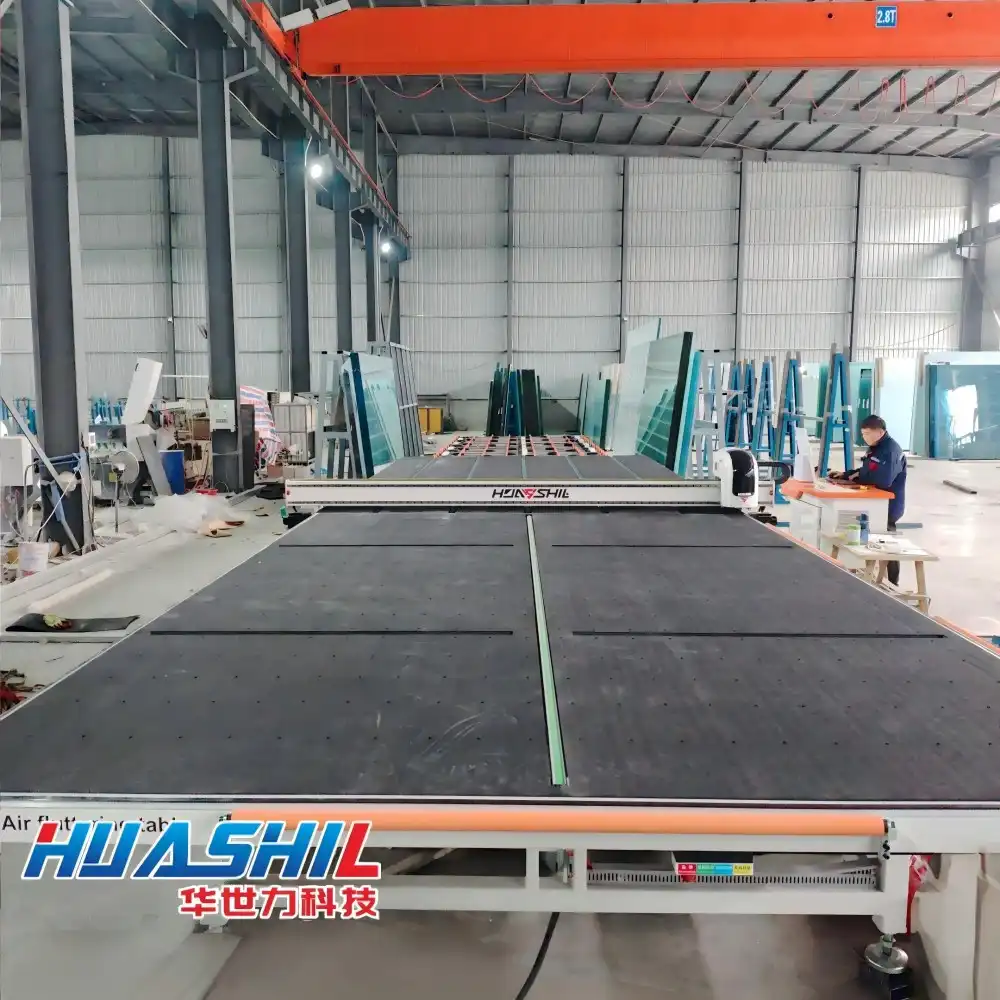
Benefits and Applications of Bilateral Glass Edging Machines in Modern Production Lines
When modern glass factories use bilateral edging technology, they get big operating gains that have a direct effect on their profits and productivity. These tools solve important problems in industry and create new opportunities for making products and growing the market.
Enhanced Throughput and Lead Time Reduction
When compared to single-sided processing equipment, production sites that use bilateral edging systems usually see output rises of 50 to 80%. This improvement comes from not having to do as many dealing tasks and setting up each processing step, taking less time. Manufacturing sites say that order delivery times have gone down by a lot, which lets them respond to customer needs faster and put themselves in a better position to compete.
Quality, Consistency, and Waste Reduction
Bilateral processing makes sure that the edge quality is the same on both sides of the glass panel, which almost always happens with sequential processing. Because they are managed by servos, the systems keep the pressure and positioning the same throughout the whole process. This makes the surface finishes and measurements constant.
Cutting down on waste and redo is a direct result of improving quality. Companies that make things say that switching from human or single-sided processes to bilateral technology cuts waste by 15 to 25 percent. This is an improvement because there is no longer any damage from handling, and there are fewer processing differences that can cause rejection rates.
Versatile Application Across Industries
The main situations where two-sided cutting machines are very useful are listed below:
- Architectural Glass Processing: This includes curtain wall systems, window manufacturing, and structural glazing that need exact measurement control and consistent edge quality to keep out the weather and keep the structure strong.
- Making windshields and side windows for cars, where safety standards require regular edge strength and exact size limits to ensure proper fit and structural performance
- Furniture and interior design: glass countertops, shelf units, and decorative panels need to have safe, smooth edges that look good and have the same level of end quality.
- Smart Mirror and Display Industries: Interactive mirror panels and display glass need precise edges so they can work with computer parts and mounting systems without any problems.
These examples show how versatile bilateral edge technology is for a wide range of manufacturing needs, from making a lot of cars to making one-of-a-kind buildings.
Choosing the Right Bilateral Glass Edging Machine for Your Business Needs
To choose the best bilateral edging system, you need to carefully look at your long-term business goals, output needs, and technical specs. Knowing the important selection factors makes sure that investment choices are in line with manufacturing skills and business goals.
Production Capacity and Technical Specifications
Analyzing present and planned production volumes is the first step in figuring out a machine's potential. Depending on the thickness of the glass and the complexity of the edges, high-speed symmetrical edgers can usually cut 15 to 25 linear meters per minute. Bilateral automation works best for facilities that process more than 1,000 square meters of material every day. Smaller businesses may find that semi-automatic systems are more cost-effective.
Long-term running costs are greatly affected by how much energy is used. These days, servo-controlled devices use 20–30% less energy than hydraulic ones, but they are more accurate and reliable. Power needs are usually between 15 and 30 kW, but this depends on how the machine is set up and how much work it can do.
Automatic Versus Semi-Automatic Systems
Automatic split edgers in the glass bilateral edging machine have built-in systems for loading, processing, and emptying that allow you to use them without using your hands at all. These setups work well in high-volume production settings where steady output and little work are required to make the business profitable. Servo motor control makes it possible to precisely automate all tasks, from placing the glass to changing the cutting power.
Semi-automatic systems need a user to load and set up, but they do the real edging on their own. For factories that don't make a lot of things or that need to switch between different types and sizes of glass often, this setup saves money.
Customization and the ability to be an OEM
Modern tools for symmetrical cutting can be changed in a lot of ways to meet the needs of different production scenarios. Different types of glass, a range of thicknesses, and edge shapes can be accommodated by changing the setups of the grinding wheels, the lengths of the conveyors, and the control systems. This freedom is especially helpful for companies that make specialized glass goods or serve a wide range of customers.
Through OEM relationships, two-way edging systems can be added to full production lines that include automated handling systems, quality checking tools, and packing solutions. These all-around methods get the most out of automation while making sure that process integration goes smoothly.
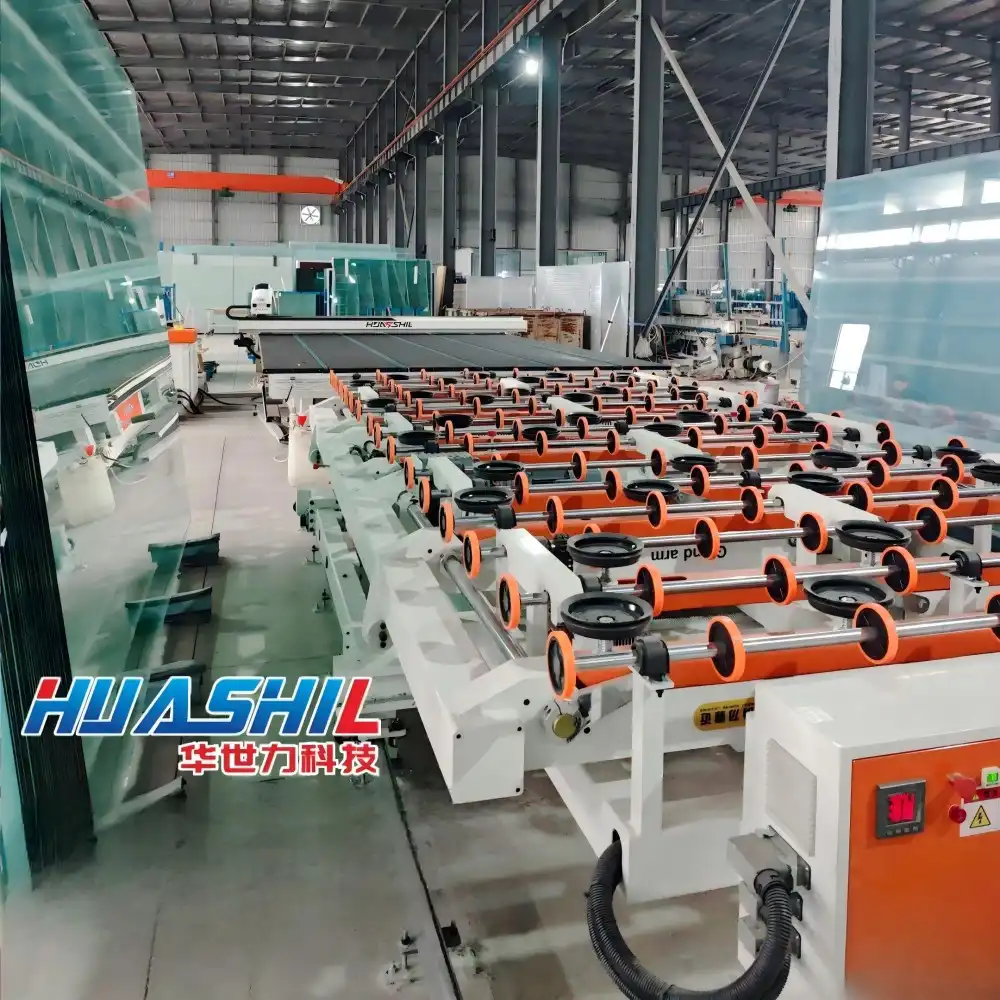
Operating, Maintaining, and Ensuring Safety with Bilateral Glass Edging Machines
Bilateral cutting systems work at their best as long as they are used as long as they are maintained and operated according to the right procedures. By knowing these standards, facilities can make sure that equipment works as efficiently as possible while still keeping workplaces safe.
Setup and Operational Optimization
Setting up a machine means changing the speeds of the conveyor belt, setting the positions of the grinding wheels, and writing the servo control parameters for different types and sizes of glass. Modern control systems can store many setup settings, which makes switching between production runs quick and easy.
The main goal of operational optimization is to keep processing parameters constant while keeping an eye on quality markers. In real time, servo motor control systems let workers know about changes in positioning accuracy, processing speeds, and grinding power. This lets them make changes right away when they happen.
Preventive Maintenance Protocols
Scheduled repair keeps technology running at its best and increases its useful life. Important upkeep tasks include checking and replacing grinding wheels, calibrating servo motors, and lubricating the conveyor system. Facilities usually have repair plans that cover different parts of the system every day, every week, and every month.
When to change the grinding wheels depends on how much glass is being made and what kind of glass is being used. Wheels may need to be changed every week in places with a lot of traffic, but once a month or longer in places with mild traffic. Keeping the grinding wheels sharp provides a uniform edge quality and eases the load on the drive systems.
Safety Protocols and Regulatory Compliance
Safety concerns include both protecting the user and protecting the tools. Bilateral cutting machines need full guarding systems, emergency stop controls, and locking systems that stop them from working when safety devices aren't being used. For the safety of the operator, modern machines have light screens, pressure-sensitive mats, and systems that shut down automatically.
Compliance with laws varies by area, but usually includes OSHA safety rules, electricity codes, and environmental rules. For installation to be done right, electricity lines must be certified, ventilation systems must be acceptable, and local building rules must be followed. Regular safety checks make sure that rules are being followed and find possible dangers before they happen.
Navigating Procurement, Installation, and After-Sales Support for Bilateral Glass Edging Machines
A successful application of a bilateral edging machine includes more than just the choice to buy one. It also includes the installation, training, and ongoing assistance needs. Knowing about these things will help the project go smoothly and ensure long-term operating success.
Sourcing Options and Financial Considerations
Buying a new machine gives you access to the newest technology, full guarantees, and full support packages. Traditional loans, leasing, and company credit schemes are all ways to pay for tools. When figuring out the total cost of ownership, you should include the costs of installation, training, and upkeep over the expected life of the equipment.
The markets for used tools offer affordable options for businesses that don't have a lot of money or specific needs. When evaluating a used machine, however, it is important to carefully check the wear parts, the usefulness of the control system, and the availability of extra parts. Costs of renovation and upgrades can have a big effect on total spending amounts.
Professional Installation and Integration Services
Professional installation makes sure that the equipment is set up correctly and works with the production systems that are already in place. Installation services usually include preparing the base, connecting the electricity, setting up the pneumatic system, and doing the first testing. Installation teams with a lot of experience can set up a bilateral edger in three to five days, based on how complicated the system is and what the building needs.
To make sure that the flow of materials and quality control systems work smoothly with current production lines, integration needs to be carefully planned. To get the most out of automation and keep production running smoothly, conveyor links, automatic handling systems, and quality inspection tools must work well.
Warranty Coverage and Technical Support
A full warranty for a cheap glass double side grinding machine covers your investments in tools and gives you peace of mind during the first few months of use. Standard guarantees usually cover important parts for 12 to 24 months, but critical systems can get longer coverage. The terms of the warranty should cover parts, labor costs, and promises for how quickly technical help will respond.
Ongoing technology support makes sure that operating problems are fixed quickly and that users can get help from experts to find ways to improve things. Popular brands offer technical support lines that are open 24 hours a day, seven days a week, as well as online diagnostic tools and on-site help when needed. Building ties with qualified service providers guarantees that there will be little downtime and that production will stay efficient.
Conclusion
Glass bilateral edging tools are an important piece of technology for modern glass factories that want to make the most of their production space while still keeping high-quality standards. When compared to older single-sided processing methods, these more modern systems offer big improvements in output, quality consistency, and operating efficiency. Bilateral edging technology is very useful for high-volume production environments because it can be controlled by servo motors, has a wide range of grinding wheel designs, and can be automated in a way that fits your needs. For execution to go smoothly, production needs to be carefully considered, the system must be installed and trained correctly, and it must be maintained regularly to ensure long-term success and a good return on investment.
FAQ
Getting to know the basic questions and concerns that most people have about paired edging technology helps hiring teams make smart choices. These commonly asked questions are about things that need to be thought about in order to be implemented and run.
Q1: How often do bilateral edging machines require maintenance?
Basic cleaning and visible checks of grinding wheels and safety systems are part of daily maintenance. As part of weekly maintenance, conveyor parts are oiled, and the tuning of control motors is checked. A full check of the electrical systems, repair of grinding wheels as needed, and a thorough cleaning of all machine parts are all part of the monthly upkeep. For steady performance, facilities that work more than one shift may need repair more often.
Q2: What efficiency improvements can I expect compared to single-side processing?
Compared to single-sided options, bilateral handling usually improves output by 50 to 80%. Because there is less time for moving things around and setting up between processes, a lot less labor is needed. Improving quality stability cuts down on waste and extra work, which leads to even more efficiency gains. When going from manual or single-side processing to bilateral automation, the overall efficiency of the tools often goes up by 40 to 60 percent.
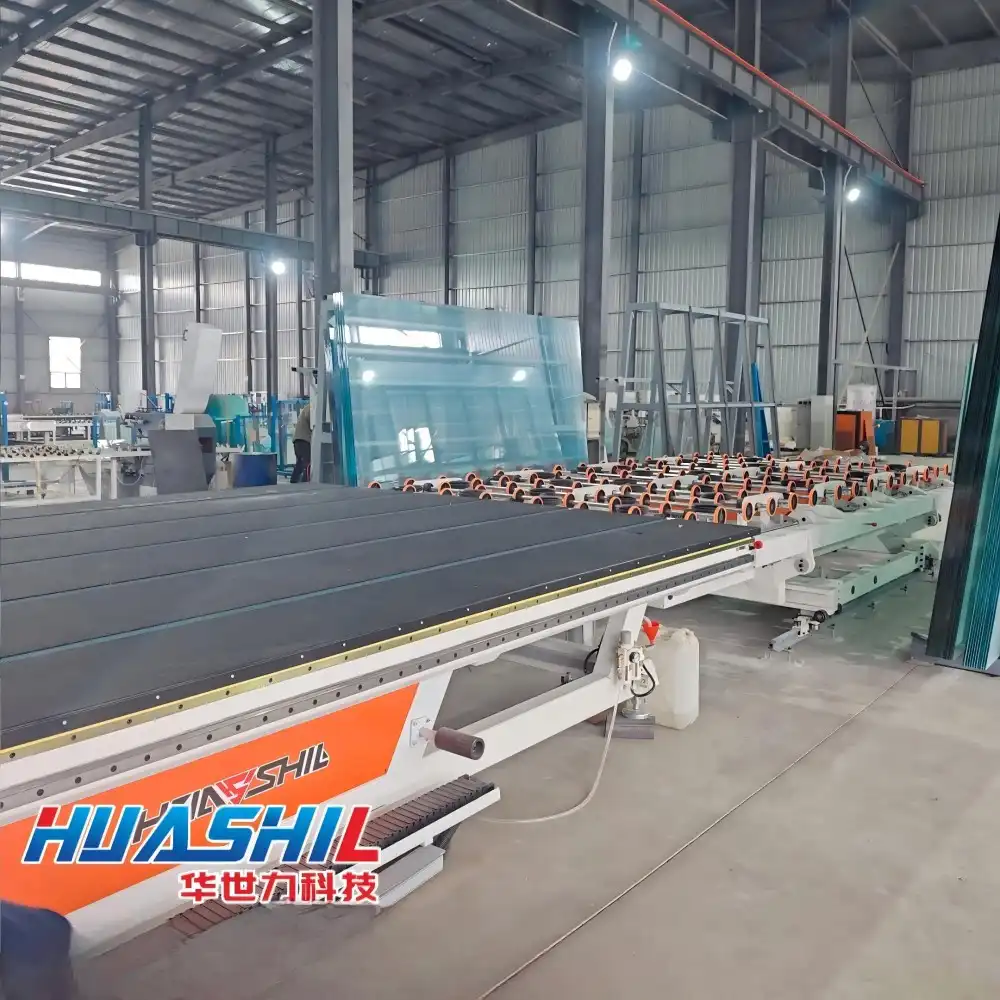
Q3: Can bilateral edgers process tempered and laminated glass safely?
When the right working settings are kept, modern tools for symmetrical edging can handle tempered glass well. Servo motor control lets you precisely change the pressure to keep the glass from being stressed to the point where it breaks. To keep the lamination from coming apart during processing, special grinding wheels and changed cooling systems are needed. For these specific types of glass, safety rules include better storage methods and different ways to handle them.
Partner with HUASHIL for Advanced Glass Bilateral Edging Solutions
HUASHIL offers state-of-the-art bilateral slicing technology made just for high-speed production settings that need unmatched quality and dependability. Our high-tech servo-controlled systems have 12 grinding wheels on each side and can chamfer any shape. They can handle glass panels from 0.35 meters to 2.5 meters in length and width, and they can be fully customized to fit any needs. As a top provider of glass bilateral edging machines, we offer full help, from the original consultation to installation and ongoing expert support. Get in touch with our knowledgeable staff at salescathy@sdhuashil.com to talk about your unique needs and find out how our tried-and-true bilateral cutting solutions can improve your production.
References
1. Glass Manufacturing Technology Review: Advanced Edge Processing Systems for Industrial Applications, International Glass Technology Association, 2023.
2. Automation in Glass Processing: Bilateral Edging Machine Performance Analysis and Industry Benchmarks, Manufacturing Technology Research Institute, 2024.
3. Safety Standards and Operational Guidelines for High-Speed Glass Processing Equipment, Occupational Safety and Glass Industry Council, 2023.
4. Energy Efficiency and Sustainability in Glass Manufacturing: Servo-Controlled Processing Systems, Green Manufacturing Technology Journal, 2024.
5. Total Cost of Ownership Analysis for Glass Processing Equipment: Bilateral vs. Single-Side Edging Systems, Industrial Equipment Economics Review, 2023.
6. Quality Control and Precision Engineering in Glass Edge Processing: Modern Bilateral Edging Technologies, Glass Technology and Engineering Quarterly, 2024.