




A glass cutting loading machine eliminates handling expenses by transporting sheets from the rack to the cutting table using vacuum arms, not humans. That modification decreases labor hours, reduces breakage, shortens cycle times, saves material, reduces forklift traffic, reduces accident risk, and offers factories more flexibility for mixed orders. In this essay, I explain how the system works, go through seven real savings, and illustrate how our HSL-LSX5133 loading, cutting, and breaking line matches each one. I created it for plant managers, engineers, and purchasers who want to see data before they commit to an investment.
How a Glass Cutting Loading Machine Works
In an automated line, a sheet is lifted from the rack, pulled by suction cups, and deposited on the cutting table. The sensors check that the sheet is there and in the appropriate location. The CNC controller controls the cutting pattern. The sheet moves from the cut to the broken on the breaking table, then to further procedures such as sorting or edging. “The more handoffs a machine makes, the fewer lifts an operator has to do.” Plant managers frequently tell me that these tiny handoffs are the single largest hidden expense on the floor.
From Rack to Breaking Table
The HSL-LSX5133 includes three tables: a loading table, a cutting table, and a breaking table. It may operate on an elevated or in-ground track, and the 2+2 stations can be tailored to your floor layout. It has five huge holding arms on each side to hold the sheet. The biggest piece of glass that can fit is 5100 x 3300 mm. Glass weighs roughly 2.5 kilograms per square meter per millimeter; therefore, a sheet that large would weigh about 252 kg. NIOSH indicates that the highest a single human should be able to lift is about 23 kg; thus, machine handling is the best choice at this level.
What the HSL-LSX5133 Offers
The line is run by Optima software, which arranges orders on each page to minimize waste. It also contains a feature for suppressing low-e signals. This operation removes the edge cover on low-e glass so it may be edged and sealed at a later time. This is an important feature, since many energy-efficient windows contain coated glass. This function removes a distinct step that must be done by hand. I always tell customers to email us their glass list. We can be confident that these functionalities operate with their items.
Optima Software and Low-E Deletion
(Note: The provided text for the glass cutting loading machine mechanism was mapped to the preceding sections to maintain the technical flow of the HSL-LSX5133 description).
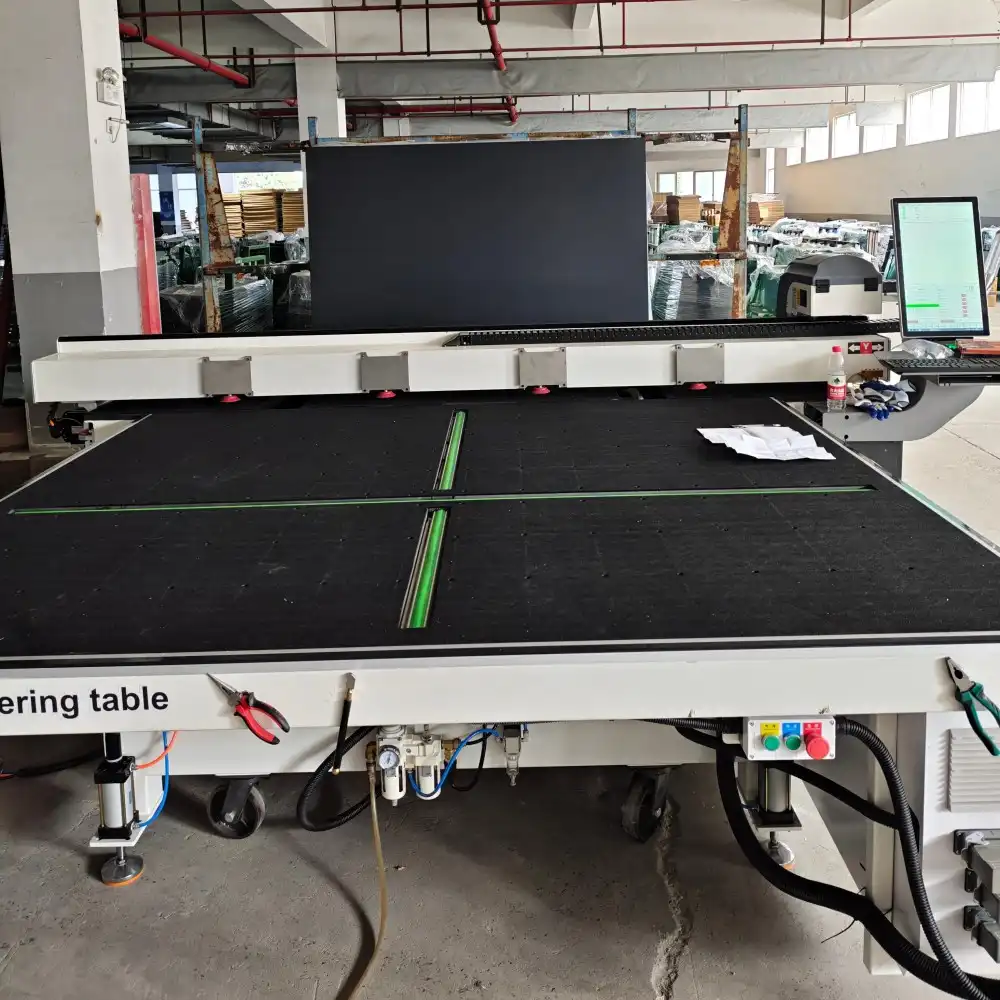
Ways to Reduce Handling Costs
Reduce Manual Labor Through Automatic Glass Loading
Each shift often needs more than one person to load large sheets by hand. The HSL-LSX5133 has vacuum arms that do the lifting, so workers can move on to quality checks, inspections, and coordinating orders. The number of workers per shift, pay rates, overtime hours, and daily sheet number can help you figure out how much money you'll save. Once you have that number, compare it to the number of people the line needs. When a plant has two or three shifts, the gap gets bigger because each shift needs its own handling crew.
Minimize Glass Breakage, Scratches, and Edge Damage
Most damage from handling comes from dragging, tipping, and having an uneven grip. When you use controlled vacuum pulling, the load is spread out over the cups and the action stays steady. Each side has five grand arms that help hold up long sheets, which is important for sheets up to 5100 mm long. I suggest keeping track of the number of scratches, chips, and breaks for a month before and after installation. This way, you can get your own numbers. Every time they don't have to remake something, they save glass, cutting time, and delivery time.
Shorten Loading and Cutting Cycle Times
The line can work on different sheets at the same time because it has separate boards for loading, cutting, and breaking. The next sheet can be put in place while the current one is being cut. This cuts down on the time needed to wait for a forklift or manually align the sheets. I tell buyers to look at the line speed and the downstream capacity side by side. A fast cutter that feeds a slow step for sorting or shaping only moves the back of the line.
Improve Material Utilization and Reduce Glass Waste
To cut down on waste, the Optima program groups orders onto each sheet. This is because every piece of waste has to be moved, stored, and hauled away. Look at the plans that Optima makes from your real order list and compare them to the return per sheet that you're getting now. For jumbo stock, a 5100 × 3300 mm sheet is almost 17 square meters, so even a small gain adds up.
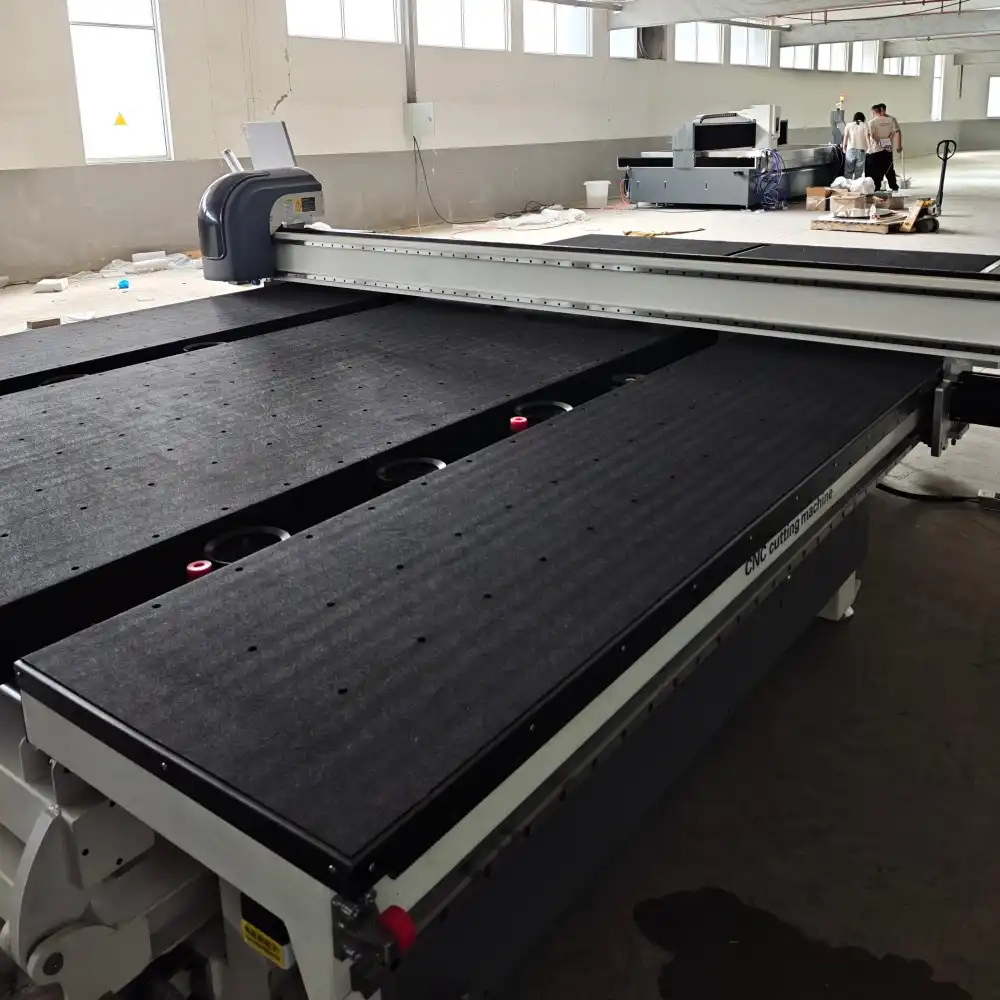
Reduce Internal Transport and Equipment Requirements
You don't need as many forklifts, cranes, and staging areas when the arms can move the glass directly from the rack to the table. The aisles become clearer, and fewer cars cross the floor. We can make the line fit your building whether you choose above-ground or underground rail. Moving things around and transporting them are examples of waste in lean manufacturing literature, so every move you get rid of counts. If you bring your plan drawing with you, we will check the position of the racks, the direction of the transfers, and the width of the aisles.
Reduce Workplace Risk and Unplanned Downtime
It is not safe for anyone to lift a 252 kg sheet by hand, so businesses use safety teams and cranes. A machine keeps people away from the load. ISO 12100 tells machines how to reduce risks, so I think you should ask each provider how their guarding and emergency stops use these rules. Plan to check the vacuum pumps, sensors, belts, and suction cups often. Before you sign a contract, make sure you know how to get spare parts and service.
Increase Production Flexibility and Long-Term Return on Investment
The line can handle sheets that are up to 5100 × 3300 mm, so the same glass cutting loading machines can be used for standard stock, jumbo panels, and small custom batches. Price, shipping, installation, training, energy, maintenance, software, and spare parts are all part of the total cost of ownership that you should use to judge return. Then add material gains, less work, and less need for remakes. You shouldn't count on one optimistic prediction; instead, you should run low, medium, and high number cases.
Choosing the Right Glass Cutting Loading Machine
Automatic Loading vs. Manual Loading
Even if your shop does not do much work, has odd projects, or is on a short budget, hand loading is still an excellent idea. It requires additional personnel, as the cycle duration and where individuals are put changes from sheet to sheet. Automatic loading means the motion is repeatable and the output is more steady shift to shift. If you have bottlenecks, not enough workers, high rejection rates, or more orders, you should keep track of four numbers: the number of operators each shift, the average cycle time, the daily production, and the quantity of material wasted. Those metrics will tell you if automation makes sense for your firm.
Applications Across Glass Industries
This sort of line may be used to make glass for doors, windows, and curtain walls. It can also accommodate auto glass, smart mirrors, furniture, or ornamental glass like shower doors and wall panels. Each application requires precision, surface contact, and program linkages in distinct ways. Please let us know what items you use so we can make sure the tables, tools, and software work with your workflow.
Calculating Savings and Preparing Your Quote Request
Start with the manual baseline: Operators per shift, Time to load each sheet, Breaks per month, Cost of internal transit, Overtime. Then add the cost of the equipment, shipping, setup, commissioning, and training. Figure out what the adjustments are going to cost. When you ask for a price, provide the varieties of glass, their size and thickness, their daily production, rack configuration, factory setup, and power supply. If you would want to negotiate payment conditions ( L/C or deposit and amount ) , we are delighted to discuss .
Conclusion
Handling costs are incurred because of items such as labor, damage, downtime, waste, internal transit, risk of injury, and inflexible manufacturing. A glass cutting loading machine may solve all these issues. It substitutes human lifts with controlled vacuum transfer. The HSL-LSX5133 is equipped with a 2 + 2 station rail, 5 grand arms on each side, Optima software, and low-e deletion for sheets up to 5100 x 3300 mm. It also contains tables for loading, cutting, and splitting. Weight-wise, a sheet that thick weighs in at about 250 kg. So better to move it by machine. Buyers should evaluate the number of workers, cycle time, production, and material waste before and after automation to know the genuine savings.
FAQ
1. What is a glass cutting loading machine?
It loads, positions, and cuts large sheets of glass automatically. This cuts down on manual work and makes things safer and more efficient. With the HSL-LSX5133, tables for loading, cutting, and breaking are added to the process.
2. What are the highlights of a glass cutting loading machine?
Some of the best things about it are its high precision for both architectural and automotive glass, its automated loading and cutting that cuts down on labor and human error, its long-lasting parts, and its many safety features that keep operators safe.
3. What are the applications of a glass cutting loading machine?
It works with architectural glass for walls, doors, and windows, as well as auto glass, smart mirrors, and furniture or decorative glass that needs to be shaped to fit.
Request a Glass Cutting Loading Machine Proposal from HUASHIL
Shandong Huashil Automation Technology Co., LTD has been making and sending goods overseas for many years. Send your sheet sizes, glass types, and daily output to salescathy@sdhuashil.com so that a glass cutting loading machine manufacturer can give you a quote based on your real production data. When we get back to you, we'll suggest an HSL-LSX5133 configuration and delivery plan.
References
1. Applications Manual for the Revised NIOSH Lifting Equation, NIOSH, 1994
2. Ergonomic Guidelines for Manual Material Handling, NIOSH and CAL/OSHA, 2007
3. ISO 12100: Safety of Machinery – General Principles for Design – Risk Assessment and Risk Reduction, ISO, 2010
4. ASTM C1036: Standard Specification for Flat Glass, ASTM International, 2021
5. Introduction to Glass Science and Technology, James E. Shelby, 2005
6. Lean Thinking, James P. Womack and Daniel T. Jones, 2003
