




An industrial cutting machine for stained glass windows pays for itself when it cuts labor hours, scrap, and rework faster than it adds cost. You measure that by comparing the full purchase cost against yearly savings and added capacity, then tracking payback. In this guide, I walk through how the technology works, how to calculate ROI, and what to check before you buy. I also show how the HSL-YTJ3829 from HUASHIL fits fabricators who cut large flat glass sheets for architectural, decorative, automotive, and smart mirror work.
Why Automated Glass Cutting Changes Your Production Math
Where Manual Cutting Falls Short
Hand tools and basic saws are good for making prototypes, fixing things, and making one-of-a-kind art pieces. It starts to go wrong when orders come back, panels get bigger, and delivery dates get closer. The edges and sizes aren't always the same from shift to shift because each operator cuts in their own way. Chipped edges need to be fixed again, which costs money, time, and the trust of the customer. Large sheets are also hard on the people who work on them because they have to move and lift heavy panels by hand, which slows down work and makes it more likely that someone will get hurt. The process is more consistent with an industrial cutting machine for stained glass windows. This helps the plant manager plan jobs and know how much work will be done each shift.
Core Cutting Technologies Compared
When people look at tools, they often see manual cutters, diamond saws, ring saws, CNC systems, waterjet machines, and automatic glass cutting lines. Diamond and ring saws work well in studios and for small jobs. CNC and waterjet systems are more expensive to buy and run, but they can cut large panels and forms that are hard to cut. Auto-cutting lines like the HSL-YTJ3829 score the paper and then cut it along the score. It's always done this way to cut flat glass. Pick a machine that can handle different designs. If it's good at making straight cuts, it might not be good at making freeform shapes. Check the software, the cooling, the consumables, and how well it works with the rest of your line.
Which Industries Use This Equipment
This machine works well with wall, door, and window decorative glass. Besides that, it can cut glass for smart mirror designs, glass for decorations and furniture, and parts for cars. In the US, these markets are home to companies that make furniture, windows, curtain walls, and shower doors. Each group cares about different things. So that they can finish their projects on time, integrators need to know that their deliveries will arrive on time. Not so for people who make furniture. They want clean edges that are simple to edge or temper. Send your hardest drawing to a cutting machine for stained glass windows as a test run before you decide. This way, you can see how it works with your real patterns.
How to Calculate ROI for a Glass Cutting Machine
Count the Full Investment
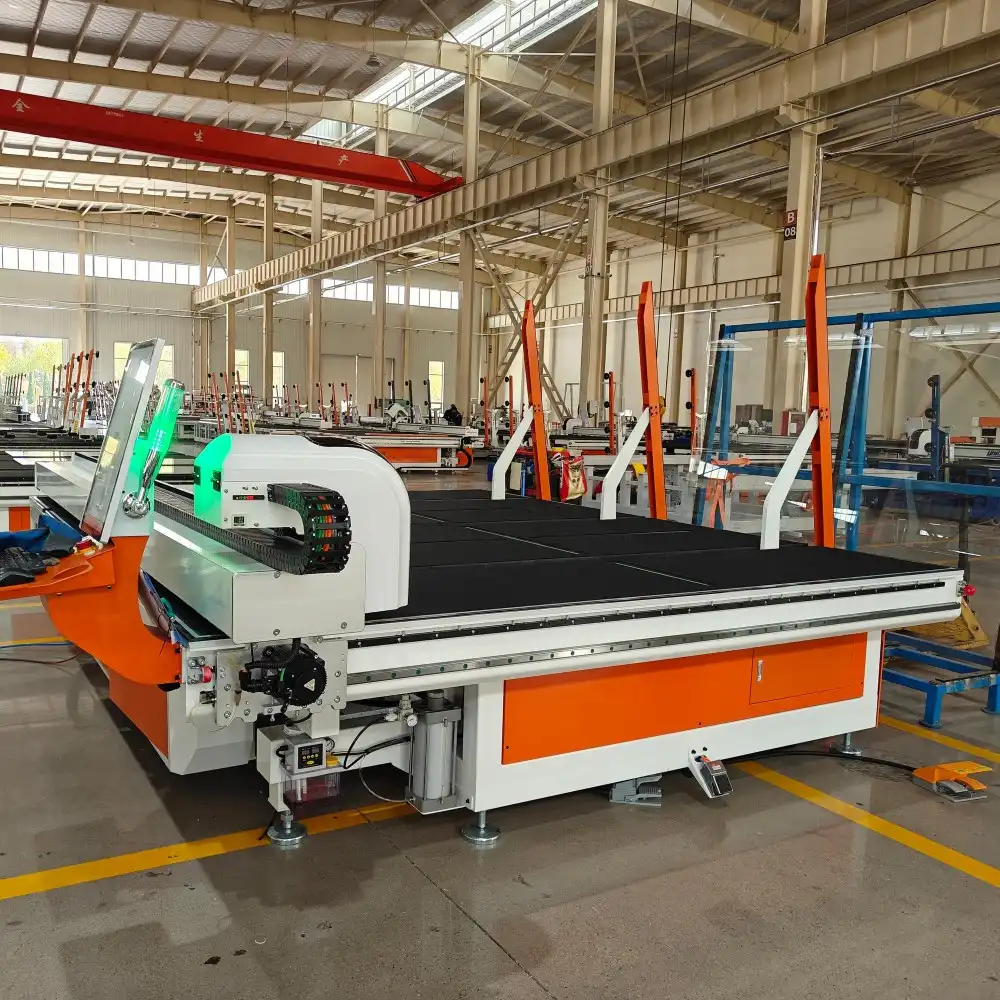
Start by writing down the cost and every dollar you plan to spend. Along with tools, there is freight, onshore transport, installation, commissioning, training for operators, connecting power and air, and getting the floor ready. It all adds up. The HSL-YTJ3829 is 5780 mm long and 4925 mm wide, which is 19 feet and 16 feet. To get the right size, measure your floor and add extra room for loading and unloading. Next, add up all the costs that come with running the business each year, like rent, supplies, repairs, spare parts, money, and time off. Getting these things in writing is best for procurement teams, since a low price with hidden fees can negate the savings.
Measure the Benefits
Things that cut down on work hours, waste, mistakes, and hiring are faster delivery and better work. Add up how much money you'll make by taking on more work. To find out how long it will take to get your money back, divide the total payment by the amount you save each month. Taking the benefits away from the operating costs gives you the net savings. Finance teams learn how to use this method from standard books on corporate finance. When they make big purchases, many of them also check the net present value. Take what you learned from your shop and use it. Let us say that a few points' worth of scrap on pricey tinted glass goes down. You can put a dollar amount on that gain.
Track KPIs and Avoid Common Mistakes
Watch the first-pass yield, the amount of material used, the output per operator, the average cutting time, and the time it takes to get the money back. They should be looked at again in three, six, and twelve months. A lot of the time, people make the mistake of only comparing buy price, focusing on table size while missing small-part performance, skipping extra parts and service checks, and not thinking about how the business could grow in the future, like by adding more workspace or combining data. Short-term, a less expensive machine that is harder to improve may cost more in the long run. Make a note of your starting point before the installation. They need it in order for you to show them the result.
HSL-YTJ3829 Specifications and Features
Key Specifications
The HSL-YTJ3829 is made for big flat glass. It can hold glass that is 3660 × 2800 mm, which is 144 × 110 inches. This is big enough to hold large sheets. It can cut glass that is 0.08 to 0.75 inches thick, or 2 to 19 mm thick. In other words, it can cover both thin decorative panels and thick architectural lites. It's 5780 mm long and 4925 mm wide. The glass is moved along synchronous belts, which make the movement steady and simple. There are two certifications for the machine: CE and ISO 9001. This helps buying teams that need proof of conformity for customer checks and inspections.
Automation Functions
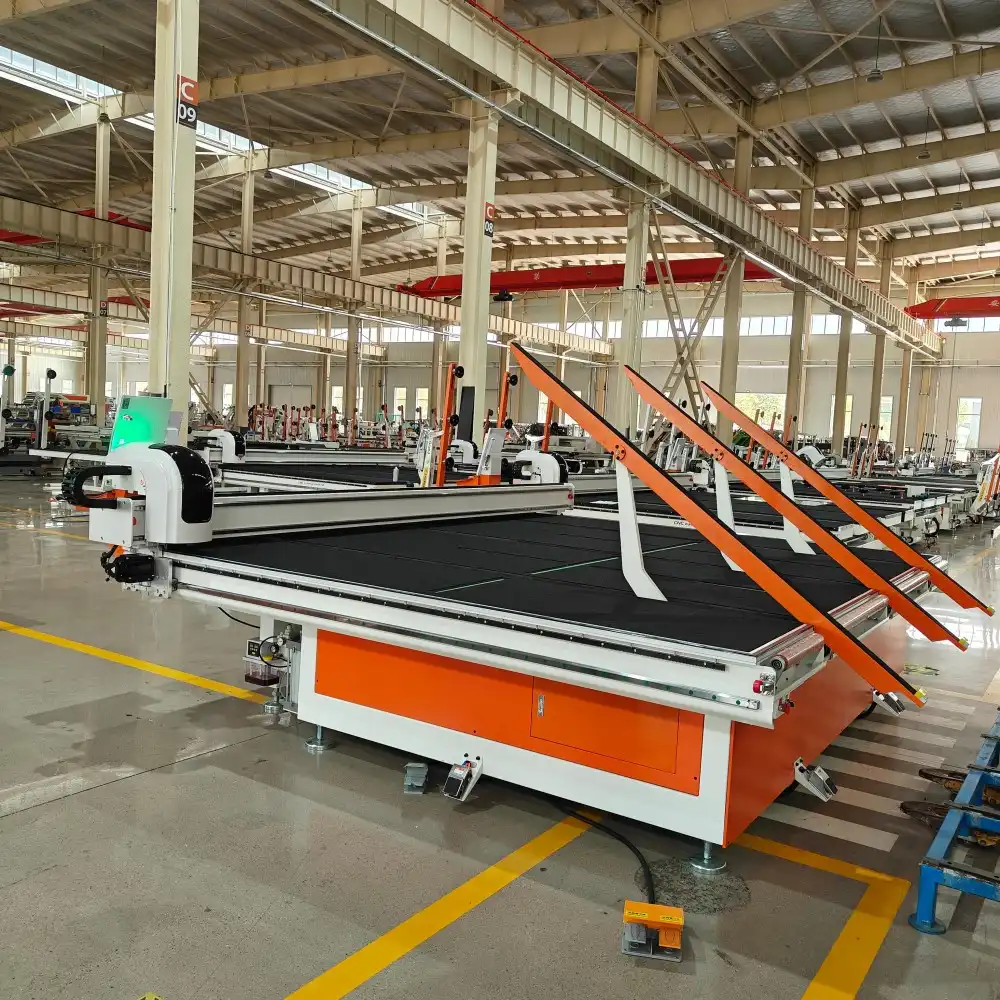
You don't have to lift the sheets by hand because they are put on the table for you. The glass's edge is found automatically before it is cut, and the cutting pressure is changed automatically to fit the glass. This is important for cutting machine for stained glass windows thicknesses between 2 and 19 mm. The sheet is raised on an air cushion by the air float device. Heavy panels can move with less surface contact this way, so there is less chance of scratches. A broken table backs up the break after scoring. Because the remote control can walk in any direction, operators can control the machine from a number of locations. These functions help make sure that results can be repeated by different users and cut down on the amount of work that needs to be done by hand.
Optima Software and Waste Control
Optima software plans where each piece will go on each sheet. It costs more to buy specialty glass like colored, textured, or dyed glass, but better plans cut down on waste. This saves money on specialty glass. Having a list of things you want to cut out makes it easy to use the machine. Cutting plans and order records can be linked to make it easier to keep track of things and place repeat orders as linked production grows. If you use ERP or CAD/CAM systems, please let our experts know which file types and interfaces work best for your process before you place your order. It will take less time to train people and get paid back if you set higher standards for software compatibility right away.
Buying and Implementation Checklist
Define Your Specification First
Include the number of orders you get every month, how much you think they will grow, the types of glass you sell, how thick they are, the sizes of your sheets, and the split between straight cuts and other shapes. Add your standards for the quality of the edge, the tools that are provided, the skill level of the operator, and your safety needs. And if the specs are clear, you won't buy a machine that's too big or that you'll only need for a year. Plants in the US should also read over the rules for machine guarding because OSHA gives help on how to keep things safe. The HSL-YTJ3829 limits say that sheets can be between 2 and 19 mm thick and 3660 mm by 2800 mm in size. Compare your list to these limits. You can quickly move on to quotes if your work fits in.
Supplier and Procurement Checklist
The Shandong Huashil Automation Technology Co., LTD company. designs, builds, and sells mechanical equipment. It's been a long time since they made and sent goods abroad. Make sure you get clear FAT and SAT acceptance criteria, technical specs, sample-cutting results, example projects, installation requirements, and clear FAT and SAT acceptance criteria from anyone before you buy from them. It's important to compare quotes based on the total cost of ownership, which includes things like shipping, software, training, refills, extra parts, service calls, and more. Make sure the contract has details about warranties, how long it takes to get replacement parts, and how to get help. A Letter of Credit, a down payment and the full amount due at the end, or both are popular ways to send money abroad. Talk to your business team about what they think is the best choice.
Implementation and ROI Verification
Before the installation, write down how much labor, scrap, repair, outsourcing, and cycle time cost right now. Once it's arrived, you'll need to train the operators and support staff, tell them how to do their jobs, and plan for regular upkeep. Before you accept something, don't just use standard samples; test your real patterns too. Then, compare the new data to the old data three, six, and twelve months later. If you only need approval for one machine, it only takes a few weeks. For full production lines, it takes three to six months because of the technical review, site visits, and financial approval. That's why you should plan ahead of time. One at a time, add things like loading, inspection, or software updates as the need for them grows.
Conclusion
It's worth the full price of a cutting machine for stained glass windows when you think about how much work, scrap, rework, and extra room it saves. For bigger orders, automatic systems let you repeat steps, but manual tools work better for tests and small amounts. To find the return on investment (ROI), you need to keep track of the first-pass yield, the amount of material used, and the payoff after three, six, and twelve months. The HSL-YTJ3829 can work with glass that is up to 3660 mm x 2800 mm and 2–19 mm thick. It can load itself automatically, control the pressure, find edges, float air, have a breaking table, and come with Optima software. The money you spend is safe because the rules, sample tests, and terms of acceptance are all very clear.
FAQ
1. What glass sizes and thicknesses can the HSL-YTJ3829 cut?
It can cut sheets that are up to 3660 mm x 2800 mm and 2 to 19 mm thick. Before you place your order, please let our team know about any glass types you work with.
2. How do I calculate payback on a glass cutting machine?
If you save money every month, divide the total amount you spend by that amount. Costs should be thought of for things like training, supplies, and setup. There will be less waste, less work, and more orders can be filled.
3. Which certifications does the machine carry?
CE and ISO 9001 have both approved it. Get the papers when you buy them so that your team can store them until they can be looked over and checked.
4. Does the machine reduce glass waste?
To help cut down on waste, Optima optimization software plans out how to cut things. How much money you save will rely on the mix of sheets you order and their sizes.
Request a Quote for a Cutting Machine for Stained Glass Windows Supplier
HUASHIL brings years of production and export experience to the HSL-YTJ3829, which carries CE and ISO 9001 certification. If you are comparing a cutting machine for stained glass windows supplier, send us your glass sizes, thicknesses, and monthly volume, and our team will recommend a fitting configuration. Email salescathy@sdhuashil.com for details.
References
1. ASTM International, Standard Specification for Flat Glass (ASTM C1036), 2021
2. International Organization for Standardization, ISO 9001: Quality Management Systems – Requirements, 2015
3. European Parliament and Council, Machinery Directive 2006/42/EC, 2006
4. Occupational Safety and Health Administration, Safeguarding Equipment and Protecting Employees from Amputations (OSHA 3170), 2002
5. Brealey, Myers, and Allen, Principles of Corporate Finance, 2020
6. Shelby, Introduction to Glass Science and Technology, 2020
