




A glass transport table line is a structured series of automated handling stations that move, position, and process glass sheets through each production stage without manual intervention. In modern glass fabrication plants, this type of system connects loading, cutting, and breaking operations into one continuous workflow. When properly configured, it reduces glass breakage, cuts labor costs, and keeps output consistent across shifts. For plant managers and engineers evaluating new equipment, understanding what drives performance in these systems is the first step toward making a sound capital investment.
Understanding the Role of Glass Transport Tables in Automation
Manual glass handling has always carried risk. A single misaligned grip or uneven surface contact can scratch or shatter a sheet worth hundreds of dollars. Automated glass handling systems replace that guesswork with mechanical precision, and the transport table is where that process begins.
Why Manual Transport Creates Production Losses
In facilities still relying on manual trolleys or wooden tables, breakage rates during transport can reach 2–5% per shift, according to industry observations across flat glass processing plants. Scratches, edge chips, and alignment errors all trace back to inconsistent human handling. These losses accumulate quickly when processing large architectural glass sheets.
How Automation Changes the Equation
Automated transport tables use sensor arrays to detect glass position, weight distribution, and edge alignment before any movement occurs. This real-time feedback prevents misfeeds and reduces contact damage. The result is a measurable drop in scrap rates and a more predictable production rhythm that plant managers can plan around.
The Connection Between Transport and Downstream Quality
Every station downstream—cutting, edging, tempering—depends on the glass arriving correctly positioned. When the transport stage is automated, downstream machines receive consistent inputs, which means fewer rejects and less rework. This dependency makes the glass handling line one of the highest-leverage points in any fabrication investment.
Key Features of the HSL-LSX4228 Automated Glass Transport Table Line
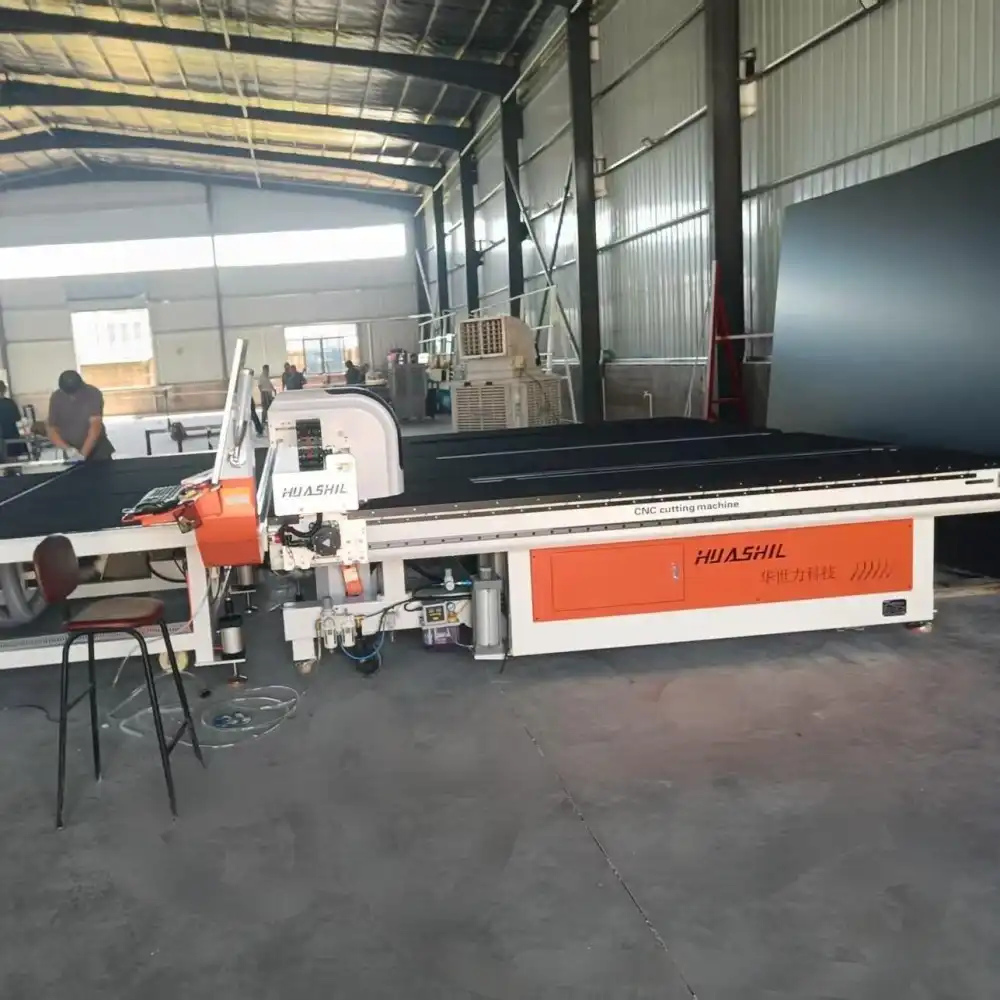
The HUASHIL HSL-LSX4228 has three workstations that are all built in. These are a loading table, a cutting table, and a breaking table. All of these work together to make a full glass processing line that can handle sheets up to 4200 x 2800 mm. In terms of technology, these are the main things that make this system unique.
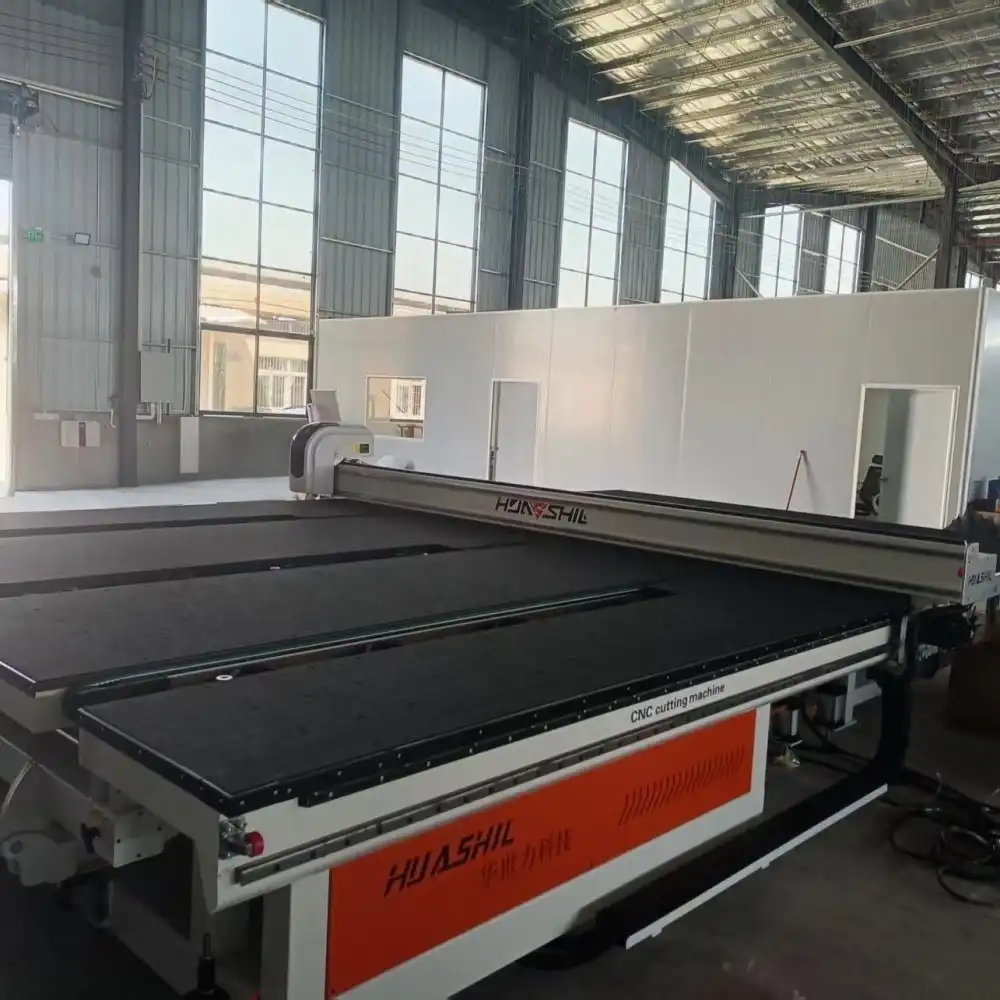
Three-Station Processing Architecture
Raw glass sheets are put on the loading table and fed into the line. The cutting table then makes programmed cuts using Optima optimization software, which figures out before each run which cutting design will use the least amount of material. The cycle is finished by the breaking table, which cleanly separates the cut pieces. Because the central control system lets each station talk to the others, time and handoffs are always the same.
Above-Ground and Underground Rail Options with 2+2 Station Configuration
The glass transport table line HSL-LSX4228 can be used for both above-ground and underground rail systems. This gives plant planners options based on how the building is laid out and the type of flooring used. The standard 2+2 station layout can be changed to fit different production needs and floor areas. There are four large arms on each side of the line that grip and place the sheet across the whole width of the glass screen.
Optima Software for Material Optimization
The settings for the cutting table are built right into the Optima program. It looks at each sheet of glass and makes a cutting plan that reduces the amount of waste from the edges. This software-driven method directly lowers the cost of raw materials per order for businesses that process a lot of high-quality glass, like Low-E coated or laminated architectural glass. Engineers can either load their own cutting plans or let Optima make them based on the parameters of the order.
The HSL-LSX4228 is a good choice for architectural glass plants, curtain wall fabricators, and furniture glass producers who need a high-throughput processing line that can be used over and over again. With a variety of train choices, station counts that can be changed, and optimization software, real production bottlenecks can be fixed without having to make expensive changes to the facility.
Evaluating Glass Transport Table Options for Your Business
Every automatic glass production line isn't going to work for every job. Before making a purchase, procurement teams need to make sure that the specs of the equipment they want to buy match the way they actually make things.
Weight Capacity and Glass Size Range
The HSL-LSX4228 can work with glass that is up to 4200x2800mm, which is the size of most architectural and curtain wall panels sold in the U.S. Buyers who are working with smaller sheets of decorative or furniture glass can change the way the station is set up to work with shorter sheets without slowing down the process.
Automation Level vs. Total Cost of Ownership
Full automation lines cost more up front than semi-manual ones, but over the next three to five years, the total cost of ownership figure usually works out better for automated systems. A faster return on investment is caused by fewer workers being needed, less waste, and less time spent on repairs. The financial case for technology is especially strong for places that have two or more jobs.
OEM and Customization Support
HUASHIL offers OEM and ODM options for buyers who need the line to be changed to fit a certain building size, type of glass, or to work with other equipment they already have. Curtain wall integrators and window factories need to know this because the production line needs to connect to tempering furnaces, edging machines, or automated packaging systems that are already in place.
Best Practices for Operating a Glass Transport Table Line Safely
To get the most out of a glass transport table line automated glass handling system, you need to be consistent with how you use it. Precision is taken care of by technology, but operators and engineers are still very important to keeping the system running smoothly.
Pre-Operation Inspection and Setup
Before each shift, operators should make sure that the sensors are calibrated correctly, that the grippers on the grand arm are not worn, and that the rail surfaces are clean and free of any debris. The HSL-LSX4228 has four grand arms on each side that provide consistent gripping force. However, over time, worn pads can lower the quality of contact. The tools and the glass it handles are both safe because of a 10-minute check before each shift.
Load Balancing and Feed Alignment
It is very important to put the glass on the loading table at the right angle and in the right place. Even when setting is done automatically, sheets that come in out of place can cause sensor mistakes or the system to stop. By teaching operators the right way to feed, cycle interruptions can be cut down and throughput can stay steady. Using the full arm span of the grand arms on both sides for sheets up to 4200x2800mm makes sure that the weight is spread out evenly during transport.
Maintenance Scheduling for Long-Term Reliability
HUASHIL suggests a regular repair plan that includes lubricating the rails, updating the Optima software, and calibrating the cutting table sensors on a regular basis. For U.S. buyers who work in different time zones, the supply of spare parts is a real issue. HUASHIL keeps a stock of spare parts on hand and offers remote technical help so that when parts need to be replaced, there is little downtime.
Procurement Considerations and Support for Glass Transport Table Lines
Buying an automatic glass processing system is a big investment that needs to be thought through in terms of technical, financial, and practical issues.
Pricing Structure and Bulk Options
HUASHIL has standard prices for single-line configurations and different prices for orders with multiple lines or for the whole facility. You can talk about volume-based pricing with us directly if you are a large fabrication plant or a construction integrator buying equipment for more than one project site. Standard payment terms are a deposit followed by the balance. For international orders, a Letter of Credit is accepted.
Warranty and After-Sales Support
Each HSL-LSX4228 line comes with a written guarantee that covers both the mechanical parts and the computer systems. HUASHIL's after-sales team helps with installation, provides documentation for operator training, and offers ongoing technical support. When a buyer in the U.S. uses the control system to do remote diagnostics, HUASHIL engineers can usually help with troubleshooting without having to go to the site in person.
Purchasing vs. Project-Based Procurement
Project-based procurement lets the line be set up specifically for the glass sizes and volumes needed by a fixed-term curtain wall project for construction integrators working on those projects. This method keeps project costs tighter and avoids over-specifying tools. For large-scale procurement processes, HUASHIL's engineering team can put together bid-ready documents with specs, project deadlines, and acceptance standards.
Conclusion
Moving and processing glass automatically is no longer a competitive benefit, but a must-have for serious manufacturers using a glass transport table line. The HUASHIL HSL-LSX4228 is a system with three stations, four grand arms on each side, flexible rail setups, and Optima optimization software that was made to work with the large and precise glass plants of today. This line is worth a close look for plant managers, engineers, and buying teams who are planning to buy new equipment because it works well and has easy access to help after the sale.
Frequently Asked Questions
1. What glass sizes does the HSL-LSX4228 handle?
The HSL-LSX4228 handles glass sheets up to a maximum size of 4200×2800mm. This range covers most architectural panel, curtain wall, and large-format furniture glass dimensions commonly processed in U.S. fabrication facilities.
2. What does the Optima software do?
Optima is a material optimization program integrated into the cutting table controls. It calculates the most efficient cutting layout for each glass sheet before the cut begins, reducing offcut waste and lowering raw material costs per production run.
3. Can the station configuration be changed after installation?
Yes. The 2+2 station configuration is the standard setup, but it can be adjusted to match different production volumes or floor space constraints. HUASHIL's engineering team can assist with reconfiguration planning during the purchase or installation phase.
4. Is above-ground or underground rail better for my facility?
The choice depends on your floor construction and workflow design. Above-ground rails are easier to install and service. Underground rails keep the production floor cleaner and reduce trip hazards. HUASHIL's team can review your facility layout and recommend the right option.
Partner with HUASHIL for Your Next Glass Transport Table Line Project
HUASHIL makes automated glass processing equipment for fabricators who need to know that their work will be good every shift. The HSL-LSX4228 glass transport table line has three precise stations, Optima software, and a variety of rail options, making it a system that can handle heavy production needs. Get in touch with our team right away to get technical specs, a project price, or help with OEM setup. Get in touch with us at salescathy@sdhuashil.com to find out more about our full range of glass moving table line maker services.
References
1. Glass International. (2022). Flat Glass Processing Technology and Automation Trends.
2. Journal of Manufacturing Science and Engineering, ASME. (2021). Sensor Integration in Automated Glass Handling Systems.
3. Buildings Magazine. (2023). Curtain Wall Fabrication: Equipment Standards and Production Line Design.
4. Glass Worldwide. (2022). Material Optimization Software in Float and Architectural Glass Cutting.
5. Occupational Safety and Health Administration (OSHA). (2020). Safe Handling of Glass Materials in Industrial Environments.
6. Automation World. (2023). ROI Analysis for Automated Transport and Processing Lines in Glass Manufacturing.