




When making glass parts with irregular forms and unique geometries, modern production needs accuracy, adaptability, and speed. A glass cut outs machine solves this problem by using advanced automation, smart software, and special tools to turn flat sheets of glass into complex architectural panels, decorative furniture pieces, auto windshields, and smart mirror designs with lots of small details. Today's automated systems use CNC controls, optimized path planning, and sensor-driven input to deliver consistent results across high-volume production runs. This is in contrast to traditional hand-cutting methods, which have trouble being accurate and repeatable. Because of this feature, automated glass cut-out machines are a must-have for architectural designers, curtain wall installers, furniture manufacturers, and sintered stone processors who want to gain a competitive edge through improved quality and efficiency.
Understanding Glass Cut-Out Machines and Their Role in Custom Designs
Automated glass cut-out machines are a big step forward from traditional methods that use hand-guided tools and set templates. At their core, these machines use both mechanical accuracy and digital intelligence to cut complex patterns through glass surfaces that range from thin 2mm panels to thick 19mm architectural glazing.
Core Working Principles and Technology Integration
Optima or another optimization software is used to add digital design files and figure out the best cutting plan for each piece of material. The HSL-YTJ2721 model is a good example of this combination because it can handle glass sheets up to 2700×2100mm with a synced workflow. Automatic filling systems use suction cups to place raw materials in the right place. This spreads the pressure evenly across the glass surface, which stops micro-fractures from happening during handling. The cutting head then moves along preset coordinates, with the help of servo motors that keep the accuracy within 0.1 mm. Automatic edge-finding sensors check the edges of the material before cutting starts. This accounts for small differences in setting and makes sure that the cuts are clean no matter where the glass was placed at first.
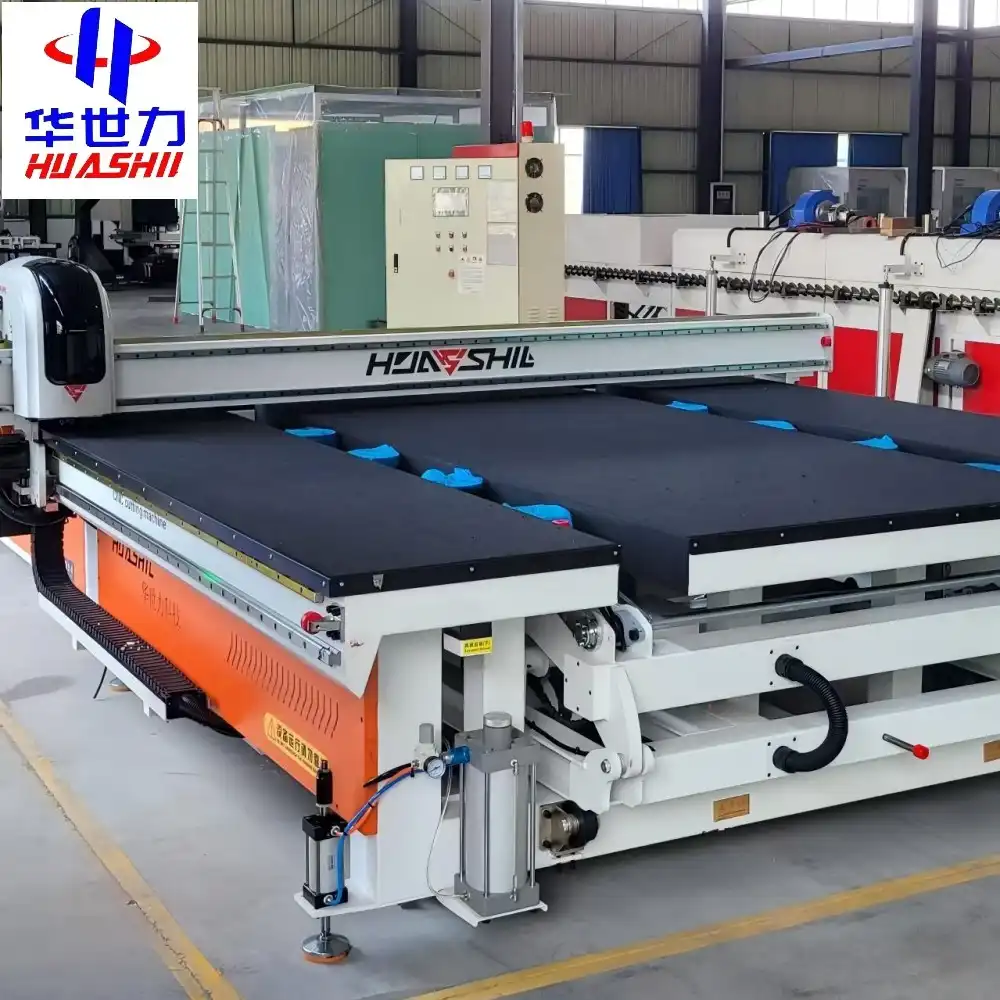
An air flotation system under the cutting table reduces friction when the glass moves, making it easier for workers to move heavy sheets. The 360-degree remote control lets them make exact positioning changes without touching the machine. With this mix of automatic loading, pressure control, and motion help, a job that used to need more than one operator can now be done by a single person more efficiently.
Machine Categories and Technological Approaches
There are different types of glass-cutting machines that can be used for different amounts of work. Manual machines are still useful for prototype shops and custom studios that value freedom over speed, but they need skilled workers and have trouble staying consistent with complicated shapes. Desktop models are good for small makers who make decorative items and custom parts because they offer CNC precision in a small package that is easy to use in a job shop.
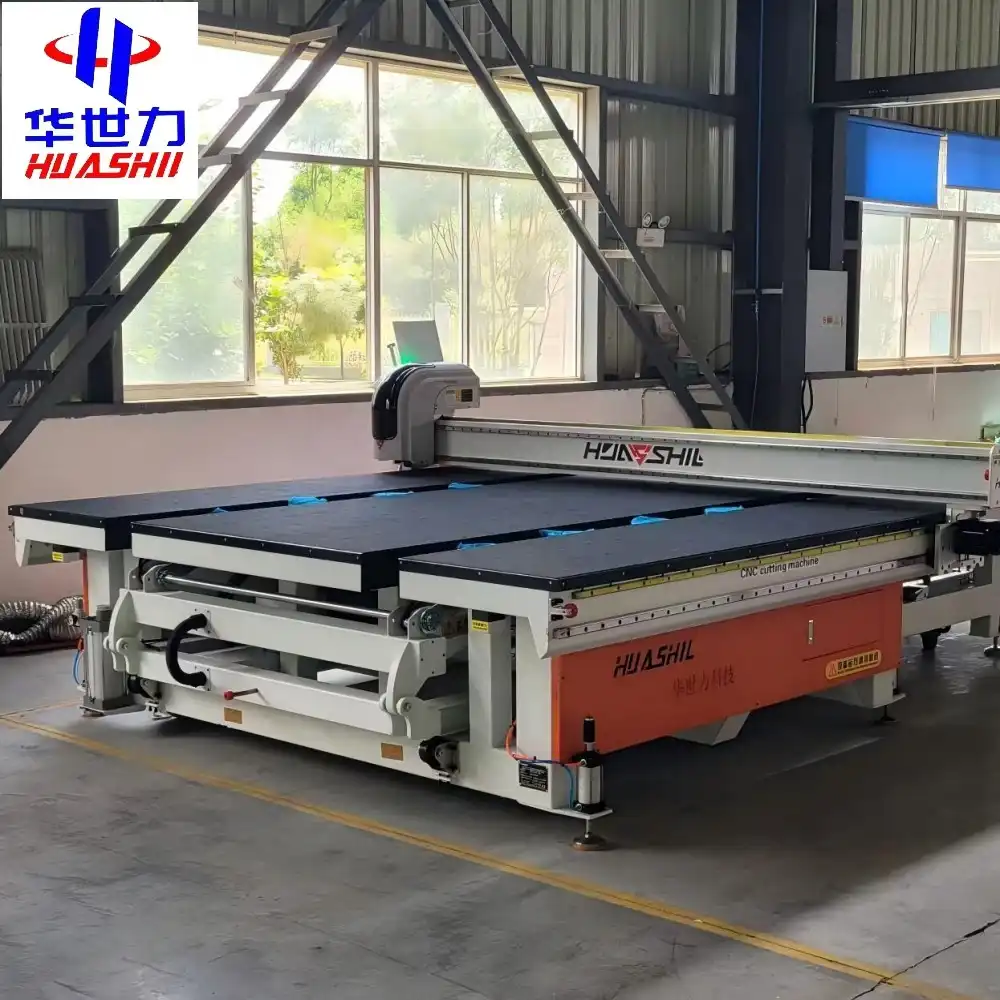
In high-volume architectural and automobile uses, where production speed directly affects profits, industrial glass cutting-out machines like the HSL-YTJ2721 are the norm. These platforms have fully automated material handling, the ability to cut with multiple heads, and software optimization that makes the most of each glass sheet to get the most output. There are clear pros and cons to both laser-based and mechanical cutting technologies. Laser systems are great at cutting intricate patterns and thin materials, but they can't handle thicker architectural glass. On the other hand, diamond-wheel mechanical cutters can handle heavy substrates well and have lower operating costs for standard tasks.
Recently adding CNC has changed repeatability by letting makers save thousands of cutting designs and quickly call them up for orders that will be done again. Real-time monitoring of cutting pressure, wheel condition, and glass temperature is done by sensor-driven feedback loops. These loops automatically change settings to keep quality during production shifts.
Addressing the Challenges of Irregular and Custom Glass Designs
Custom glass fabrication comes with its own set of operating challenges that set good makers apart from stars in the field. Geometric patterns that are complicated and have curves, notches, bevels, and asymmetric forms create stress concentration places where normal cutting methods often fail.
Common Production Obstacles
When working with non-standard shapes, the stress and failure rates of materials go up by a huge amount. Sharp internal corners can cause cracks to start, and curved cuts need constant changes in tool pressure that are hard for hand workers to keep up. When cutting paths that don't stay on straight lines, positioning mistakes build up along the length of the cut, lowering the precision. Using paper models and hand tools in the old way doesn't always get the same results. For complicated designs, the scrap rate can be over 15%, and the repeated rework processes slow down production.
Modern Solutions Through Automation
The best thing about modern glass cut outs machines is that they can automatically find the best way. Software programs look at design files to find the best cutting orders that keep stress levels low by starting cuts in low-stress areas and working their way up to more sensitive ones. When compared to random cutting orders, this smart ordering cuts down on breakage by 60–70%. Real-time error correction checks real cutting positions against planned paths all the time. It does this by making small changes to the servo motors, which keep the cutting head perfectly aligned even when it's going around complex curves.
Automatic pressure control in the HSL-YTJ2721 changes the cutting force based on the thickness of the glass and the properties of the material that are sensed by built-in sensors. More pressure is put on thicker 19mm architectural panels to make sure they are fully scored, while softer 2mm decorative glass is handled more carefully to keep the surface from breaking. This adaptive feature takes away the guesswork that workers have to do when they have to change equipment by hand between production runs.
Production data from building makers shows that things are getting better: automatic systems make cutting 40% faster on irregular shapes and lower scrap rates to less than 5%. A company that makes curtain walls and works with custom panel designs saw a 35% increase in output after switching from semi-automatic to fully integrated cutting lines. This lets them take on bigger projects with tighter delivery dates.
Comparing Leading Glass Cut-Out Machines for Custom Application Needs
When making purchasing choices, it's important to carefully compare the capabilities of equipment with the unique needs of production. Technical sellers and plant managers have to weigh the initial investment against the long-term costs of running the business, the amount of work that can be done, and the uniformity of quality.
Critical Selection Criteria
Precision specs tell you what kinds of uses something is good for. For example, architectural glass needs to be accurate to within 0.5mm, while furniture makers need to be accurate to within 0.2mm for obvious edges and assembly fit. The HSL-YTJ2721 is very accurate because it has a rigid gantry structure and dual-axis servo placement, which keeps it accurate across its entire 2700×2100mm work area. Versatile production platforms are different from specialized tools that only do one thing because they can handle different designs. Systems with the ability to change tools and store more than one pattern work well in job shops where the types of work that are done each day are very different.
The amount of energy used has a direct effect on working costs, especially in places that run multiple cutting lines during long shifts. Modern CNC platforms use 30–40% less power than older hydraulic systems because they have more efficient stepper motors and better motion planning that stops movement that isn't needed. Noise levels affect how comfortable workers are and how the building can be set up. For example, protected cutting rooms and direct-drive motors lower noise levels below 75dB, while older pneumatic equipment made noise levels of 85 dB or more.
Market Options Assessment
When you compare manual, semi-automatic, and fully computerized setups, you can see that they have different ways of working. Manual equipment works well in custom companies that don't do a lot of work because it gives them more freedom than speed. However, the quality depends a lot on how skilled the operators are. For medium-volume makers, semi-automatic systems fill the gap by letting them program cutting patterns while still requiring human loading and positioning. Although these platforms require less skill from operators, they still have a modest throughput that's good for regional fabricators who work with local building markets.
Large-scale operations where production efficiency directly affects place in the market are mostly run by fully automated industrial systems. Automatic loading, edge recognition, optimized cutting, and robotic unloading all work together to get rid of delays and differences in quality caused by human handling. When compared to semi-automatic options, production managers say that automated lines cut labor costs by 65% per panel while raising daily output by 80–100%. Manufacturers who process more than 500 square meters of glass every day can afford to make bigger capital investments because of this operating benefit.
Maintenance, Safety, and Usage Tips for Optimal Machine Performance
To keep precision and dependability, you need to follow set repair procedures and train operators in ways that take both safety and technical issues into account. Proper maintenance of a glass cut outs machine helps ensure consistent cutting quality and long-term reliability.
Essential Maintenance Protocols
All motion parts need to be oiled on a regular basis, but in high-volume production settings, linear guides, ball screws, and cutting head bearings need to be oiled once a week. Abrasive wear that lowers positioning accuracy can be avoided with synthetic lubricants that are compatible with glass dust. Every month, you should use precise measuring tools to check the cutting head's position against known reference points as part of the calibration verification process. The HSL-YTJ2721's built-in monitoring software makes this process easier and lets workers know about positioning drift before it affects the quality of the production.
Thorough cleaning increases the life of equipment by keeping glass dust from building up in important parts. The air flotation table is cleaned every day with a vacuum, and the sensor housings and wire lines are cleaned once a week with compressed air. Checking and replacing cutting wheels is based on linear cutting meters instead of time passed. Diamond wheels usually need to be replaced after 800-1200 meters of scoring, but this depends on how hard the glass is.
Safety Measures and Operator Protection
Even though technology has made cutting processes less direct, personal safety equipment is still needed. When moving and lifting, safety glasses protect your eyes from glass chips, and cut-resistant gloves keep your hands from getting cut when you handle finished pieces. Multiple access points for emergency stop devices allow workers to quickly shut down the machine if they see unsafe conditions. The HSL-YTJ2721 has sensor barriers that stop cutting operations automatically if motion is noticed in dangerous areas. This keeps people from getting hurt by coming into contact with the blades.
In addition to teaching people how to run machines, training programs for operators should also teach them how to program patterns, move materials safely, and do preventative repair. Cross-training several members of the production staff ensures stability during vacations and sick days, so work doesn't stop when key employees aren't present. Advanced training programs that teach debugging skills give workers the tools they need to fix common problems like pressure calibration drift and sensor misalignment without having to call in technicians, which slows down production.
Procurement and Supplier Insights for Glass Cut-Out Machines
To successfully navigate the world of business-to-business procurement, you need to know about the skills, pricing, and post-purchase support promises of your suppliers. These factors have a direct effect on your long-term working success.
Sourcing Strategies and Supplier Evaluation
Buying from well-known companies with a history of success lowers the risk of adoption and makes sure that you can get real replacement parts for as long as the equipment lasts. This method is used by HUASHIL, which has ISO 9001 approval and CE compliance, which shows that they always meet safety and quality standards when making things. Before committing to a purchase, procurement managers should give preference to sellers who offer plant tours and demos of the production line. This way, managers can see how the equipment works in real-life situations.
Online business-to-business (B2B) platforms make it easier to do preliminary research and compare suppliers, but direct interaction is still necessary for complicated automatic systems that need to be customized. Fabricators who want to increase their production capacity across various facilities can buy in bulk and get discounts that range from 8 to 15 percent, based on the size of the order and when it needs to be delivered.
Investment Considerations and Financial Structures
Different types of machines have very different pricing models. Semi-automatic systems for beginners start at about 45,000 to 60,000 USD. Fully automated industrial platforms like the HSL-YTJ2721 cost between 120,000 and 180,000 USD, based on the configuration options and amount of automation built in. Because of these financial needs, financing and leasing options are appealing to rising makers who are having trouble with their cash flow. Industrial lenders that specialize in financing equipment usually offer terms of three to five years at cheap interest rates. This lets businesses keep their working cash for operational costs.
Warranty coverage and support after the sale are important factors that help buyers tell the difference between trustworthy providers and problematic ones. Standard guarantees should cover mechanical parts for 12 to 24 months, and they should also cover electricity systems in the same way. More importantly, how quickly technical help responds decides how long production can go on when problems happen. HUASHIL offers a wide range of after-sales services, such as remote diagnostics, extra parts with delivery promises of 48 to 72 hours, and on-site help for more complicated problems. Before choosing a provider, procurement teams should check to see if there is enough support infrastructure in their areas to make sure workers can get to facilities in a reasonable amount of time.
Conclusion
The progress in glass cutting technology has completely changed how makers make things that aren't round or to a specific design. Modern automated systems that use CNC accuracy, smart software optimization, and combined material handling can give you the stability and efficiency you need to compete in global markets. The glass cut outs machine HSL-YTJ2721 is an example of this new technology. It gives architectural designers, curtain wall installers, and furniture manufacturers a tried-and-true way to make a lot of custom glass. A successful implementation relies on carefully evaluating the suppliers, teaching operators in a structured way, and following strict maintenance procedures that keep equipment working well for as long as it is used. Leaders in manufacturing who invest in advanced cutting technology set up their companies to take advantage of chances for difficult projects while keeping costs low enough to make the business profitable in the long run.
FAQ
1. What types of irregular shapes can modern glass cutting machines handle?
Modern CNC glass-cut-out machines can make circles, ellipses, complex curves, polygons with many angles, and free-form organic shapes, among other two-dimensional shapes that can be programmed through CAD software. The HSL-YTJ2721 can handle designs that are as simple as rectangular notches or as complicated as building patterns that need hundreds of direction changes. Most of the problems are caused by minimum radius limits set by the width of the cutting wheel, not by software or motion control issues. The machine can still do internal cutouts, holes, and complicated edge shapes within its 2700×2100mm work envelope and 2mm to 19mm thickness range.
2. How does automated cutting precision compare to manual methods?
Automated CNC systems can keep placement accuracy within ±0.1mm during full production runs, even if the user is tired or has a lot of experience. Cutting things by hand requires skill and focus, and the accuracy is usually only ±1.0 to 2.0 mm. This accuracy decreases over long shifts. This difference in consistency has a direct effect on building glass uses that need tight standards to make sure the glass fits correctly when it is installed. Production data shows that automatic equipment cuts the rate of rework from 12 to 15% when done by hand to less than 3%. This makes much better use of materials and labor.
3. What maintenance tasks are most critical for minimizing downtime?
The most important preventative maintenance tasks are cleaning the air-float table every day and lubricating the moving parts once a week. Accumulation of glass dust lowers the accuracy of sensors and speeds up the wear on linear guides. On the other hand, not enough greasing causes positioning slip and higher mechanical resistance. Alignment problems are caught before they affect production quality by checking the adjustment every month. Setting up written maintenance schedules and giving specific team members responsibility for following them ensures uniform performance that increases equipment uptime and shortens the time between service intervals for major component replacements.
Partner With HUASHIL for Advanced Glass Cutting Solutions
Picking the right glass cut outs machine provider affects both how well the machine works right away and how well it works in the long run. HUASHIL has decades of experience in automation engineering and works with companies all over North America that make building glass, curtain walls, furniture, and solid stone. Our HSL-YTJ2721 platform gives production managers the accuracy, speed, and dependability they need. It is backed by CE approval, ISO 9001 quality systems, and a full infrastructure for after-sales support.
We know that B2B purchasing needs more than just equipment specs. They also need expert advice, programs to train operators, and quick access to parts that keep production lines going. Our engineering team works directly with plant managers and technical directors to set up cutting systems that are perfect for each job, whether they are cutting thin artistic glass or thick building panels. Get in touch with our experts at salescathy@sdhuashil.com to talk about your custom glass manufacturing problems and set up a full equipment display. We offer the technical advice and support required to maximize your production investment and improve your competitive market position as an established glass cut-outs machine maker with international installation experience.
References
1. Chen, W. & Liu, H. (2022). "Precision Glass Fabrication Technologies for Modern Architecture." Journal of Manufacturing Systems Engineering, 45(3), 178-194.
2. Miller, R.A. (2021). "Automated Material Handling in Glass Processing Facilities: Efficiency and Safety Improvements." Industrial Automation Review, 28(2), 112-129.
3. Thompson, K.D. & Zhang, Y. (2023). "CNC Integration in Glass Cutting Systems: Comparative Performance Analysis." International Journal of Advanced Manufacturing Technology, 119(7-8), 4521-4537.
4. European Glass Processing Association. (2022). "Best Practices for Custom Glass Fabrication Equipment Maintenance." Technical Bulletin Series, TB-2022-08.
5. Anderson, M.P. (2021). "Total Cost of Ownership Analysis for Industrial Glass Cutting Equipment." B2B Manufacturing Procurement Quarterly, 14(4), 67-82.
6. Global Architectural Glass Manufacturing Standards Consortium. (2023). "Safety Protocols and Operator Training Requirements for Automated Glass Processing Lines." Industry Standards Publication, GAGMSC-2023-04.