




AI-driven glass processing technology reduces scrap rates below 3% by finding defects early, placing cuts more efficiently, and holding machine settings steady from the first pane to the last. Machine vision flags flawed areas before more work is added, nesting software uses each sheet more fully, and sensor data warns teams about tool wear before it ruins parts. A sub-3% rate is a measurable target, not a universal promise, because glass type, thickness, shape, order volume, and equipment condition all change the result. Below, I explain how plants pursue that target and where the HUASHIL HSL-YTJ3829 fits.
Why Scrap Happens and How AI Reduces It
Where Traditional Methods Lose Glass
Based on their skill, people can measure, cut, grind, and handle things by hand in different ways from shift to shift. There are many small problems that can happen with panels, like vibration, coolant, and tools that get worn out before anyone notices. It's lost even more because the raw sheet has flaws, scratches, and other things that make it dirty. Most of the time, people don't notice these flaws until it's too late, after they've paid money to do extra work like cutting, edging, and drilling. When the glass is big, thin, coated, and custom-shaped, each panel is more valuable, and there is less room for error. That's what plants do a lot of the time—they just throw it away like any other trash. This is because they find it too late and don't control the process well enough.
How Machine Vision Catches Defects Early
In machine vision, flaws like scratches, chips, cracks, bubbles, coating damage, and changes in size and shape are sorted by type and location using cameras and learned software. Sensors asked people to vote on how to find mistakes in the way things are set up in 2020. The Journal of Production Systems put out a study of deep learning in smart production in 2018. They show that picture-based inspection is a well-known field of study. You can use the time that a glass processing technology plant gives you. You can't route around a flaw once the sheet has been cut. It will take time, money, and tools to fix a mistake you find after cutting. You do still need good lighting and cameras that are set up right, though.
How Nesting and Closed-Loop Control Save Sheets
Putting things on a sheet in the right order makes better use of the space it has when software puts things on it. They were the first people in 1961 to use math to solve the cutting-stock problem in Operations Research. Nesting can move parts away from trouble spots while still staying within safe limits if you give it bad maps. A second layer is added by closed-loop control. Based on what the sensors tell it, it changes the flow of water, the direction of the tool, the feed rate, or the speed of the spindle. By reading sound, temperature, and motor power, it looks for early signs of tool wear. There is more waste when there are a lot of mistakes, but these steps will help you make fewer mistakes. But each one needs to be set up correctly and checked often.
Process Changes That Make a Sub-3% Target Realistic
Start With a Clean Scrap Baseline
Tech can't make it better if the plant hasn't already measured it. When you waste materials, fix them, turn down customers, or lose something that you can't avoid, I think you should keep separate records. After that, you could sort these records by the stage of the process and the product. One scrap number can hide the fact that the raw sheet is faulty, that it was cut incorrectly, or that it was damaged while being handled. Rework may be seen as scrap by one company but not by another. This is another important thing to keep in mind when comparing sources. Write down the types and sizes of glasses you use most often for a few weeks. From then on, every flight score has to meet or beat that level.
Connect Data From Raw Sheet to Finished Panel
You should connect order data, cutting files, inspection results, and storage records so that each panel can be traced back to its original sheet once you have a baseline. This data is often stored in different places in ERP and MES systems. They can see if a lot of problems happen on the same tool, stock lot, or shift if they can keep track of them. The machine won't have to guess as much about standard recipes for each type of glass, coating, and thickness. A review, preventative maintenance, and new operating instructions are some of the things that keep things getting better. For AI to find patterns, it needs data that is clean and consistent. This is the best place to begin.
Compare AI Automation With Manual and Other Cutting Methods
There is more than one right way to do something. For tests and small, one-of-a-kind orders, you can still cut things by hand. CNC cutting makes it possible to make complicated cuts and forms that can be used over and over. With a waterjet, you can cut through thick glass or glass that melts pretty quickly. A laser can cut through some thin things and work on small details. To make annealed, tempered, and fused glass, you need to follow different steps. AI doesn't take the place of these methods; they are still useful. It is simpler to choose conditions, make sure they are correct, and always use them. An automatic cutting line is a good place to start for plants that need to cut a lot of flat glass.
Matching Applications and Evaluating Partners
Match Scrap Strategy to the Application
Every market has rough spots. It's important to carefully nest pieces, drill holes in the right places, check the edges, and keep track of them when building walls, stairs, and frames. Shower doors and furniture glass must always have smooth, even sides. In order to build a curtain wall, big pieces that are exact copies of the plans are used. Fabricators also have to be careful not to chip the edges when they cut solid stone, but they use different tools for this one. It is against the law to scratch, bend, or pollute glass that is used in computers, solar panels, or cars. You should think a lot about how the app works when choosing a seller now that these changes have been made.
Questions to Ask an Equipment Partner
A good partner will tell you the truth when you ask them a simple question. Find out what kinds of glass processing technology and how thick they are that the machine can work with. Also, ask the supplier for test run records. Quality standards like ISO 9001 can help you find what you need. Systems that handle quality know what they need to do because of these standards. How does the program link to your CAD files? What do the staff learn? How quickly do you get extra parts? The finance and procurement teams should ask engineers about delivery terms, warranties, and different ways to pay as they read technical documents. Go to the building and see a live show if you can.
Benefits and Limits to Weigh Before You Invest
AI can help with tracking, cost, first-pass output, and accuracy. It can also cut down on the number of checks and changes that need to be made by hand. It may not be able to do everything. Getting cameras, software, connections, training, and data ready costs money. If there isn't enough light, the setting isn't right, or there aren't enough bad shots, this could lead to false calls on older machines. Engineers with the right skills are still needed to look for standards, recipes, and strange flaws. Make a business case that shows how much money you will save on things like scrap, labor hours, downtime, claims, and the cost of each panel that works. It needs to say how long it will take for the business case to earn its keep. Before making a choice about the whole line, it's safer to do a test run on just one family of goods.
How the HUASHIL HSL-YTJ3829 Supports Low-Scrap Cutting
Specifications That Define the Working Range
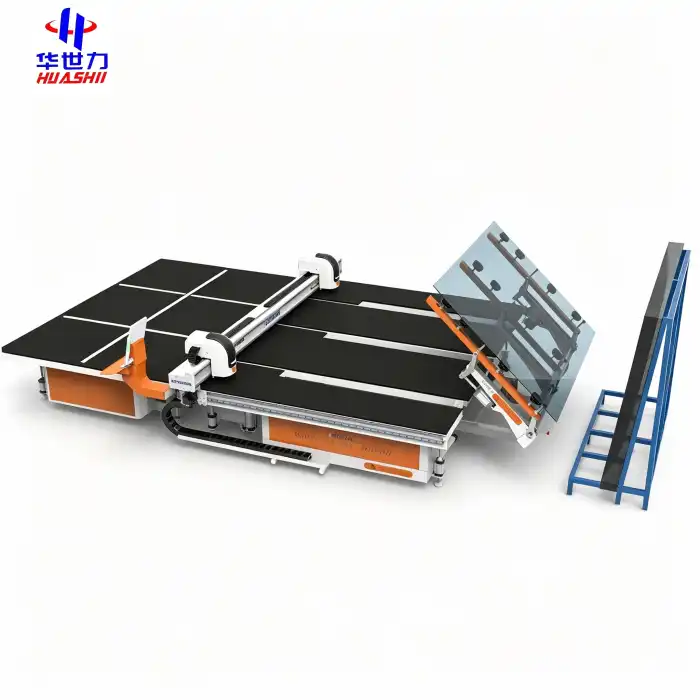
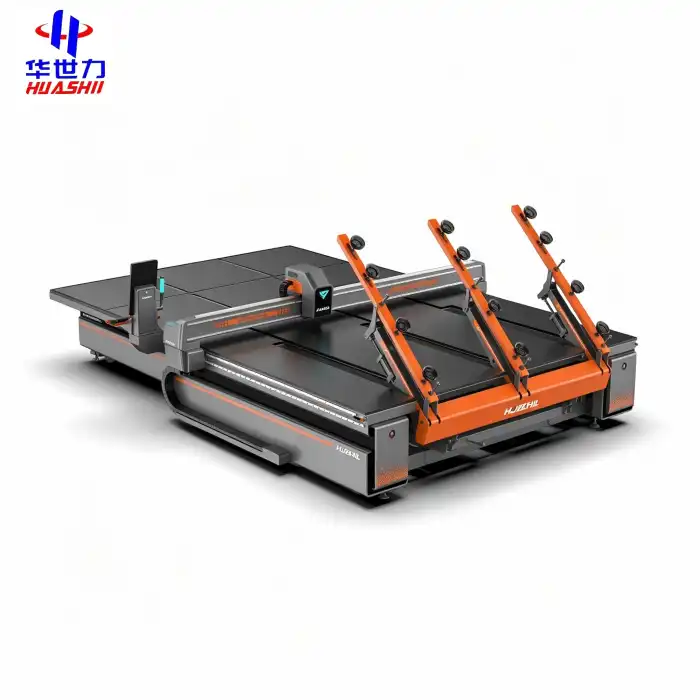
There is a company called Shandong Huashil Automation Technology Co., LTD that makes the HSL-YTJ3829 automatic glass cutting line. It can cut glass sheets that are up to 3660 mm long, 2800 mm wide, and 2 mm to 19 mm thick. The machine is 5780 × 4925 mm, so make sure the floor has enough room from the start. The glass is moved by belts that move together. It's important to know that AI review is an extra step that skips a line. This model gives these kinds of data programs the building blocks they need to keep working on their own. Talk to our staff about what kinds of sheet sizes and thicknesses you need.
Controls That Protect Each Cut
When things go to scrap, there are a few different ways to handle them. When you load big sheets for you, they are easy to work with. The pressure used for cutting is always the same because it controls itself. It also finds the sheet's edge before you cut it. You can move the glass around, and air bubbles keep it in place. The broken table helps separate the cut pieces. Optima makes the best use of space by putting parts on each sheet. It's easy to use because the line has a remote release that can move in any direction. Each part focuses on a known cause of loss, such as damage from handling, uneven pressure, starts that aren't lined up right, or sheet area that is lost.
Certification, Support, and Pilot Planning
Both CE and ISO9001 have approved the HSL-YTJ3829. Send us your pictures, the kinds of glass you use, how thick they are, and how much scrap you have right now. Next, choose a starting point and check the outcomes against it. You can talk about your OEM and ODM needs, as well as installation, training, and getting extra parts for plants that want to grow or add full lines. HUASHIL has been selling goods to people from around the world for many years. Specs, warranty terms, and shipping times should all be written down so that the people in charge of money, buying, and engineering can all see the same thing. To learn more about the item, go to huashil.com.
Conclusion
Scrap is less than 3% when plants find problems quickly, improve sheet arrangement, keep machines under tight control, and make sure they measure things properly. Worker turnover, late checks, and worn-out tools are some of the old ways that glass processing technology is lost. For these problems to be fixed, a business must first figure out how much scrap it has and link all of its output data. It is possible to make things better with machine vision, nesting, closed-loop control, and predictive maintenance. Any number below 3% needs to be backed up by samples, pilots, and clear KPIs because the numbers are different for each type of glass, use, and machine. People who want to buy something should compare AI to manual, waterjet, laser, and CNC and think about the pros and cons of each. They should also check out the supplier's licenses and background. An automatic cutting base that works well helps with that work.
FAQ
1. Can AI guarantee a scrap rate below 3%?
It relies on the kind of glass, its thickness, shape, the size of the order, the condition of the tools, and the quality standards. AI does make it easier to recognize, plan, and control things, but not all the time. Any claim you make should be backed up by data from tests of your own products.
2. What does the HSL-YTJ3829 cut?
It can work with glass that is up to 3660 mm x 2800 mm and 2 mm to 19 mm thick. Auto-loading, pressure control, and edge tracking are some of the software tools that are used to help with each cut.
3. Does the HSL-YTJ3829 include AI inspection?
It does not have AI analysis on its list of features. Because it has Optima software, the machine can cut things by itself. If you need to merge things, talk to HUASHIL about it before you place your order.
4. What should I request from a supplier?
Checklists, information on how the materials were used, pilot results, certificates, guarantee terms, and when extra parts will be sent are some of the things you should ask for.
Ready to Cut Scrap Below 3%? Talk to HUASHIL
You can use Huashil's helpful glass processing technology and the HSL-YTJ3829 cutting line to plan your work so that you waste less glass. Want to find a store that sells tools for working with glass? In an email to salescathy@sdhuashil.com, list the glass you want to sell by size, thickness, and number. We will get back to you with news about the project and a price. Shandong Huashil Automation Technology Co., LTD has been sending goods to other countries for a long time and can answer any questions.
References
1. Sensors, 2020. Czimmermann et al., "Visual-Based Defect Detection and Classification Approaches for Industrial Applications – A Survey."
2. Journal of Manufacturing Systems, 2018. Wang et al., "Deep Learning for Smart Manufacturing: Methods and Applications."
3. Operations Research, 1961. Gilmore and Gomory, "A Linear Programming Approach to the Cutting-Stock Problem."
4. Manufacturing Letters, 2015. Lee, Bagheri, and Kao, "A Cyber-Physical Systems Architecture for Industry 4.0-Based Manufacturing Systems."
5. International Organization for Standardization, 2015. ISO 9001:2015, Quality Management Systems – Requirements.
6. ASTM International, 2021. ASTM C1036, Standard Specification for Flat Glass.
