




A low cost automatic glass cutting line gives custom glass shops a practical way to process more orders with less handling, less waste, and steadier quality. It links loading, scoring, and breaking into one workflow, while software plans each layout before the first cut. Models such as the HSL-LSX3829 from HUASHIL cut sheets up to 3660*2800 mm, which suits window, door, furniture, and partition work. In this guide, I explain how the line works, which specifications to compare, and how to judge cost, so your team can decide with confidence.
How a Low-Cost Automatic Glass Cutting Line Works
Definition and Configuration Levels
You can build this low-cost automatic glass cutting line all the way in or just a little. It can load, place, score, and break things at the same time. The staff still has to move sheets from one step to the next because there is only one table that can cut glass. Things don't have to be dealt with over and over again when there is a line. Things are moving in one direction. It can be loaded by hand and cut for people, or it can load, break, and sort itself. First, you should talk about the size of the sheets, how many you make every day, the floor space, how much the workers get paid, and what you make. Then choose the level of automation that works for you now and gives you room to grow.
From Loading to Sorting
The cycle starts when a sheet is put down and then raised. Software that knows about order sizes, glass stock, and yield goals makes cutting patterns. Strong bridges move the cutting head and also decide how fast and how hard the glass is cut. The sheet is then cut into pieces that are either put back together or washed. These steps are carried out by sensors, vacuums, and elevators working together. The HMI gives details about the item and sounds an alarm. If they know this flow, they can tell what a quote doesn't include, like table breaks or transfer lines.
HSL-LSX3829 Three-Table Design
The HSL-LSX3829 has three tables, and these are what they do:
- Loading table: The raw sheet stays on the "loading table" while it is being cut. If the sheets you get are different sizes and thicknesses, you can do this step somewhere other than where you handle and score sheets. You'll have more space to move and less time to wait during busy shifts. It works well for shops that do a lot of different things every day.
- Cutting table: The cutting head stays on the line that was set up by the Optima software during the score stage. Before you cut the glass, think about what you'll do with it. If you order glasses that come in more than one size, this is very important. The people in charge can look over the plan before they start.
- Breaking table: News that will shock you: tear the score sheet into pieces that can be used right away. When you break a low cost automatic glass cutting line by hand on a different table, it keeps going. It keeps moving forward instead. This may also help keep a steady flow of people sorting, packing, or edging if your shop is set up right. This helps you work with fragile cut sheets better.
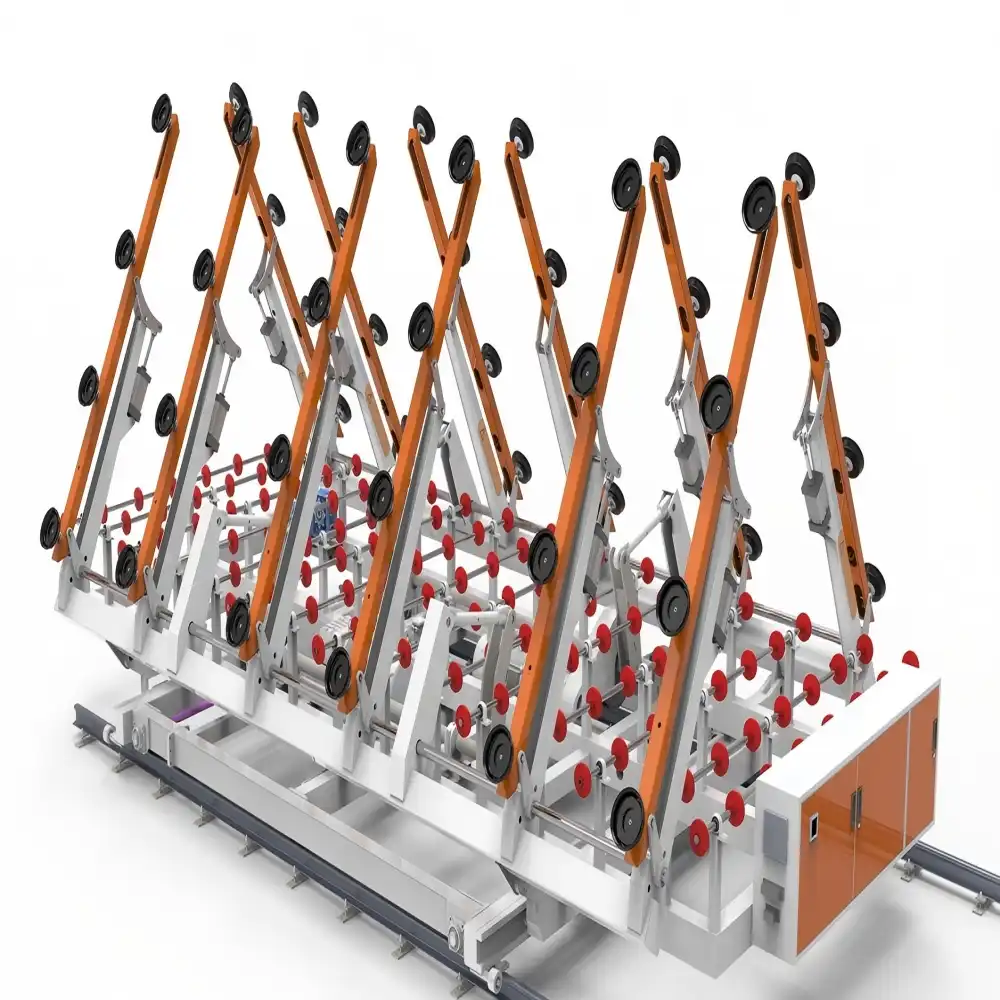
These three tables break up the cutting process into stages so that shops of all kinds can keep sheets moving.
Specifications, Glass Types, and Cutting Method Comparison
Specifications to Compare
First, find out what size and width range the glass comes in, how much it weighs, how much it can cut, and how fast it can cut. The HSL-LSX3829 can work with sheets that are up to 3660 mm x 2800 mm. The line can have 2+2 stops, and the train can go above or below ground. The plan was made, and each side has three big arms. When you set up your machine, write down those HUASHILs. Low-E cutting lines are accurate to within 0.25 mm, and they can move at speeds of up to 150 m/min. Make sure you know the floor loads, power, price, and size before you look at the prices.
Glass Types and Applications
Float glass is often used for automatic cutting. It may be clear, colored, or smooth. Based on ASTM C1376, low-E glass should have a thin film on it. Before you buy it, ask the seller how to cut it, what tools to use, and how to keep the surface safe. To break fused glass, you might need extra tools. The type of wheel, the pressure, the speed, and the breaking force are all affected by how thick it is. Window, door, curtain wall, furniture, smart screen, and art glass can all be cut on a low-cost automatic glass cutting line that works by itself. ANSI Z97.1 and other safety glass rules say that bathroom door and wall glass needs to be cut and then strengthened. You should put the line on all of your sheets, not just the one you use most.
Versus Other Cutting Methods
You can cut by hand for small or one-time jobs, but it takes longer, wastes more, and makes different cuts. An automatic line makes things safer, more accurate, and faster when the same order is made over and over. High-speed lines and CNC glass machines can work on a lot of low cost automatic glass cutting lines at once. These machines can handle groups of hard-to-work-with shapes. Auto-loading is faster, but it costs more than loading by hand. In order for a business to grow, it needs to be partly automatic. The reason for this is that it is the best mix of price and efficiency. Make sure the machine can handle cutting stone if that's what you do. Stone needs different tools.
Cost, Return on Investment, and Supplier Selection
What Drives the Price
The cost depends on the table's size, the type of loader used, the breaking tools, the software, the conveyors, the training, the packing, the extra parts, the shipping, and the way the cutting head is set up. Find out how much it costs to put everything together instead of believing the shop prices. To run, a business needs cash. Some costs are power, cutting wheels, repairs, and time spent not working. For the same amount of work, each service provider should be able to give a price. They won't have to guess what each number means when they compare things.
New vs. Used Equipment and Payback
Most of the time, the warranty and program help are better when you buy new tools. There is more technical risk and doubt about the extra parts when you buy used tools. The first amount is also less. You run a business. You need to figure out how much it costs to run, how much it makes, and how much it saves you in work. To figure out the payback period, just divide the amount spent by the amount gained each year. Say you put $200,000 into something that earns $80,000 a year. After two and a half years, the money repays itself. You can choose your own hours because every shop has different hours and types of sales. This is usually what the finance team wants before they give the go-ahead to spend.
Choosing a Supplier
To compare at least three full quotes, you should use the same technical standard. Ask the company about their technical knowledge, how long they've been in business, how many installations they've done in the past, their papers, their guarantee, whether they have spare parts available, and how quickly they can react. You can change the configuration, try samples, and get expert help for a long time if you work with a good OEM partner or a direct manufacturer. That's what Hebei Huashil does: they plan, build, and sell machines that do things for you. For a long time, they've sold their machines in other countries. People often pay a deposit first and then the whole amount at the end. A Letter of Credit is often needed to buy something from another country. Make sure you understand these terms, the Incoterms, and the release plan by writing them down.
Installation, Maintenance, and Acceptance
Installation and Delivery
Before the goods are sent, plans are made. Check the floor, the ways to get in and out, the place to store things, the room for the user, the power source, the compressed air, and the needs of the network. The best way to make sure the plan comes true is to write it down. Depending on how things are customized, how parts are sent to the plant, how they are exported, and how they work in the end, delivery times can be longer or faster. An installer taught by the provider can do the job in person or from afar. You should test the software to see how well it works, how accurate the cuts are, how the loading works, how the safety features work, and how the production runs go. Make sure you agree to the warranty, online repair, spare parts, and staff training before you sign.
Maintenance and Operating Risks
Every day and once a week, it is checked to make sure it stays right. Clean the sensors, look at the vacuum cups again, check the cutting wheels, and read the warning one more time. People often get scores that aren't even because the machine is dirty, the tools are too worn, or the pressure isn't right. The robot might not be where it should be if the software is set up wrong, the sensors are dirty, or parts are not tight. If you handle something and it breaks, it could be out of line, lose its vacuum, or go fast. If you follow OSHA 3170 and keep your tools safe, you should also do these things. Also, an ISO 12100 risk review needs to be carried out. Write down when you won't be able to go to work and where your spare wheels are.
Acceptance Checklist
Make it easy for everyone to use the same form to buy, plan, make, and get money. A lot of technical stuff is talked about, like size, accuracy, speed, tools, impact, safety, software, and how well it works with other things. You can get set up, trained, backed, shipped, given payment terms, and spare parts if you pay money. Before giving the final OK, it's important to look over the factory tests, sample cuts, measurement reports, safety features, software transfer, machine training, and software transfer. So, both sides can see why they should be hired, and there won't be as many fights. For bigger projects, it helps reviews stay on track to have a short document with goals, needs, and acceptance standards.
Conclusion
A low cost automatic glass cutting line puts the glass in, cuts it, and breaks it all at the same time. This takes away some of the work that needs to be done by hand and makes it easier to make correct cuts for orders. It also has two extra stations and can handle glass that is up to 3660 mm x 2800 mm. On the tables, you can load, cut, and break things. They should compare the specs, types of glass that can be used, and ways that the glass is cut with what they already sell. You can learn more than just the price at the plant. You should check how much it costs to set up and run, as well as how long it will take to earn back its money. As long as the seller helps with extra parts, planning the installation, regular maintenance, and writing down the acceptance criteria, the line will work well after it is shipped.
FAQ
1. Is a low-cost line suitable for a small shop?
Yes, as long as the room can fit the size and weight of the sheet. First, write down what you need to do every day and how much room you have. Now you have to pick how much automation you want. For shops that are getting bigger, systems that do some work automatically work well.
2. Can it cut Low-E glass?
You can cut with low-E if the finish is set up right. Find out what tools will be used, how the glass will be cut, and what a test cut showed before you buy.
3. Can it reduce labor costs?
It can, though, since it doesn't have to load, cut, and break things by hand as often. Check out the payback method and the orders you place to see how much you can save.
4. How long does delivery take?
There are changes to be made, parts to be ordered, and tests to be done in the factory before the items can be sent out. Make sure that dates are written in the plan.
5. What should I request before buying?
Write down what you want and include things like power data, warranty terms, training papers, and proof of sample cuts. This will help you make sure you get what you want.
Request Your Low-Cost Automatic Glass Cutting Line Quotation from HUASHIL
Are you going to build a new cutting line? Shandong Huashil Automation Technology Co., LTD sells machines that can do things on their own. For many years, they've made machines and sent them to other places. Let us know what kind of glass you need, how thick it is, what size sheets you need, and how much you print every day, and we'll help you set up the HSL-LSX3829. A business called HUASHIL makes low cost automatic glass cutting lines. You can email salescathy@sdhuashil.com to find out more.
References
1. ASTM C1036 Standard Specification for Flat Glass, 2021
2. ASTM C1376 Standard Specification for Pyrolytic and Vacuum Deposition Coatings on Flat Glass, 2015
3. ANSI Z97.1 Safety Glazing Materials Used in Buildings, 2015
4. ISO 12100 Safety of Machinery – General Principles for Design, 2010
5. OSHA 3170 Safeguarding Equipment and Protecting Employees from Amputations, 2007
6. GANA Glazing Manual, 2008