




A float glass cutting machine works by placing a flat sheet on a table, reading the cutting plan, and drawing a hardened wheel across the surface to make a shallow score line. It does not saw through the glass. A breaking step then applies controlled force along that line, and the sheet separates cleanly. On an automatic CNC line, loading, scoring, breaking, and unloading run in sequence, so operators handle fewer heavy sheets and spend more time checking quality. Below, I walk through each stage and show how the HUASHIL HSL-LSX4228 is set up.
What Is a Float Glass Cutting Machine?
How the Score-and-Break Principle Works
Float glass is made by putting molten glass on top of molten tin. Sir Alastair Pilkington talked about this process in a Royal Society lecture in 1969. It's easy to score sheets this way because the sheets are flat and all the sides are the same. The machine presses a small, hard wheel into the glass and then moves it along a predetermined path. It's not a full cut; the wheel only makes a small vent. When the machine bends the sheet along that line, the crack goes all the way through it. A lot of people don't understand how important it is to buy wheels in good shape until they see the crack that appears after the thin score. What happens depends on the type of glass, how thick it is, how fast it is moving, how much pressure is used, and how much oil is used.
Compatible Glass and Common Applications
The float glass is cut into pieces that are clear, tinted, coated, or patterned. If the job calls for it, some machines can also work with laminated glass. ASTM C1036 lists the different kinds of flat glass and the levels of quality that are acceptable. That's why whenever I ask for a price, I always say what kind of glass I need. A lot of people buy things like windows, doors, curtain wall panels, shower doors, dividers, furniture glass, and insulated glass units. Cut blanks are also used to make smart screens, car glass, and pieces of art. The machine that best meets the needs of each use (different size and edge requirements) is picked.
What to Confirm Before Choosing Equipment
Five things are important to me before I compare quotes: the range of widths, the largest sheet size, the type of finish, the goal for edge quality, and the level of automation. To edge, temper, and insulate, you need clean blanks, so it's important to have a good edge. It's also important to make things every day. A shop that cuts a few dozen sheets a day needs a different setup than a plant that feeds a hardening line. Everyone can price the same scope if these facts are written down first. This helps plant managers, engineers, and buying teams compare prices.
How Does a Float Glass Cutting Machine Work Step by Step?
Loading and Positioning
The process starts at the table where the goods are loaded. Adding sheets can be done by hand, automatically, or with vacuum lifts. Then, sensors find the sheet's edges and confirm its location. This tells the CNC exactly where the glass is. This is an important step because the first cut sets the tone for the rest, and a sheet that isn't straight makes all of them wrong. Many cutting boards have air supports that let the sheet slide into place without getting scratched. Barcodes or production files can also tell the float glass cutting machine which sheet it is on. This makes it easier to type and less likely that you'll make a mistake.
Cutting Plans and Controlled Scoring
As a way to cut down on waste, the software sorts the pieces and places them on the sheet before scoring. The cutting head then does its job, which is to press the wheel into the glass at a certain speed and level of force. The things I care about the most are the wheel pressure, the speed of travel, and the wheel condition. Edge chips happen when there is too much pressure, and when there is not enough pressure, the score is blank. It's easier for the wheel and the crack to move when they are oiled. When the software links to ERP or MES systems, orders go straight to the machine without having to be typed again. This makes it easier to keep making things.
Breakout, Sorting, and Unloading
When the machine presses down on each score line after it has been scored, the sheet breaks. It's important to spread the pressure out evenly because uneven force can cause breaks to be rough. Stations get finished blanks and edge, heat, laminate, or insulate the glass depending on what they need. Cuts leave the line on their own. People don't have to lift as many big sheets when machines do it, so there is less chance of falls and cuts. Before the full run begins, the first pieces are quickly checked for size to make sure that everything is set up correctly.
HSL-LSX4228 Configuration and Main Components
Three Tables and Four Grand Arms per Side
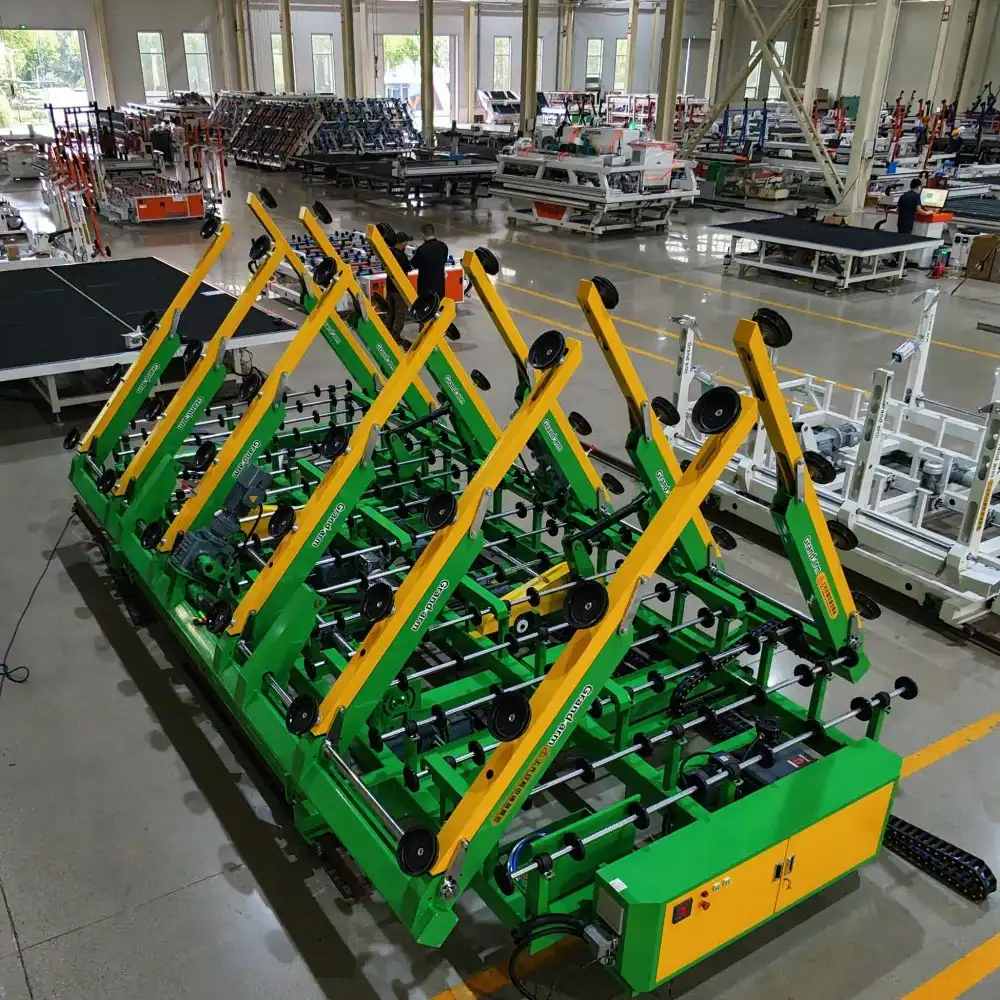
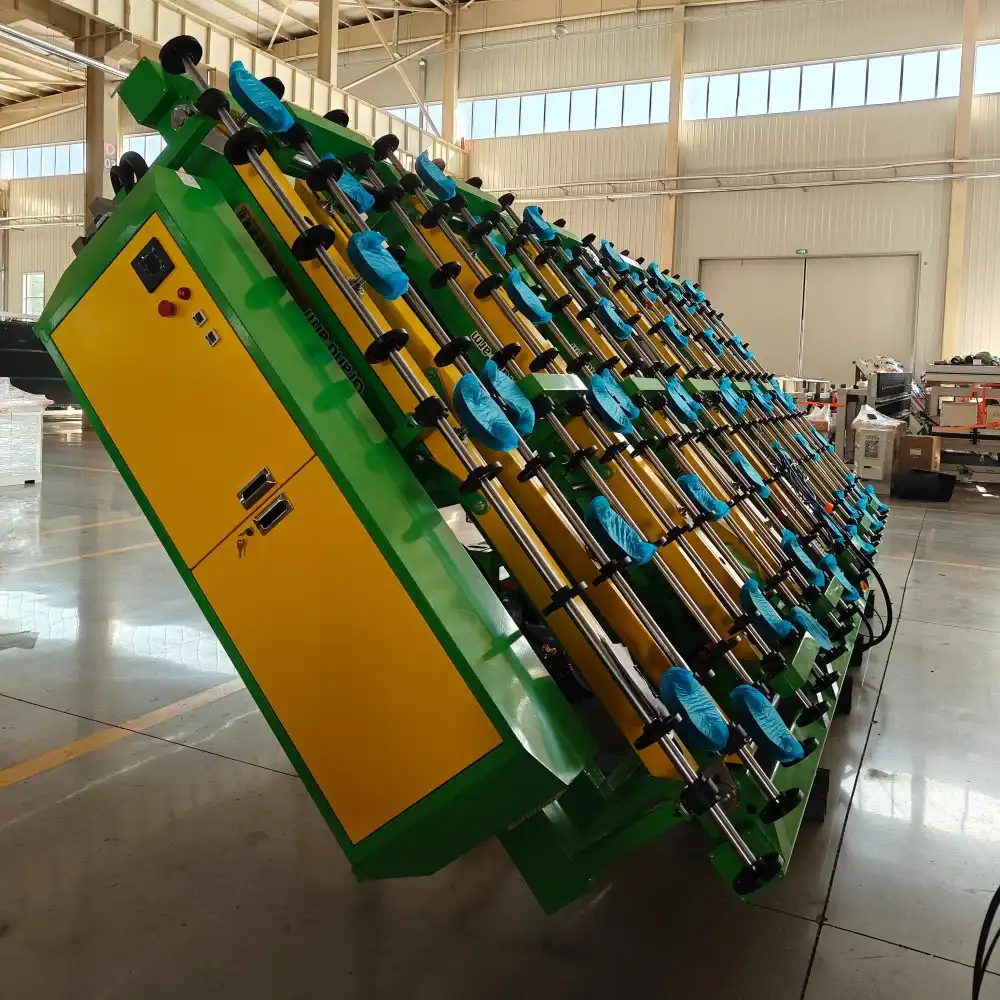
The HUASHIL HSL-LSX4228 has a loading table, a cutting table, and a breaking table. Because each table shows a different step, the line flows easily from the blank sheet to the finished blank. The glass moves along the line with the help of four big arms on each side. The largest piece of glass that can fit through the machine is 4200 × 2800 mm. This means that it can handle big sheets of glass that are used in building and curtain wall projects. Ask for the smallest size and thickness range in writing so that your team can compare them to the prices on your list.
Rail Layout and Station Setup
The HSL-LSX4228 comes with either an above-ground or an underground rail, so it can be used with any floor plan. You can change how the two plus two stations are set up to suit your needs. Before you decide, I think you should have your engineer draw the points where the sheets enter, pick up, and leave the machine. Select your choice of trains before the final layout drawings are made. This is because each choice affects the amount of groundwork, floor space, and time needed for installation. As you plan ahead, you can also help your team set up times for installation and user training.
Optima Software and Core Parts to Check
The line uses Optima software to plan how to cut things and get rid of waste. A solid gantry, servo drives, linear guides, a cutting head, vacuum and pneumatic parts, oil, and a screen for the operator are all things that every CNC cutting line needs. How accurate and flat the scores are depends on how flat the table is and how stiff the crane is. Look at the quote to see if it includes spare wheels, software licenses, pumps, and air preparation units. Find out in writing how fast, accurately, and thick the glass should be cut, and then use your own glass to make test cuts before sending the order.
Automation, Safety, and Supplier Selection
Choosing the Right Automation Level
Here is how common setups compare.
| Setup | Loading | Typical fit |
|---|---|---|
| Manual | By hand | Small workshops |
| CNC single table | Operator or loader | Mixed orders |
| Multi-table automatic line | Automatic | High-volume plants |
Things are more consistent with automation, and more materials are produced. It also makes work safer and more efficient, but it costs more up front and needs to be maintained regularly. Because different providers use different words to describe "semi-automatic" tools, I need a process diagram that shows how they load, place, score, break down, sort, and unload. You can use this list to find the right float glass cutting machine for your structure, volume, and growth needs.
Safe Operation, Troubleshooting, and Maintenance
The PPE rules from OSHA say to do a risk assessment. When cutting glass, you usually need safety glasses, gloves that won't cut, and shoes that protect your feet. The rules for figuring out how dangerous machinery is are in ISO 12100. Some good tools have safety stops and interlocks as well. When crews use these tools, they should follow the lockout/tagout rules. When problems happen, I don't guess; I measure different parts first. Scores and chips along the edges were probably caused by a worn-out wheel, the wrong pressure, bad lubrication, or a surface that was dirty. If the measurements are off, it means there is a problem with the alignment or calibration. If the loading is off, it means there is a pressure leak. You should clean the table every day, check the wheel, and make sure the air pressure is right. You should also adjust the axes regularly and keep extra wheels, vacuum cups, seals, and filters on hand.
Evaluating a China Manufacturer or Global Supplier
Find out about the company's technical skills, export experience, quality control, customization, paperwork, and stock of extra parts. When you get a good quote, it tells you about the machine's setup, the glass's specs, its capacity, its accuracy, its electrical standard, its software, its warranty, its shipping schedule, and the services it provides. Before signing, make sure you know what the electricity standard is for your business. Learn about export packaging, customs documents, insurance, remote commissioning, and inspections before you ship. Payment terms like an L/C or a deposit plus the last payment are used a lot. The Shandong Huashil Automation Technology Co., LTD does all of its own research and development, production, and sales of automatic machinery. It's been a long time since they made and sent goods abroad.
Conclusion
A sharp wheel that draws a line cuts float glass. The sheet is then cut along that line, and the flats that are ready are sent to the next step. To get a good shape cut, you need to be in the right place, use the right amount of pressure and speed, grease the blade, and even apply breaking pressure. A flat table, a rigid gantry, and good pneumatic and vacuum parts make sure that the process can be done again and again. Cutting-plan software cuts down on waste. The HSL-LSX4228 uses this method. It has Optima software, three tables, four grand arms on each side, and a glass size of 4200 × 2800 mm at its biggest. There are written specs, test cuts, safety rules, upkeep, and clear quotes from suppliers that show how well a float glass cutting machine fits a plant.
FAQ
1. Does a float glass cutting machine cut all the way through the glass?
No, it scores the surface with a wheel and then breaks the sheet in half along the score line.
2. Can it cut coated or laminated glass?
It depends on the item and how it's set up if some tools can do that. They can make sure it will work if you tell them what kind of glass it is, how thick it is, and what finish it has.
3. How accurate is CNC glass cutting?
What makes the machine accurate are its tools, how it is set up, and the glass it uses. Get them written down and cut some test pieces of glass by yourself.
4. What should I send to get a quotation?
Send the size of the sheet, a range of thicknesses, the output goal, the level of automation, the level of accuracy needed, the location of the factory, and any needs you have after the sale.
5. How often should maintenance happen?
Clean and check the machine every day, and set a time to adjust it every day. For each part, do what the supplier tells you to do.
Request a HUASHIL Float Glass Cutting Machine Quotation
Want to add a line or make an old one better? If you tell HUASHIL about your glass's size, thickness, output, and plan, they can help you find a good float glass cutting machine. Like, the HSL-LSX4228 can work with glass that is up to 4200 × 2800 mm in size. You can send your project to salescathy@sdhuashil.com. We will give you clear information, help you plan the installation, and support after the sale if you are looking at different float glass cutting machine manufacturers.
References
1. Proceedings of the Royal Society A, 1969 – "Review Lecture: The Float Glass Process"
2. Introduction to Glass Science and Technology, Royal Society of Chemistry, 2005
3. Fundamentals of Inorganic Glasses, Academic Press, 2006
4. ASTM C1036 Standard Specification for Flat Glass, 2021
5. ISO 12100 Safety of Machinery – General Principles for Design, 2010
6. OSHA Personal Protective Equipment (OSHA 3151), 2004
