




A high quality mirror processing machine moves mirror glass through a controlled sequence: loading, positioning, cutting or shaping, edge finishing, drilling, washing, and inspection. Each stage protects the silvered surface while holding the final size to the order. Sensors find the glass edge, software plans the layout, and the cutting head applies steady pressure so the sheet breaks cleanly along the score. Air tables and suction cups move heavy sheets without dragging them. I wrote this guide for plant managers, engineers, and buyers who want to understand each step, compare machine types, and judge equipment such as the HSL-YTJ2721 from HUASHIL.
What Is a High-Quality Mirror Processing Machine?
One Machine or a Full Line
A high-quality mirror processing machine can cut or connect several things on one line. It can do one thing at a time. A line might have tasks like cutting, loading, drilling, cleaning, beveling, cutting, and edge grinding. A lot of small shops start out with one station and add another as they get more work. Bigger plants, like those that make curtain walls and architectural glass, have stations that are connected so sheets don't have to move around as much. Every time a customer comes to me, I tell them to start with the end product: the glass's size, thickness, shape, hole design, and daily output. The floor plan can either fit a single high-quality mirror processing machine or a line with several stages, depending on the answers.
How to Measure "High Quality"
The thing that the machine does, not the words used to sell it, is what makes it a machine. Look at the length and width tolerances, the condition of the edges, the number of defects, and the amount of time the machine is up and running during a full shift. There are rules for the mirror itself in the US standard ASTM C1503 for silvered flat glass mirror. The way you make it should protect the finish that the standard talks about. A good machine also has parts that are simple to fix, like wheels that fit on most cars, filters that are easy to get to, and alarm messages that are clear. Ask the seller to test-cut your own mirror stock and write down what they found before you sign.
Who Uses This Equipment
Businesses that work with mirrors include those that make bathroom mirrors, furniture and interior glass, shower doors and wall panels, and architectural glass plants. Each group cares about different things. For bathroom work, cut-to-size output needs to be correct. Most of the time, furniture glass is sold in small amounts and in shapes that are made just for you. Architectural panels are big and heavy, so it's very important to be careful when you move them. When integrators take on whole projects, they also need clear documentation and the ability to make changes. I think that before comparing rates, each team should write down its top three needs. This is because everyone has different needs. A lot of the time, buying teams worry about shipping, warranties, and extra parts, while plant managers worry about how much work they can get done.
How Does a Mirror Processing Machine Work, Step by Step?
Loading, Positioning, and Edge Finding
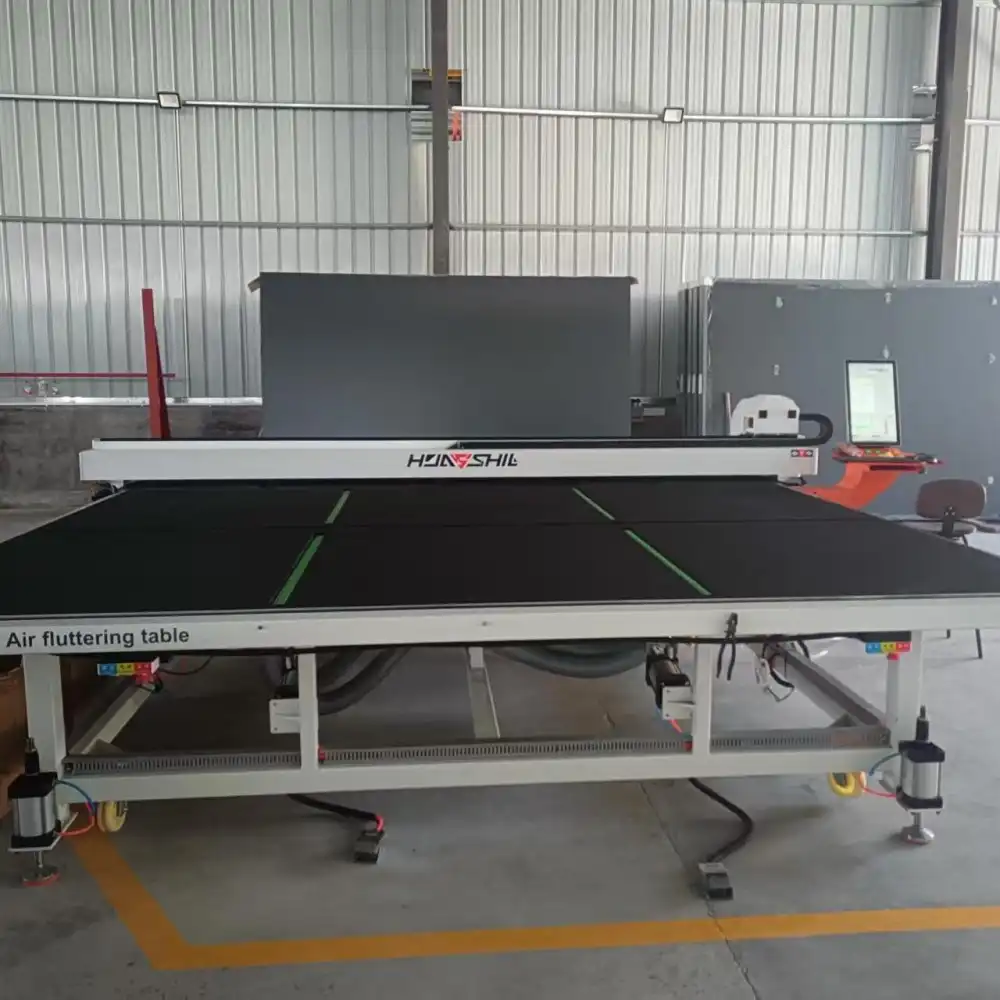
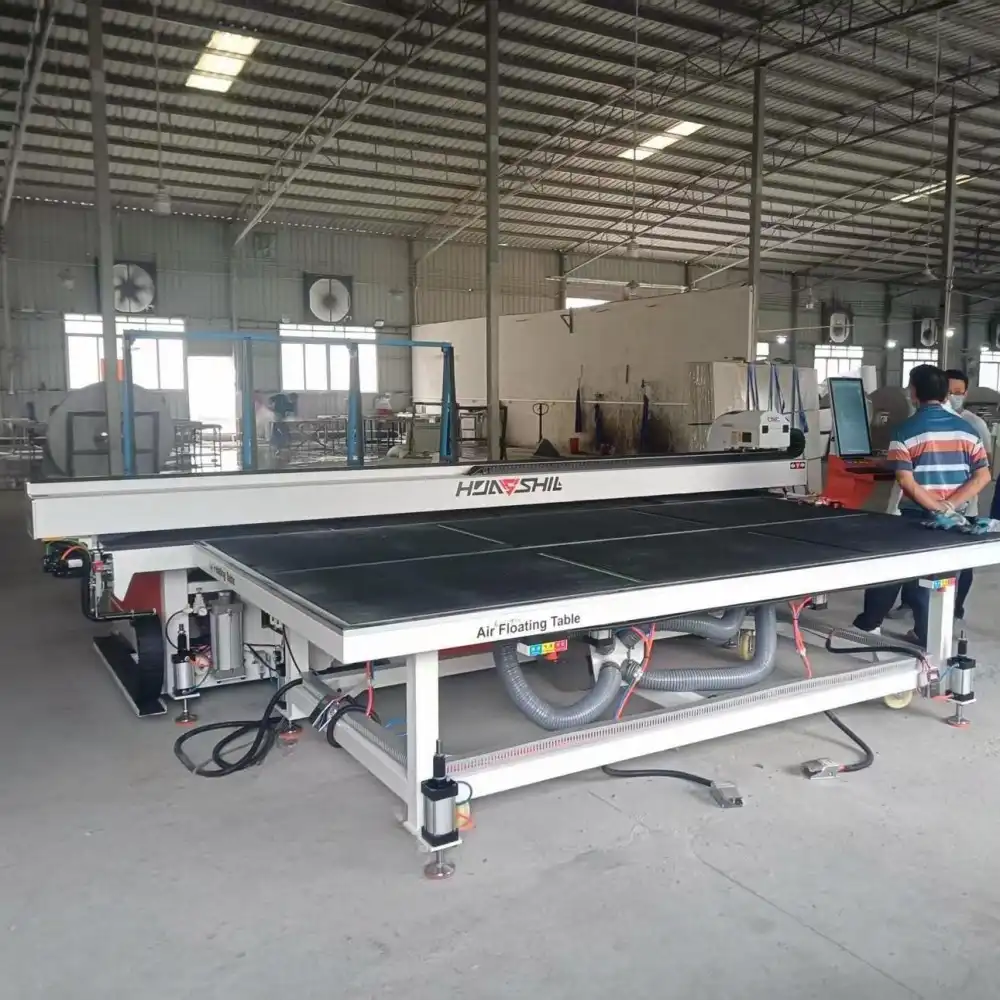
It starts when a sheet is put on the high quality mirror processing machine. The sheet doesn't have to rub against a hard surface because of an air flotation device. Instead, it glides on a thin air cushion. Sticky cups hold or lift the glass. In the mirror, that's important because the shiny front and the padded back are both easy to scratch. After that, the machine finds the glass edge by itself. In this way, the cutting program starts with a real point of reference instead of a guess that was made by hand. These lines must be put correctly at this stage so that they match up with the picture when they are cut out.
Cutting and Shaping
The cut then does what the software tells it to do. The sizes are put on the sheet in the right order with a layout tool like Optima. This lets you lose less glass. When the cutting head hits the surface, it makes cuts. The force stays the same across the sheet thanks to automatic pressure control. The score line is even because of a steady force, which helps the sheet break cleanly along it. The HSL-YTJ2721 can handle a range of thicknesses, from 2 mm to 19 mm. This means that it can be used for a lot of different mirror jobs. A lot of the time, you need CNC tools to make bent or strange shapes.
Edge Finishing, Washing, and Inspection
The mirrors are usually moved to different places when the cutting is done. Beveling adds a nice angle, grinding the edges smooths out sharp edges, and drilling makes holes for hardware. It is then cleaned to get rid of coolant and glass dust that might leave marks. The last step is to check it. The first piece of each batch is usually the one that workers check to see if it is the right size, has good edges, no scratches, and the covering is in good shape. Because it can both load and cut, the HSL-YTJ2721 will not be used in the next step of your line. HUASHIL can help you figure out how to connect the stations in a way that makes them safe and easy to use.
Core Components That Decide Mirror Processing Quality
Control System and Tooling
The processor manages the movement, the recipes, the alarms, and the production data for the high-quality mirror processing machine. The equipment also touches the glass. Over time, tools like cutting wheels, diamond grinding wheels, and polishing heads wear out. When tools are too worn out, they chip and have edges that aren't even. Don't guess at how long it should be between cleaning and changing; instead, set a timer and write down each change. In his book Glass: Mechanics and Technology, Le Bourhis talks about how flaws on the surface of glass change how strong it is and how it breaks. That link will explain why it's very important for mirrors to have a smooth score line and sound edges when they're done.
Handling, Cooling, and Safety Systems
It's important to hold up big mirror sheets when you load and unload them. The weight is held down, and the surface is protected by trays, clamps, air tables, and sticky cups. Cold water and filtration keep heat, dust, and sludge in check while grinding. To keep people safe, hardware like guards, emergency stops, and sensors is also very important. The OSHA guide on protecting tools shows why keeping people away from moving machine parts keeps them from getting seriously hurt. Before setting up, US companies should ask the provider about local rules, security, and power supplies, since each site has different needs.
Factors That Shape Results
If the frame is rigid, the drive moves steadily, the tools are in good shape, the coolant is clean, and the sensors are set up, cuts or edges can be repeated from the first sheet to the thousandth. Buyers should also think about how much it costs to operate, get water, electricity, tools, and fix things. A lot of the time, the total cost of owning a high quality mirror processing machine is more telling than the price it was bought for. Costs more in the long run if a cheap machine breaks down or scrapes more glass. People who want to buy my mirror stock should ask for trial data so they can compare yield and cutting speed.
HUASHIL HSL-YTJ2721 for Mirror and Glass Cutting
Key Specifications
Here are some things that the HSL-YTJ2721 can do based on its features. It can cut glass as thick as 19 mm and as wide as 2700 mm. Optima optimization software plans out how to cut things. There are marks on the machine that say CE and ISO9001. Machinery that has the CE mark is in line with the EU Machinery Directive 2006/42/EC. ISO 9001:2015 is a standard for managing quality. They are useful for engineers and buyers to read, but I think you should still talk to our team about what the US site needs.
Automatic Functions That Reduce Handling
When it comes to the shop floor, the most important features of the high-quality mirror processing machine are automatic edge finding, automatic filling, an air flotation system, sticky cups for moving glass, and a remote control that lets you move around the machine. Automatic filling gets rid of the need to lift things by hand. You can cut more than once if you know how to find the edges and control the pressure. Thanks to air flotation and sticky cups, sheets can be moved with less mess. The person running the machine can move it from a distance with a remote control. A lot of people have problems with the cost of labor, scratches, and results that are different from sheet to sheet. These functions are what fix those problems.
Fit for Different Buyers
The HSL-YTJ2721 works well for glass companies, people who make glass for buildings, and people who need mirrors and glass that are cut to size for making furniture or shower doors. The plant's managers can see how it stacks up against their output goals. They can check their list of products to see if the ranges of size and thickness are correct. HUASHIL can talk to buying groups about delivery, guarantees, extra parts, and payment terms, such as a down payment with the rest due at the end of the term or an L/C for sales outside of China. When it comes to custom line projects, OEM and ODM can talk right away. This helps installers who need to finish projects on time.
Choosing the Right Machine and Avoiding Common Problems
Automatic or Semi-Automatic
Choose based on the size of the order, the variety of products, the number of workers needed, and your growth plans. When work is done continuously or in large amounts, automatic tools keep output steady and cut down on mistakes made by hand when putting. Semi-automatic high-quality mirror processing machines are best for small shops that need to change things out often or don't have a lot of money. Even when automation is used, quality is still determined by skilled workers, the right tools, and regular maintenance. It is more important to look at true cycle times, staffing, output, and payback than to look at the capacity with the best ranking. After technical review, site visits, and budget approval, it might take three to six months for a full line. It only takes a few weeks to choose a single machine.
Selection Checklist
Start with the finished item. Make a note of the shapes, sizes, thicknesses, holes, edge finishes, and how much you make every day. Next, check the spec sheet to see how big the work area, tools, power, and water it needs are. Ask for an inspection report and a sample cut on your own mirror paper. Last but not least, find out how the seller installs, trains operators, provides extra parts, offers warranties, offers remote support, and has experience shipping. In the US, people should also ask about shipping, changing the power, and putting up the item. Make sure that spare parts are easy to get because a high-quality mirror processing machine that won't work costs more than one that isn't bought at all.
Common Defects and Fixes
A lot of problems happen, like chips in the edges, scratches, damage to the coating, uneven cuts, wrong measurements, and unplanned downtime. Old tools, wrong pressure, not enough support, dirty water, and sensors that move around can all damage. It is possible to avoid problems by checking the coolant, inspecting the first piece, and regularly calibrating the machine. It is also important to keep the touch areas clean. Take notes on tool wear, alarms, flaws, and how they were fixed. After a few weeks, when trends begin to show, you can fix the root cause instead of just the symptom. Write down how much water, energy, and products are used for each finished piece. This will help you find waste early on.
Conclusion
A high quality mirror processing machine moves glass from being loaded to being placed, cut, washed, inspected, and edge finished while keeping the size and protective coating that was ordered. You can measure how good the quality is by looking at things like tolerance, edge condition, defect rate, and uptime. It's also helpful to have good tools, steady handling, cooling, and safety systems. Automatic machines work best for steady, large amounts of work, while semi-automatic machines work best for a wide range of small tasks. A better way to compare machines than just price is to look at how much they cost to own altogether. The HSL-YTJ2721 can load and cut sheets that are up to 2700 x 2100 mm and 2–19 mm thick automatically. It can also change the pressure, find edges, float air, and move with a suction cup. With test cuts, defect logs, and clear supplier support, the evaluation is over.
FAQ
1. What is the difference between a mirror machine and a regular glass machine?
There is a layer on mirror that makes bumps, water damage, and edge damage stand out more. Standard high-quality mirror processing machines can cut mirrors, but only after the tools, areas that touch the mirror, coolant, and cleaning methods have been checked. Check your own mirror stock first.
2. What glass size and thickness can the HSL-YTJ2721 cut?
It can cut glass as thick as 19 mm and as wide as 2700 mm. The cutting plans are made by software called Optima.
3. How much does a high quality mirror processing machine cost?
The price of a high-quality mirror processing machine depends on its size, how automated it is, the tools and systems used to handle it, and how well it needs to be integrated. It costs more to move, set up, train, and get extra parts. Look at the total cost of ownership, which includes work, time off, and money you get back. We'll make you a price after you send HUASHIL a list of the things you want to buy.
Request a Quote for a High-Quality Mirror Processing Machine from HUASHIL
Do you want to build a new line or get rid of an old one? A well-known company called Huashil has been exporting high quality mirror processing machines for a long time. Send us your daily output, glass sizes, and thicknesses at salescathy@sdhuashil.com, and we'll help you find a machine that works for you, like the HSL-YTJ2721. To find out more and ask about samples, guarantees, extra parts, and becoming an OEM or ODM customer.
References
1. ASTM International, Standard Specification for Silvered Flat Glass Mirror (ASTM C1503), 2018
2. ASTM International, Standard Specification for Flat Glass (ASTM C1036), 2021
3. Le Bourhis, E., Glass: Mechanics and Technology, Wiley-VCH, 2014
4. International Organization for Standardization, ISO 9001: Quality Management Systems – Requirements, 2015
5. European Parliament and Council, Machinery Directive 2006/42/EC, 2006
6. Occupational Safety and Health Administration, Safeguarding Equipment and Protecting Employees from Amputations (OSHA 3170), 2007