




A glass transport table line reduces labor costs by moving sheets between loading, cutting, and breaking stations on powered tables. Crews no longer lift, carry, and align each panel by hand. Fewer people touch the glass, and one operator can supervise several steps. Breakage, rework, and waiting time also drop because positioning stays consistent. I wrote this guide for plant managers, engineers, and buyers who want to see where the savings come from, how to measure them, and what to ask a supplier. Along the way, I use our HSL-LSX4228 glass cutting line as a practical example.
Why Manual Glass Handling Costs More Than Wages
Extra Hands for Heavy Sheets
Moving heavy sheets takes a lot of people. With a density of about 2.5 g/cm³, a 6 mm sheet that is 4200 mm long and 2800 mm wide takes up 11.76 square meters of space and weighs about 176 kg. As an example, the NIOSH lifting solution starts with a force of 23 kg that stays the same under ideal conditions. To lift panels that are bigger than that, you need more than one person or tools. Every shift has to hire, schedule, pay for, and keep an eye on an extra person. Thick glass adds more weight, so as forms get bigger, staff needs to grow quickly too.
Hidden Costs of Breakage and Rework
Pay isn't the only thing that costs money. People who put glass in place by hand can make scratches, chipped edges, and bad cuts if they are not careful. Every broken sheet costs money because of the time and materials used, as well as the work that has already been done on it. Orders are also late because workers have to take time off from their normal jobs to do rework. People often ask me to tell them to add these costs to their base case. More often than not, they show up in scrap reports instead of salary records. A powered table line takes care of them right away.
Safety, Absence, and Turnover
OSHA's ergonomics rules say that strain accidents are most likely to happen when you lift and move things over and over again. This harm costs money because of hospital bills, time off work, and temporary replacements. When the job market is tight, it can also be tough to find and keep people who do physical work. Skilled workers are still needed even though powered tables do most of the work. It gives them more time to do steady work that is better for their bodies, like checking, programming, and keeping an eye on machines.
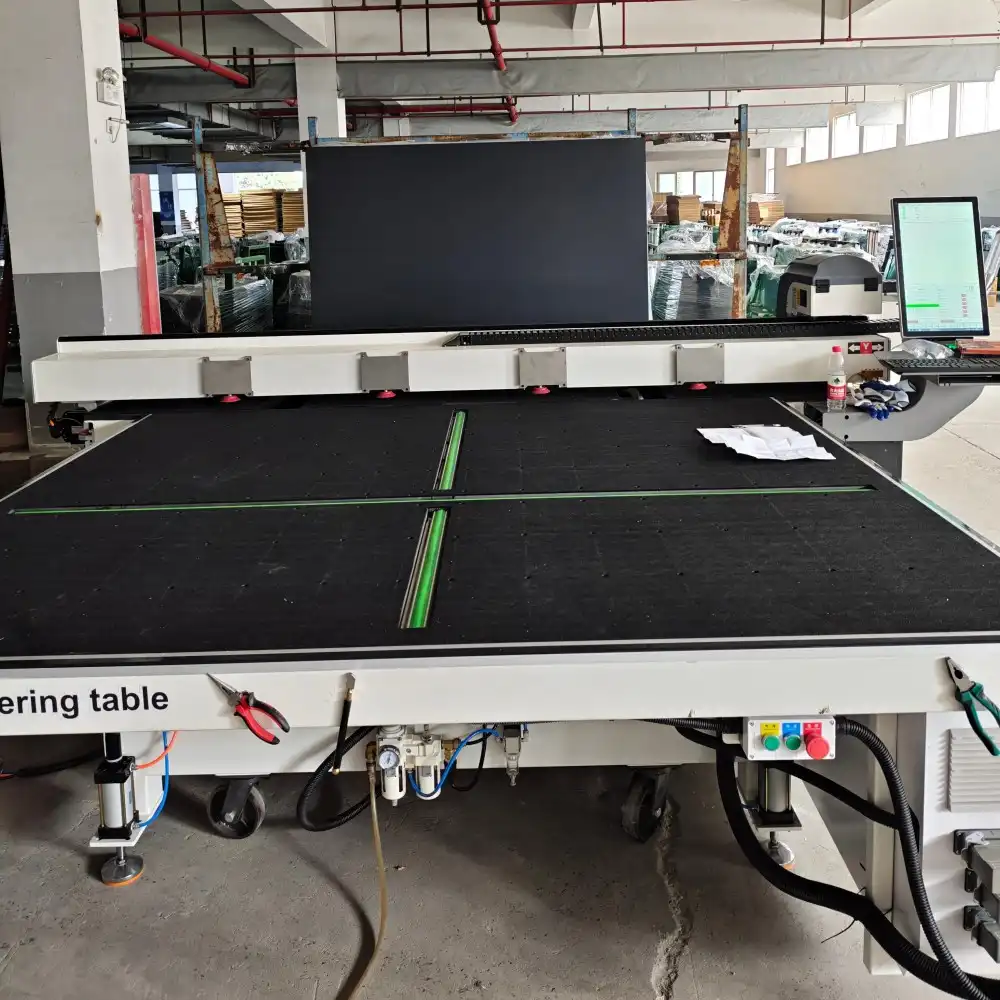
How a Glass Transport Table Line Reduces Direct Labor
Replacing Manual Transfers with Powered Movement
With a glass transport table line that moves between places by motor, you don't have to carry tables over and over again. Sheets on powered tables can be moved at set speeds. Every move is checked by sensors and PLC or HMI controls to make sure it works with the machine that is linked. It takes longer to measure and fix things by hand before cutting when they are aligned automatically. It depends on the plan and the amount of automation; one person can watch over several steps instead of each sheet. Now that things have changed, it takes less direct labor to finish a panel. However, trained people are still in charge of quality control and making sure nothing goes wrong.
Components That Produce the Savings
Less work needs to be done because of how the parts fit together. Strong rollers or belts keep the movement steady, and the right surface coatings protect the glass. Machines that are upstream and downstream can be moved by drives that can change speeds. Different formats stay in place with frames that are rigid and can be moved. Thanks to safety interlocks, emergency stops, and obstruction detection, users can only jump in when something needs their attention. People have to fill in the blanks by hand if any of these parts are missing or don't fit right. This takes time away from the savings that were supposed to be made.
What the Workflow Looks Like in Practice
When a worker or a machine further up the line puts glass on the loading section, the normal cycle begins. The motorized table moves the sheet forward while guides set its position when sensors pick up the sheet. It takes less time for stations to hand off to each other on simultaneous parts. During the process, people don't carry glass. Instead, they keep an eye on quality and alarms. Process information, such as cycle time, problems, and downtime, can then be used to find ways to save more time at work. Thanks for letting me know. It turns a one-time purchase into a process that you keep getting better at.
HSL-LSX4228: A Practical Example of a Glass Transport Table Line
Three Tables Working in Sequence
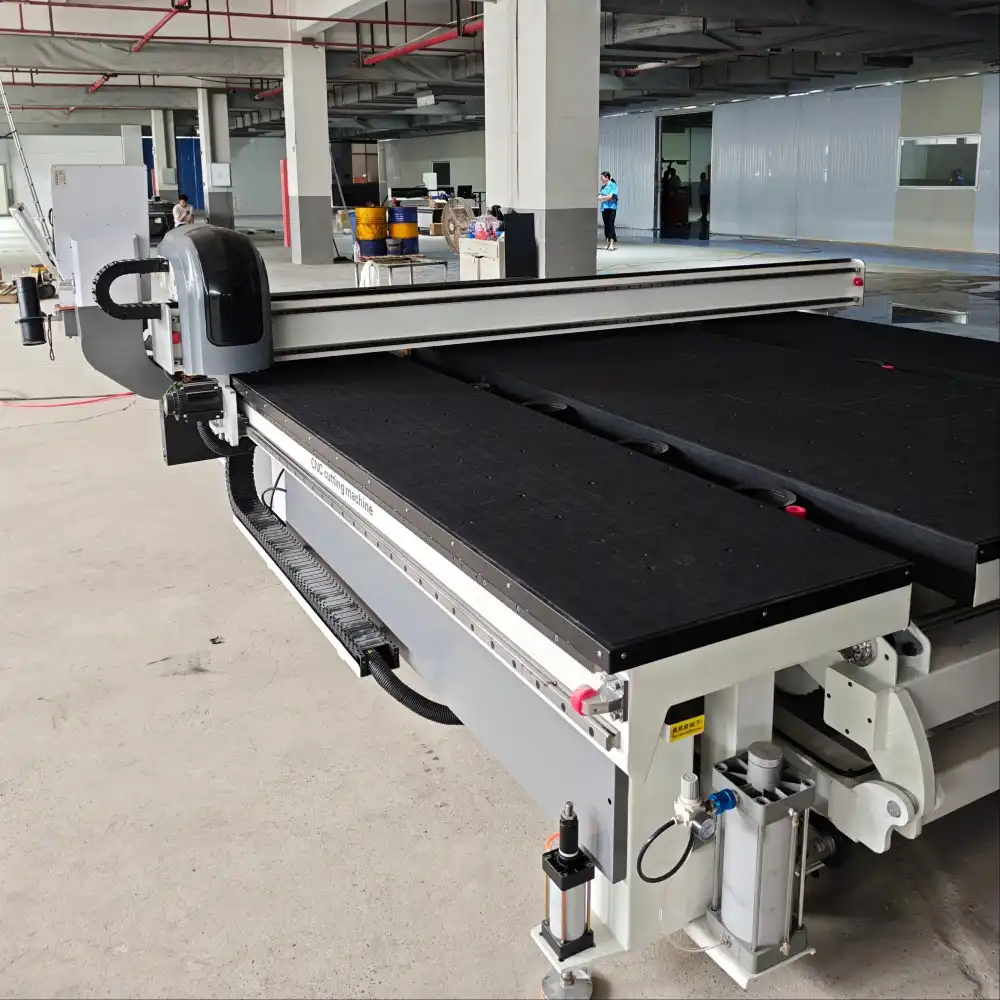
A loading table, a cutting table, and a breaking table make it up. The HSL-LSX4228 is a machine for cutting glass. Each sheet is set, cut, and broken out without having to be moved from one machine to another. This is possible because the glass goes through it in a certain order. Glass that is up to 4200 mm x 2800 mm can be used for large building frames. If you load and remove by hand, this plan cuts down on the number of people who need to stand in line and the number of steps that need to be moved and lifted.
Rail Design and Station Setup
One type of rail is above ground, and the other is below ground. You can pick the one that works best for your floor plan and installation needs. You can move the two + two stations around to make it work for you. Each side has four grab bars. I think you should tell our engineers right away what size sheets you use and how many you make each day. You should use your real product mix instead of a guess when setting up and running a station.
Optima Software and Cutting Plans
The Optima software can be used with the HSL-LSX4228 to make things better. With Optima, cutting lines are spread out across each sheet. This means you use less material and don't have to spend as much time planning by hand. Then, operators don't have to make plans by hand or draw new ones. Instead, they follow a plan that has already been made. For workers, this is important because planning time, cleaning up extra glass, and recutting all take time from staff. Most of the time, these types of glass transport table lines are used for housework, furniture, and art glass. The exact fit will depend on the style you choose, though.
Measuring Savings and Choosing the Right Line
Calculating Return on Investment
Keep track of how many operators work each shift, how much they get paid, how many hours they work, any overtime, broken items, extra work, and the cost of injuries. Measure the same things again after setting everything up. Annual labor savings = labor cost before minus labor cost after plus costs for not having to do extra work or handle things. This is easy to figure out. Then, compare the answer to how much the tools cost, how long they take to set up, train, and maintain, and how much energy they use. People who study buying talk about this method called "total cost of ownership." It's better for finance teams to see the return on investment this way than just looking at the price of the purchase.
Selection Criteria for Buyers
Check to see if the line fits your glass. Check to see how thick, heavy, big, and what kind of surface the sheet has. First, find out how many sheets need to be printed every hour. Next, decide how much automation your staff and budget can handle now and in the future. There are safety features, maintenance steps, and ways to connect the line to other machines that you should look over. When looking for spare parts, it's important to compare shipping times, guarantees, and the ease of getting them. This is because downtime quickly wipes out any work savings. I think you should make one shared design sheet so that engineers, buying managers, and finance leads can all see different things.
Mistakes That Reduce Savings
A line's size should not be based on the average weight of a sheet, as this doesn't work well when heavier panels show up. One more is choosing based only on price and putting up with bad integration or weak controls. If the cutting or checking station is already full and slow, a faster table won't help. Make sure the line is fair. Last but not least, make sure that training workers and commissioning are part of the plan from the beginning. Also, make room for future updates and new glass forms.
What to Send a Manufacturer
It takes less time to quote when the question is clear. You should list the glass's size, thickness, maximum weight, product type, daily output, layout drawings, and how you want it to work. Check to see how much weight the equipment can hold, what safety features it has, whether it can work with other equipment, how it will be delivered, set up, trained operators, and spare parts. A good quote tells you about the work that will be done, the size, the controls, the guarantee, the lead time, the payment terms, and the warranty. HUASHIL has been making and sending goods abroad for a long time. Our team can talk to you about these details before you decide.
Conclusion
The glass transport table line uses driven, sensor-guided movement to do the moving, carrying, and setting up that used to be done by hand. This saves money on labor costs. It's safer and less likely that someone will get hurt because there are fewer operators per sheet. Then, skilled workers are sent to keep an eye on the work and make sure it's done right. The HSL-LSX4228 comes with Optima software, four grab arms on each side, a 2+2 station layout, and tables that can be used to load, cut, and break glass up to 4200 x 2800 mm. In real life, it shows how this works. Set a baseline and compare the total cost of ownership. This is the best way to see how much you've earned back. By making sure the whole line is balanced and planning training, capacity is matched to real glass sizes, and costs are kept low.
FAQ
1. How many operators can a glass transport table line replace?
There's no set number. The answer is based on the output, layout, size of the glass, how it is loaded, and the level of automation. First, find out how big the people who are currently handling the goods are. Then, set up the proposed setup and compare the two.
2. Is a transport table the same as a standard conveyor?
The only thing that a conveyor belt moves is glass. There are fewer steps that need to be done by hand when you use a moving table line to put and line up sheets and work with stations for cutting and breaking.
3. What information do you need for a quotation?
Send the glass size, thickness, weight limit, daily production, structure plans, and the amount of automation you want to use for the glass. Once they have that information, our experts can offer a good setup.
Request a Customized Glass Transport Table Line from HUASHIL
The Shandong Huashil Automation Technology Co., LTD makes automatic glass machines and sells them. We can help you find the best glass transport table line manufacturer for your next project if you email salescathy@sdhuashil.com with the sizes, thicknesses, and output goals of the glass you need. Our staff will look at how you work and suggest a setting like the HSL-LSX4228.
References
1. NIOSH, Applications Manual for the Revised NIOSH Lifting Equation, 1994
2. OSHA, Ergonomics: The Study of Work, 2000
3. Shelby, Introduction to Glass Science and Technology, 2005
4. Groover, Automation, Production Systems, and Computer-Integrated Manufacturing, 2015
5. Ellram, Total Cost of Ownership: An Analysis Approach for Purchasing, 1995
6. Salvendy, Handbook of Industrial Engineering, 2001