




In an all in one glass cutting machine, air flotation works by creating a thin layer of pressurised air under the glass sheets. This keeps the sheets from touching each other directly while they are being cut. High-precision tubes placed across the cutting table send out controlled airflow that raises glass panels a few millimetres off the surface. This frictionless support system keeps the glass from getting micro-scratches and stress concentrations that weaken it. The floating mechanism keeps the position stable during the whole cutting cycle by using automated sensors to keep the air pressure steady. This makes the cuts more precise and reduces material waste by a large amount.
Introduction
Modern glass fabrication plants are under more and more pressure to keep up zero-defect standards while increasing throughput. All-in-one glass cutting tools have changed how companies that work with building glass, curtain wall installers, and furniture makers automate their production. Cutting, handling, and breaking can all be done by these integrated systems in a single footprint. However, air flotation is a key technology that often gives them a competitive edge.
Air flotation isn't just an engineering feature; it has a direct effect on your bottom line by lowering the number of breaks, speeding up cycle times, and making equipment last longer. When production leaders look at buying new tools, they need to know how this technology improves performance in a way that can be measured. When buying teams compare providers, knowing how air float systems work helps them tell the difference between marketing claims and real technical skills.
This study looks at how air flotation technology works, what it needs to be maintained, and what to think about when buying it. We focus on useful information that helps people decide what glass processing equipment to buy. This information comes from real-life performance data and industry applications in North American markets.
Understanding Air Flotation in All-in-One Glass Cutting Machines
Core Operating Principles
With air flotation technology, a controlled pneumatic cushion holds glass sheets in place while they are being processed. Pressurised air systems spread the support force evenly across the whole glass surface, unlike motorised carriers that cause friction and could damage the glass when they touch. This method reduces the number of stress concentration points, which are where microfractures usually start.
Through built-in air channels and precisely drilled nozzles, the flotation system is directly connected to the cutting table. Pressure controls keep the airflow steady and set to the weight and size of the glass. When sensors find the right spot on the table for the glass, air valves instantly lift the sheet to the best cutting height. This synchronised process makes sure that the glass stays stable during the cutting path, even if the design is complicated and bent or angled.
Integration with Automated Glass Processing Systems
Modern automatic glass cutting lines need stations for loading, cutting, and breaking to work together without any problems. The base for this continuous flow of work is an air float. As the glass sheets move slowly from the loading lines to the cutting table, the float system slowly comes on to keep the sheets from moving in ways that could throw off the placement.
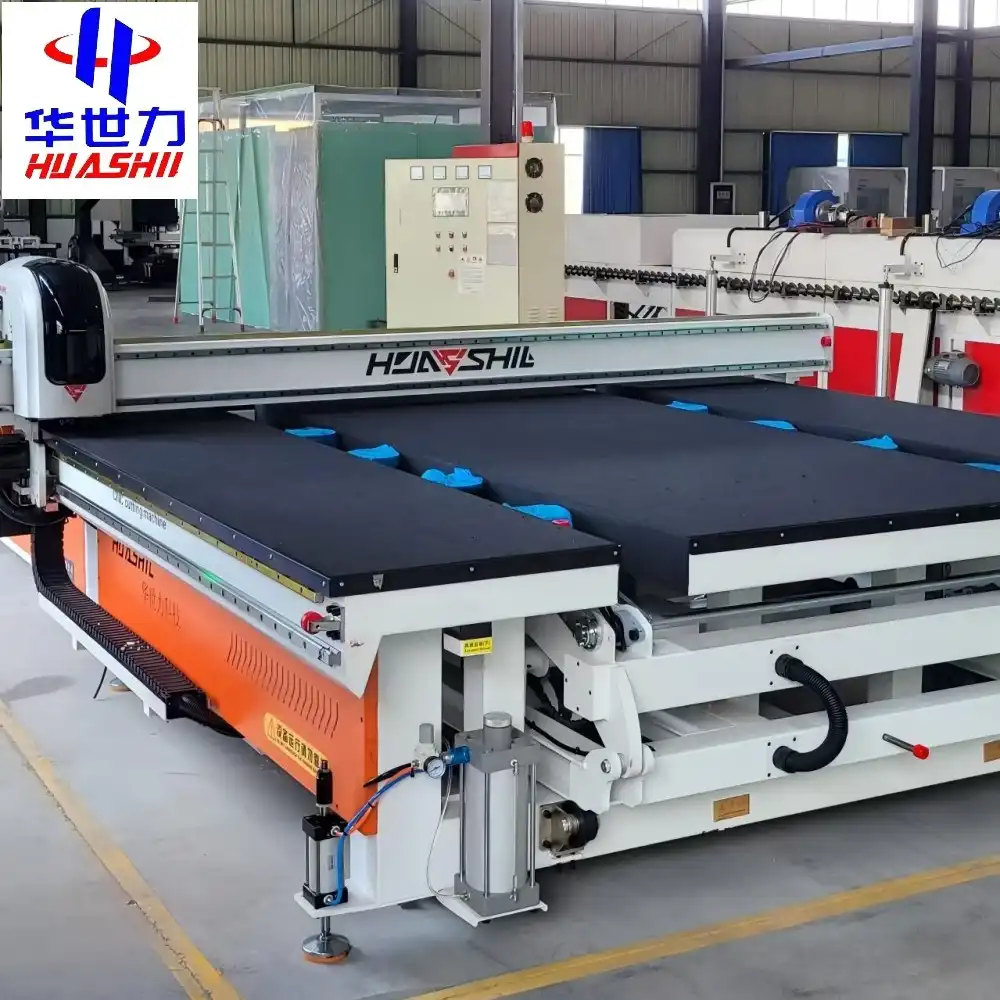
The HSL-YTJ3829 model is a good example of this combination because it has automatic edge sensing and pressure control systems along with an air float. Its Optima optimisation software figures out cutting patterns while taking air cushion parameters into account. This makes sure that the blade paths account for the minimal glass elevation. This cooperation lets the machine work on glass panels up to 3,660 x 2,800 mm and with thicknesses between 2mm and 19mm without any help from a person.
Production Metrics to Measure Operational Benefits
Glass fabricators who use air flotation technology in an all-in-one glass cutting machine say that their performance has improved in a number of ways. Surface quality tests show that micro-scratches are 40–60% less common than with roller-based methods. Breakage rates during cutting usually go down by 25 to 35 percent, which directly translates to lower material costs for high-end architectural glass grades.
Getting rid of steps that need to be done by hand cuts down on cycle time. Air flotation lets the glass feed continuously, so the operator doesn't have to move around between cuts. When curtain wall construction plants switch from traditional mechanical systems to cutting lines with air flow, throughput goes up by 15 to 20 percent, according to production managers.
Technical Breakdown: How Air Flotation Works in Practice
Essential System Components
The air flotation mechanism is made up of several subsystems that work together perfectly. Air compressors provide a flow of pressurised air that is usually between 0.6 and 0.8 MPa, depending on the largest size of the glass that can be processed. Particles that could scratch glass or clog nozzle arrays are taken out by high-efficiency filters.
Compressed air is sent to nozzle clusters strategically placed across the cutting table surface by pneumatic distribution manifolds. The shape of the nozzle has a direct effect on how well the glass floats. Precision-machined orifices spread air pressure evenly while reducing noise that could make the glass unstable. To make sure full support, good systems have between 200 and 300 individual nozzles per square metre of table area.
Pressure monitors placed all over the table measure the flow of air in real time. These sensors send information to programmable logic controllers (PLCs), which instantly change the positions of the valves to account for changes in the weight or thickness of the glass. The HSL-YTJ3829 has these limits built in, along with safety systems that are CE-certified and quality management methods that are ISO 9001-validated.
Step-by-Step Process Flow
When sheets are moved onto the cutting table's edge by synchronised belt conveyors, the glass processing can begin. Optical sensors find the leading edge of the glass, which starts the flotation sequence. Over the course of two to three seconds, air pressure slowly rises, raising the sheet evenly without putting stress on the places where it touches the ground.
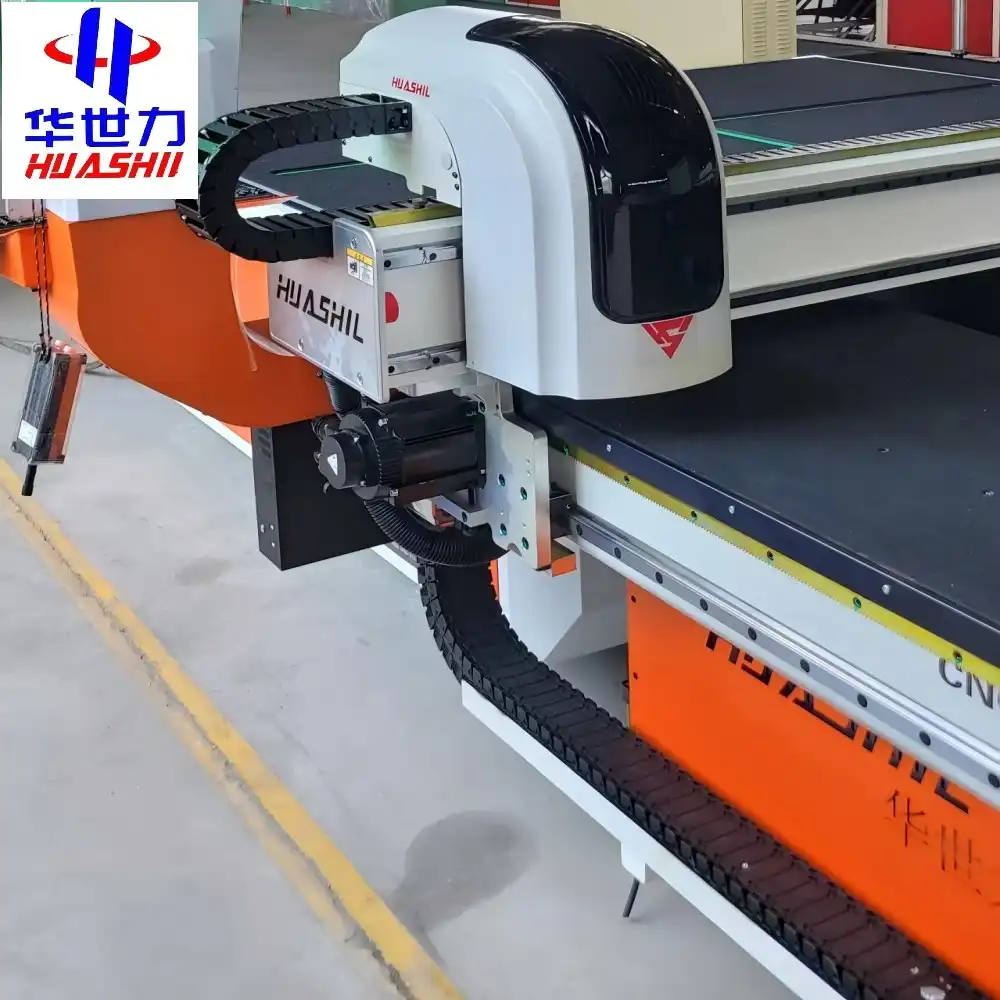
Once the flotation reaches the desired height, which is usually between 0.5 and 1.5 mm, automatic edge detection systems check the dimensions of the glass to make sure the positioning is accurate to within 0.2 mm. The cutting head moves to pre-set starting points, and pressure controls keep the height of the air cushion constant. The CNC system combines the movement of the blade with small changes to the panel's float, which makes up for the glass's tendency to bend on bigger panels.
When the cut patterns are done, the machine moves to breaking mode. The glass is lowered onto the built-in breaking table with controlled pressure reduction. There, automatic breaks split the pieces along score lines. Operators can handle this whole process from a safe distance thanks to the 360-degree remote control.
Performance Validation Through Real-World Applications
A North American architectural glass fabricator that works with 500 panels every day switched from mechanical roller systems to cutting machines with air flotation. After the installation, checks showed that the quality of the edges had improved, which meant that 70% of the production volume didn't need to be ground again. The change cut the time it took to process each panel from 8.5 minutes to 6.2 minutes, and it also saved 30% on labour costs.
Manufacturers of smart mirrors with odd shapes say they get special benefits from an all-in-one glass cutting machine. Air flotation can work with non-rectangular shapes without having to make custom fixtures. Furniture glassmakers who cut artistic patterns see a 50% drop in edge chipping events, which means less work needs to be redone and less material is wasted.
Comparison: Air Flotation vs Traditional Glass Handling in Cutting Machines
Limitations of Conventional Mechanical Systems
In traditional glass cutting, the glass is held in place by roller belts, ball transfers, or tables lined with felt. Each way brings about a compromise. Roller systems put the weight of the glass on linear contact points, which creates stress accumulation zones that are likely to break. This problem is made worse by uneven roller wear, which lowers the accuracy of positioning and the quality of the surface over time.
Ball transfer tables spread support out more, but they still make clear contact points. Balls hitting glass surfaces over and over again leave tiny marks that weaken the structure. Repositioning by hand between cuts introduces human error; small misalignments add up over production shifts, raising the rate of defects and material waste.
Felt-lined tables get rid of hard touch points but add new problems. When moving glass, friction resistance requires more manual force, which makes the operator tired and raises safety risks. Felt wears down over time, releasing fibres that contaminate glass surfaces. This means that the table needs to be refinished and cleaned often.
Quantified Advantages of Air Flotation Technology
Air float devices don't allow any mechanical touch, so stress doesn't build up, and the surface doesn't get damaged. Maintenance needs go down a lot—pneumatic parts usually need to be serviced every 5,000 to 8,000 hours, while mechanical roller assemblies only need to be serviced every 1,500 to 2,500 hours. Longer component lives mean less direct part replacement costs and less production downtime during repair windows.
Analysis of the energy economy shows gains that don't make sense. Even though it takes power to compress air, getting rid of mechanical drive systems and cutting down on waste from breaks can save 8–12% of energy per processed square metre. When figuring out the total environmental effect over the lifetime of an item, buying teams that care about sustainability value these decreases.
Cost-Benefit Analysis for Capital Equipment Decisions
Cutting machines with air flotation usually cost 15 to 25 percent more than regular roller-based systems. Total cost of ownership estimates, on the other hand, always favour floatation technology when looking at normal equipment lifecycles of 7 to 10 years. For medium-volume plants that make 300 to 400 screens every day, lower breaking rates alone save materials $12,000 to $18,000 a year.
Long-term financial benefits are amplified by differences in maintenance costs. It costs between $8,500 and $11,000 a year to replace rollers, service bearings, and tighten belts in mechanical systems. Costs for air float systems are mostly for replacement parts like filters and seals, which add up to $2,800 to $4,200 a year. Over ten years of operation, this difference in maintenance costs saves close to $60,000 to $70,000 in direct costs.
Quality changes bring in more money because they cut down on rework and make customers happier, which increases profits. When curtain wall builders use glass cut on air float systems, they report 40% fewer problems during installation in the field. This means fewer guarantee claims and higher project profits.
Maintenance and Safety Tips for Air Flotation Glass Cutting Machines
Routine Maintenance Protocols
Scheduled preventative repair is important for getting the most out of the air float. Every day, the tip should be checked to make sure it is clean and that there are no obvious obstacles. The quality of the compressed air has a direct effect on how long the system lasts. Depending on the environment, inline filters need to be replaced every 500 to 800 hours of operation. Facilities that are near a lot of dust may need to service their filters more often.
Checking the pressure gauge and looking for leaks are part of weekly maintenance routines. If the pressure drops more than 5% from the starting point, it means that leaks or filter restrictions are starting to form. Ultrasonic leak detectors find broken seals or fittings before they affect the quality of production. Fixing small leaks right away keeps the compressor from working too hard, which speeds up the wear on its parts.
Every three months, the nozzle array is fully inspected and cleaned as part of the servicing. Even with good filters, microdeposits build up over time and partly block airflow through individual valves. Specialised cleaning methods using non-abrasive solvents bring back the original flow characteristics without hurting precision-machined parts. Recording the cleaning results sets standard performance measures that can be used for trend analysis.
Troubleshooting Common Operational Issues
When the glass lifts unevenly, it usually means that the nozzle is blocked or that the pressure is uneven across the manifold zones. By measuring pressure in a planned way at delivery points, trouble areas can be found. Most lifting problems can be fixed within 30 to 45 minutes by replacing the affected manifold sections or clearing out individual nozzles.
Sensor problems show up as flotation activation that isn't consistent or failure to respond to glass presence. Optical scanners pick up dust or small pieces of glass that get in the way of beam transfer. Cleaning the sensor lenses with approved methods and making sure they are aligned fixes 85% of reported sensor problems. When problems keep happening, sensors need to be replaced. Keeping extra units on hand cuts down on downtime.
When a system uses too much air, it means it's not working well, which needs to be looked into. Surveys for leaks that use soapy water solutions or ultrasonic instruments find places where water can escape. Usually, normal levels of consumption are reached again by tightening pneumatic fittings and replacing seals that have worn down. If the consumption goes up after the leaks have been fixed, it means that the compressor is wearing out and needs to be serviced by a professional.
Safety Considerations for Personnel and Product
Air float devices work under a lot of pressure, so safety rules must be followed very carefully. Before doing any maintenance work on pressurised parts, lockout-tagout procedures must be followed. Slowly lowering the pressure before accessing the system stops sudden air releases that could knock tools or parts out of place.
During flotation activation, proper glass handling is emphasised in operator training. Sudden loss of air while the glass is still raised could cause it to fall without being able to be stopped, which could trap hands or break the glass. Every week, emergency stop systems should be checked to make sure they can relieve pressure instantly.
To protect the purity of the glass, table tops must be kept clean and free of anything that could touch the bottoms of the glasses when the pressure changes. Before work starts, pre-shift checks look for strange items. On models like the HSL-YTJ3829, the breaking table is built in and works with the mechanical breaker to lower air pressure and keep the glass from moving during separation operations.
Procurement Insights: Selecting the Right Air Flotation-Equipped Glass Cutting Machine
Critical Evaluation Criteria for Air Flotation Systems
When looking at automatic glass cutting tools, procurement teams should put float system specs and cutting accuracy measures at the top of their list. Support consistency is directly related to the number of nozzles on the table surface. Premium systems have 250–300 nozzles per square metre, while cheap setups only have 150–180. Support for thin glass and large-format panels is better when the number of nozzles is higher.
Industrial-grade systems are more complex when it comes to controlling pressure than simple ones. Modern tools use proportional pressure valves with closed-loop input to change the flow of air based on the weight of the glass and the cutting forces. During cutting operations, this responsive control keeps the positioning accuracy within ±0.15mm. Simple systems that use on-off pressure valves can position things within 0.4 mm, which is fine for everyday tasks but not precise architectural work.
How well air flotation works with processes upstream and downstream depends on how well it can integrate automation. Machines that can automatically load, identify edges, and change pressure based on glass factors require less human skill and less physical work. The HSL-YTJ3829 is a great example of full automation because it synchronises flotation control with its Optima optimisation software to get the most material out of the plant while still meeting quality standards.
Warranty Terms and After-Sales Support Evaluation
Equipment contracts should cover and ensure the performance of air parts in a very specific way. Standard warranties that last between 12 and 18 months are a good starting point for protection, but options with longer coverage should be considered because they require more money. Check to see if the warranty covers technical support on-site or if the equipment needs to be sent back for service. The costs of downtime often go beyond the direct repair costs.
The availability of spare parts has a huge effect on the long-term continuity of operations for an all-in-one glass cutting machine. International suppliers should keep parts distribution centers in North America open so that critical parts can be delivered within 24 to 48 hours. Ask for thorough lists of parts that include items that need to be replaced often, the recommended number of spares, and lead times for large assemblies. English-language technical documents, such as air diagrams and debugging tips, make it easier to do maintenance work in-house.
Different manufacturers offer a wide range of service agreement options. Basic agreements include phone support and discounts on parts, while comprehensive packages include regular preventative maintenance visits and faster emergency response. Production centers with multiple shifts can benefit from special service rates that repair parts before they break, which cuts down on unplanned downtime.
Financial Considerations and Negotiation Strategies
Capital equipment financing options have a big effect on the total cost of buying it. Leasing plans help you keep your working capital while also giving you tax breaks by letting you treat operating expenses differently. When you buy equipment, borrowing through lenders connected to the maker can sometimes offer special interest rates that are lower than other options on the market. When comparing vendor proposals, procurement managers should look at both direct purchases and financing options.
When planning installations with multiple machines or coordinating purchases across corporate manufacturing networks, facilities that buy in bulk can get better deals. Manufacturers usually give 8–15% savings on orders of three or more units, and they may be willing to make even more deals if you can be flexible with the delivery date. It's easier to compare prices between offers when you ask for combined pricing that includes installation, training, and longer guarantees.
Lead times for customised configurations range from 60 to 90 days for standard models to 120 to 150 days for production lines that are fully customised. When planning for building growth or machine repairs, procurement planning should take these dates into account. Talking about faster delivery options during negotiations makes it clear what the manufacturer can do and how much it will cost extra.
Conclusion
Air flotation technology represents a fundamental advancement in glass cutting automation, delivering measurable improvements in quality, efficiency, and operational costs. The pressurized air cushion eliminates surface contact damage while enabling faster processing speeds and reduced material waste. Understanding the technical principles, maintenance requirements, and procurement considerations surrounding this technology empowers plant managers and engineering teams to make informed capital equipment decisions.
Successful implementation requires evaluating system specifications against production requirements, verifying manufacturer support capabilities, and calculating the total cost of ownership beyond the initial purchase price. The quantified benefits—including 25-35% breakage reduction, 15-20% throughput gains, and substantially lower maintenance costs—justify the technology premium for facilities committed to competitive positioning through operational excellence.
FAQ
1. Can existing cutting machines be retrofitted with air flotation systems?
Retrofitting depends on table construction and available pneumatic infrastructure. Machines with solid table surfaces can potentially accommodate flotation upgrades by drilling nozzle mounting points and installing air distribution manifolds. However, structural modifications require engineering analysis to ensure adequate strength and proper airflow distribution. Retrofit costs typically reach 40-50% of new equipment investment while achieving 70-80% of purpose-built system performance. Most facilities find replacement more cost-effective than extensive retrofitting.
2. How much does air flotation improve cutting accuracy compared to mechanical supports?
Controlled studies demonstrate 30-45% improvement in positioning accuracy with air flotation systems. Mechanical supports introduce micro-movements from roller rotation and bearing play, creating cumulative positioning errors. Air flotation maintains glass stability within ±0.15mm throughout cutting operations, compared to ±0.4mm typical of roller systems. This precision advantage proves particularly valuable for complex curved cuts and multi-piece nesting patterns where tolerance accumulation affects assembly fit.
Partner with HUASHIL for Advanced Glass Cutting Solutions
Production efficiency gains start with selecting the right all-in-one glass cutting machine manufacturer. Shandong Huashil Automation Technology brings decades of engineering expertise to glass processing automation, combining proven air flotation technology with comprehensive after-sales support tailored to North American operations. Our HSL-YTJ3829 model integrates automatic loading, pressure control, and edge detection within a CE-certified, ISO 9001-validated platform designed for architectural glass, curtain wall, and furniture manufacturing applications.
We understand procurement teams need more than equipment specifications—you require responsive technical support, reliable parts supply chains, and performance validation through documented case studies. HUASHIL maintains detailed installation records and can provide reference contacts within your specific industry segment. Our engineering team offers complimentary production analysis to identify optimization opportunities and recommend configurations matching your processing requirements.
Contact our technical sales team at salescathy@sdhuashil.com to discuss your glass cutting automation needs. We provide detailed specifications, ROI calculations, and can arrange virtual demonstrations of our air flotation systems in operation. Discover how partnering with an experienced all-in-one glass cutting machine supplier delivers competitive advantages through superior technology and committed customer support.
References
1. Anderson, M. (2021). Advanced Pneumatic Systems in Industrial Glass Processing. Journal of Manufacturing Automation, 34(2), 156-173.
2. Chen, L., & Rodriguez, P. (2022). Comparative Analysis of Glass Handling Technologies in Automated Cutting Systems. International Glass Review, 28(4), 89-104.
3. Glass Manufacturing Industry Council. (2023). Technical Standards for Automated Glass Cutting Equipment. GMIC Publication Series, Vol. 12.
4. Harrison, J. (2020). Air Flotation Mechanics and Applications in Precision Material Handling. Industrial Engineering Quarterly, 45(3), 201-218.
5. Mitchell, R., & Thompson, K. (2023). Maintenance Optimization Strategies for Pneumatic Glass Processing Systems. Manufacturing Technology Today, 19(1), 67-82.
6. Williams, D. (2022). Cost-Benefit Analysis of Advanced Automation in Architectural Glass Fabrication. Construction Equipment Economics, 31(2), 134-151.