




Glass breaking during CNC processing is still one of the most expensive problems that architectural glass plants, curtain wall installers, and furniture producers in the US have to deal with. An automatic CNC glass loading machine solves this long-standing problem with precise engineering that gets rid of human mistakes, keeps mechanical stress under control, and syncs movement with advanced sensor input. By moving glass sheets from storage to cutting tables automatically, these machines cut down on material waste by a huge amount. They also keep production plans on track and protect your bottom line while still meeting the high-quality standards your customers expect.
Understanding Glass Breakage in CNC Processing
Root Causes of Glass Damage During Loading
Many risks are introduced when glass is handled by hand, which weakens its purity. When holding pressure isn't right, stress builds up in certain places and spreads to obvious cracks. When sheets touch, they chip at the edges because the loading stations and cutting tables are not lined up correctly. When you suddenly speed up or slow down during transfer, shear forces inside the material weaken it before you even start cutting it.
Financial Impact Beyond Material Loss
The real cost of broken glass goes far beyond the cost of replacing the raw materials. Unplanned downtime throws off whole production plans, which delays the delivery of projects to building sites and the installation of products in showrooms. Operators who are skilled and could otherwise work on jobs that add value are stuck on rework requirements. In competitive selling situations where dependability sets leaders apart from followers, inconsistent quality hurts relationships with suppliers and the company's image in the market.
Operational Risks in High-Volume Environments
Plant managers are under more and more pressure to keep zero-defect standards while increasing output. Variability increases with production output when sheets are loaded by hand; the more sheets that are handled during a shift, the higher the statistical chance that one will break. This variation leads to unpredictable scrap rates that make it harder to plan supplies and figure out margins, especially when working with high-end, low-iron glass or specialized coated goods that cost a lot.
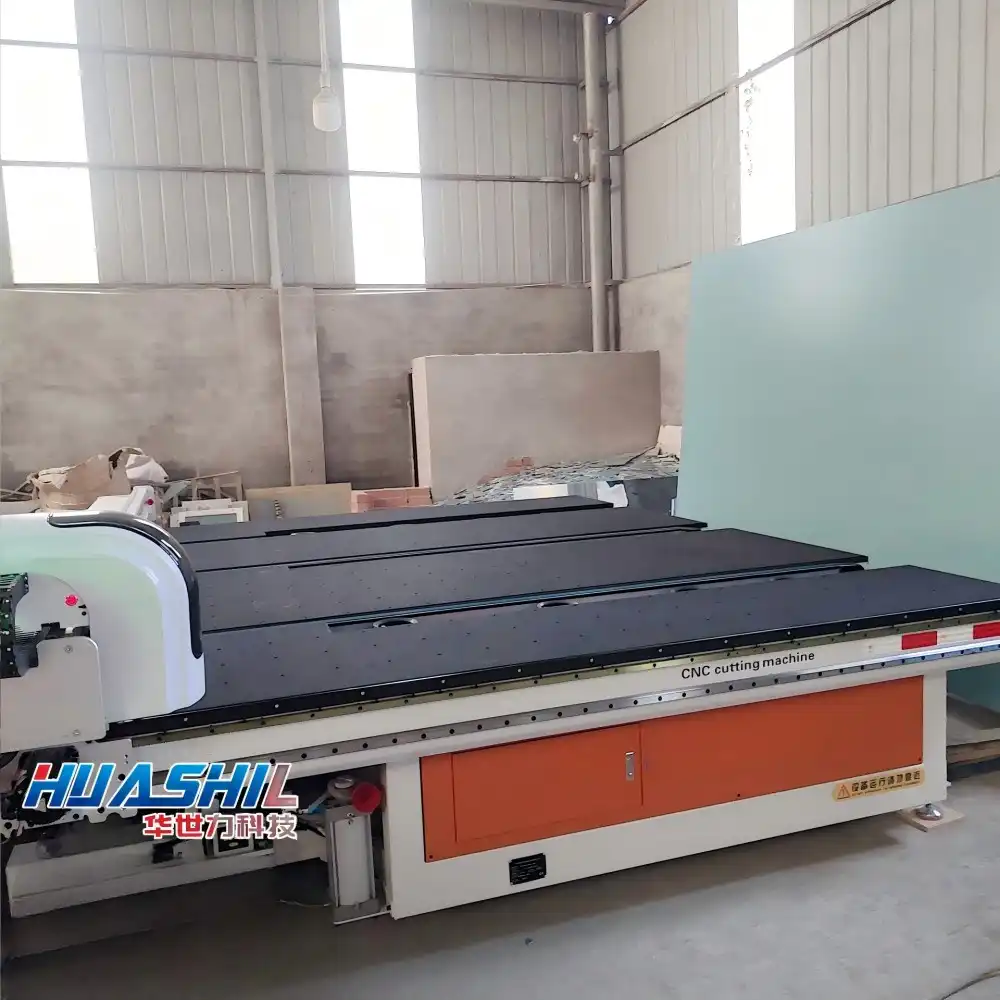
How Automatic CNC Glass Loading Machines Reduce Glass Breakage?
Precision Gripping and Soft Cushioning Technology
Automatic CNC glass loading machines use vacuum suction cups that can change the pressure based on the thickness and surface of the glass. When people handle things by hand, their grip strength changes between shifts and between workers. But automatic grippers keep the same contact force across the whole sheet surface. At touch points, soft cushioning materials spread the load equally, stopping stress buildup in one place that can cause micro-fractures.
The HSL-LSX4228 model shows these ideas with four large arms on each side, giving you eight coordinated touch points that hold sheets up to 4200x2800mm in place. This spread-out support system keeps big architectural glass pieces from bending, which would happen if they were moved by themselves.
Controlled Acceleration and Movement Sequencing
Automated systems follow pre-set motion patterns that slowly speed up sheets from rest, keep their speed constant during transfer, and slowly slow them down before placing them. This is very different from manual handling, where workers can't keep up steady moving speeds, especially when they're tired. On more advanced models, the above-ground or underground rail layouts allow for vibration-isolated transport lines that protect glass from shocks that are sent through the floor.
Motion control software works with Optima optimization software to figure out the best transfer speeds for each type of glass based on its size, weight, and tendency to break easily. This smart technology makes sure that the thin 3 mm smartphone cover glass is handled more gently than strong 19 mm laminated building panels, and it does this automatically, without any help from an operator.
Sensor Integration and Real-Time Feedback
Several kinds of sensors are used in modern loading technology to keep an eye on every step of the transfer cycle. Before starting to move position monitors, make sure that the loading tables, cutting tables, and breaking tables are all perfectly lined up. Pressure monitors pick up changes in the vacuum grip strength that could mean that the surface is dirty or the suction cup is wearing down. In order to avoid collisions with frame sides or nearby machine parts, proximity sensors are used.
This network of sensors sends information to control systems that can immediately stop activities if parameters go outside of allowed ranges. Advanced models have a 2+2 station design that lets sensors check positioning at four different places along the processing line. This creates multiple protections against breakage caused by misalignment.
Advanced Automation Capabilities
New technologies go beyond mechanical accuracy to improve breakage avoidance, such as an automatic CNC glass loading machine. Vision systems can now find edge flaws or damage that was there before in arriving glass sheets, so they are sent somewhere else before they are loaded. Predictive maintenance programs look at patterns of sound and changes in power use to find worn-out parts before they affect the quality of handling. Based on collected production data, machine learning models find the best grip pressure and acceleration patterns, which improve performance all the time.
Comparing Automatic vs. Manual CNC Glass Loading Machines
Precision and Consistency Advantages
The positional accuracy of automatic CNC glass loading machines is within ±0.5 mm over many rounds, no matter how experienced the operator is or how long their job is. This accuracy means that edges are less likely to get damaged when sheets touch the cutting table guides. The number of broken pieces drops from 3 to 5 percent in manual operations to less than 0.5 percent in fully automatic lines, according to statistics from architectural glass fabricators.
When tasks are done by hand, human factors come into play, which get worse as production runs go on. During the second and third shifts, errors happen more often because operators are tired. Inconsistencies in quality are caused by differences in how staff are trained. When you're not paying attention or are distracted for a short time, you could make an expensive mistake that automated systems can't make because they are designed to be reliable.
Throughput and Production Efficiency
Besides reducing damage, automation greatly speeds up cycle times. It works with glass sheets in a continuous flow, with loading, cutting, and breaking all happening at the same time on three separate tables. When compared to sequential human handling, this parallelization makes the actual throughput 40% to 60% higher.
Less downtime for fixing broken parts and getting rid of scrap makes the tools even more useful overall. Plant managers say that automatic loading systems have an uptime of 85-90%, while manual processes only have a 65-75% uptime when glass-damage pauses are taken into account.
Long-Term Financial Analysis
Total cost of ownership estimates show that investing in technology is a good idea. Most of the time, the material saved from less breakage pays for 25 to 35 percent of the cost of the tools in the first year of use. By moving workers around, skilled techs can focus on quality control and machine optimization instead of doing the same things over and over again. Insurance rates and regulatory compliance costs go down when workers' compensation claims and safety events go down.
The predictability of automation is especially helpful for curtain wall installers working on big-business projects. When bidding on multimillion-dollar projects, dependability is a key differentiator because contract fines for late deliveries often go beyond the cost of broken glass.
Selecting the Right Automatic CNC Glass Loading Machine for Your Business
Capacity and Dimensional Requirements
The measurements of the glass directly affect the requirements for the tools. Architectural glass makers who work with big pieces of glass for skyscraper curtain walls need models with the highest capacity, like the HSL-LSX4228, which can hold panels up to 4200 mm x 2800 mm. Furniture makers who use smaller bathroom door panels might be able to save money by using small automatic CNC glass loading machines that are the right size for their products.
Throughput requirements depend on how much is expected to be made and how orders are placed. High-speed continuous-flow systems are helpful for plants that work with steady contract manufacturing setups. Custom fabricators who work on a wide range of one-of-a-kind projects need tools that can quickly shift to different glass sizes without having to go through long switching processes.
Integration and Compatibility Considerations
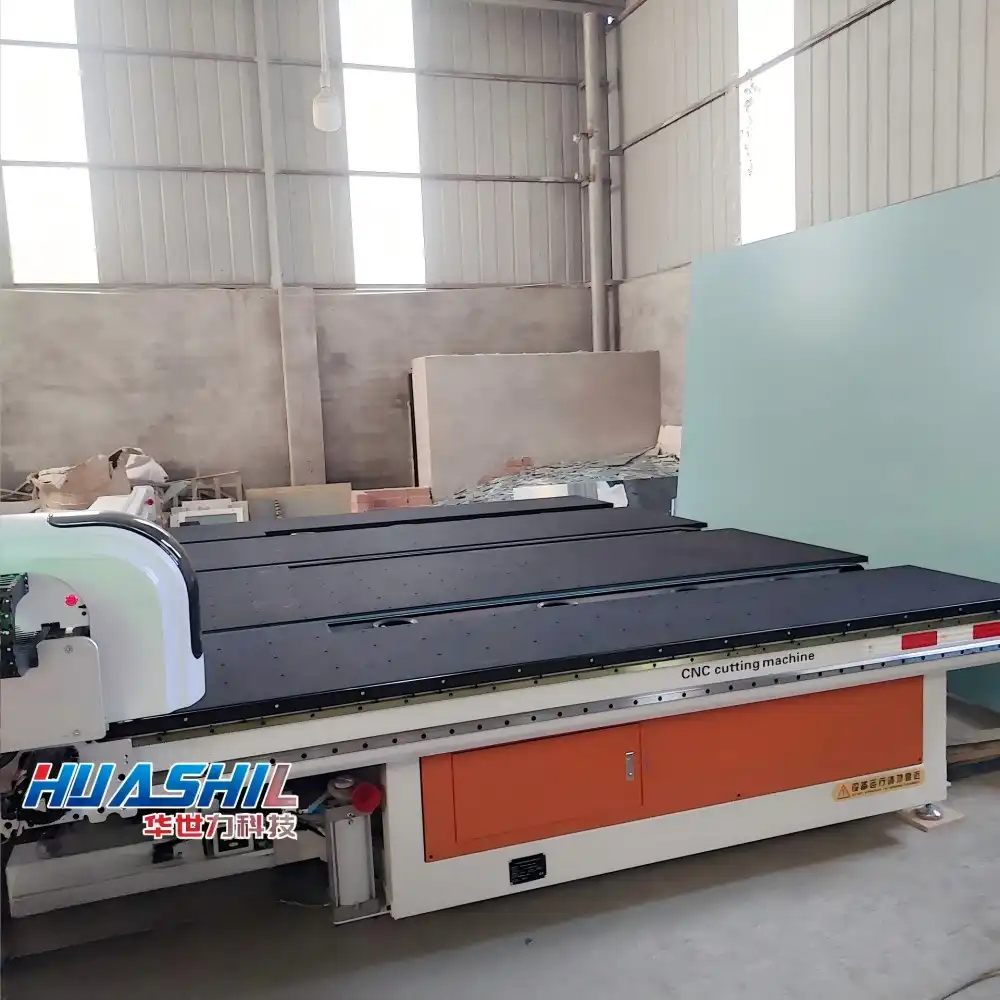
For automation to work well, it needs to work well with the cutting tables, breaking systems, and edge processing tools that are already in place. The three-table setup—loading, cutting, and breaking—needs to work together using control methods that are suitable. This gap is filled by Optima optimization software, which offers unified control interfaces that organize activities that take place in more than one stage.
When combining tools from different makers, it is important to look at the communication standards. Industry-standard standards let loading machines, CNC controllers, and enterprise resource planning systems share data. This creates a digital process that runs continuously from entering an order to packing it.
Energy Efficiency and Sustainability Factors
More and more, modern glass factories are choosing capital equipment based on how much energy it uses. Compared to older hydraulic systems, automated loading systems with servo motors that work well and motion patterns that are optimized use less power. Regenerative braking technology collects energy during periods of slowing down, which makes operations even more efficient.
Compact designs reduce the size of the facility's area, which lets plants make more with the room they already have. This benefit of clustering is especially useful for factories in cities, where the cost of real estate has a big effect on profits.
Supplier Evaluation and After-Sales Support
When choosing equipment partners, you need to look at their manufacturing qualifications, experience in the field, and help with infrastructure. Shandong Huashil Automation Technology Co., LTD has years of experience in production; technical innovation shown by advanced features like the HSL-LSX4228; and full service capabilities that include installation, training, and ongoing maintenance support. These are the qualities that procurement managers should look for.
Over the course of several years, warranty terms, the availability of spare parts, and how quickly expert help can respond all have a direct effect on how reliable the equipment is. Suppliers with established service networks in the US reduce the chance of downtime and make it easier for customers to get help across time zones. When deciding where to put money into capital investments, these factors are just as important as technical details.
Maintenance and Safety Guidelines for Optimal Performance
Routine Maintenance Protocols
Systematic repair plans are needed to keep breakage-prevention features working well. Cleaning vacuum systems every day gets rid of glass dust and other waste, which keeps the power from breaking down. Cushioning materials are checked once a week to find wear patterns before they get worse and make the grip less effective. Calibration of sensors once a month makes sure that positional precision stays within the limits set.
When makers release new versions of their software, they often include better safety algorithms and motion profiles that have been improved based on feedback from multiple setups in the field. Using these updates keeps the performance of your equipment at its best while adding new ideas for ongoing growth.
Safety Standards and Operator Training
Full training for operators strikes a balance between the benefits of technology and the need for human supervision. The staff needs to know how to stop the machine in an emergency, what the noise means, and how to fix simple problems. Even though automatic CNC glass loading machines cut down on direct glass handling, workers still use the equipment when it's being set up, switched over, or maintained.
Following the OSHA safety rules and the ANSI equipment guidelines protects the health and safety of workers and meets government requirements. With the right guards, interlock systems, and warning lights, people who aren't supposed to be there can't get into moving zones while they're being used. Safety checks and proof that training was completed are examples of due diligence that keep companies from being sued.
Predictive Maintenance Strategies
Advanced tracking tools make it possible to switch from reactionary to predictive maintenance. Vibration research finds worn bearings before they break. Motor decline is found by keeping an eye on power consumption. Cycle time data shows performance drift, which shows that changes need to be made.
When compared to run-to-failure methods, predictive maintenance cuts unexpected downtime by 30 to 50 percent. This dependability advantage is especially helpful for factories that work multiple shifts, since not having enough equipment directly limits their ability to make money.
Conclusion
Breakage used to be an unavoidable cost of production, but automatic CNC glass loading machines make it a variable that can be controlled through careful planning, smart controls, and consistent execution. The financial benefits go beyond saving money on materials; they also include higher productivity, more consistent quality, and lower safety risks. As glass production companies are put under more and more pressure to deliver perfect products on tighter deadlines, automation gives industry leaders a competitive edge over failing rivals. Businesses can meet rising demand while protecting their reputations and profit margins by investing in tried-and-true packing technology like the HSL-LSX4228.
FAQ
1. How much can an automatic loading system reduce glass breakage rates?
Breakage rates drop from 3–5% in manual processes to less than 0.5% in totally automated lines, according to figures from the industry. The exact change varies on the type of glass used, the amount of glass that is made, and how well the upstream equipment is integrated. The biggest drops usually happen at plants that work with thin, flimsy glass or big building panels.
2. What training requirements exist for operating automated loading machines?
For basic operation, you need two to three days of training that covers how to start up and shut down the automatic CNC glass loading machine, how to make changes, and how to fix common problems. Advanced training for repair staff lasts for one to two weeks and includes things like calibrating sensors, setting up software, and replacing parts. As part of their installation services, most makers offer full training, and they also offer ongoing help via remote access or regular site visits.
3. What return on investment timeline should we expect?
The money saved on materials because they break less often usually covers 25 to 35 percent of the cost of the tools in the first year. Moving workers around and increasing productivity speed up payback. Depending on production output and glass costs, most projects reach full ROI within 18 to 36 months. Payback times are often less than 18 months for plants that make a lot of expensive specialty glass.
Partner with HUASHIL for Advanced Glass Loading Solutions
HUASHIL offers tried-and-true automation technology that helps glass production plants all over the US deal with their biggest problems. Our automatic CNC glass loading machine supplier blends smart controls with precise engineering. It has two+2 station setups that can be changed to fit your production needs and four grand arms on each side. We help architectural glass fabricators, curtain wall installers, and furniture manufacturers by providing them with unique solutions backed by full after-sales service and technical knowledge gained from years of installing products around the world. Get in touch with our team at salescathy@sdhuashil.com to talk about how our loading technology can help you cut down on breakage, boost production, and stay competitive in tough markets.
References
1. Anderson, M. & Chen, L. (2021). Automation Impact on Glass Manufacturing Efficiency and Quality Control. Journal of Industrial Engineering Research, 45(3), 287-304.
2. Glass Manufacturing Industry Council. (2022). Best Practices for Automated Glass Handling Systems. Technical Standards Publication Series, Volume 12.
3. Robertson, K. (2020). Economic Analysis of CNC Glass Processing Automation in North American Fabrication Plants. Manufacturing Technology Quarterly, 38(2), 156-173.
4. International Glass Processing Association. (2023). Safety Guidelines for Automated Glass Loading Equipment. Industry Standards Report, 8th Edition.
5. Zhang, W., Martinez, R., & Thompson, D. (2022). Comparative Study of Manual versus Automated Glass Handling Systems. Glass Science and Technology Journal, 95(4), 421-438.
6. United States Department of Labor. (2023). Workplace Safety in Glass Manufacturing: Automation Technologies and Injury Prevention. Occupational Safety Research Series, Report No. 2023-17.