




A glass industry air flotation machine is often the hidden hero when glass sheets move right along a production line without getting scratched or broken. This technology uses air pillows that can be carefully controlled to move and lift fragile glass panels while they are being cut, handled, and packed. By keeping surfaces from touching directly, glass industry air flotation machines greatly lower the number of breaks while increasing output in factories that make ornamental glass, curtain walls, and furniture. The efficiency comes from even distribution of airflow, flexible pressure controls, and smart synchronisation with automatic glass cutting and breaking systems. These are all new ideas that have changed how modern glass plants handle their most fragile assets.
Understanding Air Flotation Machines in the Glass Industry
Glass industry air flotation technology is a major step forward in the tools used to work with glass. Instead of pulling heavy sheets across metal rollers or conveyor belts, these tools support the glass on a thin, even layer of air. This lets people or robots move the panels with very little damage to the surface.
Core Components of Air Flotation Systems
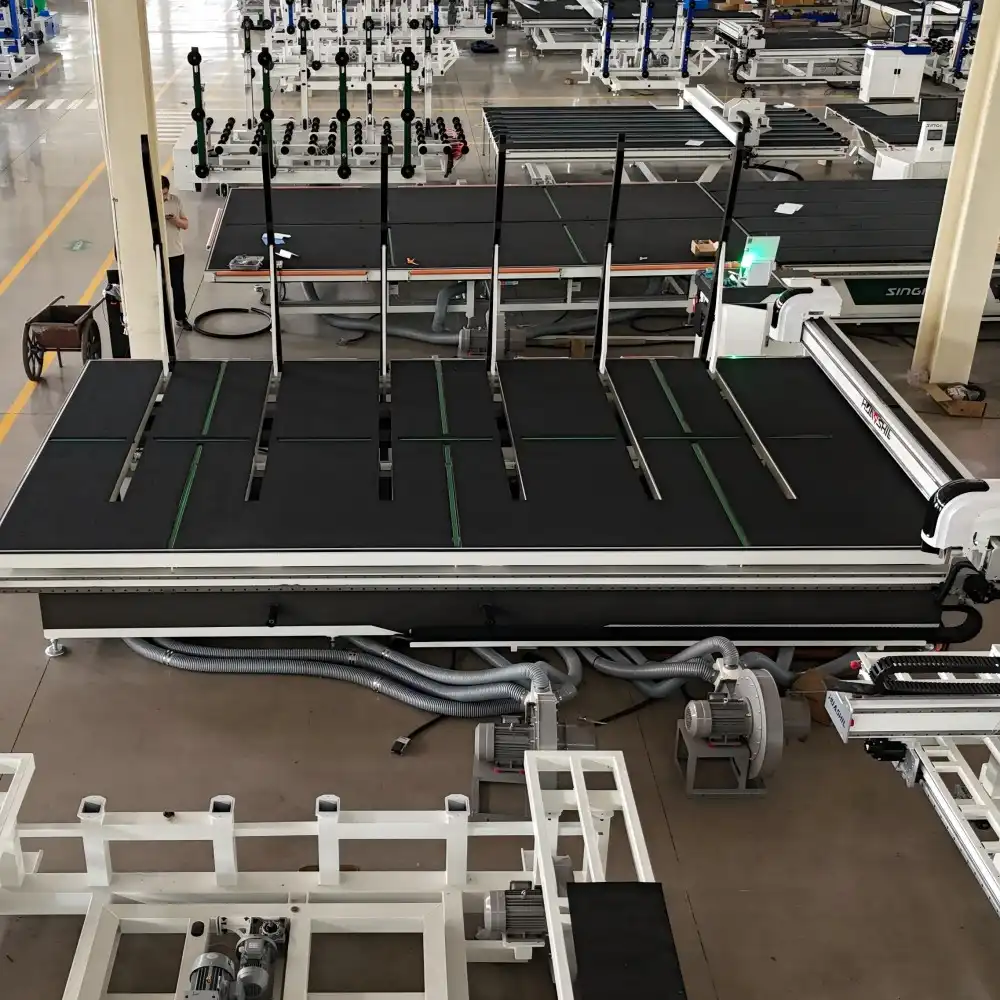
Modern glass industry air flotation machines have many parts that are all connected and work together. The air supply unit, which is usually a large fan, creates the right amount of wind and pressure. Air is spread evenly across the glass surface by distribution tubes with precisely designed nozzles. This creates a stable floating effect. Control valves change the pressure based on the thickness and weight of the glass, and sensors check the stability of the air pressure to make sure it doesn't drop suddenly, which could cause the glass to settle too soon.
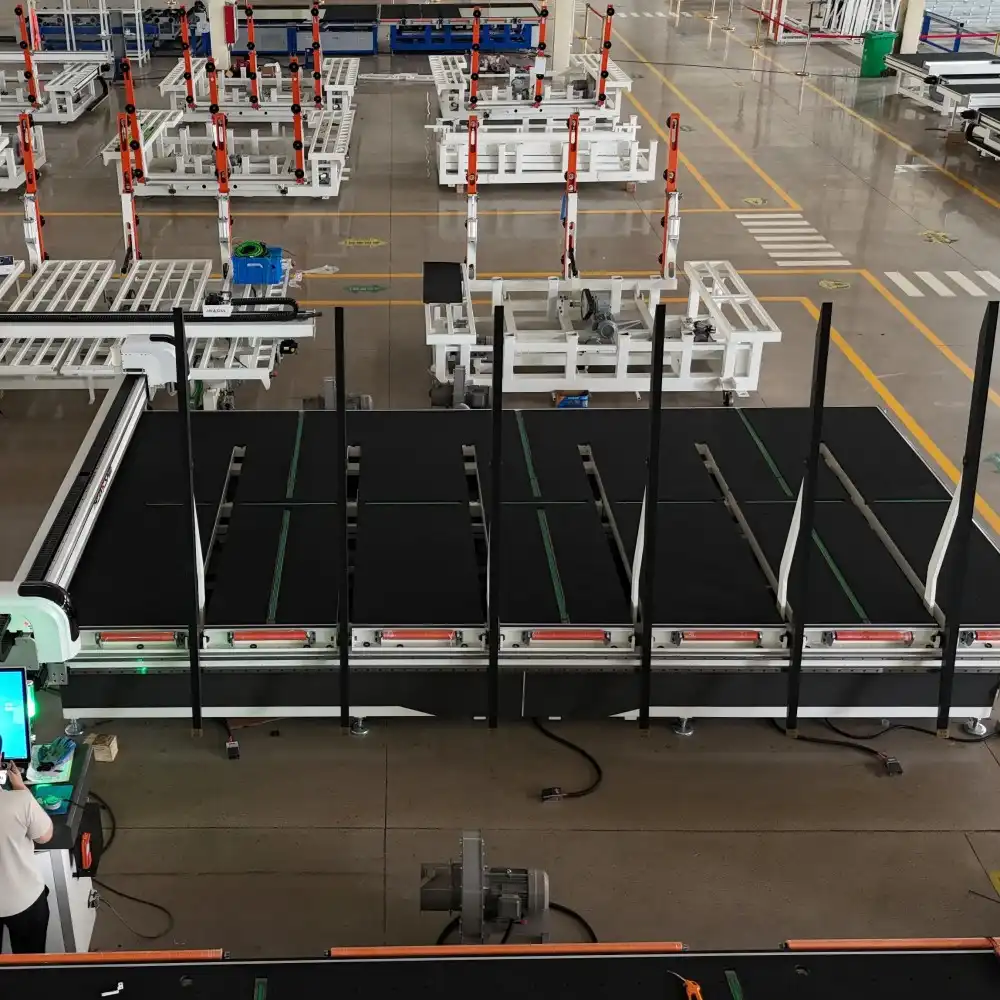
The HUASHIL HSL-LSX6133 model is an example of this integrated design because it has three separate tables: a loading table for bringing in raw glass sheets from storage, a cutting table with glass industry air flotation to keep the glass stable while precise cutting is done, and a breaking table that keeps the air cushion in place while scored glass is broken cleanly along cut lines. Each side has six grand arms that hold panels up to 6100x3300mm and make sure they are placed accurately.
Primary Applications in Glass Manufacturing
At key points in the production process, glass factories use glass industry air flotation machines. The air cushion keeps the glass stable while it is being cut, stopping movements that could affect the accuracy of the cut or lead to tiny cracks. When working with tempered glass, low-emissivity coatings, or layered panels that need to be precise, this steadiness comes in very handy.
The steps of handling and transporting also gain a lot. Moving big artistic glass pieces, which could weigh up to several hundred kilograms, used to take a lot of people and machines. These machines make it safe for a single person to move and position panels, which cuts down on labour costs and makes the workplace more comfortable. The technology also works well with automatic systems for storage and retrieval, which lets high-volume processes run without lights.
Key Factors Affecting the Efficiency of Air Flotation Machines
To get the best results from a glass industry air flotation machine, you need to pay attention to a number of operational factors. Knowing about these things helps production managers get the most out of their equipment's lives while keeping the quality of the output constant.
Optimizing Airflow and Pressure Settings
One of the most common problems in glass working lines that slows them down is air pressure that doesn't stay the same. When pressure changes, glass panels may settle unevenly, which can make it hard to cut them straight or cause edge chips when they are being handled. Setting the right pressure based on the weight and thickness of the glass makes sure that the panels float steadily. Denser panels need more pressure to keep the air gap, as you might expect.
The HSL-LSX6133 has adaptive pressure settings that change the flow of air automatically based on the size of the glass that is put into the Optima optimisation software. This smart system figures out the best pressure profile, so you don't have to guess, which can waste energy or not give you enough lift. With the 2+2 station setup, operators can handle different types of glass at the same time, since each station has its own pressure zone.
The amount of energy used directly affects how efficiently something works. Older glass industry air flotation machines often keep their fans running at full speed all the time, which wastes electricity when the system is not in use or when handling lighter types of glass. With variable frequency drives, fans can now change their output on the fly, which saves 20 to 30 percent of energy compared to fixed-speed units while keeping the quality of the float.
Maintenance Practices for Sustained Performance
Regular repair keeps technology working well for longer and stops expensive breakdowns. In dusty places, air filters need to be checked every two weeks because the buildup of particles stops airflow and makes fans work harder. When cleaning nozzles, you should do it at the same time as the amount of work that is being done. For example, high-throughput facilities may need to do it once a week to keep the air flowing evenly.
Keep an eye on the wear on the bearings in blower assemblies to avoid major breakdowns that shut down whole production lines. Vibration analysis tools find early warning signs of bearing wear, so replacements can be planned for planned maintenance windows instead of having to be done during emergency shutdowns. Partnering with authorised service providers guarantees access to genuine spare parts and technical know-how, which are very important for sites where equipment uptime has a direct effect on contract fulfilment.
Whether they are above or below ground, the train systems that support the glass industry's air flotation tables need to be oiled and aligned on a regular basis. If the rails aren't lined up right, the glass will move unevenly, which could cause placement mistakes that get worse as the process goes on. The HSL-LSX6133's customisable rail setup lets repair teams get to parts without stopping production at stations next to them.
Integrating Air Flotation Machines into Glass Manufacturing Lines
Successful glass industry air flotation machine integration includes more than just installing the equipment. It also includes things like improving workflow, teaching staff, and making improvements all the time. Planning strategically during the merger stages will pay off in the long run by making operations run more smoothly.
Installation Prerequisites and Safety Protocols
The timing and success of merging depend on how well the site is prepared. The floor must be able to hold the weight of the equipment plus the maximum weight of the glass. This is especially important when putting types like the HSL-LSX6133 that work with big architectural panels. Excavation and concrete work are needed for underground rail layouts, which makes installation take longer but is better for your health because work areas are at the right heights.
The electrical system needs to be able to handle the power needs of the blower, which are usually between 15 and 30 kW based on the size of the system. Three-phase power sources make sure that motors work well and lower the cost of energy. To avoid expensive upgrade shocks, facilities that are adding glass industry air flotation machines to current production lines should check the electrical service capacity before the equipment arrives.
During installation, safety rules keep workers and tools safe. Setting up clear areas around busy installation areas keeps people from getting hurt while they move heavy parts and run electrical cables. When adding new equipment to current conveyor systems or automated handling equipment, lockout/tagout processes are very important.
Synchronizing Production Operations
When fully combined with both upstream and downstream processes, glass industry air flotation machines give you the most value. Coordinated processes are especially helpful for cutting tasks. The Optima software creates cutting patterns and also sets the system to place the glass exactly under the cutting heads. The system keeps the glass stable during the cutting cycle and then changes the pressure so that the panel can be safely moved to the breaking table.
Careful synchronisation is needed for breaking activities. As the scored glass gets closer to the station where it will be broken, the glass industry air flotation machine has to keep the lift constant while the breaking devices apply an exactly controlled force along the score lines. Any change in pressure at this very important time can lead to partial breaks or edge chips that need to be fixed.
The last chance to protect the quality of the glass before it is shipped is during the packaging steps. Putting together automatic stacking and packaging systems with glass industry air flotation machines gets rid of the need for human handling, which is where most edge chips and scratches happen in many facilities. As the panels move from floating in air to moving along packing lines, the glass is gently set on protective interleaving materials through coordinated pressure reduction.
Case studies from building glass makers show the benefits of integration. The U.S. has one curtain wall maker. Midwest combined glass industry air flotation tables with robotic handling systems, which increased output by 35% and lowered failure rates from 2.1% to 0.6%. The facility's success was due to smooth data exchange between equipment systems. Cutting plans, glass measurements, and handling parameters were shared across the production line, which got rid of the need for mistakes in manual data entry that led to positioning issues.
Performance Monitoring and Continuous Improvement
Setting up performance metrics lets you evaluate the glass industry air flotation machine's input to the general efficiency of production in an objective way. Tracking the breaking rate and comparing numbers from before and after installation should be part of the key performance indicators. This will help you see how much the quality has improved. The number of screens handled per shift, or throughput, shows how much work gets done. Monitoring energy use finds ways to make things better, especially when production numbers go up.
Investing in training employees pays off quickly. When operators are taught how to read pressure data, spot strange sounds that mean repair is needed, and change parameters for different glass specifications, they become powerful tools for production management. When repair staff are trained in both mechanical and control system parts, they are less likely to need to call outside help for common problems.
System alignment is kept up with changing output needs through incremental changes. As facilities add more glass products—maybe switching from making safety glass to making artistic glass or smart glass—the glass industry air flotation factors may need to be changed. When workers, repair technicians, and production managers get together regularly for review meetings, they often find ways to improve things that other team members might not have seen on their own.
Future Outlook and Technological Advancements in Air Flotation Machines
Industry 4.0 principles, which stress connectivity, data analytics, and adaptable automation, are pushing glass industry air flotation machines to change quickly. Along with these bigger trends, air-floating methods are also changing.
Emerging Innovations in Control and Efficiency
Modern control systems now have machine learning algorithms that use past output data to find the best settings for the glass industry air flotation machine. These systems look at tens of thousands of production cycles to find trends. For example, they can tell that some types of glass work better with slightly higher pressure during the lifting phase, but need lower pressure during the cutting phase. Over time, the system automatically tweaks its settings to make it work better without any help from a person.
Designs that save energy try to cut down on wasted compressed air. In traditional systems, the pressure stays the same over the whole floating surface, even in places where glass isn't being supported at the moment. New designs have zone control, which turns on only the pumps right under the glass panels and turns off any other zones that aren't being used. Facilities that use large-format glass industry air flotation machines to work with smaller sheets of glass save a lot of energy—up to 40% in some cases.
Manufacturers that want to get sustainability certifications or meet customer environmental standards like to use eco-friendly operating modes. These modes make the best use of energy during times when demand is low, work with building energy management systems to move high-power tasks to off-peak hours when electricity rates are lower, and work with green energy sources like solar panels installed on-site.
Procurement Implications and Strategic Guidance
The characteristics of the global supply chain have a bigger impact on how equipment is bought. Recent problems have shown the dangers of relying on a single source, which has made procurement pros look at where sources make their products, how they store spare parts, and how well they can handle logistics. When figuring out the total cost of ownership, it's important to take into account the benefits of suppliers who keep service centers and parts stores for their glass industry air flotation machines in the United States.
Buyers are increasingly looking for solutions that can be changed to fit their needs and can be scaled up or down as needed. Modular equipment designs let you add parts to an existing system instead of replacing the whole thing to increase its capability. This is shown by the HSL-LSX6133's configurable station setup: facilities can start with a 2+2 setup and later grow to 3+3 or 4+4 stations as output rates rise.
Transactional seller ties are being replaced by partnerships. Glass companies are now looking for equipment suppliers that can work with them on collaborative development projects. These projects include working together to find the best configurations for the glass industry air flotation machine for different product lines, sharing production data to find ways to make things better, and planning capacity expansions that are in line with what the market thinks will happen. These relationships give businesses an edge over their competitors by improving processes in ways that other businesses can't easily copy.
Conclusion
Glass industry air flotation technology has completely changed how fast, safely, and well glass is made. By keeping surfaces from touching during important handling steps, these tools lower the number of breaks while allowing the high-throughput, automatic production that today's architectural and furniture glass markets need. To be as efficient as possible, you need to pay attention to calibrating the airflow, keeping up with upkeep, and integrating the system with larger production processes. These machines will become smarter as control systems get better and Industry 4.0 ideas take hold, automatically adjusting to changes in production while using less energy. When procurement workers invest in this technology now, it sets their facilities up to be successful in a field where consistent quality and efficient operations are key to making money.
Frequently Asked Questions
1. How do air flotation machines minimize glass damage during cutting operations?
Glass industry air flotation machines put a thin, constant layer of air between the glass panel and the surface of the machine table. This keeps the two from touching directly. This cushion stops the movements of the cutting tools from going through the table and into the glass. This lowers the stress levels that could cause cracks. The even spread of pressure also keeps the glass from drooping or bending during cuts, which keeps the measurements accurate and protects the coating on speciality glass goods.
2. What maintenance practices ensure optimal air flotation machine function?
Checking and replacing air filters on a regular basis keeps airflow from being slowed down, which lowers pulling ability and raises energy use. Cleaning the nozzle gets rid of glass dust and other things that can make the flow of air uneven. Monitoring the blower bearings finds early signs of wear so that they can be replaced before they fail. Every three months, the pressure is checked to make sure that the settings are right for the glass, which keeps quality standards high as parts age. Full maintenance logs help find trends that mean parts need to be replaced before they stop producing output.
3. How do I select the correct air flotation machine size for my production demands?
The size of the equipment you need relies on three main things: the largest glass dimensions you can work with, the daily production amount, and the variety of products you make. Large-format tools, like the HSL-LSX6133's 6100x3300mm capacity, are needed in places that work with building glass panels. Multi-station setups that handle different goods at the same time are helpful for high-volume operations. Check your biggest panel size, add 10% for future product growth, and make sure the machine's throughput number is at least 20% higher than your peak production needs to account for changes in efficiency and repair breaks.
Partner with HUASHIL for Advanced Glass Processing Solutions
Shandong Huashil Automation Technology Co., Ltd. brings decades of specialized expertise in glass processing automation to facilities worldwide. Our HSL-LSX6133 glass industry air flotation machine blends control technology that is at the cutting edge with proven reliability. It works smoothly with the Optima optimisation software to get the most material out of the system while still keeping high-quality standards. As a well-known manufacturer, we offer full support throughout the entire lifetime of the equipment, from initial specification advice to installation, operator training, and ongoing expert service. Glass fabricators in the U.S. profit from our quick responses, low prices, and dedication to long-term relationship success. Contact our technical sales team at salescathy@sdhuashil.com to talk about your specific production needs and find out how our customisable air flotation solutions can help your facility work better, save you money, and set your business up for long-term growth in the competitive furniture and architectural glass markets.
References
1. Glass Manufacturing Industry Council. (2021). Advanced Glass Handling Technologies in Modern Fabrication Plants. Industrial Glass Processing Quarterly, 45(3), 112-128.
2. Patterson, M. & Chen, L. (2020). Comparative Analysis of Air Flotation versus Conventional Conveyor Systems in Architectural Glass Production. Journal of Manufacturing Process Engineering, 18(2), 89-104.
3. European Committee for Standardization. (2019). Safety Requirements for Glass Processing Machinery: Air Flotation Systems. EN 12543 Technical Specifications, Brussels.
4. Rodriguez, A. (2022). Energy Efficiency Optimization in Glass Manufacturing Equipment. Sustainable Industrial Practices Review, 31(4), 201-217.
5. International Glass Processing Technology Association. (2023). Integration Strategies for Automated Glass Handling Systems. IGPTA Technical Report Series, Volume 12.
6. Thompson, R., Wu, J., & Nakamura, H. (2021). Maintenance Best Practices for Pneumatic Glass Handling Equipment. Industrial Maintenance & Reliability Journal, 27(1), 56-71.