




Improve IGU production by determining where the automatic double glass processing machine is waiting, in transit, or being reworked. Substitute human operations with an automated double-glass processing system that maintains a consistent speed of movement for each pane. Start by capturing baseline numbers: units per hour, first-pass yield, and rework rate. Then smooth the upstream cut so each glass hits the mark, on time. This stage is backed by an HSL-LSX5133 cutting line with loading, cutting, and breaking tables, Optima software, and a maximum glass size of 5100*3300 mm. Finally, educate your operators, schedule maintenance, and verify your return on investment before you purchase.
Why IGU Output Often Falls Below Production Targets
Hidden Losses Behind Rated Machine Speed
Even if the machine is running at maximum speed, the line may not reach the destination. Usually the gaps occur between stations, when objects are moved by hand, slowly or when spacers are put wrongly, when there are issues with cleaning or sealing or when there are interruptions during pressing or argon filling. One stop may not seem like much, but it all adds up to less work being done in a shift. Waiting time is caused by disconnected equipment and repetitive data input.
Set Baseline Numbers Before You Invest
Before you acquire any tools, note down the daily capacity, units per hour, first pass yield, rework rate, labor input, and energy usage. Add your agreed size and sealing tolerances. It’s impossible to know how quickly a machine is running without those figures. Instead of tracking your greatest day, monitor two or three typical weeks to obtain a better sense of your baseline. Then plant managers, engineers, and finance teams may all utilize the same data to compare each concept against.
Why Quality Standards Shape Output
What is the “output”? It wasn’t just “glass that moved. It signifies completed units that are up to snuff. ASTM E2190 outlines requirements for the performance and evaluation of insulating glass units. This implies you are paying time and materials for a rejected unit. According to the Efficient Windows Collaborative, argon, an inert gas, is less conductive to heat than air. If you have to repair or throw away a unit that has a faulty gas fill or failed seal, you get less work done.
How an Automatic Double Glass Processing Machine Works
Stages an Automatic Line Can Coordinate
An automatic double glass processing machine links numerous IGU stages so that they all function together as a single flow. It can load glass, identify Low-E surfaces, wash and dry panes, place spacers, align the glass, press the unit, fill it with argon, and apply primary or secondary sealant as per the configuration. The operator does not have to transport glass between the stations to monitor the operation. Instead, sensors, PLC controllers, and HMI panels maintain these procedures in order.
Where the HSL-LSX5133 Fits in the Process
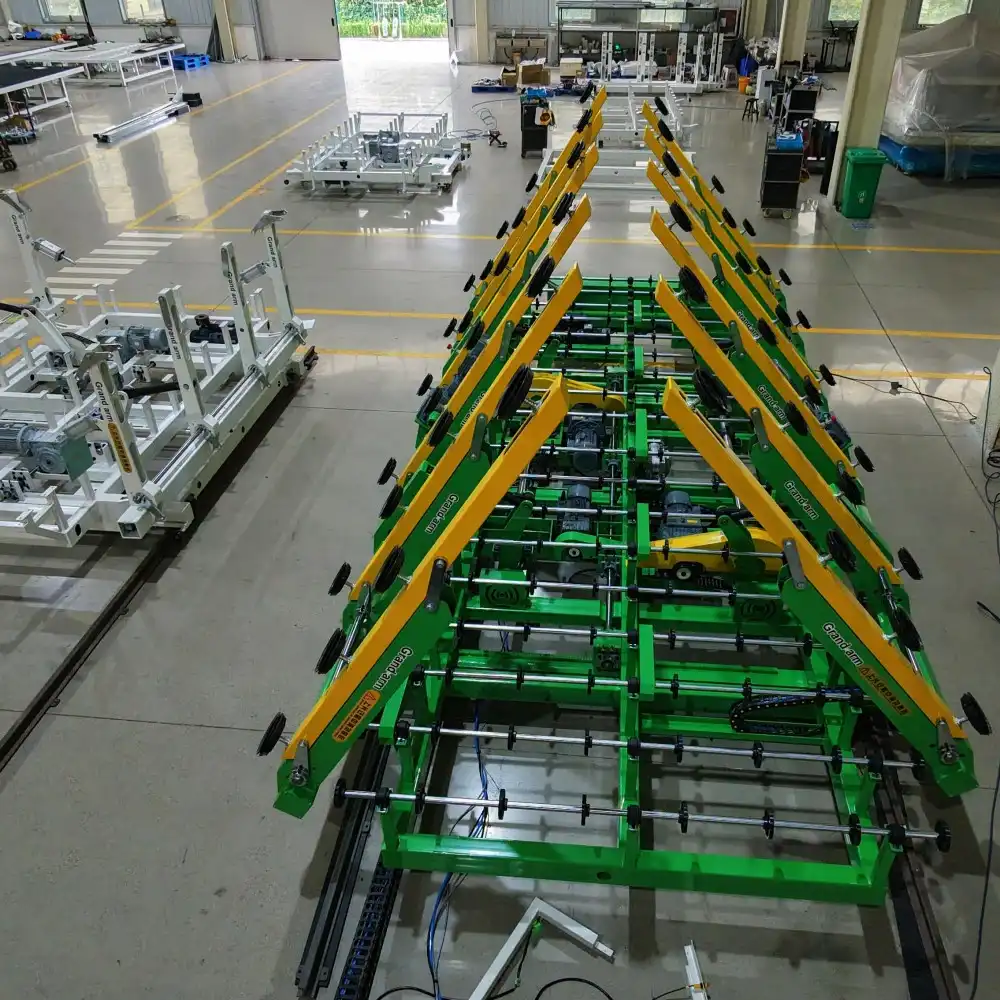
The first stage of optimal IGU quality is the accuracy of the panes. The HSL-LSX5133 is a glass cutting line that prepares panes for washing and assembly. It has a loading table, a cutting table, and a breaking table. The largest glass cutting size is 5100*3300 mm. You will get Optima optimization software to design cutting configurations. I believe you should compare that amount to your biggest sheets and completed unit sizes before you ask for a price.
Rail Layout, Stations, and Arms
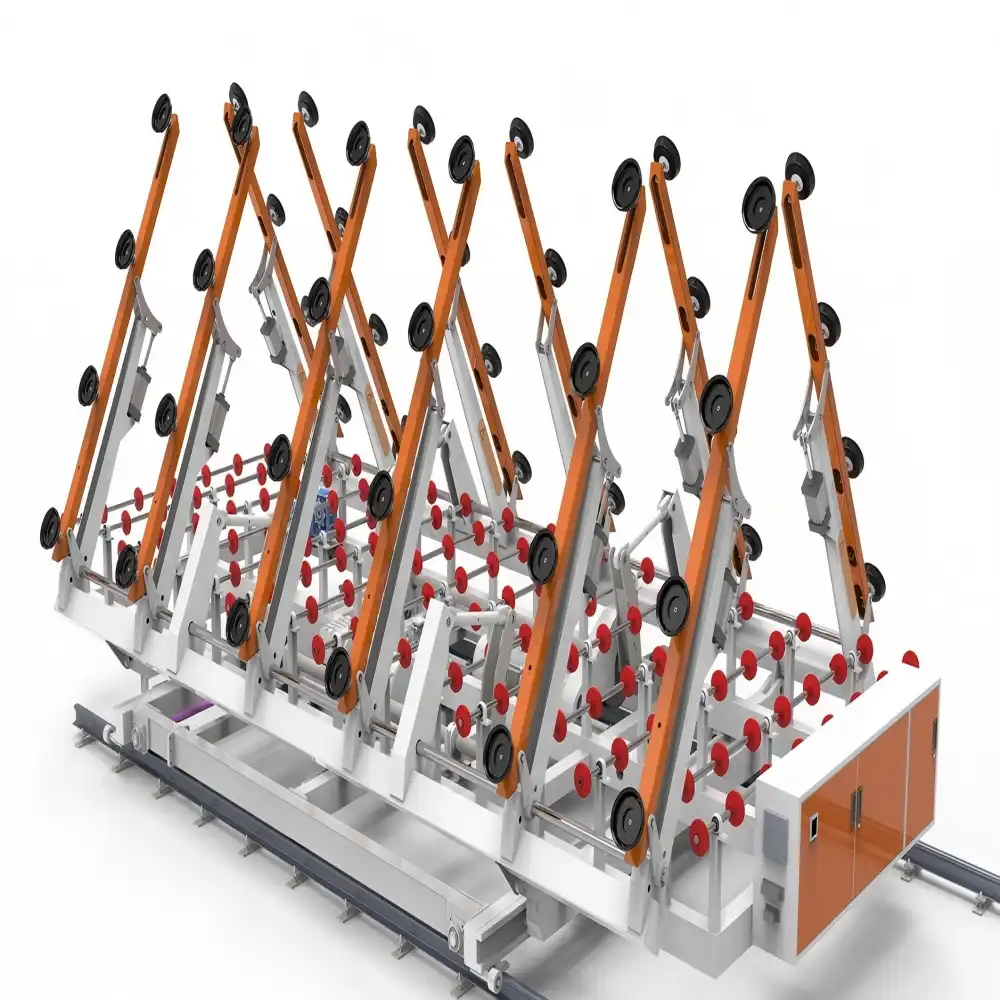
The line’s 2+2 stations may be arranged in any manner that fits your workflow. The rail may be elevated or underground. And each side has 5 great arms. These factors are vital when establishing a factory, since the kind of rail dictates how the floor is prepared and the station settings dictate how the glass flows through the cell. Before proceeding, have your engineer review the designs to make sure they are consistent with your floor layout and daily order mix.
Identify Bottlenecks and Improve Output With Automation
Measure Every Stage Before Changing It
At every step, note the cycle time, waiting time, operator movement, changeover time, downtime, and rejected units. Eliyahu Goldratt in The Goal asserts that the output of a system is limited by its restriction. This indicates that it does not matter much to speed up a station which is not the bottleneck. You can typically figure out whether the bottleneck for the line is washing, assembling, pressing, filling, or sealing by watching a few moves with a stopwatch.
Standardize Cutting, Spacers, and Sealant Control
Downstream stations are driven by input continuity. Correctly cut and broken panes provide panes to the washer and assembly station within tolerance, making alignment easy. Set rules for the placement of spacers, the trimming of edges, and the joining of corners. The sealant is effective only when the temperature, pressure, viscosity, and other variables are steady. Match the pace of pressing and argon filling to the speed of the upstream flow so that panes don’t queue up or a station is idle.
Recipes, Tracking, Maintenance, and Training
Production recipes contain typical sizes, spacer widths, and pressing settings, which means setup is quicker and less prone to error. Each unit is linked to a drawing, order, or batch via barcodes or QR tracking. This makes it easy to match glass and reduces errors. From time to time, check belts, rollers, brushes, sensors, pumps, pneumatic systems, and sealing equipment for wear and tear. Operators should be trained to handle recipes, alerts, and inspections instead of manual handling.
Choosing Between Automatic and Semi-Automatic Machines
Match the Machine to Your Volume
Automatic lines are preferable for medium- to high-volume factories that produce standardized goods or desire to develop, since they provide superior integration, repeatability, traceability, and labor efficiency. Semi-automatic double glass processing machines might be good for small firms, special orders, restricted budgets, or automation that happens in phases. Also consider labor availability and product assortment. If a business does a lot of one-off sizes, they may favor flexibility above sheer speed.
Vertical, Horizontal, and Argon-Filling Choices
Floor space, safety, access, glass weight, and maximum unit size are all things to consider when determining which layout is best. Select argon filling based on thermal performance requirements, market expectations, and operational cost. Before deciding, learn out what your clients want and what the ENERGY STAR standards are for windows. Gas fills minimize the flow of heat across the space between the panes.
Technical Checks and Total Cost of Ownership
Make sure the equipment will function with varying glass thicknesses, Low-E coatings, laminated glass, spacer materials, sealants, double or triple glazing, and unique forms. Review PLC and HMI systems, recipe management, remote diagnostics, safety features, and certification requirements. Total cost of ownership has to cover installation, utilities, training, maintenance, replacement parts, and technical support. Request in writing the warranty conditions and the delivery timeframes for replacement parts.
Calculate Automatic Double Glass Machine ROI Before Purchasing
List the Full Investment
Sum up the cost of the machine or line, shipping, insurance, customs, installation, commissioning, factory preparation, and utility improvements. The repayment term will seem shorter than it actually is if one item is missing. This takes just a few weeks for one machine. For a complete line, plan three to six months for technical evaluation, site inspection, and financing approval. Set aside that much time.
Add Up the Benefits
Benefits to be realized include increased IGU production, cheaper labor per unit, less glass breakage, reduced rework, improved delivery dependability, and the flexibility to handle bigger or more complicated orders. Use your baseline data to quantify each benefit. Then use these formulas: Annual benefit = Additional gross profit + Labor savings + Waste reduction. Payback period = Total investment / Annual benefit
Test Conservative and High-Demand Scenarios
You may run the model for conservative, anticipated, or strong demand. You should count both the ramp-up time and downtime for each scenario. If the payback is still acceptable in the conservative situation, the budget approver has a stronger foundation for the choice. Make the model available to engineering, buying, and finance to validate their assumptions.
Conclusion
Faster automatic double glass processing machines provide more IGU production, but also need losses between stations to be eliminated. Baseline statistics on units per hour, yield, and rework show you where time evaporates. Flow at each station is measured to determine the location of the bottleneck. The automated double glass processing equipment integrates washing, assembling, pressing, filling, and sealing, cutting down on human handling and ensuring consistent results with recipes, monitoring, maintenance, and training. That’s why it’s also important to cut accurately upstream. The HSL-LSX5133 takes care of that stage with loading, cutting, and breaking tables, Optima software, and a maximum size of 5100*3300 mm. Volume, manpower, product mix, and space dictate the automated vs. semi-automatic equipment selection. Then a cautious ROI model validates whether the investment makes sense.
FAQ
1. What is the first step to improve IGU output?
Measure your baseline: units per hour, first-pass yield, rework rate, and labor input. Then time each station to find the constraint before you choose equipment.
2. Is the HSL-LSX5133 an IGU assembly machine?
No. The HSL-LSX5133 is a glass cutting line with a loading table, a cutting table, and a breaking table. It prepares accurate panes for downstream washing and IGU assembly, and its maximum glass size is 5100*3300 mm.
3. What should I check before buying?
Check glass sizes, thicknesses, coatings, spacer and sealant types, installation needs, warranty, spare-parts supply, and training. Then compare total cost of ownership and payback under conservative demand.
4. Can the rail and station layout be adjusted?
The rail on the HSL-LSX5133 can go above ground or underground, and its 2+2 stations can be set. Send HUASHIL your floor plan so that our engineers can review the layout with you.
Talk to HUASHIL About Your Automatic Double Glass Processing Machine Needs
Planning a new IGU line or upgrading your cutting stage? Shandong HUASHIL Automation Technology Co., LTD can review your glass sizes and output targets for the HSL-LSX5133. If you are comparing automatic double glass processing machine suppliers, email salescathy@sdhuashil.com with your drawings and daily capacity goals for details. HUASHIL brings years of production and export experience. Visit HUASHIL at huashil.com.
References
1. ASTM International, ASTM E2190 Standard Specification for Insulating Glass Unit Performance and Evaluation, 2019
2. Efficient Windows Collaborative, Window Technologies: Gas Fills, 2023
3. Eliyahu M. Goldratt and Jeff Cox, The Goal, 1984
4. Mike Rother and John Shook, Learning to See, Lean Enterprise Institute, 1999
5. U.S. Environmental Protection Agency, ENERGY STAR Residential Windows, Doors, and Skylights Key Product Criteria, 2023
6. U.S. Department of Energy, Energy Saver: Window Types, 2023