




To choose the right mobile glass cutter machine, I start with four checks: the glass you cut, the largest sheet you handle, the space and power at your site, and the output you need next year. Then I compare automation level, table layout, software, safety features, and the supplier's service terms. A machine that fits those facts will cost less over time than one chosen on price alone. Below, I walk through each step and use the HUASHIL HSL-LSX6133 as a worked example for plants in the United States.
Start With Your Cutting Requirements
Define Your Glass Types and Applications
Application comes first. A mobile glass cutter machine from HUASHIL can cut architectural glass for windows, doors, and curtain walls, as well as smart mirror, decorative, furniture, and automotive glass. Each type of material has its own limits. Before I place an order, I check with the manufacturer to make sure that laminated and double-glazing will work together. Special care must be taken with tempered glass. Since it can't be cut after being tempered, cutting must come first, and then heat treatment must follow, as ASTM C1048 says for heat-treated flat glass. The quote will be correct if you send a written list of the types of glass you want early on.
Check Sheet Size and Panel Weight
Next, I match the machine to my regular daily sheets instead of rare oversize jobs. I write down the biggest length and width, the range of thicknesses, the smallest piece, and the weight of the panel. Then I decide if the heavy panels need extra support. Large-format architectural and curtain wall sheets can fit on the HSL-LSX6133, which can handle glass up to 6100 x 3300 mm, or about 240 x 130 inches. A small glass cutter machine might work better for your shop if you mostly cut smaller lites. It will save floor room and money.
Match the Machine to Your Site and Workload
I look at the number of workers, the floor area, the entry routes, the power source, and the dust control. In the US, I also check with the supplier about voltage and phase before shipping. Then I estimate how much will be cut each day and each month, as well as seasonal highs and growth over the next few years. If a plant thinks it will be making more batches, it might want to automate now instead of later. A clear estimate of the workload lets the supplier suggest a setup that will work for both now and next year.
Understand How the Machine Works and Which Type Fits
The Basic Cutting Process
I can judge any specification sheet better when I know how it works. To begin, the glass is placed on a flat surface. The operator then types in measurements or loads a cutting pattern, and the system lines up the cutting head. A cutting wheel scores the surface while pressure is kept in check, and the sheet breaks along the score line. Last, the team checks the edge and gets rid of any trash. I ask suppliers how they measure accuracy and if they can give me example cuts because accuracy depends on the mobile glass cutter machine, the wheel, the quality of the glass, the way the operator works, and the work setting.
Manual, Semi-Automatic, and CNC Options
Three types of machines can be put into three groups. Manual units are less expensive and work better for low-volume or flexible work. Semi-automatic units keep workers in charge but cut down on positioning mistakes. Digital control lets CNC units do complex jobs, automatic positioning, and patterns that are used over and over again. This makes them ideal for OEM lines and high-volume processors. For its mobile glass cutter machine range, HUASHIL says that the accuracy is ±0.1 mm. Automatic positioning cuts down on setup mistakes and improves consistency from batch to batch, but I make sure it's standard on the configuration I want before I buy it.
Mobile vs. Stationary Cutters
A mobile unit is easy to move, doesn't need as much space, and can be used for service work or changing layouts. A stationary cutter is usually used for high-volume, continuous production on a fixed floor that has built-in handling. When I talk about true portable, I also talk about equipment that is small but still needs to be set in one place. This is the biggest screen in its class, the HSL-LSX6133, and it can run on either an above-ground or an underground rail. To start, I look at the floor plan and rail option together. By matching the format to your layout, you can avoid having to pay a lot of money for rework after delivery.
Evaluate the HSL-LSX6133 Specifications
Three-Table Layout: Loading, Cutting, and Breaking
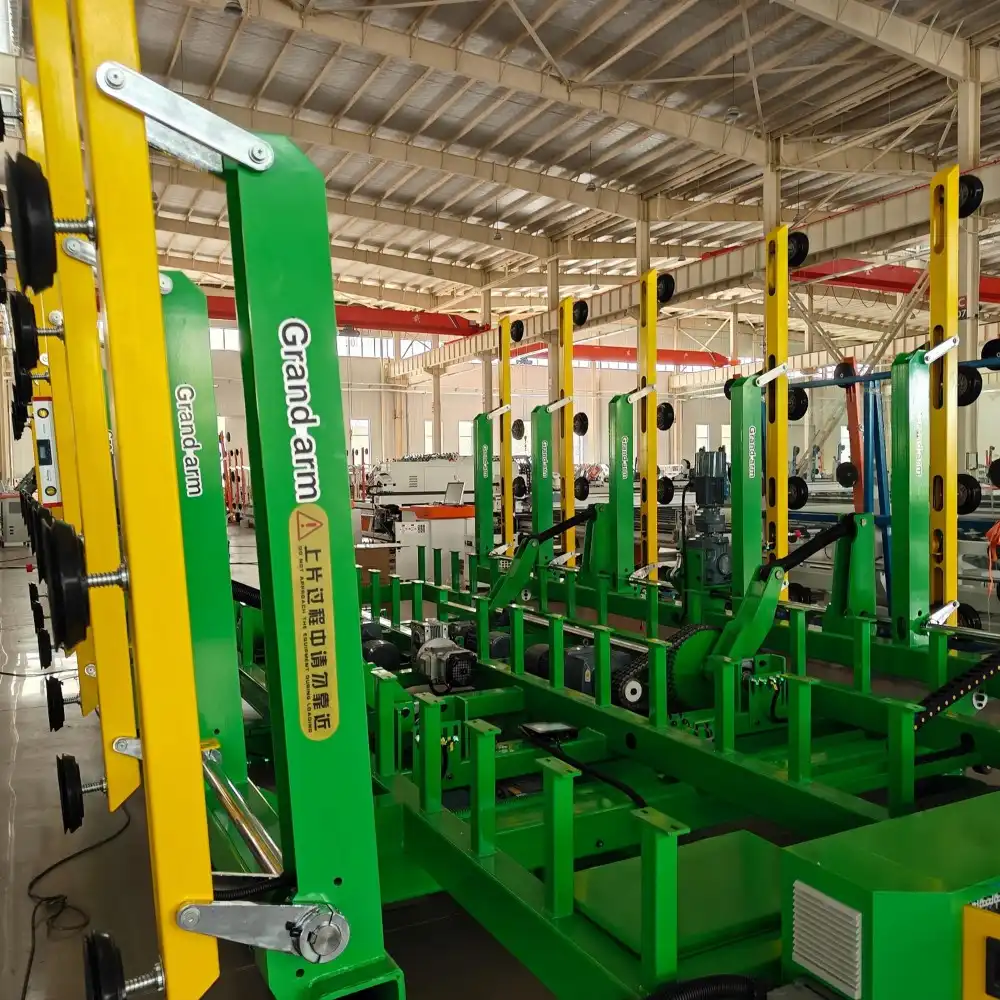
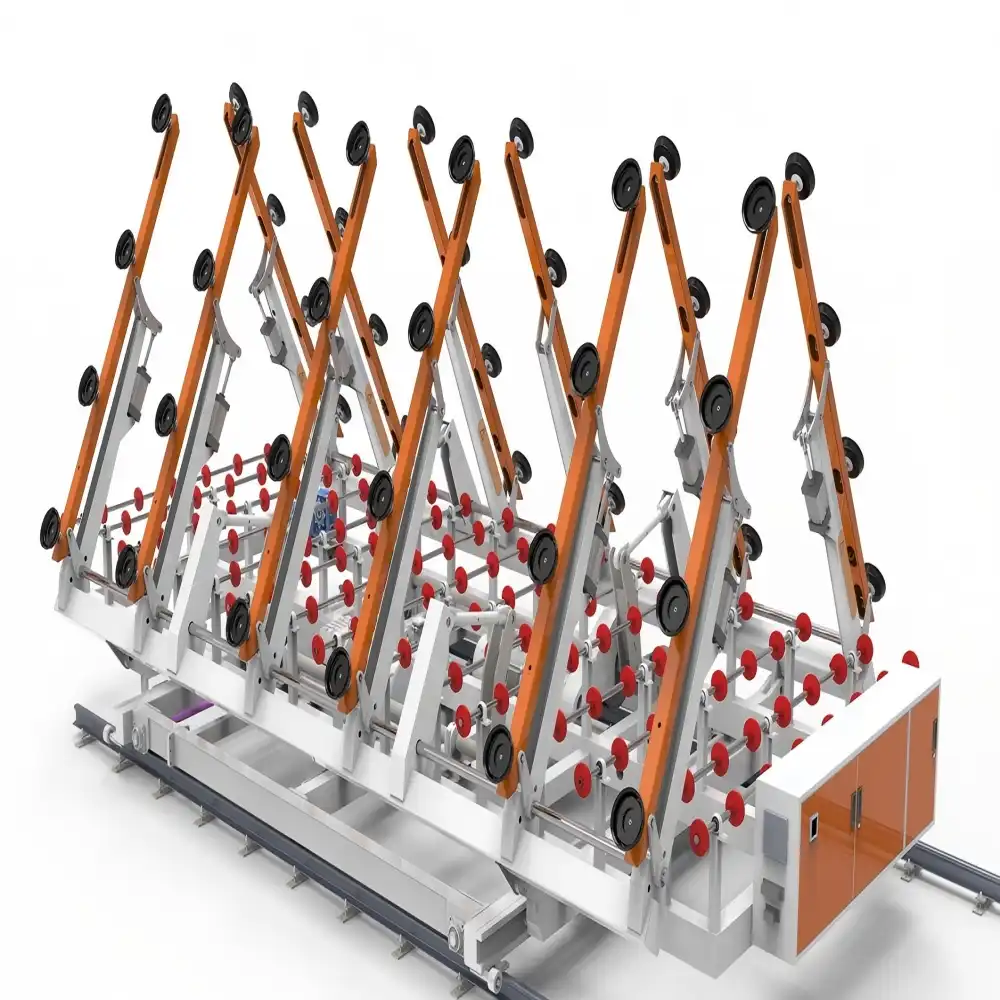
The HSL-LSX6133 has three tables: one for loading, one for cutting, and one for breaking. By giving each step its own table, you can keep loading, scoring, and breaking in different areas. This makes it easier to plan and keep an eye on the work. That structure shows plant managers where each worker does their job and where the next sheet goes. It makes it clear to engineers how the machine links to racks, lifting devices, and edging or packing lines further downstream. Before I approve a buy, I always ask for a plan drawing that shows where the tables will go. This way, the team can make sure there are no clearance issues.
Optima Software and 2+2 Stations
The machine has software called Optima that plans cutting layouts so that each sheet is used as effectively as possible. It's important to plan the layout because glass is an expensive raw material and small gains in yield happen in every batch. I talk to HUASHIL about how many stations will work for my staffing and product mix since the stations are set up as 2+2. I also want to know what data the software sends out because being able to track production records helps quality teams and financial reviewers. Training for software should be in the quote.
Rail Options and Six Grand Arms Per Side
We should take a better look at the rail and handling features. The HSL-LSX6133 has a rail that can be placed above or below ground. In general, it's easier to install an above-ground rail than an underground rail. An underground rail needs to be prepared for the floor, but it leaves more space. Six grand arms are on each side. I ask HUASHIL's engineers how the arms support and move the sheet with my glass sizes and thicknesses. When put together with the maximum size of 6100 x 3300 mm, these numbers show what the machine can do. Before I compare prices, I ask for written details about each item.
Compare Safety, Costs, and Suppliers
Safety and Maintenance
Before I talk about price, I look at safety. Risk assessment and risk reduction for machinery design are spelled out in ISO 12100, and OSHA Publication 3170 talks about how to keep equipment safe and keep workers from losing limbs. I need information about the emergency stop, guarding, warning labels, operator manuals, and electrical paperwork that meets U.S. NFPA 70 standards. Cleaning, inspecting the cutting wheel, lubricating, checking the alignment, and changing worn parts are all common parts of routine maintenance. If your provider gives you a clear repair schedule, it's easier to make plans, and the machine will keep running well for as long as it's supposed to.
Total Cost of Ownership
The price at which something is bought only tells you a part of the story. For every offer, I add up the costs of shipping, setting up, operator training, consumables, energy, software, spare parts, repairs, and downtime. It can cost more to fix a cheaper machine that takes a long time to get parts for. Finance teams want a full cost figure, while production directors look at uptime and output. One side-by-side sheet helps both groups. I suggest a comparison that takes into account performance, safety, delivery, support, and total cost, so a low number at the start doesn't hide service gaps.
Supplier Quotation and Support
A strong request for quotes includes information about the type of glass, its thickness, sheet sizes, workload, site conditions, power, level of automation, and where the glass is going. In the response, you should list the guarantee, wait time, packaging, shipping costs, installation support, and payment terms. You should also split basic features from options. In order to place an international order, I usually need a deposit and the full payment or a Letter of Credit, so I settle that right away. I ask for sample cuts, factory videos, installation cases, or a live demonstration. I also look into how long it takes to get spare parts and how to get help with technical issues. When I talk to system builders, I bring up OEM and ODM options right away because they are important to them.
Conclusion
Choosing a mobile glass cutter machine starts with your glass types, sheet sizes, site conditions, and workload, not with a price list. Different amounts of work can be done with manual, semi-automatic, and CNC formats. The layout and output of mobile units are different from those of stationary cutters. To find a good large-format machine, look at the HSL-LSX6133. It has three tables, Optima software, a 2+2 station setup, rail options, six grand arms on each side, and a maximum size of 6100 x 3300 mm. The evaluation is finished with safety standards, upkeep schedules, total ownership costs, and clear quote terms. When buyers put these factors next to each other, they can make a purchase that fits their needs now and has room for growth in the future.
FAQ
1. What glass size can the HSL-LSX6133 cut?
The HSL-LSX6133 can work with glass that is up to 6100 mm x 3300 mm. Still, I think you should send HUASHIL the type and thickness of glass so he can make sure the machine is right for your project and material.
2. Can I cut tempered glass with this machine?
After being heated, glass that has been tempered cannot be cut. Plan the work so that the cutting comes first and then the tempering. For laminated or double-glazed glass, get written confirmation from the seller that it will work.
3. How many stations does the machine have?
The HSL-LSX6133 has a 2+2 station layout, and you can change it to fit your needs. Give the engineers information about your products and staffing, and they'll be able to suggest a good plan.
4. What should I request before buying?
Ask for a written quote that lists the features that come with it and those that can be added, the guarantee terms, the wait time for spare parts, the shipping time, and the payment terms. You can also check performance with sample cuts, factory videos, and a demonstration.
Request a Mobile Glass Cutter Machine Quote From HUASHIL
Shandong Huashil Automation Technology Co., LTD (HUASHIL) has been making and exporting glass processing equipment for many years. If you need a mobile glass cutter machine for decorative, architectural, or automotive glass, email salescathy@sdhuashil.com with the sizes, thicknesses, and amounts of glass you need cut. We'll compare the HSL-LSX6133 to your plant and get back to you with a clear proposal.
References
1. ASTM C1048 Standard Specification for Heat-Strengthened and Fully Tempered Flat Glass, 2018
2. ASTM C1036 Standard Specification for Flat Glass, 2021
3. ISO 12100 Safety of Machinery: General Principles for Design, Risk Assessment and Risk Reduction, 2010
4. OSHA Publication 3170 Safeguarding Equipment and Protecting Employees from Amputations, 2002
5. NFPA 70 National Electrical Code, 2023
6. ANSI Z97.1 Safety Glazing Materials Used in Buildings, 2015