




In today's competitive industrial world, properly maintaining glass grinding equipment is essential for achieving maximum production efficiency and ensuring consistent quality output. Regular repair helps devices last longer and prevents unexpected downtime, which can cost thousands of dollars in lost production. Glass grinding machines from today, especially ones with two grinding wheels and automatic controls, need to be regularly serviced so that they stay accurate and dependable. Understanding the basic maintenance and repair needs of architectural glass, curtain wall, and furniture manufacturing applications helps production managers and technical staff get the most out of their investments while also meeting high-quality standards.
Understanding Your Glass Grinding System Components
Modern glass grinding tools have complex mechanical and computer systems that work together to get very accurate results. In the standard setup, four grinding motors give the whole system the power it needs to control speed and force for various grinding tasks. These motors power the grinding wheels through motion systems that are carefully built to keep the machines from vibrating and make sure they run smoothly.
One of the most important things about current tools is that it has a dual grinding wheel setup. Two grinding wheels are set up on each side in a way that makes the grinding process better:
- A rough grinding wheel quickly forms the glass edge into the right shape by removing a lot of material. It usually works faster with finer materials.
- Fine grinding wheel: for the final surface finish and exact dimensional accuracy, it uses smaller abrasives at fixed speeds to get better edge quality.
With this dual-wheel setup, makers can get both material removal speed and surface finish quality in just one pass. This is much more productive than single-wheel systems.
The encoder-controlled automatic opening and shutting device is a big step forward in the automation of glass processing for glass grinding equipment. This method lets you put glass in exactly the right spot and apply the same amount of pressure on glass of any size or thickness. The servo motor-controlled conveyor system makes sure that the material is handled smoothly during the grinding process. The system can open and close anywhere from 0.2 meters to 1.5 meters, which makes it possible to use with different sizes of glass panels that are usually used in architecture and furniture.
Essential Daily and Weekly Maintenance Routines
Creating detailed maintenance plans keeps things from breaking down and ensures that all production shifts run smoothly. Daily repair tasks are the most important thing for making tools last a long time, and they should be part of the standard operating procedures.
As part of the daily cleaning routine, glass pieces and grinding dust must be removed from all areas that can be reached, especially near the grinding wheels and transportation systems. If glass shards are not cleaned up, they can quickly build up and cause early damage. Using compressed air on electronics is part of the cleaning process. This keeps sensors and encoders clean, so they don't lose accuracy.
Lubrication plans for glass grinding equipment depend on the conditions and amount of production, but they usually need to be done on bearing systems, guide rails, and mechanical parts that move. You need to check the servo motors and grinding motor bearings regularly for noise or sound patterns that are out of the ordinary. These might mean that problems are starting to happen. Friction is lowered, heat generation is minimized, and early component failure is prevented with proper lubricant.
Weekly upkeep routines go beyond daily tasks to include more thorough checks and changes. It is very important to check the state of the grinding wheel during these times and look for things like glass particles, structural damage, or uneven wear patterns on the wheel surfaces. The encoder system needs to be calibrated regularly to make sure it stays in the right place. The conveyor system needs to be checked for belt tightness, alignment, and overall mechanical health.
During weekly repair rounds, electrical connections need to be looked at often. Loose links can cause problems that come and go, lower performance, or safety issues. Looking at electrical switches, motor links, and control systems can help find problems before they stop production.
Troubleshooting Common Glass Grinding Equipment Issues
When you need to fix something, you need to be able to look at both the mechanical and computer parts of current grinding systems in an organized way. Understanding common failure causes helps maintenance teams act quickly when things go wrong. This keeps production going and quality up.
If a motor has grinding problems, it usually makes a strange noise or starts to vibrate or work less well. Overheating usually means there are problems with the electricity, the lubricant, or the load is too heavy, all of which need to be fixed right away. The four-motor setup in more advanced systems offers some backup, but when motors fail, it can have a big effect on the quality of the grinding and the amount of production.
Grinding wheel issues represent one of the most frequent maintenance challenges in glass grinding equipment operations. Uneven wear patterns generally mean that the pressure settings or wheel choices were not right or that the mechanics were not aligned properly. The dual-wheel method needs both the rough and fine grinding wheels to be carefully looked after, since problems with either one can affect the quality of the finished result.
Key steps for fixing common problems with grinding wheels are:
- Too much wheel wear: Look at the pressure settings, make sure the glass feed rates are correct, and check the wheel quality standards against the needs of the application.
- Bad surface quality: Check the fine grinding wheel for problems, make sure the coolant is flowing properly, and check the shaft bearings for too much play.
- Inaccuracy in the dimensions: Figure out where the encoder is, make sure the conveyor is straight, and look for wear on the mechanics in the guide parts.
These troubleshooting steps help find the root causes instead of just handling the symptoms. This leads to better long-term answers and fewer problems that happen again and again.
When electronic systems go wrong, it's often because of encoder problems, issues with servo motor control, or parts of the system not talking to each other. The encoder-controlled device for opening and closing needs to be calibrated very carefully so that it can correctly stay within the 0.2 to 1.5-meter range. Issues with servo motors can make it harder to control conveyor speed and get the setting just right, which has a direct effect on the quality of the work and how much is produced.
Optimizing Performance Through Preventive Maintenance
Preventive maintenance plans are based on finding and fixing possible issues before they lead to broken equipment or problems with quality. This proactive method lowers the total cost of ownership and raises the general efficiency of equipment in difficult production settings.
Instead of random time periods, the real working conditions should be taken into account when planning to repair parts on glass grinding equipment. Grinding wheels need to be changed out when wear signs show too much material has been lost or when the quality of the surface finish starts to go down. With the dual-wheel setup, each wheel can be replaced on its own schedule, which helps both rough and fine grinding work better based on how each wheel has worn.
Automated systems are checked regularly to make sure they stay accurate even when they are used for a long time. The encoder system needs to be sure that the setting is correct across the full range of operations. Also, servo motor controls need to be tuned every so often to make sure they respond the right way. These testing activities stop the slow drop in performance that would otherwise go unseen until there are quality issues.
Performance monitoring means keeping an eye on important signs that show how well equipment is working and how efficiently things are running. Quality measurements and production data analysis both help you spot issues before they get worse. Quality measurements can alert you to technical or control system issues, and production data analysis can help you spot trends that suggest problems are on the way. Regular performance reviews let maintenance teams plan actions during scheduled breaks instead of having to fix things after they break.
Advanced Maintenance Techniques for Extended Equipment Life
Advanced repair methods for glass grinding equipment use current diagnostic tools and predictive technologies to get the most out of machinery durability and performance. These methods are especially useful for production runs with a lot of parts, where the ability to use tools directly affects how much money the business makes.
Vibration analysis gives you a lot of information about how well mechanical parts are working. It can find bearing problems, imbalances, or alignment issues before they lead to really big failures. The four grinding wheels and their mechanical systems make unique patterns of sound. Technicians who have been trained can read these patterns to figure out how well the parts are working and how much longer they will be useful.
Thermal imaging can show you problems that are forming in mechanical parts, electrical systems, and systems that are meant to add lubricant. Hot spots often mean that there is too much friction, electrical resistance, or a problem with greasing that needs to be fixed right away. Regular temperature scans help maintenance teams figure out what needs to be fixed first and stop unexpected failures from happening during important production times.
Conclusion
In modern automated systems, both the mechanical and computer parts need to be looked after and fixed in a planned manner when maintaining and fixing glass grinding equipment. The dual grinding wheel setup with four motors and encoder-controlled positioning needs special care to keep it working well and make the equipment last longer. Regular maintenance schedules, good problem-solving and preventive maintenance strategies, and regular maintenance all allow makers to get the most out of their equipment purchases while also meeting the quality standards required by today's competitive markets. Understanding these basic maintenance ideas gives production groups the power to get steady results and avoid costly downtime in glass-making applications.
FAQ
Q1: In a dual-wheel setup, how often do the grinding wheels need to be replaced?
A: How often the grinding wheel is replaced relies on how much is produced, what kinds of glass are used, and how the machine is operated. In businesses with a lot of work, rough grinding wheels usually need to be replaced every two to four weeks. Fine grinding wheels may last four to six weeks because they take off less material. Instead of sticking to a set plan, watch the surface finish quality and dimensional accuracy to figure out when it's time to change parts.
Q2: When keeping glass grinding equipment, what are the most important safety factors to take into account?
A: For all electrical and mechanical systems, safety measures must include lockout/tagout processes, the right personal protective equipment (like eye and breathing protection), and careful handling of grinding wheels to keep them from breaking. The servo motor and encoder systems need certain electrical safety steps to be taken. Also, the fact that the opening range is only 1.5 meters maximum means that there needs to be enough room to work and an easily reachable emergency stop.
Q3: How can I make the encoder-controlled positioning system work better for different sizes of glass?
A: Encoder optimization sets the full range of motion from 0.2 to 1.5 meters, programs the right profiles for speeding up and slowing down for different glass weights, and sets up steady reference points for repeated placement. Regular calibration testing ensures that accuracy is kept across the full working range. At the same time, proper servo motor tuning guarantees smooth operation and longer component life.
Partner with HUASHIL for Superior Glass Grinding Equipment Solutions
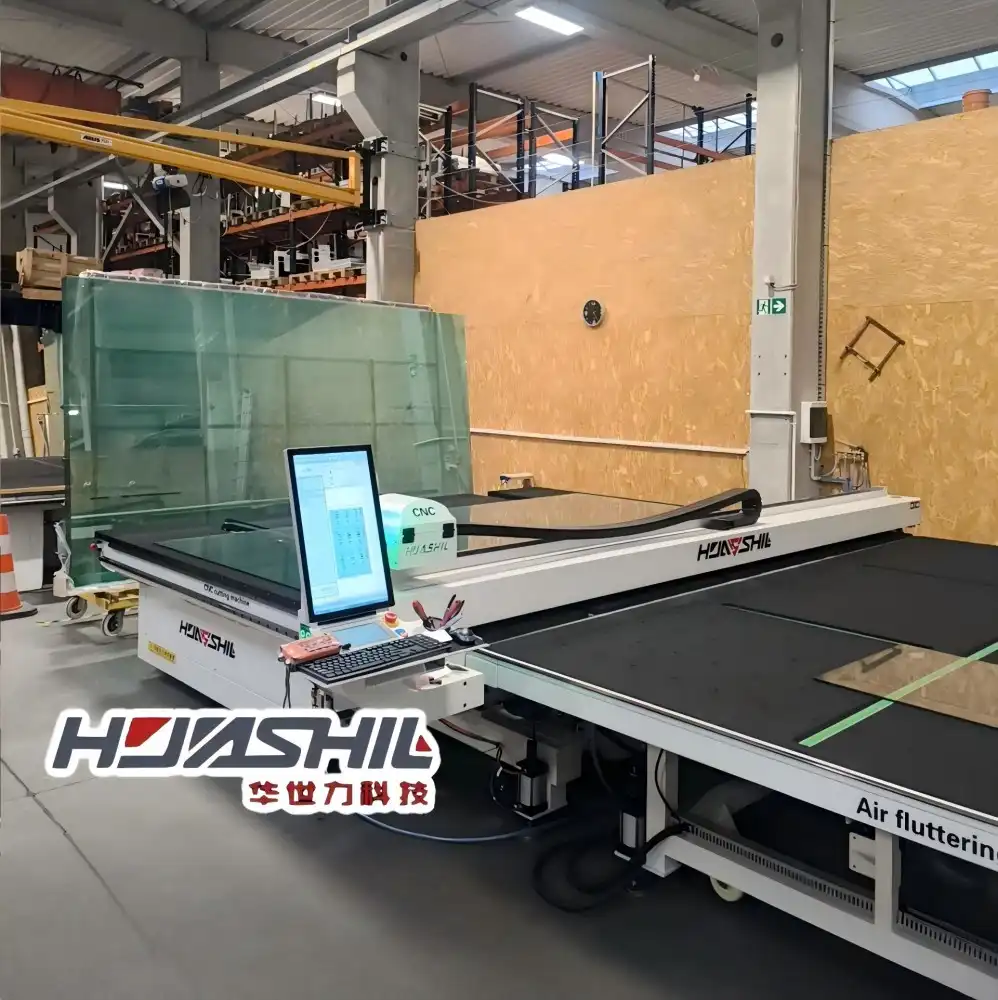
HUASHIL stands as a leading glass grinding equipment manufacturer, offering comprehensive solutions that combine advanced technology with reliable performance for demanding production environments. Our expertise in automated glass processing equipment enables manufacturers to achieve superior quality standards while maintaining competitive production costs and operational efficiency.
Shandong Huashil Automation Technology Co., Ltd brings decades of manufacturing experience and technical innovation to the glass processing industry. Our equipment features the latest technological advances, including four grinding motor configurations, dual-wheel rough and fine grinding capabilities, and precision encoder-controlled automation systems that deliver consistent results across diverse applications.
Our comprehensive support services ensure that your investment continues delivering value throughout its operational life. From initial installation and training through ongoing maintenance support and spare parts availability, HUASHIL provides the technical expertise and responsive service that keeps your production lines operating efficiently. Whether you need single machines or complete automated glass grinding systems, our team works closely with procurement managers and technical staff to develop solutions that meet specific operational requirements and budget considerations.
Take advantage of our extensive experience in glass processing automation and commitment to customer success. Contact us at salescathy@sdhuashil.com to discuss your glass grinding equipment requirements and learn how HUASHIL can enhance your production capabilities. Visit huashil.com for detailed product information and technical specifications that demonstrate our leadership in glass grinding equipment for sale to manufacturers worldwide.
References
1. Johnson, Robert M. "Industrial Glass Processing: Maintenance and Operations Manual." Manufacturing Technology Press, 2023.
2. Chen, Wei-Ming. "Automated Glass Grinding Systems: Design and Maintenance Principles." International Journal of Manufacturing Engineering, Vol. 45, 2023.
3. Thompson, Sarah L. "Predictive Maintenance Strategies for Glass Processing Equipment." Industrial Maintenance Quarterly, Issue 3, 2024.
4. Rodriguez, Miguel A. "Servo Motor Control Systems in Glass Manufacturing." Automation and Control Systems Review, Vol. 28, 2023.
5. Kumar, Rajesh. "Grinding Wheel Technology and Applications in Glass Processing." Materials Processing International, Vol. 15, 2024.
6. Williams, David P. "Encoder Systems and Precision Control in Industrial Applications." Precision Engineering Journal, Vol. 52, 2023.