




To get the most out of an industrial glass cutting table, you need to know that efficiency isn't just about speed—it's also about getting rid of waste, cutting down on downtime, and making sure that the quality of every production run is the same. Modern glass manufacturing shops are under more and more pressure to make precise building glass, auto parts, and decorative panels faster than ever. However, many of them are still having trouble with old ways of doing things and equipment that isn't being used. Manufacturers can get huge productivity boosts while cutting down on labor costs and waste by carefully finding bottlenecks, using tried-and-true optimization strategies, and choosing the right equipment for their needs. This book gives useful information from real-life situations that involve making glass. It helps plant managers, engineering teams, and purchasing workers make smart choices that have a direct effect on their companies' profits and ability to compete.
Understanding the Current Performance and Bottlenecks of Industrial Glass Cutting Tables
Before we buy new tools or change the way we do things, we need to figure out what's wrong with the way things are now. Many glass casting plants have small problems with efficiency that get worse over time, cutting into profits and making production teams anxious.
Common Inefficiency Indicators in Glass Cutting Operations
When production stops, there are measured signs that show up. Longer times to switch between different sizes or thicknesses of glass are often a sign of bad setup or no automation. When work has to be redone a lot because of mistakes in measurements, it means that the calibration is drifting or the user isn't being consistent. Delays in moving materials, especially when workers have to move big sheets of glass by hand, cause jams that affect the whole process. If the cutting edge chips or breaks too easily, it could be because the pressure settings are wrong or the cutting wheels are worn out and haven't been changed on time.
Diagnostic Tools for Identifying Production Bottlenecks
Time studies give us numbers that show us where minutes turn into hours of lost work. Managers can find out which steps use too many resources by keeping track of the cycle times for each action, such as loading, positioning, cutting, breaking, and emptying. Value stream planning and other lean manufacturing ideas help you see how the whole process works, so you can easily spot activities that don't add value. Process capability analysis checks how often equipment meets requirements, which shows if issues are caused by machine limits or problems with process control. People who work directly with the tools often know important things about problems that keep happening that data alone might miss.
Root Cause Analysis for Manual Handling Delays
Handling materials by hand is one of the biggest ways that standard glass cutting processes lose time and money. When workers have to physically move and lift heavy glass sheets, safety worries slow things down, and as shifts go on, fatigue makes mistakes more likely. The biggest piece of glass that a facility can actually process is limited by the physical limits of human handling, even if the cutting tools can handle bigger pieces. Automated filling systems get rid of these problems, keeping cycle times the same no matter how much glass is being made or how heavy it is, while also making the workplace safer.
Principles and Techniques to Optimize Industrial Glass Cutting Table Efficiency
Long-term improvements in efficiency are based on basic ideas that take into account both the powers of the tools and the people who use them. These methods work together to improve performance in a way that can be measured.
Streamlining Workflow Through Process Standardization
Standardized operating methods make sure that the same results are achieved every shift, no matter which workers are working. Written setting steps for common types of glass cut down on switching time and take away the need to guess. Visual management tools, such as color-coded glass storage racks and clearly marked cutting patterns, cut down on the time it takes to make a choice. Setting up tools in a certain order, from automatic loading to cutting, breaking, and offloading, provides a continuous flow that cuts down on the number of times things need to be handled and the lengths they have to be moved within the building.
Automation Integration for Speed and Accuracy
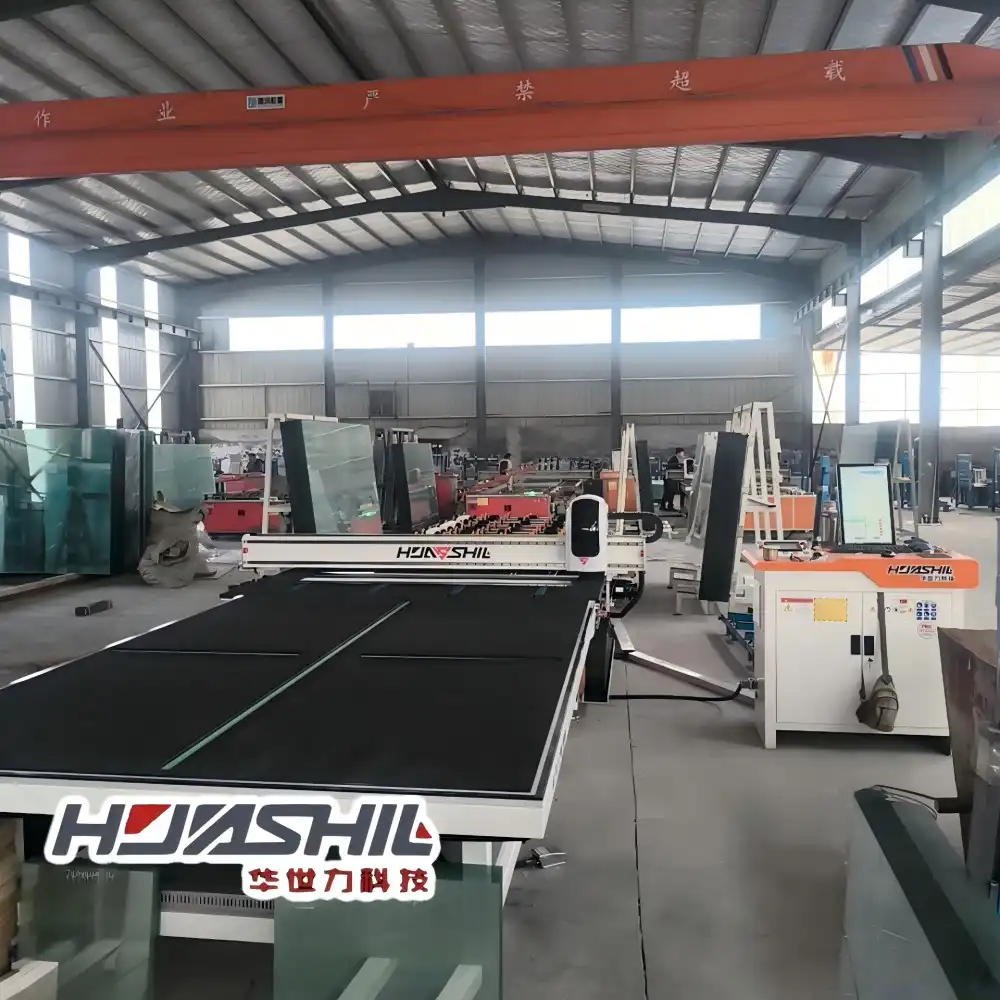
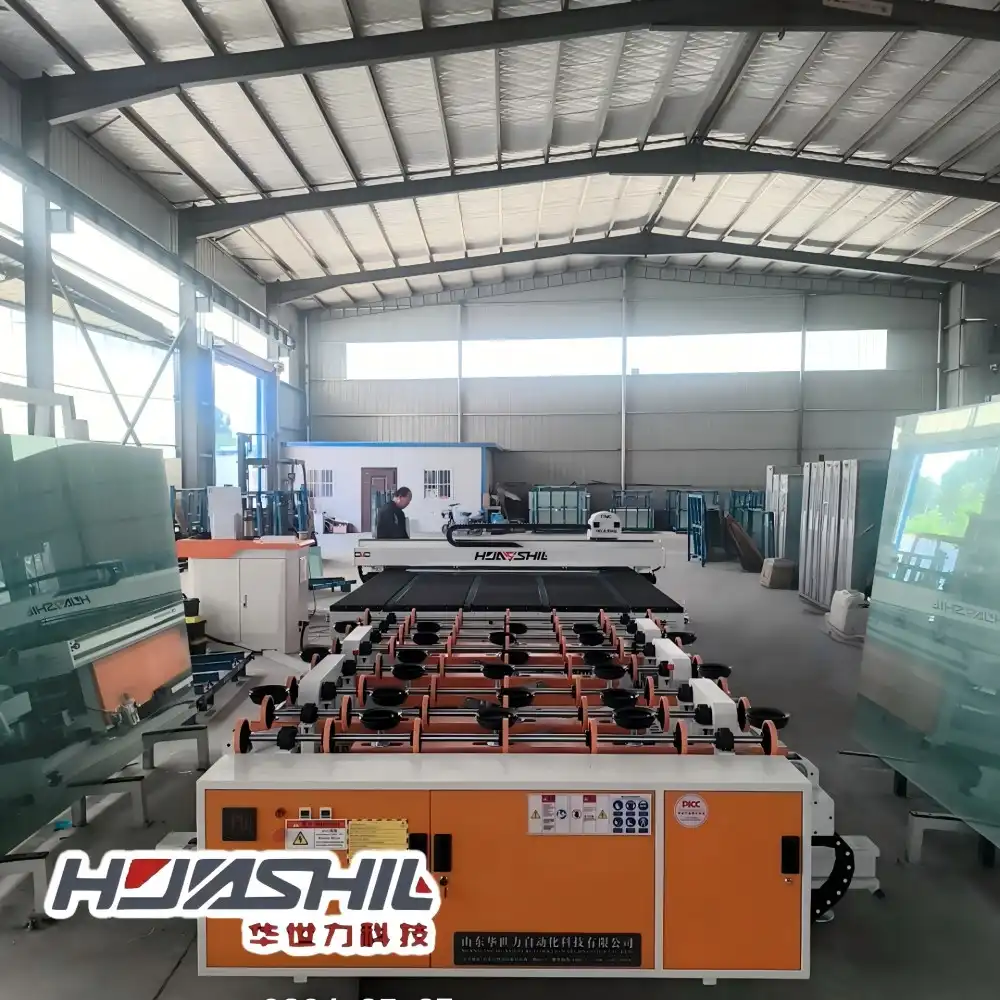
Modern automatic systems for cutting glass, such as the industrial glass cutting table, are much more productive because they can do more than one thing at once. This method is shown by the HSL-YTJ3829 model, which has automatic loading that gets rid of the need for human positioning delays, automatic pressure control that changes the cutting force based on glass thickness from 2 mm to 19 mm, and automatic edge finding that makes sure the machine is perfectly aligned without the user having to measure it. With the built-in air flotation system, workers can easily move big sheets measuring up to 3660 mm by 2800 mm, and the breaking table completes the separation process without having to move the glass to other workspaces. Compared to semi-automated options, this level of integration cuts cycle times by as much as 40%.
Precision Calibration and Predictive Maintenance Strategies
The precision of the dimensions needed for architectural and automobile uses is kept up by regular calibration. Using precise measurement tools to check the setting of the cutting head once a week helps find drift before it affects the quality of the product. Predictive maintenance goes beyond immediate fixes by keeping an eye on performance signs that show when equipment is about to break down. By keeping an eye on bearing temperatures, shaking patterns, and cutting wheel wear rates, maintenance teams can plan repairs for planned breaks instead of having to rush to fix problems when they happen. When modern cutting systems have optimization software like Optima built in, it constantly looks at cutting patterns to find the best ways to keep throughput goals while minimizing glass waste.
Operator Training and Cross-Functional Collaboration
It's only possible for equipment to increase output if workers know how to use its features to their full potential. In-depth training programs teach not only basic operation but also how to fix common problems and spot early signs of machine problems. Cross-training production workers on various tools makes them more flexible, so work can still get done even when some team members aren't there. When the production, repair, and engineering teams talk to each other on a regular basis, process changes that are found on the shop floor are put into action in a planned way instead of just being used as temporary solutions.
Choosing the Right Industrial Glass Cutting Table for Maximum Productivity
Choosing the right equipment can have long-lasting effects on operations, so it's important to do a lot of research before buying. The right system fits your output needs without costing extra for features that aren't needed.
Evaluating Automation Levels and Production Volume Requirements
Fully automatic cutting tables work best in places that process a lot of glass sheets every day, because they save time and money by cutting down on labor and increasing output. For businesses with modest volumes or a wide range of products that need human oversight during setup, semi-automated systems are a good compromise. Manual cutting tables are still a cheap way to do specialized work in small batches, but they can't be used on a larger scale. By being honest about your current business and growth estimates, you can avoid both buying too little equipment that causes future problems and too much equipment that sits idle.
Critical Specifications: Table Size, Thickness Range, and Precision
The jobs your building can take on are directly related to the largest glass sizes it can handle. Architectural glassmakers who make curtain wall panels need tables that can hold sheets that are longer than 3500 mm, but furniture manufacturers who make smaller decoration pieces value flexibility over maximum size. It doesn't matter what thickness the glass is—a system that can handle 2 mm to 19 mm glass will work for most building, automobile, and furniture uses. However, specialty manufacturers may need wider ranges for thicker structural glass or thinner display panels. Cutting accuracy, which is usually measured in tenths of millimeters, is what separates good performance from great performance in situations where field change is not possible because of tight tolerances.
Energy Efficiency and Total Cost of Ownership Analysis
The purchase price is only one part of the real cost of the tools, such as an industrial glass cutting table. When a machine is in use, it uses a lot of energy. This is especially true in places where machines are used on multiple shifts. When compared to older designs, modern systems with motors that use less energy and smart power control can cut electricity costs by 15 to 25 percent. Accessibility for maintenance affects both the cost of parts and the length of downtime. Equipment that can change parts quickly cuts down on production breaks. Warranty coverage and easy access to parts from the maker protect you financially against unexpected repair costs in the first few years of operation, which are very important.
Case Study: Throughput Improvement in Architectural Glass Fabrication
In the southeast of the United States, an architectural glass maker got rid of three old semi-automated cutting tables and replaced them with two fully automated systems that have synchronous belt lines and can be controlled from anywhere using a remote. The factory makes glass panels for business building projects. The sheets are usually about 3200mm x 2400mm and have a thickness of 6mm to 12mm. After installation and two weeks of training, the plant's daily throughput went from 180 sheets to 274 sheets, a 52% rise. At the same time, it needed four workers instead of six. Dimensional variation went from ±0.8 mm to ±0.3 mm, which means that cutting accuracy got better and there were fewer problems with installation and return costs. The investment paid for itself in 18 months thanks to lower labor costs and higher production capacity that let the business take on more jobs without having to expand its facilities.
Maintenance and Safety Tips to Sustain Optimal Performance
Paying close attention to repair plans and safety rules that protect both people and machines is necessary for equipment to work reliably. These methods make tools last longer while keeping the accuracy needed for high-quality production.
Preventive Maintenance Schedules and Critical Inspection Points
Daily checks find small problems before they get so bad that they stop production. Operators should make sure that the cutting wheels can move easily and don't wobble. They should also make sure that the air-float systems keep the pressure even across the table surface and that the conveyor belts move smoothly without any edge wear. As part of weekly maintenance, the maker recommends lubricating the bearing points, cleaning the optical sensors that find the edges of glass, and making sure that the emergency stop systems work right away when tried. Deep checks are done once a month to look for signs of overheating in the electrical connections, check the amount and state of the hydraulic fluid, and compare the cutting pressure sensors to known standards.
Parts Replacement Timing and Inventory Management
Based on production output, wearable parts wear out in a predictable way. Cutting wheels need to be replaced every 8,000 to 12,000 linear meters of cutting, but this depends on the type of glass being cut and how the operator cuts it. Keeping at least two full sets of wheels in stock will keep you from having to pay extra for fast shipping when you need to replace them. Over time, synchronous belts gradually get longer, and replacing them before cracks can be seen keeps them from breaking during production runs. Keeping detailed repair logs helps you figure out when to replace something based on how you use it, instead of just using the manufacturer's estimates based on normal conditions.
Operator Safety Protocols and Protective Systems
Processing glass comes with its own risks that can be reduced by following strict safety rules. The first line of defense against accidents is personal protective equipment like gloves that won't cut, safety glasses with side shields, and shoes with steel toes. Safety features built into the equipment, such as light curtains that stop cutting when beams are blocked, keep people from getting hurt without slowing down regular production. There are emergency stop buttons all around the cutting table, so the machine can be turned off right away from any position. Regular safety training repeats the right way to lift for jobs that can't be fully automated and sets clear rules for how to talk to each other when multiple people are working near the same piece of equipment.
Compliance with OSHA Standards and Industry Regulations
Facilities in the United States that make glass have to follow rules set by the Occupational Safety and Health Administration. These rules cover things like machine guarding, lockout/tagout processes during upkeep, and communicating hazards. An industrial glass cutting table that is automated and approved to CE standards shows that it meets strict safety requirements that often go beyond what OSHA requires. This gives operators even more confidence in their safety. When equipment makers get ISO 9001 approval, it means that they use systematic quality management methods that make it less likely that problems or defects will get to customer facilities. Keeping records of safety training and maintenance tasks creates the audit trail that government inspections need and also helps with efforts to keep getting better.
Conclusion
To get the most out of your glass cutting operations, you need a plan that takes into account the skills of your workers, the powers of your tools, and the way your processes work together. Modern automated cutting tables like the HSL-YTJ3829, which has an automatic feeding system, pressure control, and a combined breaking table, are more efficient than manual systems. This shows how far technology has come since the days of manual systems. But equipment alone doesn't ensure results if it isn't properly maintained, operators aren't trained, or the process isn't always getting better. It is possible for glass fabricators to meet rising market demands while keeping costs low and quality high for architectural, automotive, and specialty glass applications by figuring out where the current bottlenecks are, choosing the right machinery, and following strict operational procedures.
FAQ
1. What efficiency gains can realistically be expected when upgrading to automated glass cutting?
When manual or semi-automated equipment is replaced with fully automated systems, facilities usually see 35–55% increases in throughput. However, the exact gains rely on the current standard performance and production mix. When physical chores like positioning and handling are taken over by technology, labor costs usually drop by 25 to 40 percent. Optimization software that nests cutting patterns more efficiently than human planning cuts down on material waste by 10 to 18%. When these changes are added together, they usually pay for themselves in 14 to 24 months for high-volume processes.
2. How do maintenance requirements differ between automation levels?
Fully automatic systems have more parts that need to be maintained, like sensors, pneumatic systems, and mechanical drives, than simpler human tables. Routine repair hours usually go up by 20 to 30 percent, but this extra time keeps much more expensive unexpected downtime from happening. Manufacturers like HUASHIL make automatic equipment that is easy to maintain so that techs can get to important parts without having to take the whole thing apart. Advanced systems have predictive tracking features that actually cut down on emergency repairs by letting workers know about problems before they happen.
3. What factors should influence choosing between domestic and international equipment suppliers?
When it comes to delivery speed, parts supply, and service reaction times, domestic providers are better, especially for facilities that need help quickly. International makers often have better prices and may offer unique features that aren't available in the United States. More and more, reputable foreign providers are setting up service networks in North America to help fill in the gaps in support. Certifications for equipment like CE and ISO 9001 guarantee quality no matter where the product is made. A lot of businesses that do well work with well-known foreign companies that have shown they are committed to the North American market for a long time by providing regular parts and technical support.
Elevate Your Glass Cutting Capabilities with HUASHIL
We know how hard it is for production managers to choose industrial glass cutting table makers who are reliable and don't require a lot of initial investment. Shandong Huashil Automation Technology Co., Ltd. has helped glass makers all over the world by providing them with cutting-edge solutions that combine precise engineering with useful operating benefits. Our HSL-YTJ3829 model has automatic loading, edge finding, and air flotation systems built into a strong base that can handle glass up to 3660mm x 2800mm and thicknesses from 2mm to 19mm. It is all controlled by Optima optimization software, which cuts down on waste while increasing output. Our dedication to quality and safety standards is shown by our CE and ISO 9001 licenses. Contact our team at salescathy@sdhuashil.com to talk about how our glass cutting tools can meet your unique production needs and to set up a time to see what we can do.
References
1. Glass Manufacturing Industry Council. Automation Impact on Glass Fabrication Productivity. Industrial Equipment Research Series, 2022.
2. American Society of Mechanical Engineers. Precision Cutting Systems: Design Principles and Performance Standards. Technical Publication ME-2021-08, 2021.
3. National Glass Association. Safety Protocols for Automated Glass Processing Equipment. Industry Best Practices Guide, 2023.
4. International Journal of Production Research. Total Cost of Ownership Analysis for Industrial Automation Equipment. Volume 61, Issue 4, 2023.
5. Manufacturing Engineering Society. Predictive Maintenance Strategies for Glass Processing Machinery. Technical Bulletin 2022-15, 2022.
6. Lean Enterprise Institute. Value Stream Mapping in Glass Manufacturing Operations. Case Study Collection, 2021.