




Precision, dependability, and overall production efficiency are the most important things to look at when choosing high-performance glass processing equipment for tempering tasks. Modern hardening lines need machines that can work with different sizes of glass while keeping the quality the same. Intelligent automation equipment, like CNC cutting systems with optimization software, changes the way production works by cutting down on waste and the need for operators. These tools make a real difference in throughput, energy economy, and defect reduction, all of which have a direct effect on your bottom line and your ability to compete in the architectural, automobile, and artistic glass markets.
Understanding High-Performance Glass Processing Equipment
Modern equipment for making glass has completely changed how makers do tempering work. Modern systems combine precise engineering with smart controls to deliver predictable, repeatable results throughout every production cycle. This is in contrast to older equipment that relies heavily on manual changes and user skill.
What Defines High-Performance Machinery?
These systems have cutting heads that are moved by servos, sensors that measure in real time, and adaptive control programs that can quickly adapt to changes in the thickness and make-up of the glass. By adding optimization software, producers can get the most out of the materials they use while cutting down on the time it takes to set up between production runs. During the cutting and breaking steps, synchronous belt conveyors keep the glass precisely in place, getting rid of the size errors that were common in older systems.
Core Technologies That Drive Results
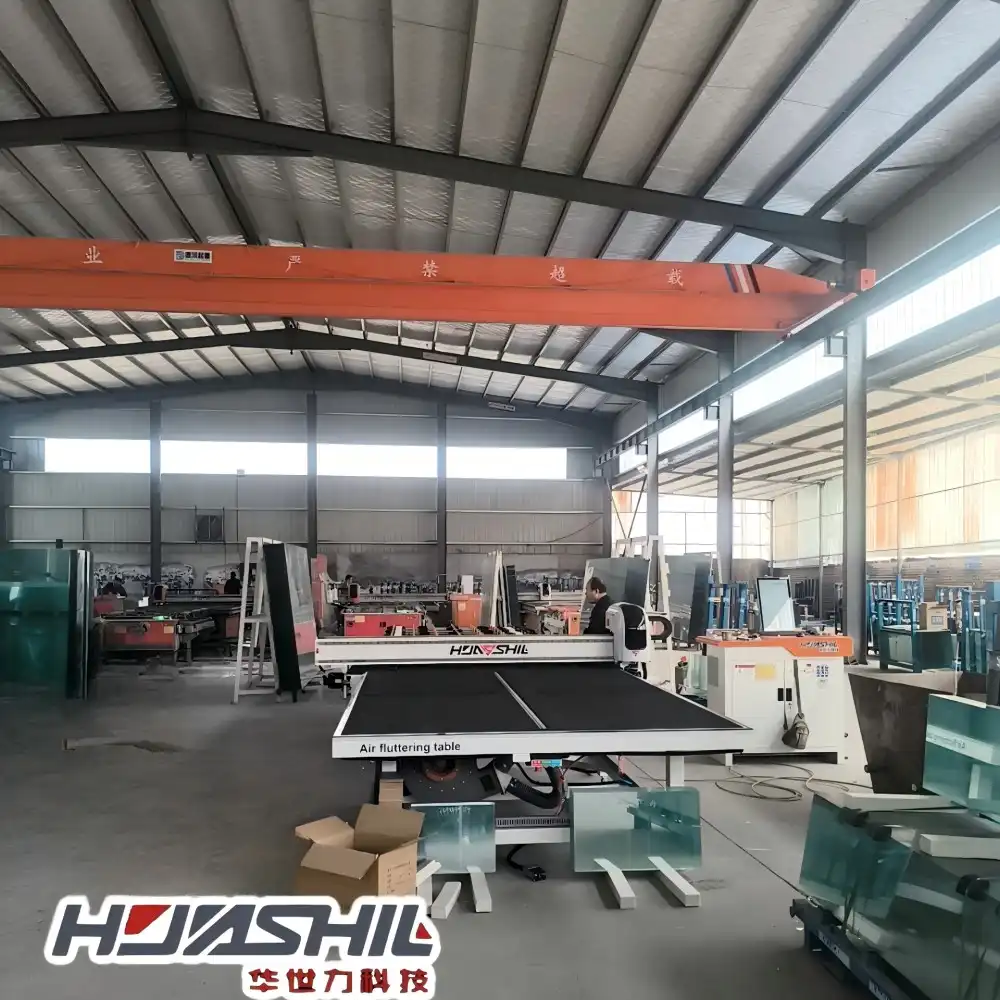
High-performance machines use automatic loading systems that cut down on the risks of human handling and speed up cycle times. During processing, air flotation devices support frail glass panels and keep the surfaces from getting damaged, which would lower the quality of the tempering. Automatic edge-finding technology makes sure that cutting tracks line up perfectly with the edges of the glass, even if the sheets are in different places. When working with the large panels used in curtain walls and architecture, these skills are very important because accurate measurements are a big part of how well the installation goes.
Technical Specifications That Matter
The HSL-YTJ3829 model is a good example of what current technology can do. This method can work with glass that is up to 3660 mm x 2800 mm and between 2 and 19 mm thick, meeting the needs of both architects and furniture makers. The Optima optimization program looks at each sheet of glass to find the best way to cut it. This keeps production speed up while lowering the cost of materials. Automatic pressure control can handle different kinds of glass without any help from the operator, making sure the edge quality is always the same whether working with standard float glass or specialty finishes.
International guidelines are very strict about the equipment that is made for hardening preparation. CE certification shows that the product meets European safety standards, and ISO 9001 certification shows that the product is managed consistently for quality throughout the whole production process. These licenses give buying managers peace of mind when they are checking the reliability of equipment and making sure it meets regulations.
Benefits of Using High-Performance Equipment for Tempered Glass
When you buy new processing equipment, it makes your business run better in real ways that go far beyond the cost of the equipment itself. When switching from old systems to new automatic lines, production managers always say that the quality of the output, working efficiency, and waste reduction all improve by a lot.
Precision That Reduces Defects
Automated methods get rid of the differences in size that come with cutting by hand. For tempered glass to work properly, the edges must be carefully prepared. Any flaws, chips, or measurements that are off will get much worse during the high-temperature tempering process, leading to stress buildup that breaks the glass on its own. When compared to semi-automated options, high-performance cutting tools lower tempering failure rates by 40–60% while maintaining edge quality within micron-level tolerances. This consistency is especially helpful for car glass uses that need to meet strict safety standards for perfect edge preparation.
Operational Efficiency Gains
Automation shortens the time it takes to make things while also requiring less work. Using 360-degree remote control systems, one operator can oversee the flow of glass from loading to breaking and stacking at various processing areas. With high-performance glass processing equipment, automatic edge-finding and pressure control get rid of the need to make setup changes for different types of glass. This cuts switching times from 15 to 20 minutes to less than three minutes. These improvements in efficiency directly lead to higher daily throughput—manufacturers can usually increase capacity by 25–35% without adding more shifts or expanding the building.
Energy and Cost Optimization
Nowadays machines use servo motors and motion patterns that are more energy-efficient than the hydraulic systems that were popular in older machines. The smart nesting methods in the Optima software cut down on wasteful use of raw materials by 8–12%, which saves a lot of money on big production runs. When paired with lower failure rates and faster cycle times, these systems usually pay for themselves in 18 to 24 months for places that process more than 2,000 square meters of glass every day.
Safety and Compliance Assurance
Automated loading and air flotation systems cut down on the amount of physical glass handling that needs to be done. This lowers the risk of injuries at work that come from heavy lifts and sharp edges. Built-in safety interlocks keep the operator from getting to moving parts while the machine is running, which is what OSHA requires for industrial machinery. Following international standards makes sure that equipment can work with global supply lines. This is very important for companies that make things for export markets or multinational building projects.
Key Features to Consider When Selecting Tempering Glass Equipment
When choosing equipment, it's important to carefully weigh the technical capabilities of the item against the unique needs of the production. When engineering managers look at processing equipment, they should think about both the current working needs and the ability to grow in the future.
Precision and Adaptability Requirements
For glass variety, you need machines that can work with different thicknesses, coatings, and shapes without having to be completely rearranged. Systems that automatically identify thickness and adjust pressure control can easily adapt to changes in the production plan. One cutting line can handle glass from 2 mm artistic panels to 19 mm building sheets. This gets rid of bottlenecks and makes the best use of all the equipment. If the materials you use in your products include low-iron glass, shiny finishes, or sintered stone, check to see if your tools can handle these specialized tasks.
Automation Integration Capabilities
Think about how the new tools will work with the production control systems that are already in place. Modern machines can connect to the internet through Industry 4.0, which lets you keep an eye on production in real time, get tips for preventative maintenance, and keep track of quality throughout the whole manufacturing process. Integrating equipment with ERP systems is easier when the equipment has open communication protocols. This lets production planners make the best schedules based on real machine state instead of estimates.
Interface Design and Training Support
Controls that are easy to use cut down on training time and user mistakes. With touchscreen interfaces and images that are easy to understand, new workers can get up to speed in days instead of weeks. Technical support teams can fix problems without having to go to the facility in person thanks to remote testing. This cuts down on downtime for facilities in rural areas. Check to see if sellers offer thorough training, clear technical documentation, and quick help after the sale. These are all things that have a big effect on the long-term success of your business.
Maintenance and Longevity Considerations
Reliable equipment keeps production running smoothly and increases the life of capital investments. Check how easy it is to get to parts, how many spare parts are available, and how often the machinery is expected to be serviced when comparing choices. Systems made with flexible parts let worn parts like cutting wheels and pressure rollers be replaced quickly, without having to wait for a long time. Suppliers with clear repair plans and ready-to-use spare parts lower the chance of long outages that cause customers to miss their delivery dates.
How to Choose the Best High-Performance Glass Processing Equipment in 2026?
There is a wide range of tools on the market right now, from basic semi-automated systems to high-performance glass processing equipment to fully integrated production lines. To make smart choices, you need to carefully look at technical specs, the skills of the provider, and the overall cost of ownership.
Evaluating Technology and Reliability
Use industry case studies, customer feedback, and third-party reports to learn more about how well equipment works. Manufacturers with a lot of installations can tell you a lot about how reliable and helpful their products are in the real world. Compare the models that are similar in terms of their cutting precision, production speed, and level of automation. Ask for demonstration movies that show how the tools you want to use can handle the types and sizes of glass that you need for your production.
Analyzing Total Cost of Ownership
The price of the tools is only one part of its total cost. Think about how much it will cost to install, train the user, do regular upkeep, how much energy it will use, and how many spare parts it will need over its lifetime. Figure out the realistic payback times by figuring out how much money you could save by reducing material waste, lowering the rate of defects, and increasing productivity. In the long run, equipment that costs more at first is often more valuable because it is more reliable and works more efficiently.
Financing and Support Structures
Flexible acquisition models can adapt to different business plans and funds available. Direct buy gives you full ownership and control over your assets, which is good for well-known makers with plenty of cash on hand. Leasing arrangements lower the amount of money that needs to be paid up front and keep the business's financial freedom for smaller operations or those with multiple growth projects in the works. When you compare seller offers, look at the guarantee terms, the time it takes for technical help to respond, and the promises of parts availability. Suppliers who give full installation help, user training, and remote diagnostics are more valuable than those who only sell tools.

Future Innovations and Trends in Glass Processing Equipment
New technologies keep making the glass processing business better by increasing efficiency, sustainability, and operating flexibility. Knowing about new trends helps makers decide where to spend in the future.
AI-Driven Automation and Predictive Systems
Adding artificial intelligence to equipment lets it learn from past production data what the best working settings are. Smart diagnostic systems keep an eye on how well parts are working and guess what maintenance is needed before they break. They do this by booking a service for planned breaks instead of emergency interruptions. Real-time quality monitoring with computer vision finds edge flaws or changes in dimensions right away, causing automatic tweaks that keep output quality consistent without any help from an operator.
Sustainability and Energy Efficiency Focus
Rules about the environment and the cost of energy make machine designs more resource-efficient. Next-generation systems use 20–30% less power than current models because they have regenerative brakes, variable-speed drives, and optimized motion patterns. Advanced building algorithms make the best use of materials, turning more raw glass into products that can be sold while lowering the amount of trash that ends up in landfills. These changes help the company reach its sustainability goals while also cutting costs in a way that can be seen.
Customization and Collaborative Development
Leading equipment manufacturers are working together with customers more and more to make custom solutions for unique uses, using high-performance glass processing equipment. OEM and ODM programs let curtain wall system installers and specialized glass fabricators choose the exact machine setups they need for their specific production needs. This way of working together makes equipment that is best for certain types of products, instead of general-purpose machines that have to make operating sacrifices.
Conclusion
Choosing high-performance glass processing equipment is a long-term investment that will affect your ability to produce, the quality of your products, and your competitive position. Precision, speed, and operating safety all get better with modern automated systems, which have a direct effect on profits. Intelligent controls, optimization software, and full automation in equipment make it less reliant on labor while increasing productivity and material production. Having both CE and ISO 9001 standards ensures that the product meets all the rules and is of high quality. When looking at different suppliers of equipment, manufacturers should focus on those that offer tried-and-true technology, quick expert help, and flexible acquisition models that fit their business goals and growth plans.
FAQ
1. What maintenance practices maximize equipment lifespan?
Regular repair plans keep machines from breaking down when they're least expected and make them last longer. Cutting wheel state, conveyor line, and air flotation system pressure should all be checked every day. Moving parts are oiled once a week, and location sensors are calibrated once a month to keep the accuracy standards. Comprehensive inspections done once a year by trained techs find wear patterns that mean parts need to be replaced before they break. By keeping thorough service records, predictive maintenance strategies can be used to plan fixes for planned breaks in production rather than sudden shutdowns.
2. How does automation improve return on investment?
Automated equipment cuts down on the cost of workers while increasing output and quality control. Three to four workers are needed for manual systems, but only one person can run automatic lines. The money saved on labor usually covers the cost of the equipment within two years. Lower failure rates mean less wasted material and no need for extra work, and faster cycle times mean more work gets done every day without having to build more space. Better stability makes customers happier and cuts down on warranty claims, which protects profits and the company's image in the market.
3. Are flexible financing options available for equipment acquisition?
Suppliers of equipment and specialty finance companies offer a range of ways to buy things that can work with a range of budgets. In a normal purchase deal, the buyer gets full ownership and a standard guarantee. Leasing reduces the amount of money that needs to be paid up front, and the monthly payments are based on how long the equipment is used. Lease-to-own designs give you options for financing and the chance to own the building in the future. A lot of sellers will accept letters of credit for international deals. This protects both parties' payments and makes it possible for global supply chains to use cross-border buying processes.
Partner with HUASHIL for Advanced Glass Processing Solutions
HUASHIL is ready to use cutting-edge automatic glass processing tools to change the way you do your tempering preparation work. Established high-performance glass processing equipment provider with a lot of experience working with architectural glass fabricators, curtain wall installers, and furniture manufacturers, we offer tried-and-true solutions backed by CE and ISO 9001 certifications. Our HSL-YTJ3829 model shows how dedicated we are to precise engineering. It has Optima optimization software, automatic loading systems, and air flotation technology that make production processes easier and lower running costs. Get in touch with our technical team at salescathy@sdhuashil.com to talk about your unique processing needs and get full specs, pricing information, and installation schedules that are tailored to your production goals.
References
1. Glass Processing Technology Association (2023). "Standards and Best Practices for Automated Glass Cutting Systems in Architectural Applications," Technical Bulletin 2023-14.
2. Martinez, R. and Chen, L. (2023). "Comparative Analysis of CNC Glass Processing Equipment Performance in High-Volume Manufacturing Environments," International Journal of Advanced Manufacturing Technology, Vol. 127, pp. 4521-4538.
3. European Committee for Standardization (2022). "Safety Requirements for Glass Processing Machinery: EN 12543 Compliance Guidelines," Brussels: CEN Publishing.
4. Thompson, J. (2024). "Industry 4.0 Integration in Glass Fabrication: ROI Analysis and Implementation Strategies," Glass Manufacturing Industry Review, Vol. 45, No. 2, pp. 78-93.
5. National Institute of Standards and Technology (2023). "Precision Measurement Techniques for Quality Assurance in Tempered Glass Production," NIST Special Publication 1500-22.
6. Worldwide Glass Processing Equipment Market Research (2024). "Technology Trends and Procurement Patterns in North American Glass Fabrication Industry 2024-2029," Industry Analysis Report, Chicago: Market Intelligence Group.