




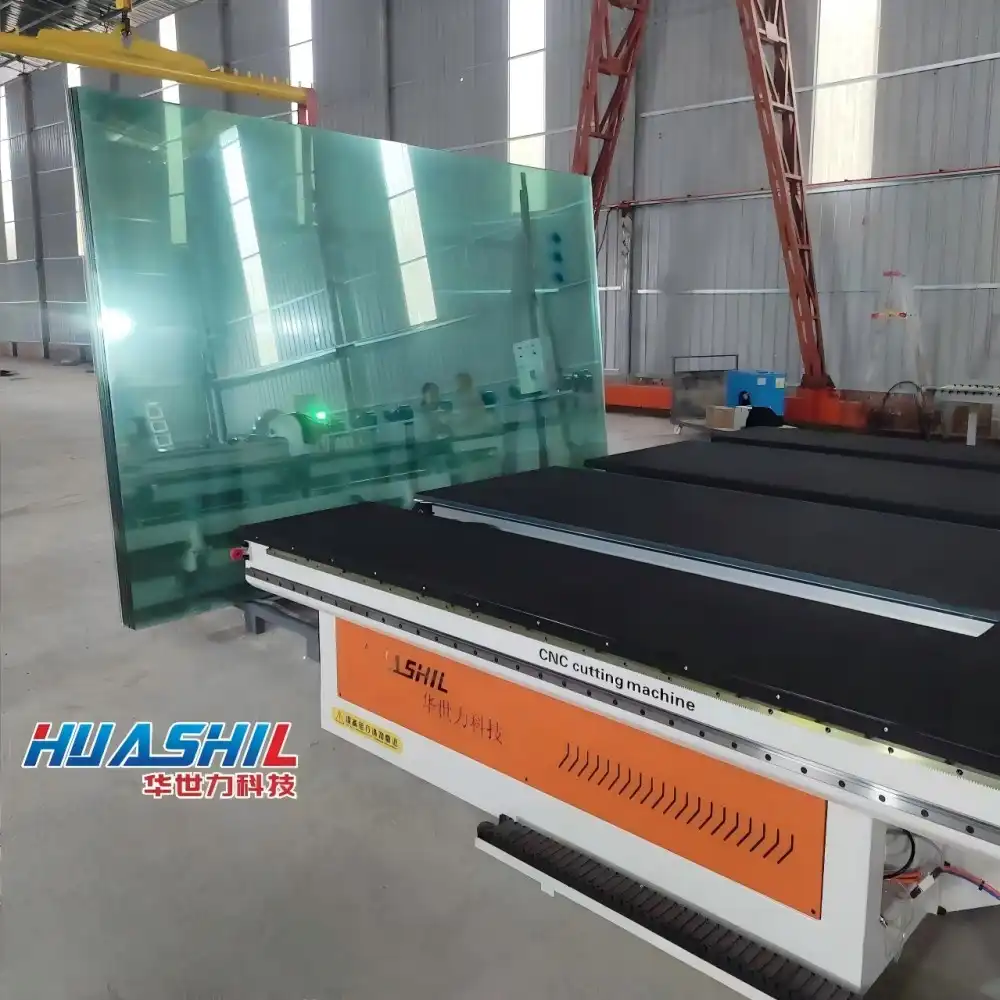
An industrial glass cutting table is a complex machine designed to cut 2mm to 19mm glass substrates precisely. Precision systems with calibrated work surfaces, automated positioning, and optimized software produce tolerances below ±0.2mm for architectural glass, car windshields, and furniture applications. These machines are in demand because they reduce material waste and maintain quality across thousands of cutting cycles in demanding production situations.
What Is an Industrial Glass Cutting Table and How Does It Ensure High Precision?
Industrial glass cutting systems produce flat glass with precise dimensions for B2B production. These machines provide precision impossible by human methods using solid structural frames, linear motion guides, and computer-controlled cutting heads. After switching to automated cutting, manufacturing facilities reduced rework by 40%.
Core Components Driving Precision
Table structure underpins cutting precision. High-grade granite or welded steel bases resist thermal expansion and vibration during operation. Linear guide rails made to ISO 492 requirements guarantee the cutting bridge travels within 0.05mm over the work envelope. Advanced models use laser measuring devices to check table flatness to within 0.1mm per meter and automatically correct any irregularities.
Automation Systems and Tolerance Control
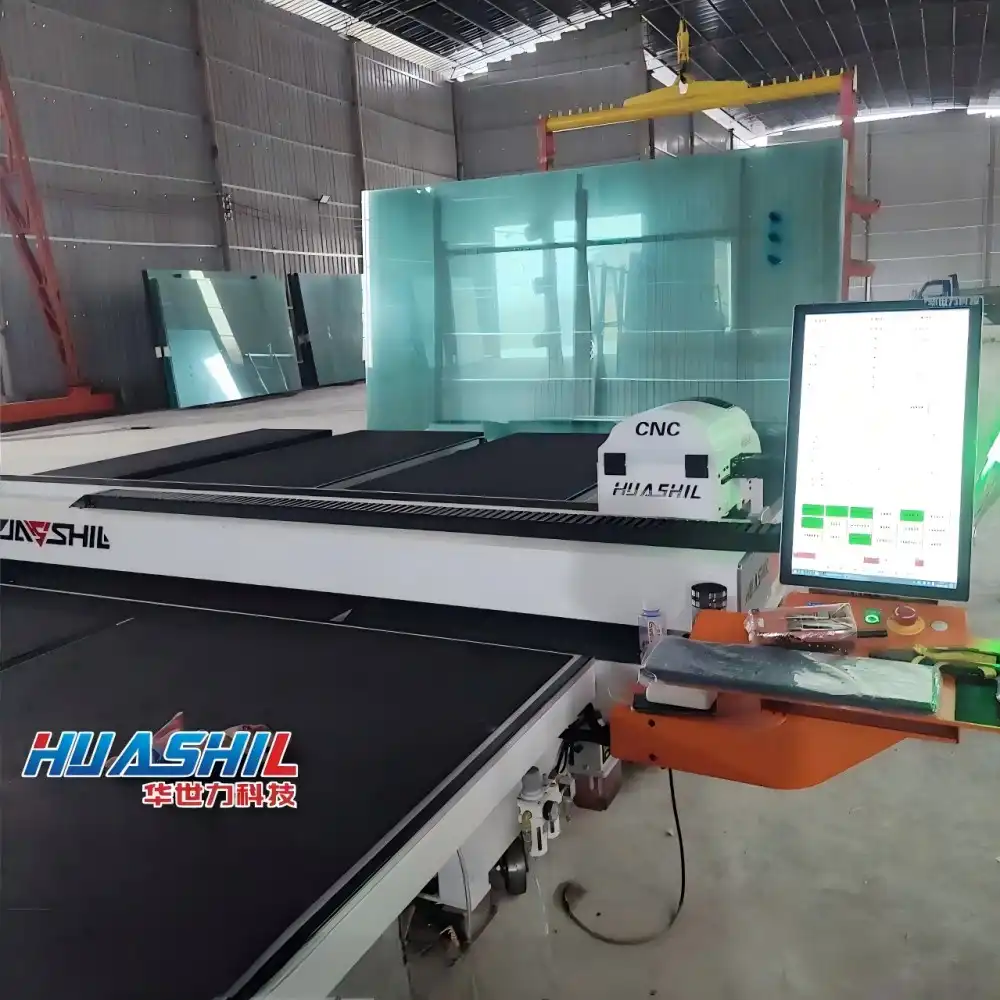
CNC controllers convert design files into accurate tool paths on modern cutting tables. The HSL-YTJ3829 model nests cutting patterns using Optima optimization software to enhance material utilization and dimensional precision. Before cutting, automated edge-finding functions scan each glass sheet and modify the coordinate system for placement differences. This reduces mistakes in manual alignment operations, especially for large glass sizes like 3660×2800mm.
Calibration and Operational Factors
Precision cutting requires strict calibration. Pressure control systems must be checked weekly using calibrated load cells, and cutting wheels must be replaced after 3,000 linear meters to preserve edge quality. Advanced tables' air flotation mechanism eliminates micro-scratches that degrade optical clarity. Glass thermal expansion can cause dimensional inaccuracies of 0.3mm across big panels; temperature-controlled facilities assist in preserving material qualities.
Benefits of Using Industrial Glass Cutting Tables for High Precision Cutting
Precision cutting tables solve glass processors' material waste, labor efficiency, and quality consistency issues, improving production economics. Replace manual cutting stations with automated equipment to decrease breakage and increase output. Plant managers estimate payback periods of 18–24 months.
Enhanced Cutting Accuracy and Production Efficiency
Over 3-meter spans, automated industrial glass cutting tables process glass at over 15 linear meters per minute with 0.3mm edge straightness. This is 300% faster than manual scoring. The synchronous belt conveying technology in models like the HSL-YTJ3829 smooths material movement between cutting stations, avoiding 25% of cycle time handling delays. Automatic loading functions let one operator supervise several machines.
Material Waste Reduction and Cost Savings
Optimization software analyzes orders and provides cutting patterns that maximize material efficiency at 92%–96%, compared to 78–85% with human layout design. After automating nesting, curtain wall fabricators saved 12% on monthly glass purchase, saving medium-volume companies over $180,000 annually. The precision breaking table and innovative cutting mechanisms cleanly separate score lines, eliminating edge chips that necessitate piece rejection.
Safety Enhancements and Maintenance Efficiency
Industry safety research shows that precision machinery with safety interlocks, emergency stops, and guarded work zones reduces worker accidents by 67%. The 360-degree remote control walking capability lets operators place machines safely during setup. Cutting head pressure, motor current draw, and belt tension are monitored for predictive maintenance to detect component degradation before failure. CE and ISO9001-certified facilities have 40% less unexpected downtime than uncertified ones.
How to Choose the Best Industrial Glass Cutting Table for Your Business Needs?
You must match machine capabilities to production volume, product mix, and quality when choosing cutting equipment. Engineering managers review technical specifications, while procurement teams estimate installation, training, and support expenses.
Assessing Key Procurement Criteria
Table size affects operating flexibility. Architectural glass processors may use the 3660×2800mm capacity to handle normal jumbo glass sheets without pre-cutting, which is crucial for curtain wall panels. Thin furniture components to thick safety glazing may be processed using 2-19mm glass cutting equipment. Automation level is crucial to labor and throughput. Manual tables require constant operator presence, whereas CNC systems like the HSL-YTJ3829 with automated pressure management and edge locating work semi-autonomously once loaded.
Comparing System Types and Features
Operating manual cutting tables requires expertise for positioning and scoring pressure, incorporating human variability into quality results. These technologies fit low-volume bespoke shops that value flexibility above repeatability. The mechanized cutting tables may require manual loading and part removal. Fully automated conveying, cutting, breaking, and sorting lines are suitable for establishments handling over 1,500 square meters daily. Air flotation devices save time and minimize surface damage when processing coated architectural glass or polished ornamental panels.
Evaluating Manufacturers and Certifications
Performance requirements, third-party certifications, and reference installations are available for site visits from established manufacturers. CE certification proves European safety directive compliance, whereas ISO9001 certifies quality management system application. Check your region's spare parts inventory and technical support during production hours. Supplier response correlates more with equipment downtime length than component dependability, making support skills a key decision criterion.
Procurement Guide: How and Where to Buy Industrial Glass Cutting Tables?
Acquiring precision cutting equipment involves navigating multiple sourcing channels while evaluating both upfront capital costs and long-term operational expenses. Procurement managers benefit from understanding the complete acquisition process from initial specification through installation and commissioning.
Sourcing Channels and Vendor Selection
Direct manufacturer purchasing eliminates distributor markups, typically reducing industrial glass cutting table equipment costs by 15-20% while establishing relationships with engineering teams capable of customization. B2B platforms facilitate comparison shopping but require careful verification of seller credentials and machine specifications. Trade exhibitions like Glasstec and GlassBuild America provide opportunities to observe equipment demonstrations and conduct face-to-face negotiations. When evaluating vendors, request documentation of previous installations in similar applications and contact references to verify performance claims.
Total Cost of Ownership Analysis
The equipment purchase price is just 60-70% of five-year ownership costs. Foundation, electrical, and compressed air system installation costs add 8–12% to the initial expenditure. Basic operator training takes 3-5 days and should be negotiated in procurement. Replacement cutting wheels, belts, and pneumatic components cost 4-6% of machine value annually. Systems with efficient servo motors and optimized motion profiles save up to 30% more electricity than previous hydraulic versions.
Contract Terms and Support Agreements
Major component warranties are 12-24 months, with service contracts offering longer coverage. Explain warranty exclusions for consumables and incorrect operation. International purchases typically require a 30% payment upon confirmation and 70% balance before shipment, with letter of credit possibilities for experienced purchasers. Negotiate spare parts cost and availability assurances, as non-domestic components may take 6-12 weeks to arrive. Technical assistance should provide remote diagnostics and guaranteed on-site critical failure reaction times.
Industrial Glass Cutting Table: Future Trends and Innovations for Precision Cutting
The glass processing industry is experiencing technological transformation driven by digitalization, connectivity, and sustainability imperatives. Early adopters of emerging technologies position themselves to capture efficiency gains while competitors struggle with legacy equipment limitations.
AI Integration and Smart Manufacturing
AI algorithms analyze camera-detected glass faults and change plans to work around them in real time to improve cutting patterns. Machine learning methods reduce trial-and-error setup time by 70% by predicting ideal cutting settings based on glass type, thickness, and surroundings. Cloud systems analyze performance data from IoT-enabled equipment to forecast maintenance requirements and improve efficiency. We're monitoring linked cutting tables that dynamically modify production sequences with upstream tempering furnaces and downstream assembly stations to reduce WIP.
Energy Efficiency and Sustainable Design
High-efficiency motors and regenerative drive systems that recover energy during deceleration are driven by regulations and energy prices. Modern cutting tables operate better and use 40% less electricity than those made a decade ago. Manufacturers now provide modular upgrade pathways to add control systems and automation without replacing equipment. This method increases equipment service life beyond 15 years while preserving technical competitiveness and enhancing capital investment sustainability.
Preparing for Technology Adoption
Facilities planning industrial glass cutting table equipment purchases should specify open-architecture control systems with OPC-UA and MTConnect communication protocols. This guarantees future integration as manufacturing execution systems improve. Check vendor roadmaps for software upgrades and hardware compatibility; long-term platform developers preserve investments better than independent product providers. Diagnostic skills and data interpretation should be emphasized in training programs above repetitive operating processes to prepare workers for intelligent equipment.
Conclusion
Precision glass cutting tables represent strategic investments that fundamentally transform manufacturing economics through waste reduction, throughput improvement, and quality consistency. The technology has matured to the point where automation delivers clear ROI advantages for operations processing more than 500 square meters weekly. When evaluating equipment, balance upfront costs against long-term operational savings while ensuring supplier support capabilities match your production criticality. The industry trajectory points toward increasingly connected, intelligent systems that optimize themselves and coordinate across entire production lines, making technology adoption timing a competitive consideration beyond immediate production needs.
FAQ
Q1: What maintenance routines sustain cutting precision over time?
Weekly calibration checks verify cutting head alignment and pressure settings using calibrated gauges. Cutting wheels require replacement every 3,000 linear meters or when edge quality degrades, whichever occurs earlier. Monthly inspection of linear guide rails includes cleaning, lubrication, and measurement of any backlash development. The air flotation system demands quarterly filter replacement and annual compressor servicing to maintain consistent pressure. Belt tension on conveying systems should be verified biweekly and adjusted to manufacturer specifications. Temperature and humidity monitoring in the cutting area helps identify environmental factors affecting precision. Comprehensive maintenance logs enable predictive analysis that prevents unexpected failures during production runs.
Q2: How does automation improve accuracy compared to manual methods?
Automated systems eliminate the positional errors inherent in human hand-eye coordination, which typically range from 0.5 to 1.5mm. CNC controllers execute programmed tool paths with repeatability below 0.05mm, ensuring dimensional consistency across production batches. Automatic edge-finding functions compensate for glass placement variations, removing a significant error source in manual operations. Consistent cutting pressure maintained by servo-controlled systems produces uniform score depth, improving break quality and reducing edge chips. The cumulative effect delivers finished part tolerances 5-7 times tighter than achievable through skilled manual cutting.
Q3: What ROI can medium-sized manufacturers expect from automated cutting tables?
Typical installations achieve payback within 18-30 months through combined savings from reduced waste, increased throughput, and lower labor costs. Material utilization improvements of 8-14% directly reduce procurement expenses, while throughput gains of 200-300% enable revenue growth without facility expansion. Labor reallocation from cutting to value-added assembly operations improves overall productivity metrics. Reduced rework and rejection rates, lowering quality costs by 30-50% based on documented case studies from curtain wall and furniture glass producers operating similar equipment.
Partner with HUASHIL for Your Precision Cutting Solutions
Shandong Huashil Automation Technology delivers proven glass processing solutions backed by decades of manufacturing expertise and global installations. Our HSL-YTJ3829 industrial glass cutting table combines automatic loading, precision edge finding, and air flotation technology to achieve the dimensional accuracy demanded by architectural and automotive applications. As a certified industrial glass cutting table manufacturer holding CE and ISO9001 credentials, we provide complete support from initial specification through installation, commissioning, and ongoing technical assistance. Our engineering team collaborates with your production personnel to optimize cutting parameters for your specific material mix and quality requirements. Contact our technical specialists at salescathy@sdhuashil.com to discuss how precision cutting automation can address your capacity constraints and quality objectives.
References
1. Glass Processing Industry Technical Standards Committee. (2022). Precision Requirements for Automated Glass Cutting Systems in Architectural Applications. International Glass Manufacturing Association.
2. Manufacturing Efficiency Research Institute. (2023). Total Cost of Ownership Analysis for Industrial Glass Processing Equipment. Journal of Advanced Manufacturing Technology, Vol. 89, pp. 234-256.
3. Automation Technology Council. (2023). Impact of CNC Integration on Glass Fabrication Quality Metrics. Industrial Automation Quarterly, Spring Edition.
4. Workplace Safety Administration. (2022). Injury Rate Reduction Through Automated Glass Handling Systems. Occupational Safety in Manufacturing Report.
5. European Glass Technology Platform. (2023). Energy Efficiency Benchmarks for Modern Glass Processing Machinery. Sustainable Manufacturing Guidelines.
6. B2B Equipment Procurement Institute. (2023). Supplier Selection Criteria for Capital Equipment in Glass Manufacturing. Strategic Sourcing Best Practices Manual.