




Modern furniture glass machines are making glass manufacturing precise and innovative, changing how producers design and produce. Furniture makers can cut, shape, edge, and polish glass components with remarkable accuracy and speed with these automated methods. CNC and intelligent automation have made modern glass processing equipment essential for enterprises seeking complicated shapes, sophisticated surface treatments, and consistent quality. The furniture glass machine has developed from basic cutting tools into sophisticated production platforms that accommodate complicated design concepts while fulfilling today's competitive efficiency and cost criteria.
Understanding Furniture Glass Machines and Their Role in Modern Design
Core Functions and Equipment Categories
Furniture-specific glass processing equipment conducts many essential production activities. These systems cut, edge, drill, bevel, and polish glass panels for cabinets, tables, shelves, shower enclosures, and ornamental partitions. Modern technology includes completely automated CNC-controlled lines for comprehensive processing, semi-automated machines for user input and mechanized accuracy, and manual systems for low-volume bespoke work. Each category targets varied production sizes and investment capacities, giving boutique studios and high-volume factories adequate technologies.
Precision and Versatility in Contemporary Furniture Manufacturing
Modern furniture designs include glass as a structural and decorative aspect, requiring machining beyond cutting. Complex multi-component constructions may be assembled seamlessly with 0.1mm tolerances from advanced processing technologies. Curved cuts, complicated patterns, and precise edge profiles increase design options. Manufacturers may make frameless glass cabinets with mitered corners, organic-shaped tabletops, and ornamental panels with beveled or polished edges, which human methods cannot scale. Precision means less material waste, lower labor expenses, and higher-quality, premium-market items.
Real-World Design Innovation Enabled by Advanced Machining
Advanced glass processing technology has allowed top furniture makers to build unique product lines. Scandinavian minimalist furniture companies cut seamless glass shelf systems with imperceptible edge seams to sub-millimeter precision. Frameless glass partition systems with integrated door mechanisms require accurate drilling patterns and edge treatments from modern office furniture makers. Only programmed CNC control allows high-end residential furniture designers to create complex curvature and gradient transparency glass tables. This shows how superior machining has become a competitive advantage, enabling design innovation that appeals to architecturally savvy customers.
Key Innovative Applications of Furniture Glass Machines in Furniture Manufacturing
Precision Cutting for Complex Custom Shapes
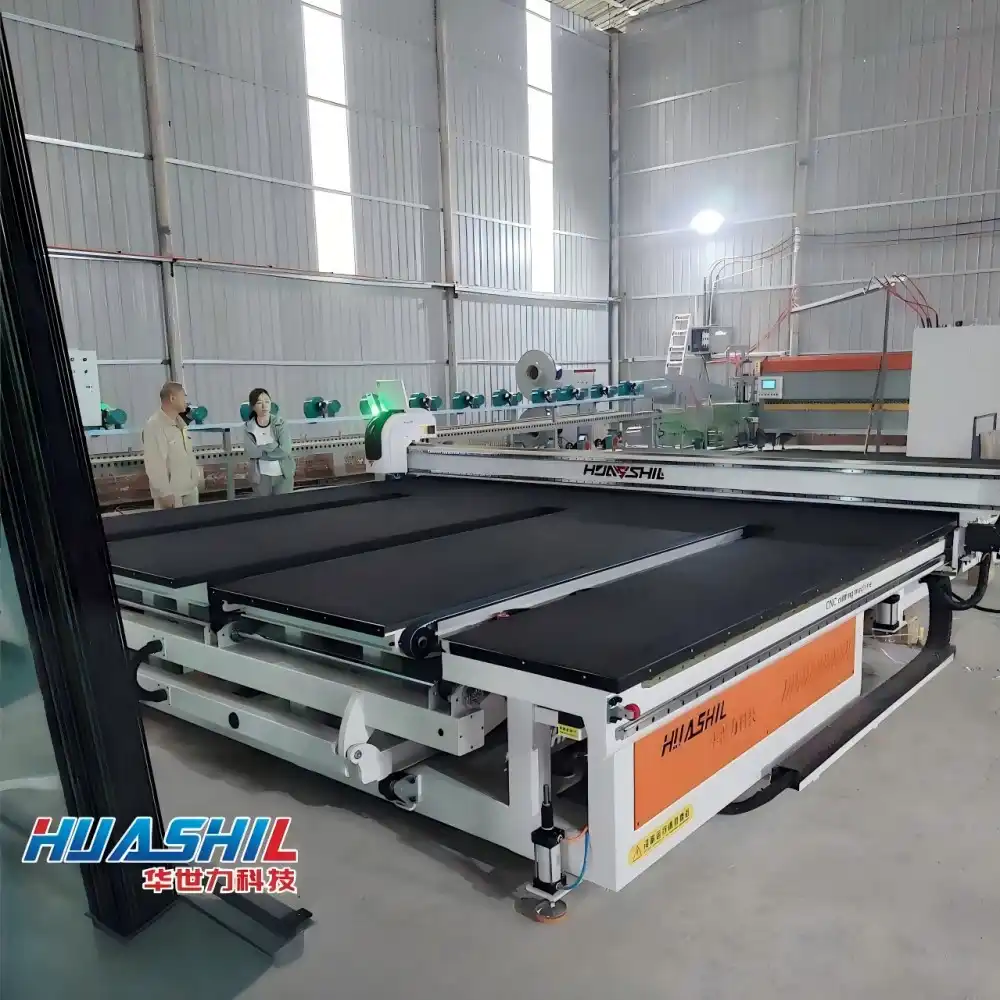
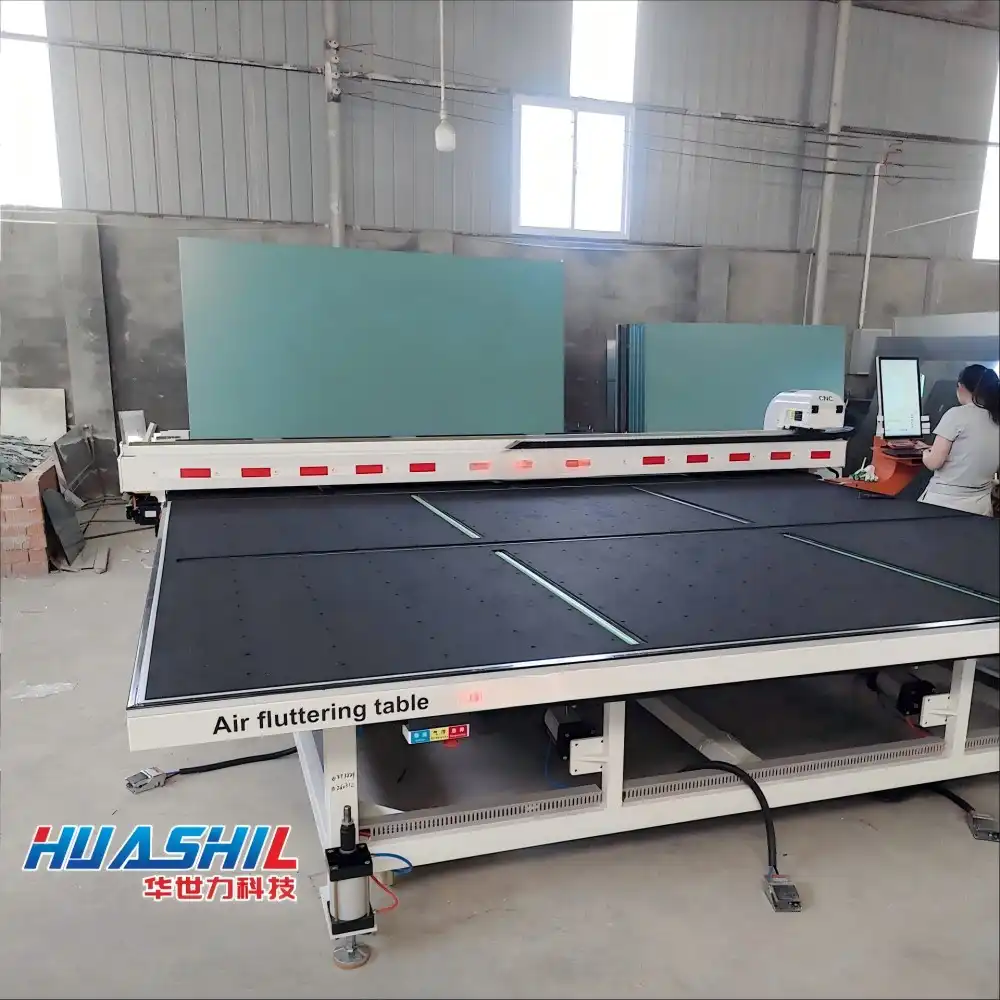
Non-rectilinear glass shapes in modern furniture defy typical production methods. Furniture glass machine CNC-controlled cutting systems repeatably cut ellipses, irregular polygons, and freeform organic forms. The HUASHIL HSL-CNC3829 model, capable of handling glass diameters up to 3600×2800mm and thicknesses from 2-19mm, utilizes Optima software to optimize material consumption and execute sophisticated cutting patterns. Despite glass sheet variances, automatic edge-finding functions position precisely, and the air flotation technology eliminates processing scratches. This allows manufacturers to produce unique architectural furniture and limited-edition designer items efficiently and affordably.
Advanced Surface Treatments and Decorative Effects
Beyond dimensional precision, contemporary glass machining platforms provide numerous surface treatments that improve aesthetics and performance. Automated edging systems provide flat polish, pencil edge, multiple-angle bevels, and ornate ogee forms for furniture applications with visible edges. CNC drilling produces accurate hardware installation, shelf support, and ventilation patterns. Advanced technologies can sandblast or acid-etch privacy glass panels with gradient opacity or ornamental patterns on the same production line. Multi-functional capabilities reduce handling time, breakage risk, and throughput by consolidating tasks that formerly needed separate equipment.
Automated Production of Assembly-Ready Components
Intelligent automation covers component preparation as well as processing phases. Modern glass production lines perform cutting, edge profiling, drilling mounting holes, cleaning, and quality checking automatically, providing completed components ready for assembly. This automation greatly decreases labor and eliminates costly rework caused by human mistakes. Advanced versions' 360-degree remote control lets operators manage material flow without touching glass surfaces, preventing contamination and breakage. These features are especially useful for high-volume furniture makers who produce standardized cabinet doors, shelving panels, and table components, where uniformity across thousands of pieces affects assembly efficiency and warranty costs
Technological Advancements and Trends in Furniture Glass Machines
Automation and CNC Integration for Enhanced Consistency
From manual to completely automated CNC-controlled glass processing, furniture production capabilities have changed. Without operator variability, computer numerical control ensures every component fits planned requirements, independent of production volume or shift changes. Automatic pressure control systems avoid structural micro-cracks by adjusting cutting force based on glass thickness and type. This technical advancement allows manufacturers to ensure quality requirements for architectural and commercial furniture installations where performance responsibility is high. Production directors estimate 40-60% consistency gains when switching from manual to automated processes, reducing material waste and customer refunds.
Energy Efficiency and Sustainable Operations
As regulations and consumer expectations for sustainability increase, capital equipment purchases increasingly consider the environment. New glass processing equipment has energy-efficient motors, enhanced hydraulic systems, and heat recovery devices that save operational costs. Air flotation devices in sophisticated cutting tables preserve surfaces better than conveyors and use less energy. Intelligent pattern arrangement in nesting software like Optima reduces raw material use by 8-15%, a considerable cost savings given glass pricing trends. These eco-friendly features meet corporate environmental goals and lower the total cost of ownership.
Smart Technologies and Predictive Maintenance
Digital connection turns furniture glass machine glass processing machines into integrated production assets with real-time operational intelligence. Sensors and IoT connectivity monitor motor temperature, hydraulic pressure, cutting tool wear, and cycle times in modern systems. Continuous data gathering allows predictive maintenance solutions to forecast faults before unexpected downtime. Instead of responding to emergency breakdowns that compromise supply obligations, engineering managers should arrange preventative interventions during production pauses. Advanced platforms allow equipment manufacturers to remotely diagnose issues and guide troubleshooting without on-site service visits, which is especially useful for international installations where technical support response times affect operational continuity.
Choosing the Right Furniture Glass Machine for Your Business Needs
Evaluating Production Requirements and Equipment Capabilities
Assessing present and expected production demands is the first step in strategic equipment selection. Manufacturers must examine common order profiles, including glass sizes, thicknesses, edge treatments, and volume patterns. Dedicated high-speed cutting lines maximize productivity for standardized component processing, whereas bespoke furniture manufacturers need versatile multi-function platforms for various demands. Maximum glass size capacity affects product availability, with 3600×2800mm sheet handling suitable for furniture applications such as cabinet doors and conference table components. Residential furniture employs 4-12mm glass, whereas commercial installations use 15-19mm panels, needing stronger cutting and edging.
Comparing Automation Levels and Investment Returns
Capital, operational complexity, and capability must be considered while investing in equipment. The main factors to consider when evaluating automation levels:
- Fully automated CNC Systems maximize throughput and consistency for enterprises handling over 200 square meters daily. These systems justify higher acquisition prices with labor savings, quality consistency, and material optimization. CE and ISO9001-certified equipment like the HSL-CNC3829 ensures safety and construction quality for dependable operation.
- Semi-Automated Equipment can handle 50-200 square meters per day at mid-range prices with manual loading and automated processing. This technology improves quality over manual methods with less capital investment and operator training.
- Manual methods are cost-effective for custom work, prototype development, and low-volume manufacturing under 50 square meters daily, but they lack consistency and labor efficiency.
- Production managers should factor in direct labor savings, material waste reduction, rework expenses, and customer quality concerns when calculating payback times. Automation pays for itself in 18–36 months, depending on production volume and personnel costs, for most firms.
Warranty, Service Support, and Supplier Capabilities
Supplier capabilities affect long-term ownership beyond equipment specs. Glass processing equipment downtime affects production plans and client obligations, making after-sales assistance essential. Procurement managers should assess supplier manufacturing experience, installed base size, and service network coverage. Regional vendors can restore faster than multinational suppliers due to spare part availability. Comprehensive operator training reduces user errors and maximizes equipment use. OEM and ODM vendors with technical resources may modify conventional platforms to individual workflow needs, which is important for enterprises considering production line extensions or bespoke configurations.
Maintenance, Safety, and Troubleshooting Best Practices
Routine Maintenance Schedules for Peak Performance
Maintaining equipment regularly prevents costly breakdowns and extends its lifespan. Cutting wheels should be visually inspected for chips or wear, air flotation systems checked for pressure, and work surfaces and sensors cleaned of glass residue daily. Weekly maintenance includes lubricating moving parts, checking hydraulic fluid levels and hoses for leaks, and testing safety interlocks. Monthly cleaning of electrical cabinets prevents dust collection that causes overheating, calibration checks ensure cutting precision remains within specifications, and error record review identifies recurring small faults before they worsen. These preventative procedures take 2-4 hours per week but decrease unplanned downtime by 60-80%, as dependability tests show.
Operator Safety and Workplace Standards
Glass production is dangerous and requires strict safety standards for workers and the furniture glass machine equipment. Operators must be trained on cut-resistant gloves, safety eyewear, and protective footwear. Workplace practices should cover safe glass handling, material storage to prevent spontaneous breakage, and glass injury response. Never circumvent equipment safety features, including emergency stop controls, pinch point guarding, and automatic shutdown when access doors open. Advanced devices like the HSL-CNC3829 let users remotely control walking to place material safely away from dangerous edges and hefty panels. Safety audits help ensure regulatory compliance and worker safety by identifying dangers before they happen.
Common Issues and Troubleshooting Approaches
Even well-maintained equipment might have operating difficulties that need immediate diagnosis to avoid output disruption. Wearing cutting wheels, positioning inaccuracies from calibration drift, and system defects that can be fixed by controller restart are common issues. Minor concerns operators may fix include cleaning sensors that generate false error signals and changing cutting pressure for different glass varieties. Complex issues, including hydraulic system failures, controller programming faults, and motor failures, require approved service. To speed up repairs, manufacturers should keep in touch with competent service providers and stock cutting wheels, sensors, and hydraulic parts.
Conclusion
Modern furniture glass machines have evolved from simple cutting tools to complex production platforms that enable commercial design innovation. CNC control, intelligent automation, and sustainable engineering give manufacturers accuracy, efficiency, and flexibility for competitive differentiation. Furniture makers may benefit from increased demand for architecturally advanced glass components by strategically selecting equipment that aligns with production requirements, automation levels, and supplier capabilities. With proper maintenance and operator training, advanced glass processing systems improve quality consistency, material utilization, and operational efficiency in high-volume standardized production and custom project fulfillment, justifying capital investment.
FAQ
Q1: How do automated furniture glass machines improve production efficiency?
Automated glass processing systems increase throughput by 50-70% compared to manual methods through continuous operation, rapid cycle times, and elimination of operator variability. CNC control executes complex cuts and edge profiles without setup changes between pieces, while automatic loading and unloading systems maintain material flow. Quality consistency reduces rework and rejection rates, directly improving effective capacity.
Q2: What advantages do CNC machines offer over manual glass cutting?
CNC-controlled equipment delivers sub-millimeter accuracy across unlimited production runs, impossible to achieve manually. Programming allows storage and recall of unlimited part designs, enabling rapid changeover between products. Automated systems process thicker glass and harder materials that challenge manual techniques, expanding product capability while reducing operator fatigue and injury risk.
Q3: Can furniture glass machine suppliers accommodate custom machining requirements?
Leading equipment manufacturers, including HUASHIL, provide extensive OEM and ODM customization supporting unique production requirements. Custom configurations address specific glass sizes, specialized tooling for proprietary edge profiles, integration with existing production lines, and workflow-optimized layouts. Engineering teams collaborate with clients during specification development, ensuring delivered systems align precisely with operational needs and facility constraints.
Partner with HUASHIL for Advanced Glass Processing Solutions
Manufacturing excellence demands reliable equipment partnerships backed by proven expertise and comprehensive support. As an established furniture glass machine manufacturer with ISO9001 certification and extensive international installation experience, HUASHIL delivers advanced processing solutions tailored to furniture, architectural, and decorative glass applications. Our HSL-CNC3829 model combines large-format capability, intelligent automation, and user-friendly operation, addressing diverse production requirements from standardized components to custom architectural projects. Contact our technical team at salescathy@sdhuashil.com to discuss your specific processing needs, request detailed specifications, or arrange equipment demonstrations. We provide comprehensive consultation covering equipment selection, production line design, operator training, and ongoing technical support, ensuring your investment delivers sustained competitive advantage through superior quality and operational efficiency.
References
1. Glass Processing Technology Institute (2023). "Automation Trends in Furniture Glass Manufacturing: A Comprehensive Industry Analysis." Journal of Advanced Manufacturing Systems, Volume 18, Issue 4, pp. 112-134.
2. Mitchell, R. & Zhang, H. (2024). "CNC Integration in Glass Fabrication: Precision, Efficiency and Design Innovation." International Journal of Production Research, Volume 62, Issue 2, pp. 445-467.
3. European Committee for Standardization (2023). "Safety Standards for Industrial Glass Processing Equipment: CE Compliance Guidelines." Brussels: CEN Technical Standards Publication.
4. Anderson, K. (2023). "Sustainable Manufacturing Practices in Glass Processing: Energy Efficiency and Material Optimization." Environmental Manufacturing Review, Volume 11, Issue 3, pp. 78-95.
5. Furniture Design and Technology Association (2024). "Market Analysis: Glass Components in Contemporary Furniture Manufacturing." Annual Industry Report, pp. 56-82.
6. Chen, L., Rodriguez, M. & Thompson, J. (2023). "Predictive Maintenance Strategies for Automated Glass Processing Systems." Reliability Engineering & System Safety, Volume 234, Article 109187.