




If you manage a glass fabrication plant or run production lines for architectural glazing, you already know how much time and money get lost in manual glass handling. An intelligent glass storage system changes that equation entirely. This guide walks you through everything you need to know before making a purchase decision — from understanding how these systems work to comparing costs, evaluating suppliers, and calculating long-term returns. Whether you're a plant manager, procurement director, or technical engineer, this resource is built for you.
Understanding Intelligent Glass Storage Systems
It's smart to know exactly what you're getting before you spend money. An automatic glass storage system is more than just a rack; it's a full tool for managing workflows that links real storage with digital control.
What Is an Intelligent Glass Storage System?
At its core, this kind of system automatically gets glass sheets, sorts them, stores them, and gets them out again. It takes the place of human judgment with identification based on sensors, accurate positioning, and delivery controlled by software. It speeds up production, cuts down on breaks, and makes it easier to see what's in stock across the whole production floor.
Core Components You Should Know
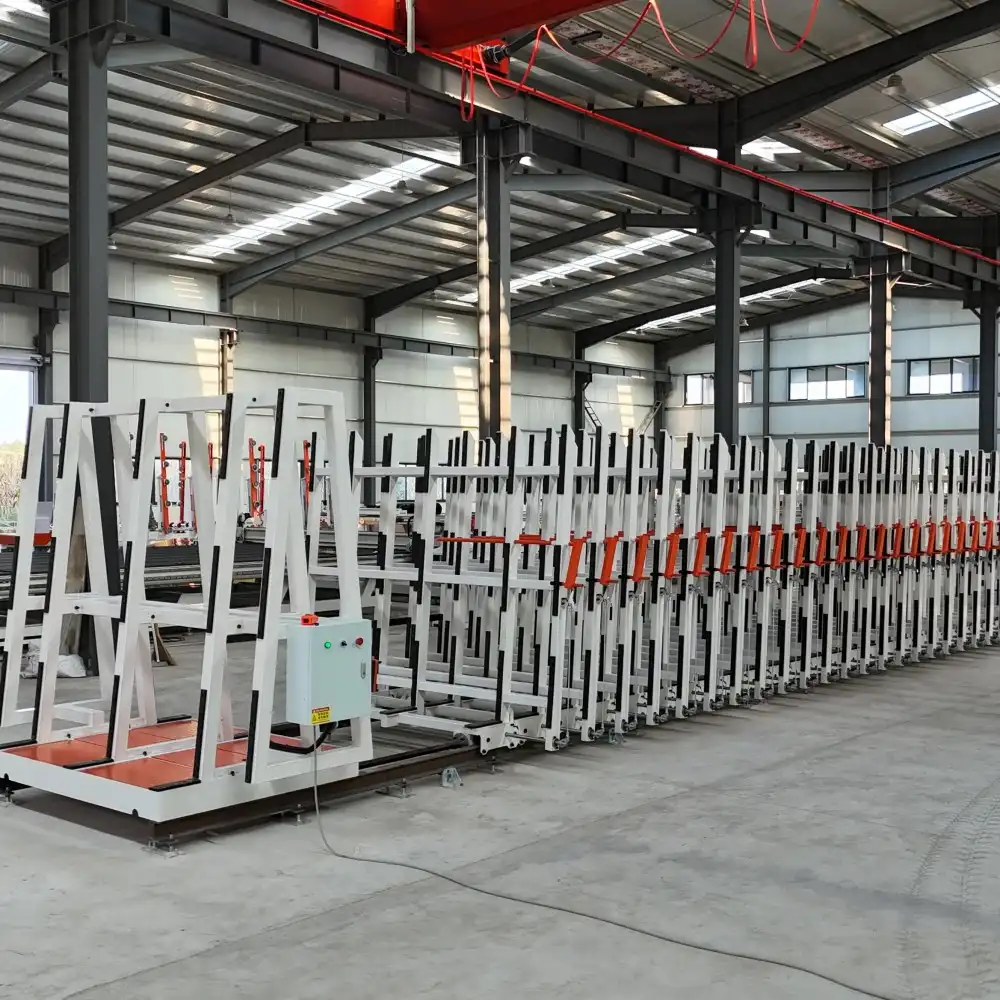
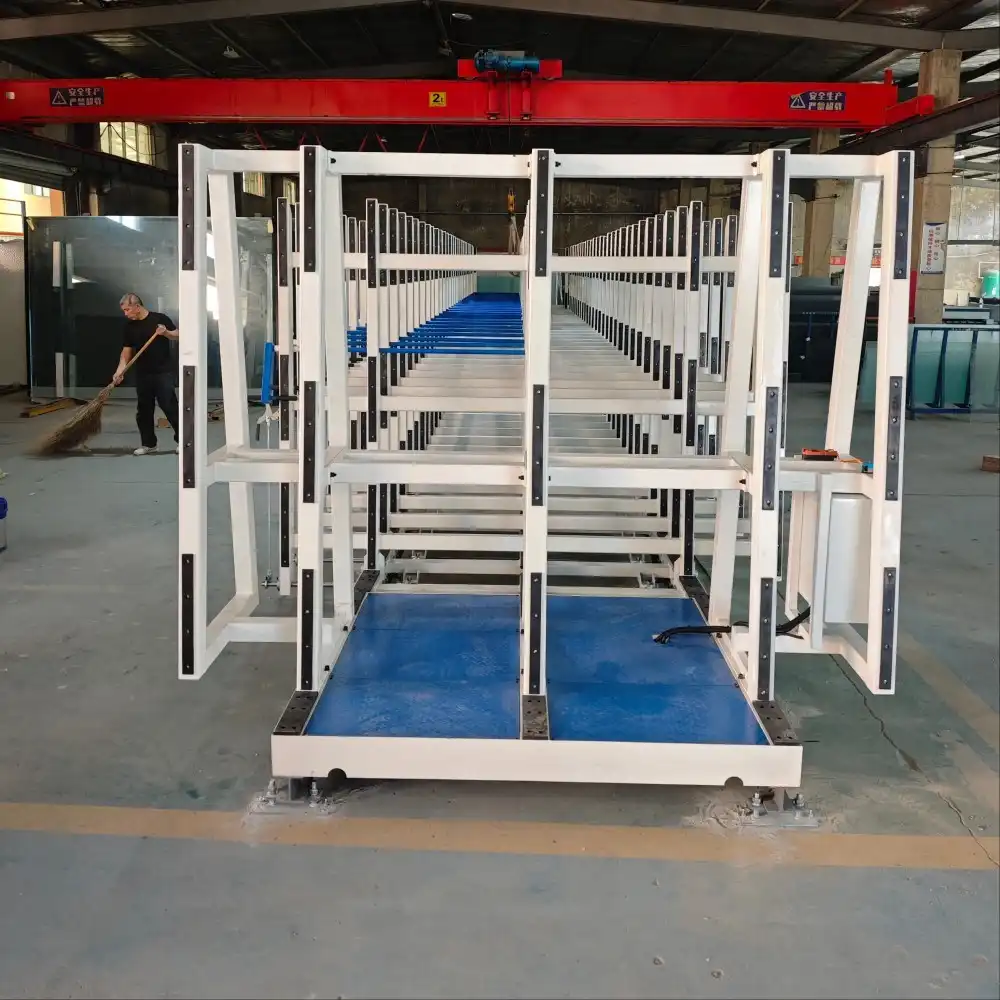
A good glass storage system will usually have automatic loading arms, RFID or barcode reading for identification, servo-driven carts for moving sheets, and a central control interface that is connected to your warehouse management system (WMS). All of these parts work together to make sure that the glass goes from the intake to the right storage slot without any mistakes.
Where These Systems Fit in Production
These systems are made for shops that make architectural glass, hollow door and window glass, and glass furniture. They help with processes like edge cutting, tempering preparation, pre-hollow storage, film sorting, and film matching. In all of these areas, accurate, classified storage has a direct effect on output and product quality.
Comparing Intelligent Glass Storage Systems with Traditional Storage Solutions
A-frame racks and hand carts are still used by many plants. That method works for small amounts of orders, but it quickly fails as the number of orders or SKUs increases.
The Real Cost of Manual Handling
Handling glass by hand has hidden costs, such as tired workers, sloppy sorting, and broken glass during transport. A survey by Glass Magazine in 2023 found that up to 8% of all glass waste in mid-size fabrication plants is caused by damage during in-plant transport. There is a real loss there that can be fixed by automated intelligent glass storage systems.
How Automation Changes the Numbers
An intelligent storage setup cuts down on the links between secret storage and human handling. Fewer touches are needed for each glass sheet because of fast inspection, precise placement, and smart delivery. Plants that have switched say that retrieving sheets takes 30–50% less time and reject rates related to damage during handling have gone down a lot.
Space and Floor Efficiency
In traditional storage, semi-finished glass is spread out over large areas of floor space that are not well organized. Automated glass storage systems make the best use of room by a large amount. By stacking sheets vertically in controlled slots and using software to manage retrieval, plants get back floor space that was lost to staging and sorting, which means that the semi-finished product site isn't used as much.
Buying Considerations: How to Choose the Right System
Choosing the right glass storage equipment is a multi-step process. Your buying decision should match your production scale, glass types, and integration requirements.
Define Your Use Case First
Start by listing the glass types you handle — tempered, laminated, insulating, or decorative — and the sheet sizes you process most often. Systems designed for architectural glass and hollow window glass need different slot configurations than those built for furniture glass. Matching the system to your actual workflow prevents costly mismatches after installation.
Key Selection Criteria
Here are the core factors to evaluate before signing a purchase agreement:
- Glass size and weight capacity: Confirm the system handles your largest and heaviest sheets without risk.
- Scalability: Check whether the system can expand as your production volume grows.
- Control system compatibility: Ensure the software integrates with your existing ERP or WMS.
- Customization options: Look for OEM/ODM support if your production line has non-standard requirements.
- After-sales support: Spare parts availability and technical response time matter more than initial price for automation equipment.
These factors directly affect your total cost of ownership. A system that fits your workflow today and scales with your business tomorrow is worth more than the lowest-priced option that requires constant workarounds.
Evaluating Supplier Credibility
Request documented case studies, not just brochures. Ask for installation references from plants of similar size and type. Check whether the supplier offers factory tours, video demonstrations, or live system walkthroughs — these are strong indicators of genuine manufacturing capability and after-sales confidence.
Costs, Installation, and Maintenance of Intelligent Glass Storage Systems
Putting money into automatic storage is a real thing, and knowing the whole financial picture will protect your budget and the process of getting board support.
What Drives the Total Cost
Frames, drives, sensors, and control panels make up the largest part of hardware. Other costs that are added to the standard are software licensing, intelligent glass storage system, and user training. Depending on how complicated the plant is, installation usually takes between two and six weeks. Plan for a longer commissioning time with on-site expert help for full production line integrations.
ROI Expectations Based on Industry Data
The 2022 Freedonia Group study on glass fabrication automation says that plants that put in automated handling got their money back in 18–36 months by saving money on labor costs and increasing yield. Cutting down on broken glass alone saves high-volume plants money every year, even if it's only by 3 to 5 percent.
Maintenance Planning
These systems need regular upkeep like lubricating the moving parts, calibrating the sensors, updating the software, and checking the loading arms every so often. A good provider gives you a written repair plan and promises that spare parts will be available when you need them. Before you buy, find out how long the average lead time is for spare parts and if the supplier keeps a regional inventory of parts.
Maximizing ROI and Long-Term Benefits
There are more cash benefits to automatic glass storage than just saving time. When plants manage their storage well, they can make more products and avoid bottlenecks along the whole line.
Efficiency Gains Tied to Automation
When glass sheets are instantly tracked, sorted, and returned, accurate inputs are used in steps further down the line, such as edge cutting, tempering, and film matching. Over time, fewer stops, fewer sheets that don't match, and faster order processing all add up. Intelligent classified storage works best in plants that make a lot of different types of glass during each shift.
Sustainability and Energy Considerations
Lift trucks or human cart systems use more energy per glass moved than automated systems. Less broken glass also means less waste of raw materials. These measures help show that US plants are meeting more and more ESG reporting standards when it comes to their sustainability performance.
Industry 4.0 Integration
Modern technology for glass storage is made to work with larger data systems in the plant. Modern systems come with features like real-time inventory data, the ability to track output, and remote tracking. This connectivity helps with planning production, checking quality, and managing capacity without having to hire more people.
Conclusion
Investing in an intelligent glass storage system is a decision that touches production efficiency, labor costs, product quality, and floor space — all at once. The shift from manual handling to automated storage is not just an equipment upgrade; it's a structural improvement to how your plant operates. The key is choosing a system built for your specific glass types, supported by a supplier with real manufacturing depth and responsive after-sales service. Take the time to evaluate options carefully, request documented references, and build a total cost model before committing.
FAQ
1. How much does an intelligent glass storage system cost?
Pricing varies widely based on system scale, glass size capacity, and integration complexity. Entry-level automated glass storage setups for smaller plants may start around $80,000–$150,000 USD. Full production line systems with WMS integration and custom configurations can range from $300,000 to over $600,000. Request a detailed quote based on your specific plant requirements.
2. Can these systems handle different glass thicknesses and sizes?
Yes. A properly configured glass storage system can be designed to accommodate multiple glass thicknesses, weights, and sheet dimensions. Customizable slot spacing, adjustable support arms, and programmable retrieval logic allow the system to manage diverse product mixes within a single installation.
3. What is the typical installation timeline?
Most single-system installations complete in two to four weeks. Full production line integrations with custom software configurations may take six to ten weeks. A reputable supplier will provide a detailed project timeline with milestones and an acceptance standard checklist before installation begins.
4. What after-sales support should I expect?
Look for suppliers who provide a minimum 12-month warranty, documented spare parts availability, remote diagnostics capability, and on-site technical support options. Confirm spare parts lead times in writing before finalizing your purchase agreement.
5. Is customization available for non-standard plant layouts?
Yes. OEM and ODM configurations are available for plants with unique floor layouts, non-standard glass dimensions, or specific integration requirements. Discuss your plant drawings and production specs with the supplier's engineering team early in the process.
Get a Custom Quote from HUASHIL — Trusted Intelligent Glass Storage System Manufacturer
It took HUASHIL years to develop automatic glass storage and handling tools for architectural glass plants, window fabrication lines, and companies that make glass furniture all over the world. As a dedicated provider of intelligent glass storage systems, we back up every system with full technical documentation, help with installation on-site, and reliable service after the sale. Contact our team right away to get a personalized consultation or proposal for a system. To find out more, email salescathy@sdhuashil.com.
References
1. Glass Magazine – "Handling and Waste Benchmarks in Glass Fabrication Plants," 2023.
2. The Freedonia Group – "Automation in Glass Processing: Market Outlook and Investment Trends," 2022.
3. Construction Specifier – "Architectural Glass Technology and Supply Chain Efficiency," 2023.
4. Manufacturing Engineering Magazine – "Smart Storage Solutions for Industrial Glass Production," 2022.
5. International Journal of Advanced Manufacturing Technology – "Automated Material Handling Systems in High-Mix Glass Production Environments," 2021.
6. Buildings Magazine – "Glass Fabrication Efficiency and the Role of Warehouse Automation," 2023.