




If you manage a glass fabrication plant or run a curtain wall production line, you already know how costly mishandled glass can be. An intelligent glass storage system automates the entire process — from rapid inspection and accurate positioning to classified storage and delivery — replacing slow, error-prone manual handling. This guide walks you through everything you need to know: what the system is, how to prepare for installation, the step-by-step process, and how to keep it running long-term. Whether you process architectural glass, hollow door and window glass, or specialty panels, this guide is built for your team.
Understanding Intelligent Glass Storage Systems
What This Technology Actually Does
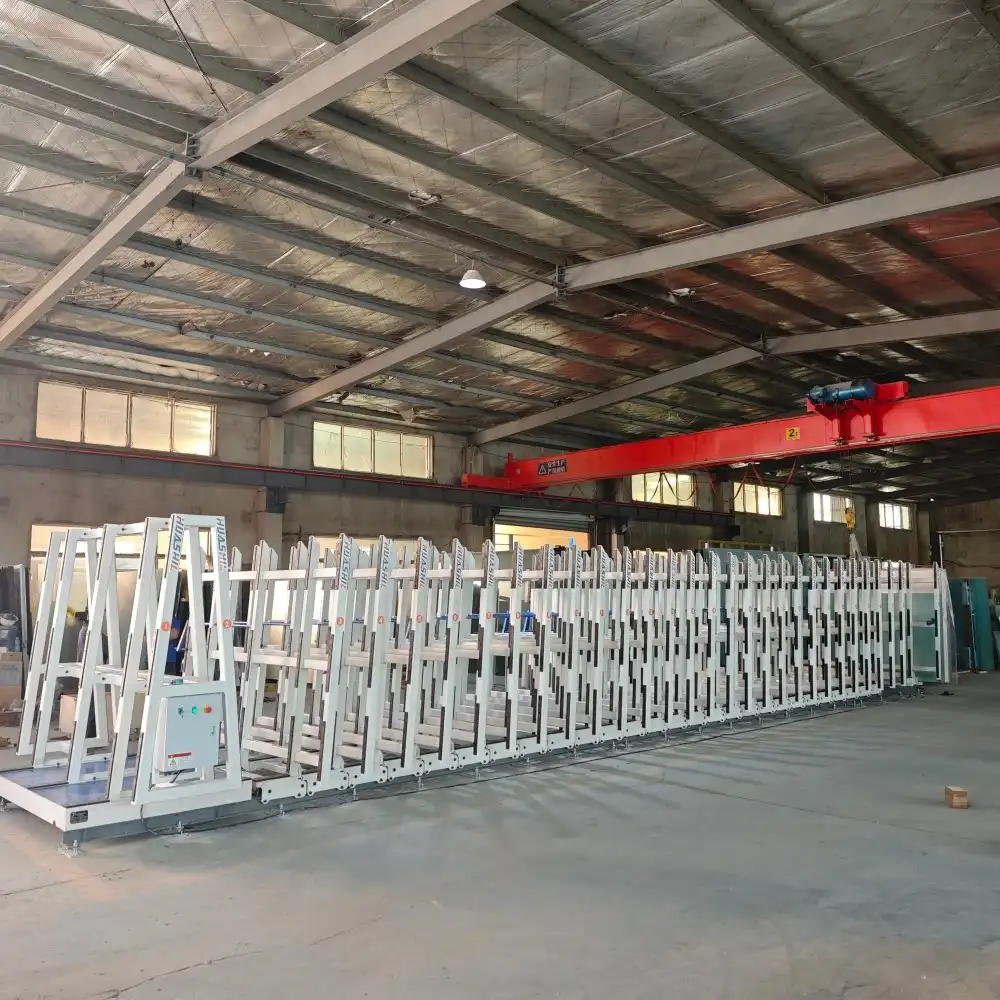
An automatic glass storage system uses sensors, robotic arms, and software to find, sort, and get glass panels without any help from a person. The system as a whole cuts down on the number of classified storage steps and links that need to be managed by hand. This directly improves the speed and quantity of production. If you have an ordinary A-frame rack, people sort by eye. But this system scans each panel, assigns it a storage space, and then retrieves it when it's needed.
Core Technologies Inside the System
The system comes with a central control interface that connects to your current production line, machine vision for quick inspection, and servo-controlled positioning for accurate slot assignment. Together, these parts make it easier for the machine to handle the glass during the steps of edge grinding, tempering preparation, pre-hollow storage, film sorting, and film matching.
Why It Differs from Conventional Storage
In the old way of storing glass, people had to sort, get, and check each piece for damage by hand. On the other hand, automated glass stacking systems arrange panels straight and tightly, which means you need less space on your shop floor to store partially finished goods. According to data from the storage industry, automated systems can free up up to 40% more floor space than racks that are set up by hand.
Preparing for Installation: Assessing Your Requirements
Evaluate Your Production Environment
Before any equipment arrives, your engineering team should audit the floor: load-bearing capacity, ceiling height, power supply voltage (typically 380V three-phase for industrial glass systems), and available network connectivity for the control interface. Plants processing large-format architectural glass panels — some exceeding 3,000 × 2,000 mm — need wider aisle clearances and reinforced floor anchoring points.
Define Your Glass Types and Throughput
The system is configurable for different glass sizes, thicknesses, and weights. You need to document your product mix: architectural glass, hollow door and window glass, tempered panels, laminated sheets, or specialty decorative glass. Throughput rate — panels per shift — determines the number of storage slots, conveyor speed settings, and robot cycle times your supplier needs to size correctly.
Budget and Customization Scope
Procurement managers should establish the total cost of ownership early for an intelligent glass storage system. This includes equipment price, installation labor, operator training, spare parts inventory, and annual maintenance contracts. For full production line projects, OEM and ODM configurations are available, allowing the system to match your plant layout rather than forcing you to rearrange your facility around a standard footprint.
Step-by-Step Installation Process
Site Preparation and Safety Assessment
Once the site audit is over, your team and the supplier's installation engineers will level the floor, mark anchor points, and make sure the electrical panels can handle the load. One thing that OSHA requires for safety reviews is to map the sensor field and set up emergency stop zones so that workers don't go into busy areas during automatic cycles.
Component Assembly and System Integration
There is a set way to install things. The main things your assembly team will do to put the parts together are these:
- Structural frame assembly: Steel uprights, horizontal rails, and glass support brackets are assembled and anchored per the engineering drawing. Each connection point is torque-checked to manufacturer specification.
- Conveyor and robot integration: Infeed conveyors, suction cup gripper arms, and transfer shuttles are connected to the central controller. Cable routing is completed with strain relief at all dynamic joints.
- Control system wiring and network setup: The PLC and HMI are wired, the plant network connection is established, and the system is configured to communicate with upstream cutting or edging lines.
Putting a robot and a moving belt together: There is a link between the central controller and the transfer shuttles, suction cup gripper arms, and infeed conveyors. Pressure reduction is built into all dynamic joints that are used to route cables.
The wires and network for the operating system must be set up. The PLC and HMI are wired, and the system is set up to talk to cutting or edging lines upstream. The plant network link has been made.
Testing, Calibration, and Go-Live
Tests are done with sample panels of all of your sizes. The vision system was set up by engineers to correctly identify panels. They then made sure that the logic for giving spots matched your production process (edge grinding → tempering → pre-hollow → film matching). Finally, they ran a full-load cycle at full output. Acceptance factors are put down, and the method is only approved if it works as well as everyone agreed it would.
Post-Installation: Maintenance and Support for Longevity
Routine Maintenance Checklist
Automatic glass shelf equipment needs to be serviced on a regular basis to stay in good shape. These things must be done to keep the system running and the glass safe:
- Weekly: Clean suction cup surfaces and inspect for wear; check sensor lenses for glass dust buildup; verify conveyor belt tension.
- Monthly: Lubricate all linear rails and drive chains per manufacturer spec; run diagnostic software to log any axis positioning drift; inspect all anchor bolts for looseness.
- Annually: Full electrical panel inspection, software version update, and replacement of wear parts (suction cups, belts, filter elements).
As directed by the manufacturer, you should grease all the linear tracks and drive chains once a month for an intelligent glass storage system. You should also run diagnostic software to record any changes in the axis positions and make sure that none of the anchor bolts are loose. Once a year, the electrical panel is fully checked, the software is updated, and worn parts like suction cups, belts, and filter elements are replaced.
Software Updates and Remote Diagnostics
). You can get software updates, look at error logs, and get help from your supplier's support team without having to send a tech to your site. This really speeds things up, which is great for U.S. companies that buy tools from other countries.
Warranty and Spare Parts Availability
It's important to know how long the warranty lasts (usually one year for parts and labor), how long it takes to get replacement parts, and how many of the most important wear parts the seller has in stock before you sign anything. An honest seller keeps extra parts on hand and can ship them within the time frames agreed upon, so production can go as smoothly as possible.
Comparing Intelligent Glass Storage Systems with Traditional Storage
Efficiency and Space Utilization
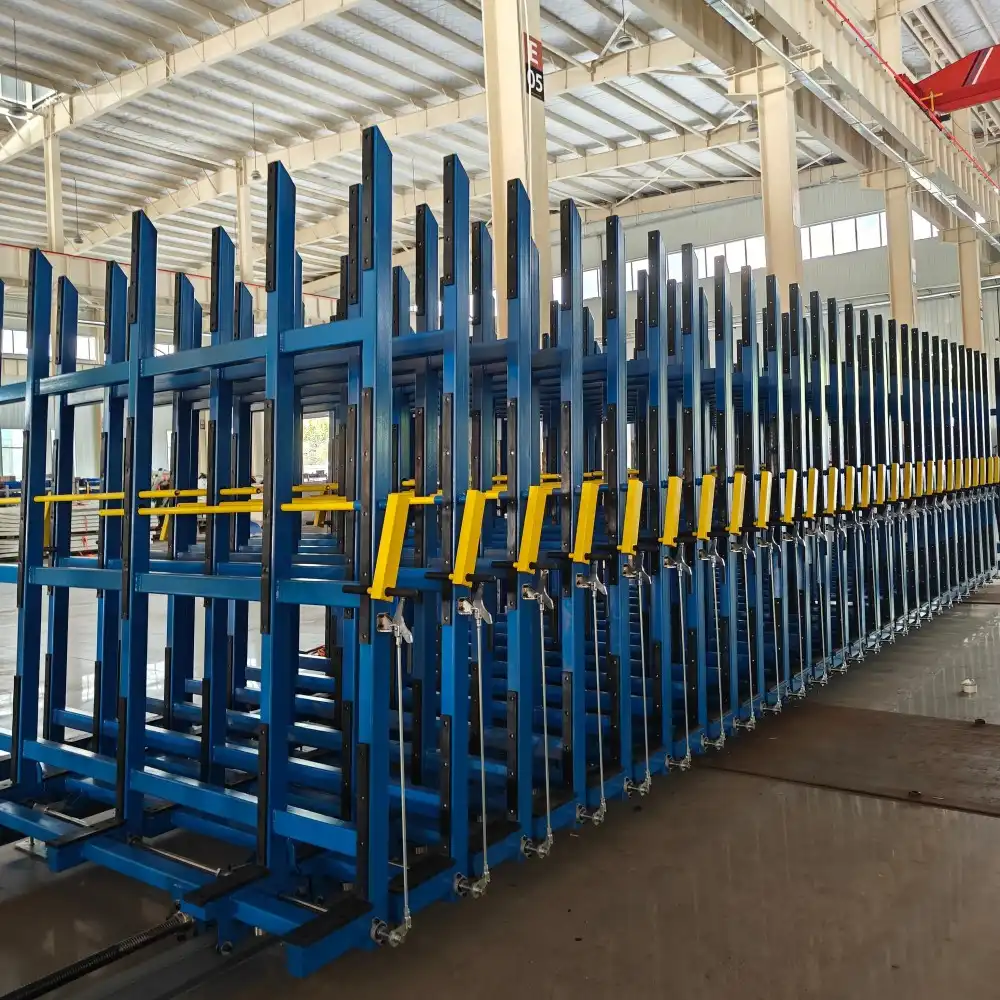
People who use A-frame and L-frame glass racks by hand have to physically find and get panels, which takes up a lot of floor space. Panels are stored in a machine in a very dense vertical arrangement. This directly cuts down on the room that semi-finished glass takes up on your production floor. People who work in plants that store glass automatically say that getting a panel now only takes 30 seconds, instead of several minutes.
Total Cost of Ownership vs. Short-Term Price
At first, traditional racks are cheap, but they need a lot of work and break glass easily when people aren't careful. It costs more to buy automated systems, but they store things more efficiently and lose less stuff when workers take breaks. Most of the time, the total cost of ownership (TCO) value of automated glass handling is greater than the initial investment gap after 5 years. Plants that work with a lot of architectural or curtain wall glass should keep this in mind.
Vendor Selection: What to Look For
When looking for companies that sell automated glass storage equipment, three things stand out as the most important. First, find out if the seller has any true examples of installation in the field you work in, like making building glass, doors and windows, or curtain walls. Second, make sure they can help you do it right. For instance, do they have commissioning experts who come to your home, or do they do tests from afar? Third, find out how easy it is to change them. If they set up the system, can they make sure it works with your exact range of glass sizes and output order? If your suppliers offer OEM/ODM support and have sent goods to U.S. industrial clients before, it will be easier for you to meet your operational and regulatory standards.
Conclusion
Setting up an intelligent glass storage system is done in a certain way. Being honest about your production needs is the first step. The end goal is to have a fully functional system that checks, sorts, and ships everything without any help from a person. Not making as many mistakes when handling, taking up less floor space, getting things back faster, and classifying them consistently are all operational gains that directly lead to higher yield and lower per-unit production costs. People who work with architectural glass, curtain wall fabricators, and furniture glass in the U.S. will save time and money over the life of the equipment because it breaks less glass.
FAQ
1. How long does installation typically take?
An average single-line automatic glass storage system can take between 7 and 14 working days to set up and get up and running on-site. This depends on the size of the company and how the system is set up. It could take three to five weeks to finish a full production line job with several units that work together.
2. Is the system compatible with my existing cutting or edging line?
There are standard ways for the computer system to talk to most glass cutting, edging, and heating tools on the market. These include Modbus, Profinet, and Ethernet/IP. Before construction, engineers from your provider will check the spot to make sure that all of the systems will work together.
3. What glass sizes and thicknesses can the system handle?
There are different sets for each brand. Systems made by HUASHIL can work with architectural glass, hollow door and window glass panels, and special forms used in edge grinding, hardening, and film matching. You are told the glass's size and weight when you place your order.
4. What happens if a sensor or mechanical component fails?
The fault codes are written on the HMI, and the zone that is having trouble is stopped. A report on how to fix the problem is sent to your support team. As suggested by the supplier, important spare parts should be kept on-site so that everyday wear and tear items can be fixed the same day.
Get a Custom Quote from HUASHIL — Trusted Intelligent Glass Storage System Manufacturer
Huashil has been making and shipping automatic glass processing systems for a long time. They send stable systems with lots of documentation to factories all over the world that make things. The smart way we store glass with an intelligent glass storage system can be changed to fit your plant's layout, the glass you use, and your production needs. If you contact our team directly, you can ask for technical specs, references for installation cases, or a project proposal. You can begin your review right away by writing salescathy@sdhuashil.com.
References
1. Glass International – "Automation Trends in Flat Glass Processing," 2022.
2. Manufacturing Engineering Magazine – "Automated Storage and Retrieval Systems in Industrial Environments," 2021.
3. Glass on Web – "Glass Handling and Storage Best Practices for Fabricators," 2023.
4. Occupational Safety and Health Administration (OSHA) – "Material Handling and Storage: Safety Guidelines," 2020.
5. Modern Materials Handling – "Total Cost of Ownership in Automated Storage Systems," 2022.
6. Buildings Magazine – "Architectural Glass Processing: From Cutting to Installation," 2023.