




To get the most out of automated glass processing systems, you need to know how current technology changes the way things can be made. With these integrated solutions, cutting, edging, loading, and finishing glass in automated glass processing systems can be done with little to no human input thanks to precision machines, smart controls, and optimised workflows. Automated glass processing systems help manufacturers get consistent quality while greatly increasing throughput by lowering the need for human labour and eliminating mistakes made by humans. Moving from traditional manual methods to automated systems is a smart investment that solves some of the biggest problems that architectural glass fabricators, curtain wall installers, furniture manufacturers, and sintered stone processors in the US market are facing.
Understanding Automatic Glass Processing Systems
Automated glass processing equipment revolutionizes manufacturing by combining mechanical engineering with advanced software control. These systems execute complex operations, including cutting, polishing, edge finishing, and material handling, through coordinated machinery that responds to digital commands rather than manual adjustments.
Core Components of Modern Automation
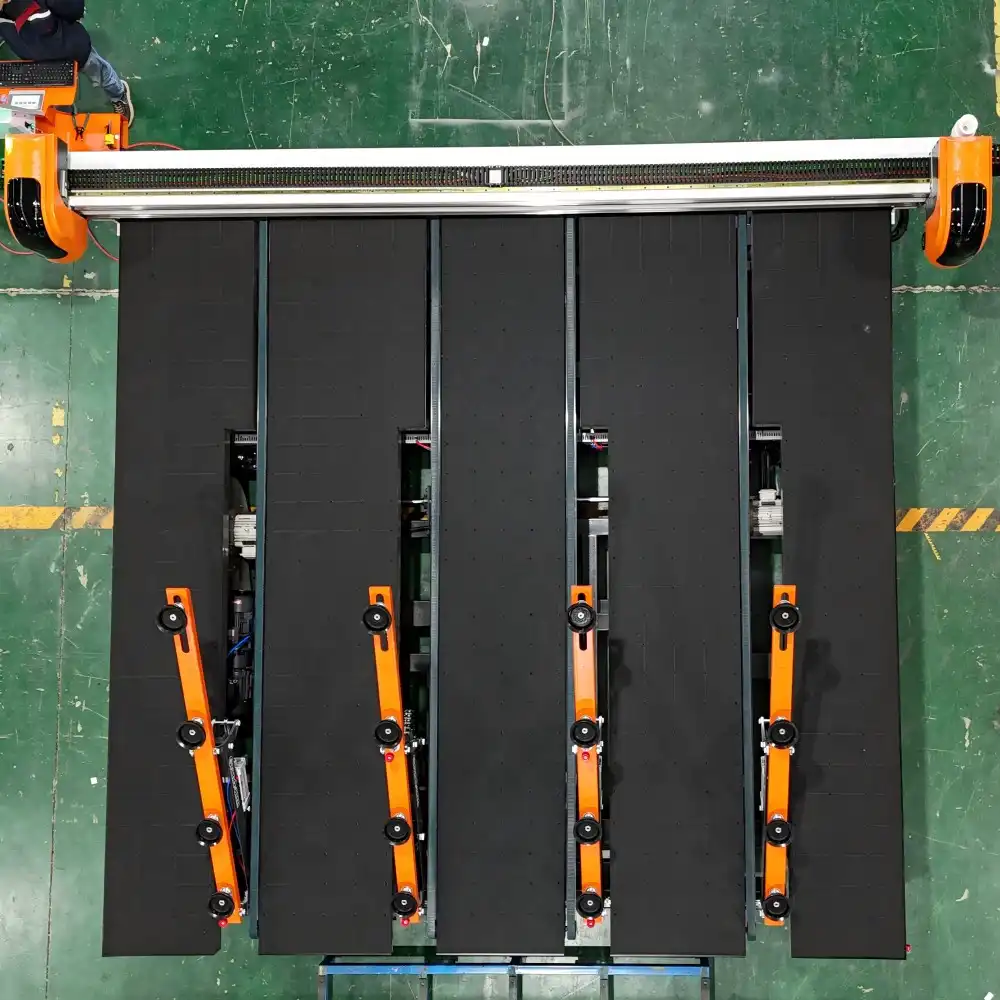
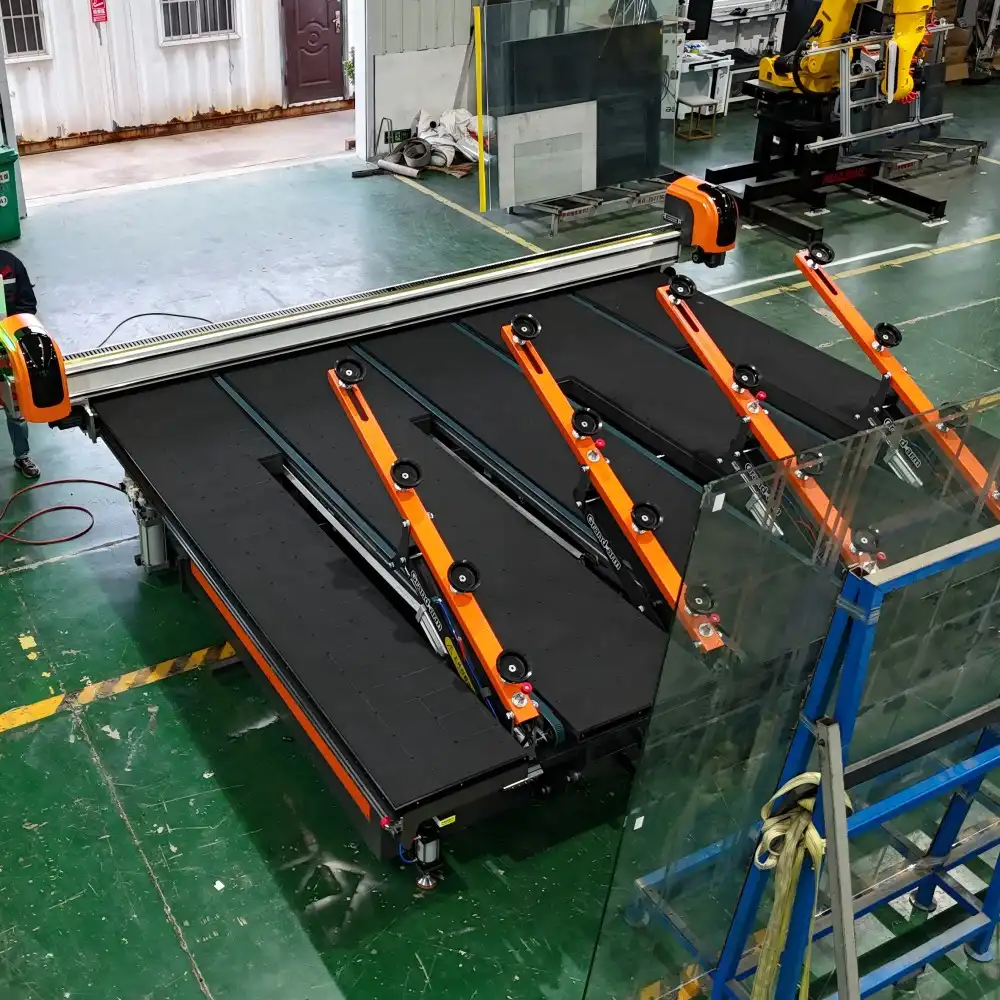
Modern automation in glassmaking uses many different types of technology that work together. CNC control systems turn design instructions into exact machine movements, and sensor arrays keep an eye on positioning, pressure, and the integrity of the material at all times. It is safe for robots to load delicate glass sheets, and materials can be moved from one stage of preparation to the next on networks of conveyor belts. The Huashil HSL-YTJ3829 is a good example of this combination because it has automatic loading, pressure control, edge finding, and an air flotation system that can handle glass sheets up to 3660x2800mm and thicknesses from 2mm to 19mm.
Precision Through Digital Control
Digital control technology gets rid of the differences that come with doing things by hand. Optimisation software, such as Optima, looks at cutting designs to find the best layouts that get the most out of each glass sheet while minimising material waste. This computer method makes sure that all of the pieces made are the same, so everyone meets the exact requirements. Synchronous belt conveyors keep materials in exact place while they're being moved, and 360-degree remote controls let workers control where equipment is placed without touching it. Automated glass processing systems that improve safety and operational flexibility.
Comparing Automated Systems with Traditional and Semi-automated Methods
The performance gap between manual, semi-automated, and fully automated glass processing becomes evident when examining productivity metrics and quality outcomes. Traditional methods rely heavily on skilled labor performing repetitive tasks, creating bottlenecks that limit throughput and introduce quality variations.
Productivity and Precision Differences
When glass is processed by hand, each worker has to measure, mark, place, and make the cuts by hand. This takes a lot of time and can lead to mistakes in measurements and uneven edge quality. Semi-automated systems make things go faster by automating cutting tasks, but they still need to be loaded, placed, and checked for quality by hand. These problems are not a problem with fully automated systems because they can run whole processing processes without stopping. When a fabrication company that works with architectural glass switches from semi-automated to fully automated lines, daily output can go up by 40 to 60 percent, and defect rates drop from 3 to 5 percent to less than 1 percent. This is better because of automated edge finding that makes sure the glass is perfectly lined up before it is cut, and pressure control systems that automatically adjust to changes in glass thickness.
Labor Cost and ROI Analysis
Labor represents a significant ongoing expense in glass manufacturing. A manual processing line typically requires 4-6 operators per shift, while an automated system like the HSL-YTJ3829 operates with 1-2 supervisory personnel monitoring multiple machines. Over a three-year period, labor cost savings alone often offset 60-70% of equipment investment. Additional ROI factors include reduced material waste through optimized cutting patterns, lower energy consumption per unit produced, and decreased rework costs from improved quality consistency. Companies upgrading from manual to automated processing typically achieve full ROI within 24-36 months while gaining competitive advantages through faster delivery times and superior product quality.
Selecting the Right Automated Glass Processing Solution for Your Business
Successful equipment selection requires aligning technology capabilities with specific production requirements, facility constraints, and business objectives. A systematic evaluation process ensures investments deliver expected performance.
Defining Production Requirements
The main factor that determines what tools to buy for automated glass processing systems is the amount of production. Single-machine options may be enough for operations that process less than 500 square meters per day, while integrated production lines are better for high-volume operations that process more than 2,000 square meters per day. Different glass thicknesses and sizes also affect the choice of equipment. For example, the HSL-YTJ3829 can handle sheets up to 3660x2800mm and thicknesses ranging from 2mm to 19mm, which is enough for most building and furniture uses. It doesn't matter what kind of product mix complexity you have; manufacturers who make a lot of different custom orders need systems that are flexible and can switch between jobs quickly. On the other hand, manufacturers who focus on standard goods want the highest throughput for each configuration.
Evaluating Supplier Credentials
The knowledge and support infrastructure of the supplier have a big impact on how reliable the equipment is. Teams in charge of buying things should check that manufacturers have the right certifications, like ISO9001 quality control standards, which show that production processes are consistent. When equipment has CE certification, it means it meets European safety standards. This gives businesses that want to sell peace of mind. After-sales support is just as important; the availability of domestic spare parts, the speed with which technical help responds, and the depth of the training program all have a direct effect on how much time the equipment is up and running. Huashil has been making things for decades and has export operations that have been running for a long time. They offer clear commercial terms for procurement discussions and thorough technical documentation for engineering reviews.
Latest Trends and Innovations in Automated Glass Processing
Technological advancement continues to accelerate in glass manufacturing automation, introducing capabilities that seemed futuristic just years ago. Staying informed about emerging trends positions procurement teams to select equipment that remains competitive throughout its operational life.
Artificial Intelligence and Machine Learning Integration
AI-powered quality control systems now identify defects invisible to human inspectors, using high-resolution cameras and machine learning algorithms trained on thousands of sample images. These systems detect micro-cracks, coating inconsistencies, and edge imperfections in real-time, triggering automatic rejection of substandard pieces before they advance to subsequent processing stages. Machine learning optimization continuously improves cutting patterns by analyzing historical data to predict optimal layouts based on current material characteristics and order requirements. This adaptive intelligence increases material utilization rates by 5-8% compared to static optimization algorithms, generating substantial cost savings across large production volumes.
Energy Efficiency and Sustainability
Environmental regulations and operational cost pressures drive demand for energy-efficient automation. Modern glass processing equipment incorporates variable-speed motors that adjust power consumption to operational requirements rather than running continuously at maximum capacity. Air flotation systems like those in the HSL-YTJ3829 reduce friction during material transport, minimizing motor loads while preventing surface damage. LED lighting, regenerative braking systems, and heat recovery mechanisms further reduce energy consumption. Manufacturers report 20-30% energy reductions when upgrading from equipment produced a decade ago, directly improving profit margins while supporting corporate sustainability commitments.
Overcoming Challenges in Implementing Automated Glass Processing Systems
Despite clear benefits, transitioning to automated glass processing presents operational and organizational challenges requiring proactive management. Successful implementations address these obstacles through structured planning and execution.
System Integration and Installation Complexity
Integrating new automated equipment with existing production infrastructure demands careful technical planning. Facility layouts may require modification to accommodate equipment footprints and material flow patterns. Electrical systems need evaluation to ensure adequate power capacity and proper grounding for sensitive control electronics. Compressed air supplies must meet pressure and volume requirements for pneumatic components. Working closely with equipment suppliers during pre-installation planning identifies these requirements early, preventing costly delays. Huashil provides comprehensive installation support, including site assessments, detailed utility specifications, and commissioning assistance that ensures smooth startups. Scheduling installations during planned production downtimes minimizes disruption to ongoing operations.
Workforce Training and Change Management
Automation changes job roles, requiring operators accustomed to automated glass processing systems manual processes to develop new skills in equipment monitoring, troubleshooting, and digital interface operation. Comprehensive training programs address these needs through classroom instruction, hands-on practice, and supervised operation periods before full handoff. Addressing workforce concerns about job security through transparent communication about role evolution rather than elimination reduces resistance to change. Many operations discover that automation creates opportunities for skilled technicians to advance into higher-value maintenance and optimization roles while reducing physically demanding manual tasks. Suppliers offering extended training support and reference documentation in clear language accelerate skill development and build operator confidence.
Achieving Expected Return on Investment
Realizing projected ROI requires attention to operational details beyond equipment installation. Optimization software like Optima delivers maximum value when operators understand pattern nesting principles and material utilization metrics. Preventive maintenance schedules must be followed consistently to avoid breakdowns that erase productivity gains. Production planning systems need adjustment to leverage faster processing speeds and shorter changeover times. Tracking performance metrics, including throughput rates, defect percentages, material waste levels, and energy consumption, provides objective evidence of automation benefits while identifying areas needing attention. Customer testimonials from curtain wall fabricators, architectural glass producers, and furniture manufacturers who achieved 18-24 month ROI periods validate realistic expectations while illustrating successful implementation approaches.
Conclusion
Automated glass processing systems can give producers a huge edge over their competitors by making their processes more efficient, consistent with quality, and flexible. Since the early stages of experimentation, the technology has grown into solutions that have been successfully used in making architectural glass, curtain walls, furniture, and sintered stone. Machines like the HSL-YTJ3829 show how modern automation uses smart control and precise engineering to meet strict safety standards and meet a wide range of production needs. To be successful, you need to carefully define your needs, choose a supplier that offers good after-sales support, plan your finances carefully, and then apply the system in a way that handles both technical and organisational problems. As improvements in Industry 4.0 connectivity, AI, and energy saving keep coming out, early adopters will be in a better position to keep growing in markets that are getting more competitive.
FAQ
1. What cost savings can automated glass processing deliver?
Automated systems typically reduce labor costs by 60-70% compared to manual operations while decreasing material waste by 5-8% through optimized cutting patterns. Energy consumption per unit produced drops 20-30% with modern equipment. Total ROI periods range from 18-36 months, depending on production volumes and labor rates. Beyond direct savings, automation enables faster delivery times that command premium pricing and reduce inventory carrying costs.
2. Can existing production lines integrate with new automated equipment?
Modern automated glass processing systems accommodate various integration scenarios. Standalone machines upgrade specific bottleneck operations while connecting to existing material handling systems. Modular designs allow phased automation expansion as production grows. Equipment suppliers provide technical assessments evaluating facility layouts, utility capacities, and workflow compatibility before installation, ensuring smooth integration with minimal disruption to ongoing operations.
3. How do I evaluate whether my operation is ready for automation?
Readiness assessment examines production volumes, product standardization levels, quality consistency requirements, and labor availability. Operations processing over 500 square meters daily with repetitive product configurations gain immediate benefits. Facilities experiencing quality inconsistencies or difficulty finding skilled manual operators also benefit significantly. Supplier consultations, including site evaluations, provide objective readiness analysis with specific recommendations tailored to individual circumstances.
Partner with HUASHIL for Advanced Automated Glass Processing Systems
HUASHIL brings decades of manufacturing expertise to the automated glass processing systems market, delivering reliable equipment trusted by architectural glass fabricators, curtain wall integrators, furniture manufacturers, automated glass processing systems, and sintered stone processors throughout the United States. Our HSL-YTJ3829 automatic glass loading and cutting system combines precision engineering with user-friendly controls, featuring CE and ISO9001 certifications that demonstrate our commitment to quality and safety. We provide comprehensive technical support, transparent commercial terms, and detailed documentation that simplifies procurement approvals. Whether you're upgrading a single processing station or planning a complete production line, our team offers personalized consultations addressing your specific requirements. Contact our experts at salescathy@sdhuashil.com to discuss how HUASHIL automated glass processing systems can transform your manufacturing efficiency and product quality. As a trusted supplier with proven OEM capabilities, we're ready to support your success.
References
1. Glass Manufacturing Industry Council. "Automation Impact on Production Efficiency in Architectural Glass Fabrication." Industrial Manufacturing Quarterly, 2023.
2. Patterson, Michael R. "Cost-Benefit Analysis of Automated Glass Processing Systems in North American Markets." Journal of Manufacturing Technology, Vol. 18, No. 3, 2022.
3. Chen, Laura, and Davidson, Robert. "Integration Strategies for Glass Processing Automation in Existing Production Facilities." Advanced Manufacturing Systems Review, 2023.
4. National Glass Association. "Industry 4.0 Technologies in Glass Manufacturing: Implementation Best Practices." Technical Report Series, 2022.
5. Williams, Sarah J. "Energy Efficiency Improvements in Modern Glass Processing Equipment." Sustainable Manufacturing Journal, Vol. 12, No. 2, 2023.
6. International Standards Organization. "Quality Management Systems in Glass Processing Automation." ISO Technical Guidelines for Manufacturing Equipment, 2022.