




Working with a professional company that makes automatic glass machinery can change how much architectural glass, curtain wall fabrication, furniture manufacturing, and sintered stone processing centers can produce. Modern automated glass processing systems use smart software like Optima, advanced CNC cutters, robotic loaders, edge polishing units, and more to make the whole process faster, from the raw material to the final product. These all-in-one solutions get rid of bottlenecks, cut down on the need for labour, and make sure that quality is always the same during high-volume production runs. Buying reliable automation equipment can help your business deal with important problems like uneven output, too much waste, and rising labour costs. It can also help your plant compete in tough market segments.
Understanding Automated Glass Processing Systems and Their Role in Your Plant
Automated glass processing systems represent a significant advancement for manufacturers seeking precision, speed, and repeatability. These all-in-one systems put together cutting technologies, polishing stations, mechanical handling equipment, and quality control sensors to make production lines that work well together. Unlike manual operations that depend heavily on operator skill and stamina, automation delivers uniform results batch after batch.
Core Components of Modern Glass Automation
Modern glassmaking depends on machines that are linked together and work together in sync. Large sheets of glass are safely placed on cutting beds by vacuum suction cups and air floating tables in automatic loading systems. Cutting heads controlled by CNC and equipped with diamond wheels or laser emitters can precisely cut complicated patterns. Edge polishing units work by following pre-set paths to get certain finishes, and robotic arms move finished pieces to tempering furnaces or stations for packing. This coordinated method cuts down on the number of manual touchpoints, which lowers the risk of contamination and worker fatigue while keeping output steady.
How Automation Enhances Production Efficiency
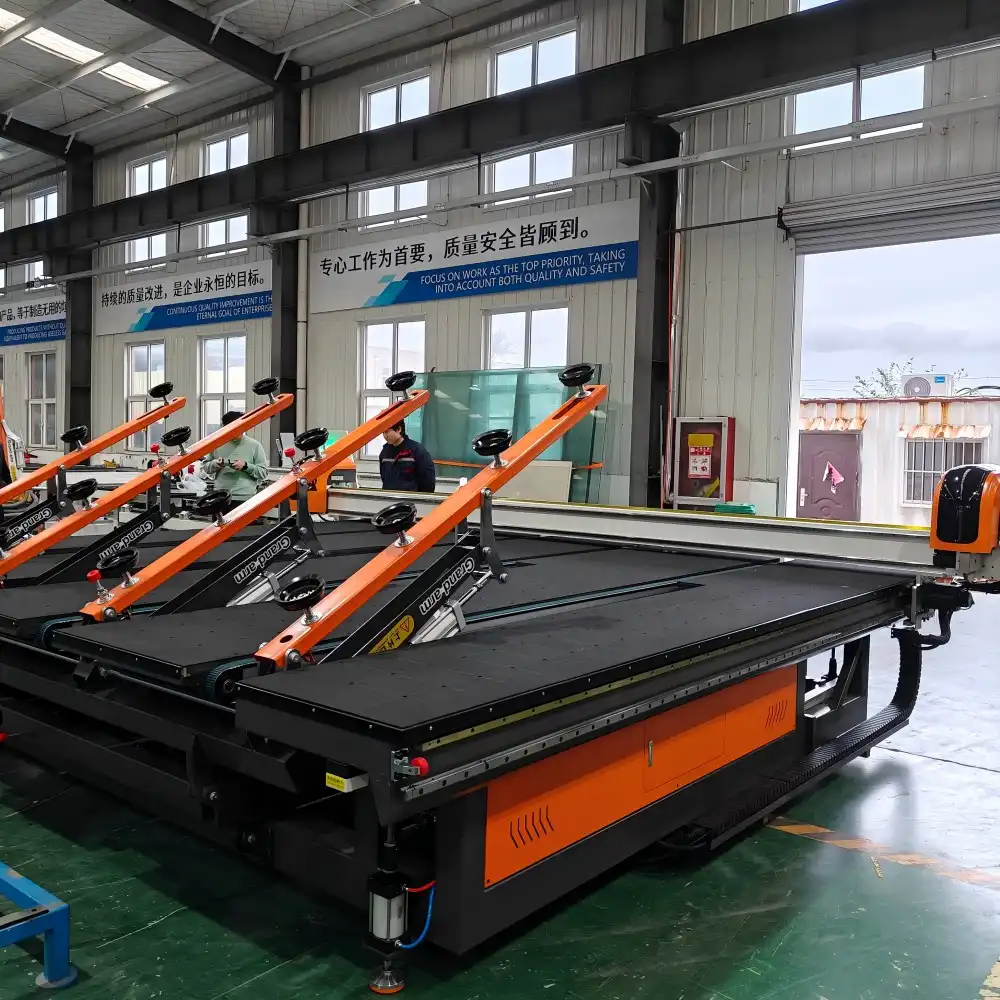
When switching from semi-automated or human processes to fully automated ones, production managers always say that things run more smoothly. Unlike human workers, who need breaks and experience variability, automated systems work nonstop during planned shifts without lowering their performance. The HSL-YTJ3829 model can cut glass sheets up to 3660mm x 2800mm, and with a width range of 2mm to 19mm, so it can meet a wide range of product requirements in a single setup. Automatic pressure control changes the cutting force based on the thickness of the glass. This keeps the structure from getting tiny cracks that weaken it. With remote control, operators can keep an eye on multiple tools at once, and automated glass processing systems, which makes the best use of workers on the production floor.
Why Choosing a Professional Automatic Glass Machinery Manufacturer Matters
Selecting the right equipment partner significantly influences long-term operational success. Established manufacturers bring decades of engineering expertise, robust R&D capabilities, and comprehensive support infrastructure that extend far beyond initial machine delivery.
Technical Innovation and Customization Capabilities
Leading makers of glass machinery are always putting money into new technology to keep up with changing needs in the business. Advanced optimisation software, such as Optima, figures out the best way to cut materials so that they produce the most material with the least amount of trash. This directly increases the profit margins. Professional manufacturers offer both OEM and ODM services. They can change the way standard equipment is set up to meet specific output needs, like unusually thick glass, sheets that aren't the standard size, or integration with older equipment. This adaptability is very important for adopting phased automation plans or improving current production lines without having to rebuild the whole facility.
Comprehensive Installation and Training Support
How well the equipment works rests a lot on how well it was installed and how skilled the operator is. Reputable makers send experienced technicians to oversee the installation of their machines, making sure that the electrical connections, software calibration, and mechanical alignment all meet the required standards. Staff in production are taught complete operational procedures, regular maintenance protocols, and how to fix problems through comprehensive training programs. This sharing of information gives plant workers the tools they need to keep up consistent performance and fix small problems on their own, which cuts down on downtime and the number of service calls.
Comparing Automated Glass Processing Systems with Traditional and Semi-Automated Methods
Understanding the tangible differences between automation levels helps decision-makers evaluate upgrade investments objectively. Real-world performance data demonstrates clear advantages that justify capital expenditure.
Productivity and Throughput Improvements
Skilled workers have to measure, mark, and score each piece of glass by hand, which takes a lot of time and limits the amount of work that can be done each day. Even though semi-automated systems are faster, they still need to be loaded and positioned by hand, which slows them down during times of high production. Through ongoing operation cycles, fully automated lines get rid of these problems. Automatic loading systems move glass sheets from storage racks to processing stations, robotic workers move pieces between stations, and conveyor systems move finished goods to areas where they are packaged without any help from a person. When plants fully automate their processes, they report throughput increases of automated glass processing systems of more than 40% compared to when they did things by hand. This directly increases their income potential without having to build bigger facilities.
Quality, Consistency, and Waste Reduction
Variability is always introduced by human workers through inaccurate measurements, inconsistent cutting pressure, and mistakes caused by fatigue. These differences cause broken pieces that need to be fixed or thrown away, which raises the cost of materials and lowers the effective production capacity. Automated systems follow programmed settings exactly over thousands of cycles, making sure that the accuracy of the dimensions stays within certain limits. Automatic pressure control and precise edge finding adapt to changes in the material and stop stress cracks and edge chips. Manufacturing data shows that switching to automation can cut waste by 15 to 25 percent, which saves a lot of money on expensive raw materials like low-iron ornamental glass and speciality coatings.
Key Technologies and Types of Automated Glass Processing Machinery Available Today
Contemporary glass automation encompasses specialized equipment addressing distinct processing requirements. Understanding these technologies enables procurement teams to specify machinery aligned with production objectives.
Automated Loading and Handling Systems
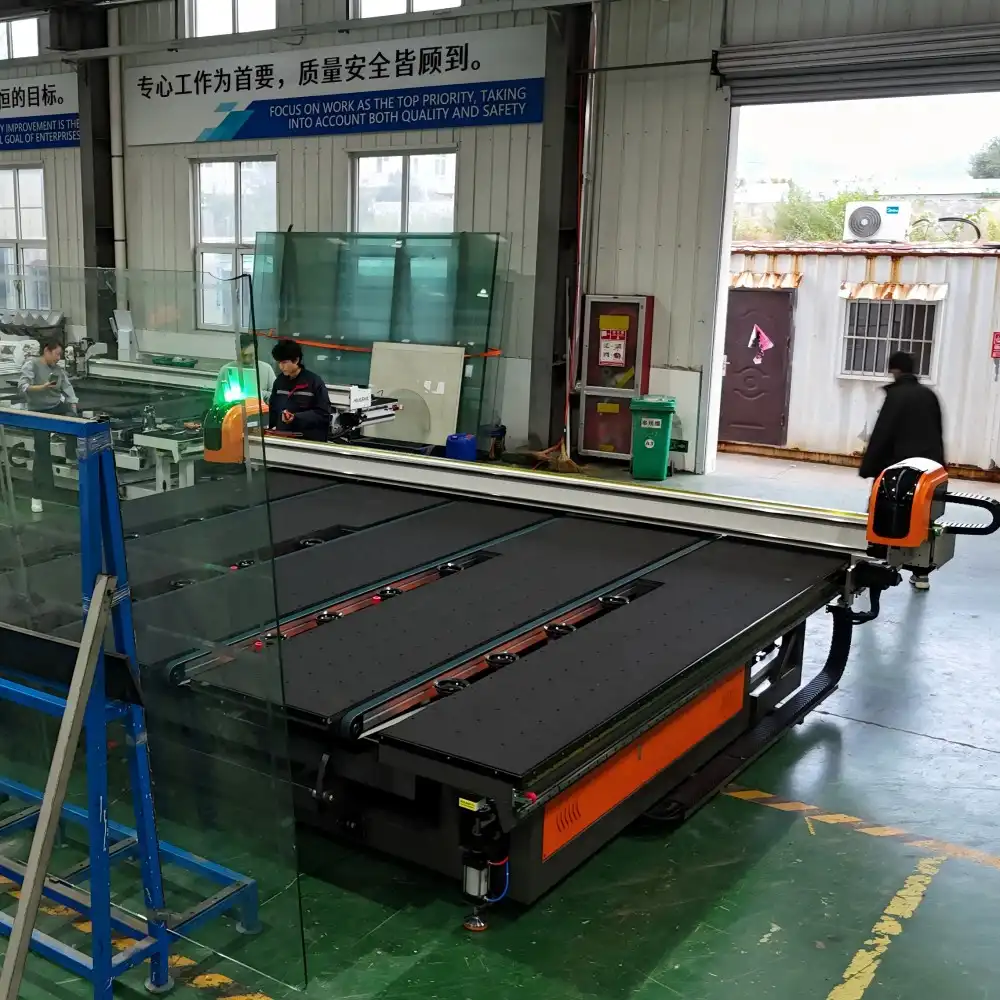
Material handling represents the foundation of efficient glass processing lines. Automated loading machines use vacuum lifting systems and air flotation tables to retrieve large glass sheets from vertical storage racks without manual assistance. The air flotation system cushions glass on a thin air layer, allowing smooth positioning with minimal friction and preventing surface scratches. Breaking tables integrated downstream from cutting stations apply controlled pressure to separate scored glass cleanly along cutting paths. Remote control operation with 360-degree mobility enables operators to manage loading sequences from safe distances, coordinating material flow across multiple processing zones within large production facilities.
Precision Cutting Technologies
Cutting accuracy directly affects downstream processing efficiency and finished product quality. CNC cutting systems execute complex patterns programmed through optimization software, calculating efficient layouts that maximize material utilization. Diamond-tipped cutting wheels score glass surfaces with consistent depth and pressure, while automatic edge-finding sensors detect material boundaries and adjust cutting paths accordingly. Equipment certified to CE and ISO9001 standards ensures compliance with international safety and quality requirements, facilitating export to regulated markets. Cutting capacity accommodating glass thickness from 2-19mm addresses diverse product portfolios, including architectural glazing, furniture panels, and automotive components within a single equipment investment.
How to Procure the Right Automated Glass Machinery for Your Plant
Strategic equipment procurement requires systematic evaluation of operational requirements, supplier capabilities, and total cost implications. Structured decision frameworks ensure investments deliver expected returns.
Defining Your Production Requirements
Successful automation projects begin with a comprehensive needs assessment. Production managers should document current output volumes, product mix characteristics, and quality specifications driving customer requirements. Glass size ranges, thickness variations, and edge finish requirements determine equipment sizing and capability specifications. Facilities processing standard architectural sizes benefit from different configurations than operations producing custom furniture components or specialized automotive glass. Growth projections influence capacity planning, as undersized equipment creates immediate bottlenecks while oversized machinery inflates capital costs without commensurate automated glass processing systems productivity benefits.
Evaluating Supplier Credentials and Support Infrastructure
Manufacturer reputation and service capabilities merit careful evaluation. Companies with extensive installation histories demonstrate proven reliability and application expertise across diverse production environments. Request customer references from facilities operating similar product portfolios, and inquire specifically about equipment uptime, service responsiveness, and parts availability. Manufacturers maintaining regional service centers and technical support staff provide faster response than distant suppliers, depending on international logistics for parts delivery. Comprehensive warranty coverage, including components, labor, and software support, protects against unexpected expenses during initial operation periods when mechanical issues most commonly surface.
Calculating Total Cost of Ownership and ROI
The price of the purchase is only one part of analysing an automation venture. Installation costs, such as upgrading the electrical infrastructure, making changes to the foundation, and integrating new tools with old ones, add up to a lot of money. Investing in training makes sure that operators get better, which maximises the use of tools after the project is finished. Maintenance costs for things like regular repair, replacement parts, and software licenses keep going up as long as the equipment is in use. To make up for these costs, automation gives measured returns through higher throughput, less labour needs, less material waste, and better product quality that cuts down on rework and customer returns. Detailed financial models that take these factors into account over the usual 7–10 year life spans of equipment show payback periods and return estimates that help with the capital approval process.
Conclusion
The architectural, furniture, and speciality glass production industries can all make better products by using automated glassmaking systems. Manufacturers of professional equipment offer complete solutions that include cutting-edge machines, smart software, and ongoing support services that boost quality, output, and profits. You should invest in capital because the benefits over manual and semi-automated methods are clear: higher output, less waste, better quality control, and more efficient use of labour. A full needs assessment, careful supplier evaluation, and a thorough cost analysis are all necessary for successful procurement. It is also important to make sure that the equipment chosen meets operational needs and business goals. When manufacturers adopt automation, they become more competitive in markets that are very picky, and they also build the operational structures that will allow their businesses to grow over time.
FAQ
1. What is the typical installation timeline for automated glass machinery?
Installation timelines vary based on equipment complexity and facility readiness. Single machines like automated cutting tables typically require 2-3 weeks, including mechanical installation, electrical connections, software configuration, and operator training. Complete production lines integrating multiple processing stations extend to 6-12 weeks, depending on customization requirements and coordination with existing equipment. Pre-installation planning significantly influences project duration—facilities completing electrical infrastructure upgrades and foundation preparations before equipment arrival accelerate commissioning compared to projects addressing these requirements during installation phases.
2. Can automated systems integrate with existing plant equipment?
Modern glass processing machinery incorporates flexible integration capabilities, accommodating phased automation strategies. Equipment manufacturers provide detailed specifications covering electrical requirements, control protocols, and physical interfaces, enabling coordination with legacy machinery. Gradual implementation approaches automate high-impact bottleneck operations initially while maintaining manual processes elsewhere, minimizing production disruption and spreading capital investments across budget cycles. Complete facility automation typically evolves through multiple project phases as operational experience and financial returns justify additional equipment purchases.
3. What environmental benefits does glass automation provide?
Automated glass processing delivers measurable sustainability advantages. Optimization software maximizes material yield, reducing raw glass consumption and disposal costs for scrap material. Precision cutting and handling minimize breakage rates, further decreasing waste generation. Energy-efficient motors and optimized motion profiles reduce electrical consumption compared to the continuous operation of legacy equipment. Some manufacturers report energy savings exceeding 20% after automation implementation, lowering utility expenses while reducing carbon footprints, supporting corporate environmental commitments.
Partner with HUASHIL for Advanced Glass Processing Solutions
HUASHIL delivers industry-leading automated glass processing systems designed specifically automated glass processing systems for architectural fabrication, curtain wall integration, furniture manufacturing, and sintered stone production facilities. Our HSL-YTJ3829 cutting system combines automatic loading, intelligent pressure control, precision edge-finding, and air flotation technology with Optima optimization software, accommodating glass sheets up to 3660×2800mm and thickness from 2-19mm. CE and ISO9001 certifications ensure compliance with international quality standards. Contact our experienced team at salescathy@sdhuashil.com to discuss customized machinery solutions matching your production requirements. As an established automated glass processing systems manufacturer, we provide comprehensive installation support, operator training, and ongoing technical assistance, protecting your investment while maximizing productivity and quality outcomes.
References
1. Glass Processing Equipment Market Analysis and Technology Trends 2024, International Glass Manufacturing Association, Industrial Equipment Research Division.
2. Automation ROI in Architectural Glass Fabrication, Journal of Manufacturing Systems and Industrial Engineering, Volume 47, 2023.
3. Comparative Study of Manual versus Automated Glass Cutting Systems, American Glass Processing Technology Institute, Technical Report Series.
4. Safety and Efficiency Improvements Through Glass Handling Automation, Occupational Safety in Manufacturing Journal, 2023 Annual Review.
5. Optimization Software Applications in Glass Fabrication Operations, International Conference on Manufacturing Automation Proceedings, 2024.
6. Total Cost of Ownership Analysis for Capital Equipment Procurement, Industrial Production Management Quarterly, Manufacturing Finance Edition.