




A reasonable price glass loading table fits your biggest glass sheet, your line speed, and your industrial layout while controlling overall ownership cost. It includes more than just the price of the purchase. The ultimate price depends on labor, breakage, downtime, spare parts, and service response. In this article, I show how loading tables operate, what requirements are important, how to compute load, and how the HUASHIL HSL-LSX5133 suits big format glass production. I developed it for plant managers, engineers, and purchasers who want the facts clearly before they ask for a price.
Introduction: Why the Right Glass Loading Table Matters to Your Production Line
A Production Decision, Not Only a Purchase
After the reasonable price glass loading table either it is quicker or slower dependent on how quickly the loading table is going. If sheets are late, the cutting table needs to wait. When individuals carry heavy glass by hand, it is more probable that they may damage themselves or shatter it. NIOSH says the maximum weight that should be lifted by hand is 51 pounds, or around 23 kilograms. This one is a lot lighter than a huge chunk of glass. A motorized loading table accomplishes most of the work and keeps things moving.
Look at Total Cost of Ownership
The charge is not a fair price. Whether anyone wants to purchase anything, I say to them, look at the energy it consumes, the time it functions, and whether it requires maintenance, more parts, training, installation, shutdown. That reasonably priced glass loading table that stops and starts a lot or doesn’t hold parts can cost you more in the long run than a machine that fits nicely. “Most plant managers care about customer service, and finance teams care about getting paid. A precise expense strategy will eliminate both of your concerns.
Who Should Read This Guide
This guide is going to assist the individuals who fabricate architectural glass, curtain walls, furniture, and shower doors in executing their tasks better. The inspections for specs are for the engineer. They will think of things to ask before they get bids, like what the warranty is, how long the lead time is, and how the items will be sent. If someone wants money, specialists in finance will calculate how much it will cost.
What Is a Glass Loading Table and How Does It Work?
Definition and Main Applications
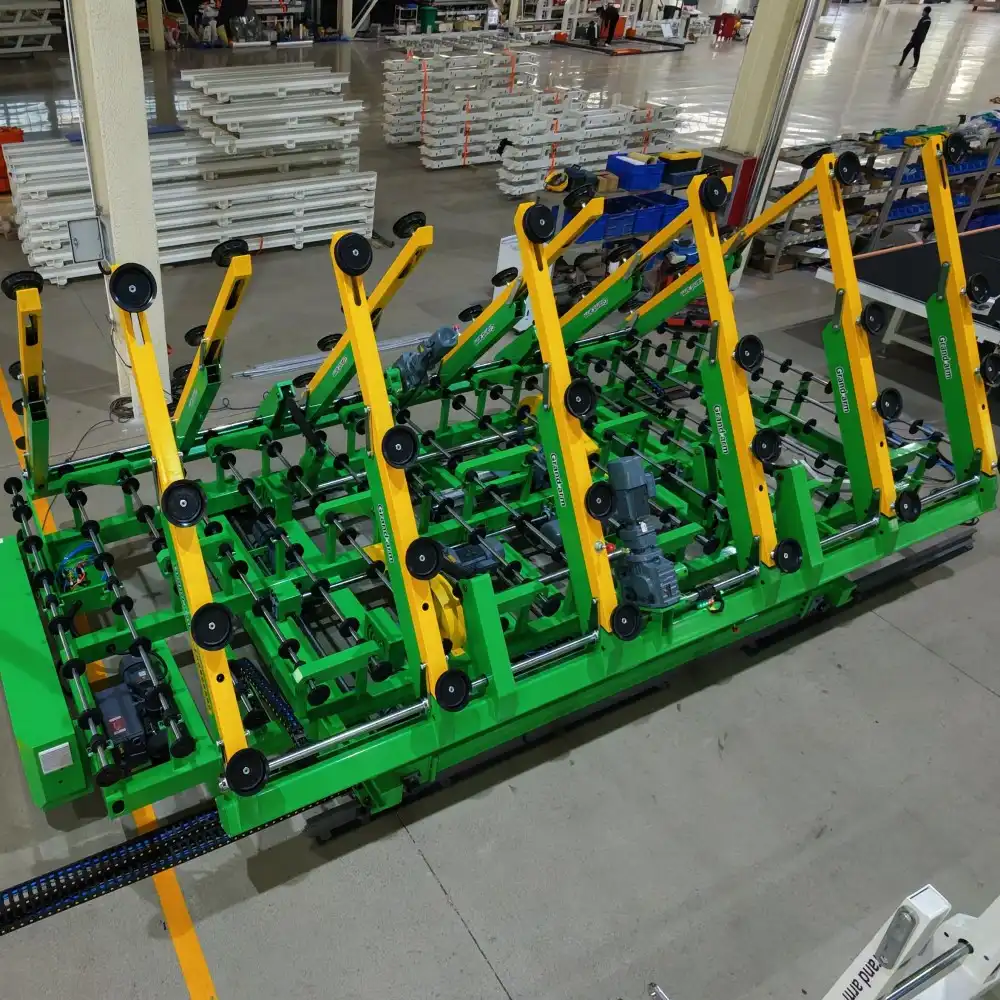
When goods are being created, a reasonably priced glass loading table is used to move, tilt, raise, put down, or take in pieces of glass. The plants push it ahead of the glass, which has to be tempered, laminated, insulated, cut, edged, ground, drilled, and processed with CNC machines. It works with architectural glass, automotive glass, smart windows, furniture glass, and ornamental glass. Glass loading tables at a reasonable price may be utilized in various ways by individuals who deal with glass and in industries, and can be found at a fair price. The proper one will be matched to your glass size, weight, thickness, daily volume, and any equipment linked to it. One kind contains an air cushion that makes it easy to adjust sheets without damaging them.
How the Machine Works
The first step is to put things away. A sheet coming from a rack or an A-frame strikes assistants, rollers, or vacuum cups. Then the reasonable price glass loading table either tips up or lifts up into a usable position. It is lined up with stops, sensors, or positioning systems before it moves on. Most items are cylinders with hydraulics or air to move them. Things are safe because they have control panels, sensors, interlocks, and emergency stops. You should ask each carrier what parts break down the most and how fast they can get you new ones. ISO 12100 is a common method to determine how harmful a machine is. It might also enable you to browse the design
Manual, Semi-Automatic, and Automatic Tables
Manual tables are good for tiny establishments that don't conduct a lot of business and have forms that change all the time. “You have the power to move things, to tilt them or to lift them on a semi-automatic table, but you still have control. Automatic techniques are good for creating lots of items repeatedly since they can hold the sheets in place, require less labor, and break fewer sheets. Even at a higher price, this is still the case. You can't only look at price returns. You can also see how much work is done each day, the cost of labor, the usage of tools, and when breaks are scheduled. If a factory is merely cutting a few sheets every shift, complete automation may not be necessary. But many facilities that cut two shifts of large-format glass do not.
Glass Loading Table Specifications, Capacity, and Dimensions
Key Specifications to Check
Before you look at the discounts, write down what you need. Check the maximum and minimum sizes of glass, thickness range, rated load, working height, lifting and tilting range, transfer speed, positioning precision, power supply, compressed-air requirements, control system, footprint, and if it can be hooked up to and operate with other machines. Check the electrical standard early for a U.S. facility. Compare each number with your own manufacturing circumstances, not with catalog averages. Before committing to a purchase, get technical drawings, cycle time statistics, safety documentation, and interface information. These tools allow engineers and procurement teams to see the same information.
How to Calculate the Required Load
Capacity should be for the heaviest sheet you use, not the most-used. Use as an estimate: glass weight ~ length * width * thickness * glass density. The density of soda-lime glass is around 2,500 kg per cubic meter. For example, a sheet of 5,100 mm by 3,300 mm at 10 mm thick has a volume of around 0.168 cubic meters, or about 421 kilograms. Allowances for laminated glass, uneven loading, repetitive cycling, and a safety factor are included. Also remember to distinguish the rated maximum capacity from the continuous operational capacity and the occasional peak load. Get the provider to confirm your figures.
Dimensions and Factory Layout
Tables might look great on paper but not so great on your floor. Check out space surrounding storage racks, forklift travel pathways, crane access, operator zones, safety clearances, maintenance areas. Check loading orientation, operating and lifting heights, door and container access, foundation requirements, and floor conditions. A layout sketch or 3D installation design might show up issues before shipping. Early layout reviews for foreign orders minimize installation delays, unforeseen civil work, and additional modification expenses. Incoterms 2020 also assists both parties in deciding who is responsible for transport, risk, and delivery locations.
Custom Specifications
The standard model is valid as long as your glass diameters, thickness, and line connections are within its range. Customization is rational for non-standard dimensions, larger loads, odd transfer heights, customized controls, or integration with an existing cutting, edge, or insulating line. Provide designs, glass data, cycle time objectives, plant restrictions, electrical standards, and interface requirements. Keep the design as minimal as the task permits. Before you place an order, ask the provider to specify the features and choices included, the acceptance criteria, lead time, testing methods, installation assistance, warranty terms, and availability of replacement parts.
HSL-LSX5133 Glass Loading, Cutting, and Breaking Line from HUASHIL
Three Tables in One Line
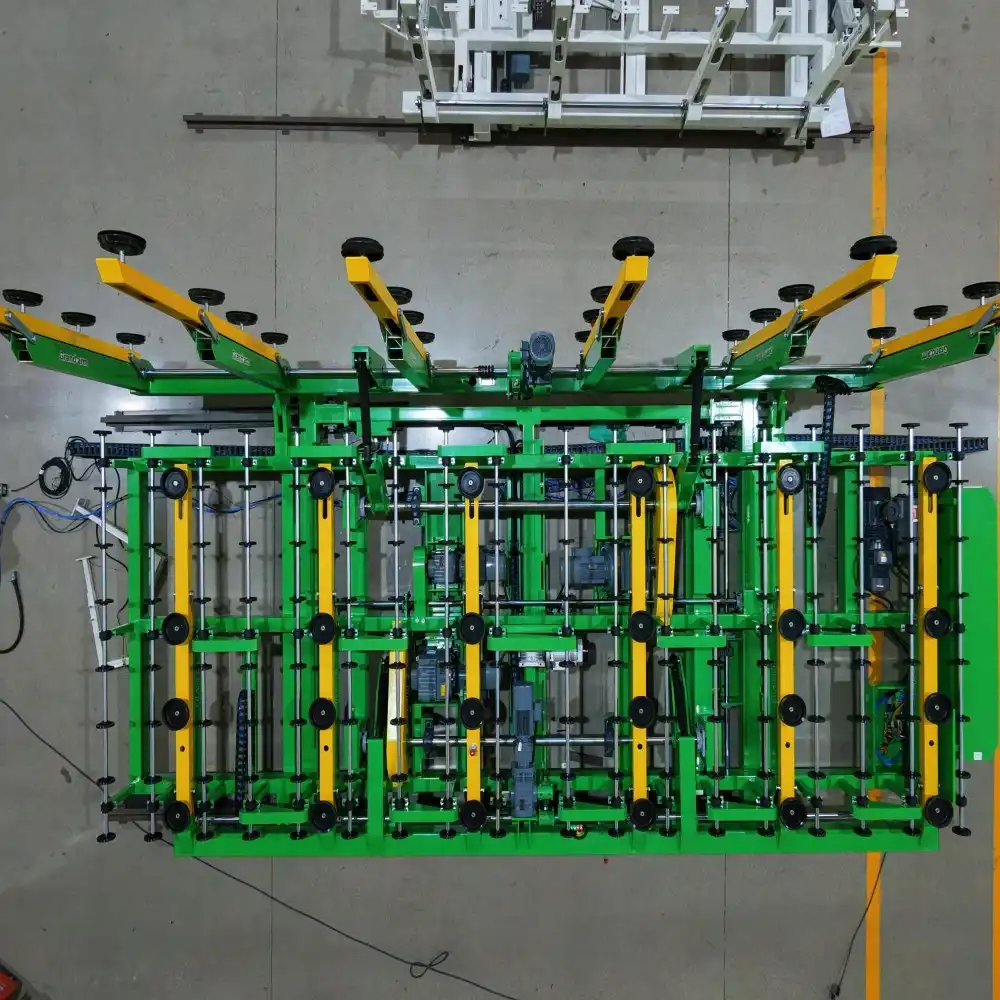
HSL-LSX5133 Model consists of a reasonable price glass loading table , a cutting table, and a breaking table. The glass is moved from loading to cutting and then to breaking so the operator has fewer sheets to handle between phases. Optima optimization software helps with cutting layout and assists planners in arranging cuts to utilize each sheet efficiently. Its maximum glass size is 5,100 × 3,300 mm, suitable for large-format architectural glass and other big-sheet work. If you have giant sizes in your purchase, then this size range is worth a closer look.
Rail Setup, Stations, and Arms
The line may be an above-ground or underground rail, so you can pick the arrangement that works best for your floor and foundation design. It has 2 + 2 stations, and the station configuration may be changed to fit your operation. Each side has five big weapons. This setup allows planners to compare handling configurations to their sheet sizes and cycle-time targets. I suggest sharing your layout plan with us so that our engineers may check rail location, station settings, and connecting points before manufacturing.
Why It Fits a Reasonable Price Glass Loading Table Search
The buyer looking for a reasonably priced glass loading table usually wants to avoid paying for things he won’t utilize. The HSL-LSX5133 is best suited for factories dealing with huge sheets that need loading, cutting, and breaking as one system. HUASHIL, located in Shandong, China, develops and produces automation equipment and sells to clients across the globe. We also discuss OEM and ODM demands with integrators and fabricators. Send us your glass sizes, daily volume and layout and we will create you a detailed estimate with warranty and replacement parts information.
Conclusion
The reasonable price glass loading table is the key to how quickly you can cut glass, how safe it is, how much work you have to perform, and how much it costs. Compare price to fit and how well it functions over the long term. You may have manual, semi-automatic, and automated systems to fit varied quantities. Payback relies on production, staffing, and downtime. The buyer must check glass size, thickness, load, height, utilities, and layout. Capacity must be calculated based on the heaviest sheet using the glass density and a safety buffer. Customization is useful if the line does not fit typical ranges, provided acceptance criteria and support conditions are explicit. The HSL-LSX5133 demonstrates how loading, cutting and breaking tables, Optima software, configurable rails, 2+2 stations and a maximum size of 5,100 x 3,300 mm may be verified with actual production demands.
FAQ
1. What is the maximum glass size of the HSL-LSX5133?
The maximum glass size is 5,100 × 3,300 mm. Check your largest sheet against this figure first.
2. Which tables does the HSL-LSX5133 include?
It includes a loading table, a cutting table, and a breaking table, arranged as one processing line.
3. Which software does the line use?
It uses Optima optimization software to support cutting layout planning.
4. Can the rail and station layout be adjusted?
Yes. The rail can be above ground or underground, and the 2+2 stations can be set to suit your workflow. Each side has five grand arms.
5. What should I send to request a quotation?
Send your glass sizes, thickness range, daily volume, factory layout, and electrical standard. These details help our team recommend a suitable configuration.
Get a Reasonable Price Glass Loading Table Quote from HUASHIL
HUASHIL offers the HSL-LSX5133 as a practical choice for large-format glass processing. As a reasonable price glass loading table supplier, we review your drawings, glass sizes, and layout, then recommend a suitable configuration. Email salescathy@sdhuashil.com to request a proposal with specifications, warranty terms, and delivery details.
References
1. Occupational Safety and Health Administration, Materials Handling and Storage, 2002
2. National Institute for Occupational Safety and Health, Ergonomic Guidelines for Manual Material Handling, 2007
3. ASTM International, ASTM C1036 Standard Specification for Flat Glass, 2021
4. International Organization for Standardization, ISO 12100 Safety of Machinery: General Principles for Design, 2010
5. International Chamber of Commerce, Incoterms 2020 Rules, 2019
6. International Organization for Standardization, ISO 13849-1 Safety of Machinery: Safety-Related Parts of Control Systems, 2023
