




Glass waste is one of the most persistent cost drivers in stained glass manufacturing. When production teams rely on worn-out equipment or imprecise manual techniques, scrap rates climb fast. The right cutting machine for stained glass windows changes that equation entirely. By combining intelligent optimization software, automated pressure control, and precise scoring systems, modern glass cutting equipment helps fabrication plants recover material yield, reduce disposal costs, and deliver consistently clean cuts across every production shift.
Understanding the Problem of Glass Waste in Stained Glass Window Production
Scrap glass is not just a material loss — it is a compounding operational expense. Industry data suggests that inefficient cutting processes can waste 15% to 25% of raw glass per production run in facilities still using manual or semi-automated equipment. When you multiply that across high-volume architectural or decorative glass workflows, the financial impact becomes significant.
Common Root Causes of Excessive Glass Scrap
Three recurring issues drive most waste in glass fabrication:
- Inconsistent scoring depth: When the scoring wheel applies uneven pressure, the break line becomes unpredictable, leading to irregular edges and rejected panels.
- Outdated layout planning: Without digital nesting software, operators manually arrange cut patterns, leaving large unused sections of glass that cannot be repurposed.
- Operator variability: Fatigue and skill gaps between shift workers cause inconsistent cut quality, particularly on large-format sheets.
These root causes are manageable. The path forward lies in selecting equipment that eliminates manual variables through automation and intelligent layout planning.
Key Features and Types of Cutting Machines for Stained Glass Windows
Not every glass cutting machine suits every production environment. Manual scoring tools work for small studios, but architectural glass plants, curtain wall integrators, and furniture cutting machine for stained glass windows manufacturers operating at scale need a different level of precision and throughput.
How Machine Type Affects Waste Output
Manual cutters offer basic control but rely entirely on operator skill. Electric bridge-type cutting machines improve repeatability through motorized movement and consistent wheel pressure. Laser-guided systems add optical alignment, reducing setup errors on complex shapes. For industrial production, fully automated CNC cutting machines for stained-glass window tables represent the highest standard, integrating nesting optimization, automatic loading, and breaking functions into a single workflow.
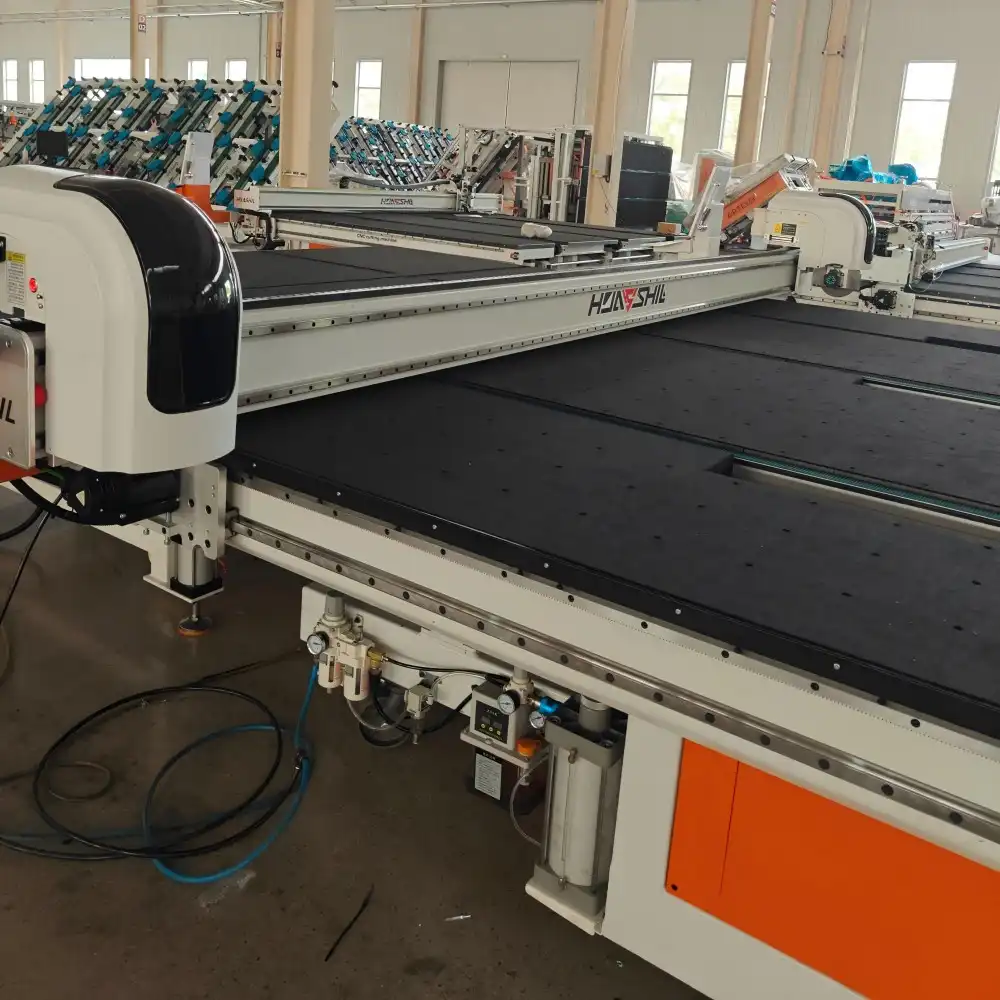
The HUASHIL HSL-YTJ3829 is a fully automated CNC glass cutting machine engineered for high-volume production environments. Here are the core technical specifications of this model:
- Model: HSL-YTJ3829
- Max glass size: 3,660 × 2,800 mm
- Cutting thickness range: 2–19 mm
- Machine footprint: 5,780 × 4,925 mm
- Optimization software: Optima
- Certifications: CE, ISO 9001
- Glass conveying system: Synchronous belts
The HSL-YTJ3829 integrates automatic loading, automatic pressure control, automatic edge finding, an air flotation system, a built-in breaking table, and 360-degree remote control operation. These features work together to remove the human variables that most commonly cause material waste.
The Optima nesting software deserves particular attention. It calculates the most material-efficient cut layout before a single score line is made, maximizing usable yield from every glass sheet. In practice, this directly reduces the percentage of scrap generated per production cycle.
These technical advantages can effectively resolve the most common waste-generation problems that plant managers and engineering teams encounter in daily operations.
Best Practices and Techniques to Maximize Efficiency and Minimize Waste
Equipment quality sets the ceiling, but operational discipline determines how close a facility gets to that ceiling. Even with advanced machinery, poor technique or deferred maintenance can reintroduce the waste problems the equipment was designed to prevent.
Scoring Technique and Pressure Calibration
Consistent scoring depth is the single most controllable variable in cut quality. The HSL-YTJ3829's automatic pressure control system maintains calibrated scoring force across the full glass surface, compensating for any thickness variation within the 2–19 mm range. For production teams previously managing this manually, the improvement in edge quality and break consistency is immediately measurable.
Scheduled Maintenance Protocols
A well-maintained machine is a precise machine. Wheel replacement intervals, lubrication schedules for linear guides, and air flotation system checks should follow the manufacturer's recommended service calendar. Deferred maintenance does not save time — it transfers the cost into rejected glass and unplanned downtime. Building a simple weekly checklist into production workflows prevents the gradual performance drift that leads to increased scrap rates over time.
How to Choose the Right Cutting Machine for Your Production Needs
Selecting a cutting machine for stained glass windows is a capital investment decision, and it warrants a structured evaluation process. Production volume, sheet size, glass thickness range, available floor space, and software integration capability all factor into the right choice.
Matching Equipment Specifications to Production Scale
A smaller semi-automatic table is suitable for decorative glass industries with smaller sizes and sheets less than 1,500 mm. Architectural glass fabrication facilities and curtain wall integrators working with large-format panels – including 3,660 × 2,800 mm sheets – require a machine with the structural integrity, software intelligence, and depth of automation of the HSL-YTJ3829.
The structuring of the budget is also crucial. Determine the total cost of ownership (TCO) not only on the purchase price but also on installation, training of the operator, availability of replacement parts, and after-sales support response time. A less expensive machine that needs frequent human intervention or components that are difficult to get generally ends up costing more over a five-year period than a well-supported automated system.
CE and ISO 9001 certifications provide objective confirmation of manufacturing quality standards for procurement managers assessing overseas vendors, minimizing procurement risk on high-value equipment acquisitions.
Procurement and Post-Purchase Considerations for B2B Buyers
Large format automated cutting equipment is not a catalog transaction. For plant management and engineering teams looking at upgrading to a complete production line, the procurement process normally takes 3-6 months, which includes reviewing technical documents, confirming site measurements, and getting financial permission.
Reliable vendors make precise equipment drawings, installation requirement documents, and acceptance testing criteria normal aspects of the sales process. Customization and OEM capabilities are important for integrators developing project-specific manufacturing lines. HUASHIL offers OEM & ODM configurations; we can provide customized machines according to your workflow specifications.
Of the two, the most direct variables protecting production continuity after the purchase are the availability of replacement parts and the technical assistance response time. HUASHIL offers organized after-sales service so that customers in the United States and other overseas markets may get technical help and replacement parts without long lead times.
For foreign orders of equipment, payment conditions are usually a deposit and balance or a Letter of Credit (L/C), both of which HUASHIL may offer for approved customers.
Conclusion
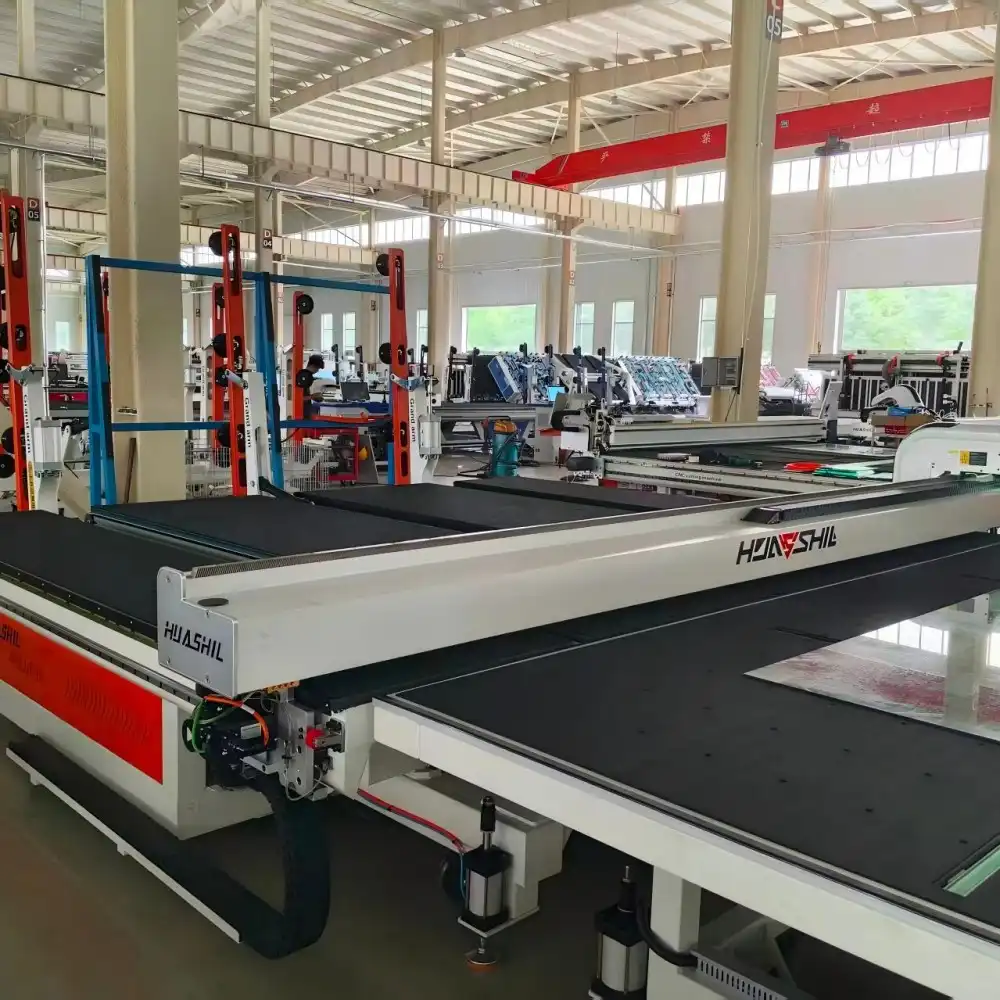
Glass waste in stained cutting machines for stained glass windows and architectural glass production is a solvable problem. The combination of intelligent nesting software, automated pressure management, and precision cutting mechanics gives fabrication plants the tools to recover material yield and reduce operational costs in a measurable way. The HUASHIL HSL-YTJ3829 was designed with exactly these challenges in mind — a machine that handles large-format sheets up to 3,660 × 2,800 mm, accommodates glass from 2 to 19 mm thick, and runs on Optima optimization software to minimize scrap from the first cut. For production teams ready to upgrade their cutting workflow, this is the right starting point.
FAQ
1. How does automated pressure control reduce glass waste?
Automated pressure control maintains a consistent scoring force across the entire glass surface, regardless of minor thickness variations. This eliminates the inconsistent break lines caused by manual pressure application, which is one of the leading causes of rejected panels and material loss.
2. What glass thickness range does the HSL-YTJ3829 handle?
The HSL-YTJ3829 cuts glass from 2 mm to 19 mm thick, covering the full range used in architectural glazing, decorative panels, shower enclosures, and furniture glass applications.
3. What does Optima nesting software do?
Optima calculates the most material-efficient arrangement of cut patterns on each glass sheet before production begins. This reduces unused remnant area and directly lowers the scrap rate per production cycle.
4. Is this machine suitable for a U.S.-based fabrication plant?
Yes. The HSL-YTJ3829 carries CE and ISO 9001 certifications, and HUASHIL supports international buyers with technical documentation, installation guidance, and after-sales support. Payment via Letter of Credit is available for international orders.
5. How long does procurement typically take for a full production line?
Full production line projects generally involve a 3–6 month cycle covering technical review, site confirmation, customization if required, and financial approval. Single-machine orders have a shorter timeline.
Start Cutting Smarter — Contact HUASHIL Today
HUASHIL is a trusted cutting machine for stained glass windows with years of verified export experience and a global client base. The HSL-YTJ3829 combines CE-certified engineering, Optima software precision, and full automation in one reliable platform. Whether you are sourcing a single machine or planning a complete production line upgrade, our team provides detailed technical documentation, competitive commercial proposals, and structured after-sales support. Reach out directly at salescathy@sdhuashil.com to request specifications and a tailored quote.
References
1. Glass International. (2022). Optimizing Glass Cutting Yield in Architectural Fabrication Plants. Glass International Magazine.
2. National Glass Association. (2021). Glass Fabrication Technology and Waste Reduction Standards. NGA Industry Report.
3. Construction Specifier. (2020). Curtain Wall Glazing: Material Efficiency and Fabrication Automation. The Construction Specifier Journal.
4. Pilkington Technical Advisory Services. (2019). Glass Processing Best Practices: Scoring, Breaking, and Edge Quality. Pilkington Group Publication.
5. Freedonia Group. (2023). World Flat Glass Market: Demand Forecasts and Processing Technology Trends. Freedonia Industry Research.
6. Glass on Web / Vitro Architectural Glass. (2021). CNC Glass Cutting Systems: Functionality, Nesting Software, and Productivity Benchmarks. Industry Technical Review.