




Whether you’re interested in acquiring a semi automatic glass loading machine for your manufacturing plant, knowing what a semi-automated glass loading machine accomplishes — and whether it’s the correct match for your operation — is a good place to begin. This guide takes you through everything from essential functionality and technical requirements to evaluating suppliers and what to anticipate after the transaction. Run a window fabrication factory, a curtain wall business, or a decorative glass studio? The information below is aimed at helping you make a confident, informed buying choice.
Understanding Semi-Automatic Glass Loading Machines
What It Is and How It Works
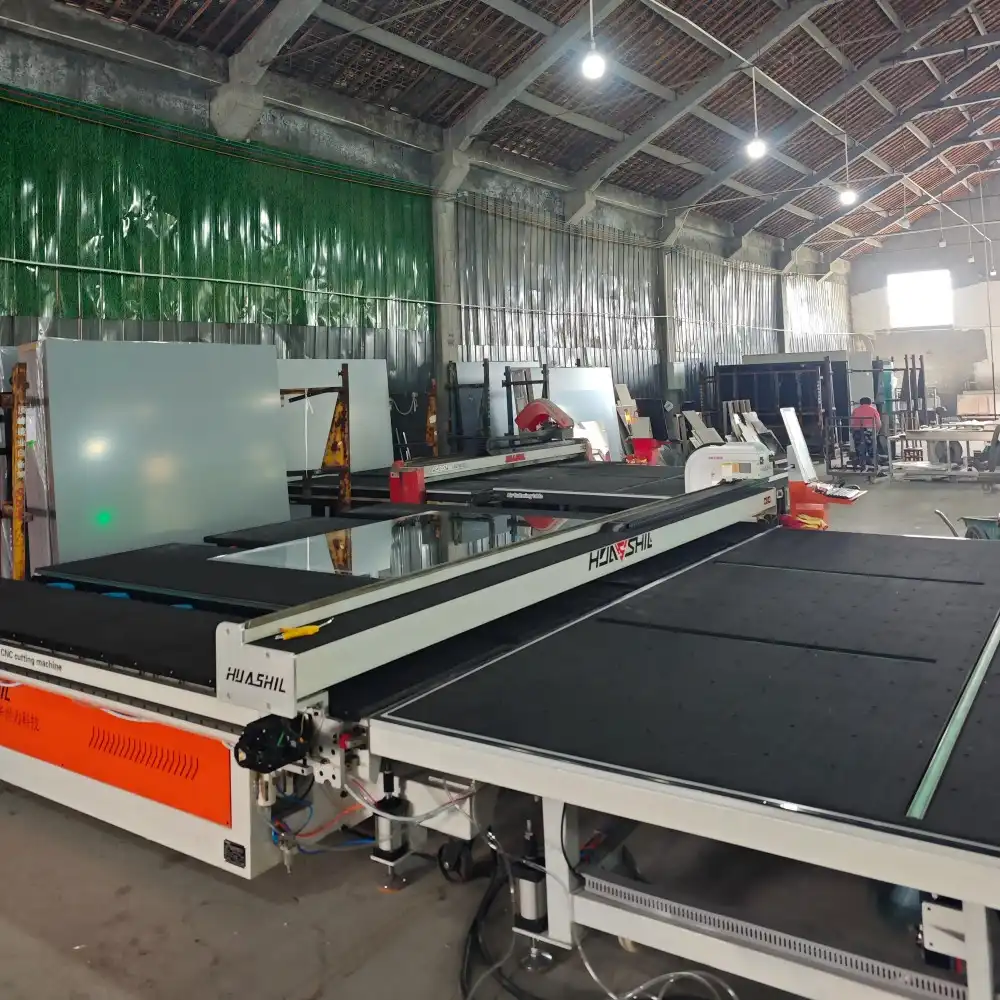
A semi-automated glass loading machine is a mechanical handling device that aids workers in transporting glass sheets to a cutting or processing line. It has both motorized movement and manual placement, which gives workers direct control over the operation and reduces the physical strain of lifting huge glass panels. A flippable cutting table enables easy manual loading from a horizontal position, making the machine user-friendly for operators of various skill levels.
Key Technical Specifications
The Huashil semi-automated glass loader has a maximum glass size of 3,660 × 2,440 mm and is appropriate for architectural, furniture, and curtain wall applications. It incorporates three ejector rods to assist in positioning and lifting glass sheets neatly during the loading operation. The device is designed to run as standard without a remote control, but hand-pushed walking wheels may be attached for floor movement. It also has Optima optimization software to enhance cutting layout efficiency and cut down on material waste.
Industrial Benefits Worth Knowing
Compared to totally manual loading, this form of equipment decreases operator fatigue, reduces the danger of breakage of glass during handling, and allows a more constant production flow. Helping workers with the mechanical loading tackles a hazard which accounts for a large proportion of occurrences at glass production sites, the Glass and Glazing Federation says. This design eliminates the need for a breaking table; therefore, the machine remains small and economical for facilities with downstream processing equipment.
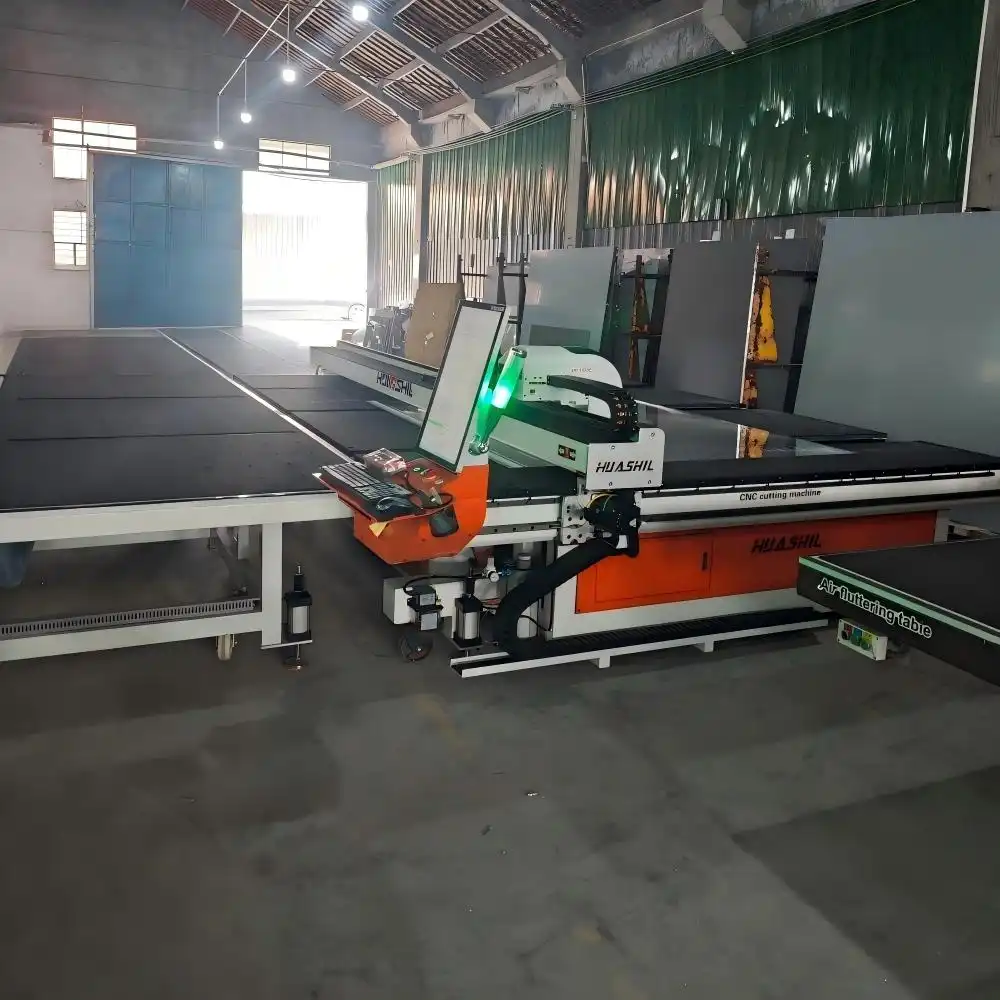
Comparing Semi-Automatic vs. Fully Automatic and Manual Glass Loading
Semi Automatic vs. Manual Loading
Glass loading is manual and is totally reliant on the strength, coordination, and availability of the operator. Manual handling is a genuine quality and safety issue for large-format glass, particularly for panels around the 3,660 by 2,440 mm size. A semi-automatic loader reduces the toughest physical duties, but the operator still controls precision of placement. This balance is particularly useful in small-to-medium production runs when complete automation is over-engineered and under-utilized.
Semi Automatic vs. Fully Automatic Systems
Fully automated loaders employ arrays of sensors, programmable logic controllers, and robotic arms to handle glass without any user input. They provide tremendous throughput for large-scale, continuous manufacturing – but they are far more costly to purchase and need more complicated maintenance. A partly automated system is a better return on investment than a fully automatic system for facilities with mixed glass sizes or smaller daily volumes when the expense of full automation can not be justified by output alone.
When Robotic Loaders Make Sense
Robotic glass loading systems are perfect for large volume automobile glass lines or smart mirror manufacturing where accurate, repeatable alignment is essential. For architectural glass shops and furniture glass makers – the key consumers of equipment like these – a semi-automatic approach often delivers the proper combination of control, cost, and flexibility without over-complicating the production floor.
How to Choose the Right Semi-Automatic Glass Loading Machine
Define Your Production Requirements First
Know your real production demands when comparing models. What is the biggest glass sheet size you usually semi automatic glass loading machine? How many shifts a day do you do? Does the machine need to feed into an existing cutting table, or is it a standalone unit? Huashil model: The reversed cutting table and 3 ejector rods make this model suitable for establishments that produce big architectural or decorative glass with modest daily volumes. Before you begin, make sure that the machine’s physical footprint will fit into your floor design.
Evaluate Supplier Credibility
Machine standards are important, but so is supplier dependability. Judge the glass loading machine supplier’s years of production, export background, technical documents provided, and after-sales support facilities. Shandong Huashil Automation Technology Co., Ltd. has many years of expertise in manufacturing and export, with solid quality records and regular participation in industry trade events. Request installation case references and verify spare parts lead times before finalizing a purchase agreement.
Balance Budget Against Total Cost of Ownership
The price of buying is just half of the story. Include installation expenses, operator training, periodic maintenance, and availability of replacement parts over a 3-5 year horizon. A partly automatic machine is often less difficult in terms of maintenance than a fully automated line. Here are the key cost aspects to consider:
- Initial purchase price – Don’t just buy the cheapest. Compare a number of vendors. Check what you are getting (software, training, documentation).
- Installation & Commissioning — Verify if there is remote instruction or help on site.
- Availability of spare parts – If you require mobility, ask especially about ejector rod components and walking wheel assemblies.
- Software license: The Optima optimization software in this model eliminates raw glass waste, saving on material costs in the long run.
These elements together provide a more precise view of the real cost of running the equipment throughout its useful life, which is the figure that is of most importance to finance and operations teams.
Installation, Operation, and Maintenance Best Practices
Installation Requirements
A level floor is a guarantee of steady operation of the glass loading machine. Check that the floor can sustain the whole weight of the machine plus the maximum load of glass before installing. Sufficient space around the semi automatic glass loading machine — notably on the loading and ejection sides — provides a safe environment for operators to maneuver. There is no break-out table in this model;l therefore, the integration with downstream equipment must be designed before the commissioning starts.
Standard Operating Procedures
Operators will be trained on a hands-on basis before production glass is run. The flipped cutting table design allows for loading at a comfortable angle, but glass handling practices, including the use of gloves, checking of panels before loading, and adherence to the weight restriction, must be regularly followed. Before each shift, examine the three ejector rods for alignment and freedom of movement.
Preventive Maintenance Schedule
When a machine is properly maintained, it will operate more consistently and is less likely to have unscheduled downtime. Some important maintenance activities are:
- Weekly: Check ejector rods for wear or misalignment. Lubricate moving joints.
- Monthly: Check walking wheel assembly if fitted. Check software calibration to current glass inventory
- Quarterly: Complete mechanical check includes fasteners, electrical connections, and table hinge points.
Adhering to this timetable safeguards the investment and preserves the throughput constancy that justifies the equipment acquisition in the first place.
Purchasing and After-Sales Support: How to Secure the Best Deals and Services
Where to Source Reliably
By purchasing directly from a manufacturer or their authorized dealer, you avoid getting the equipment with non-standard parts or insufficient paperwork. If you are looking for a semi-automated glass loading machine for sale in the U.S. market, look for a provider that can offer technical manuals in English, has clear warranty conditions, and has demonstrated export expertise. Good first research is B2B platforms and trade show participation, but the best method to check things out is to talk directly to factories.
Customization and Flexible Options
The standard design of this Huashil loader may be customized to meet the unique requirements of the facility. For example, the hand-pushed walking wheels are an add-on that allows the machine to be repositioned inside the facility, beneficial for firms that share equipment among workstations. We can also provide OEM and ODM designs for integrators developing whole glass processing lines that need equipment to fit unique layouts.
Warranty and After-Sales Commitment
At the very least, you anticipate a basic guarantee on the mechanical and electrical parts. Outside of warranty, check the turnaround time for technical support questions from the supplier and the capacity to send replacement parts overseas within a certain amount of time. Huashil’s after-sales service, including technical consultation and parts supply, directly solves one of the most prevalent issues U.S. purchasers have when obtaining industrial equipment from international suppliers.
Conclusion
Selecting the correct glass loader is essential to production safety, output uniformity, and long-term operational cost. Asemi automatic glass loading machine provides a reasonable middle ground between entirely manual handling and pricey full automation — making it a solid alternative for architectural glass plants, curtain wall fabricators, and furniture glass makers working at modest volumes. By examining the machine’s specifications, the supplier’s history, and the overall cost of ownership, you can make the best, lasting selection. The HUASHIL model is a strong contender for your next equipment investment with HUASHIL’s Optima software integration, large-format glass capacity, and adjustable setup.
FAQ
1. How much floor space does this machine require?
The machine accommodates glass up to 3,660 × 2,440 mm, so the installation area should be larger than the maximum glass size to allow safe operator access on all sides. A minimum clearance of 1 meter on each working side is a practical baseline, though your facility layout and workflow should determine the final footprint.
2. What safety features does it include?
The machine includes sensors and emergency stop functions to protect both the glass and the operator during loading. Operators should also follow standard personal protective equipment protocols — safety gloves and protective footwear are standard in glass fabrication environments.
3. Can it handle different glass thicknesses?
Yes. The ejector rod system and table design support a range of glass thicknesses typically found in architectural, furniture, and decorative glass production. Confirm your specific thickness requirements with the supplier during the technical review phase.
4. Is the Optima software difficult to learn?
Optima is a well-regarded glass optimization program used across the industry. Most operators become comfortable with basic layout functions within a short training period. Huashil can provide guidance on software setup and usage as part of the commissioning process.
5. What payment terms are available?
Standard terms for international orders include a deposit with the balance paid before shipment, or Letter of Credit arrangements for larger orders. Confirm terms directly with the Huashil sales team based on your order specifics.
Get a Quote from HUASHIL — Your Trusted Semi-Automatic Glass Loading Machine Manufacturer
HUASHIL builds glass handling equipment designed for real production environments. As an experienced semi automatic glass loading machine manufacturer, we offer verified technical specifications, reliable after-sales support, and flexible configurations to match your facility's needs. Contact us today to request a detailed product datasheet or a competitive quote tailored to your production requirements. Reach our team directly at salescathy@sdhuashil.com to learn more.
References
1. Glass and Glazing Federation. Health and Safety in the Glass Industry. 2022.
2. Freedonia Group. World Glass Machinery: Industry Study with Forecasts. 2023.
3. International Labour Organization. Safety and Health in the Use of Machinery. 2013.
4. Glass International Magazine. Automation Trends in Flat Glass Processing. 2022.
5. Manufacturing Engineering Society. Capital Equipment Procurement and Total Cost of Ownership Analysis. 2021.
6. Construction Specifier. Glass Fabrication Technology in Curtain Wall Construction. 2020.