




If you run a glass fabrication facility or manufacturing line, you understand the quality of your equipment directly impacts your output quality. The appropriate float glass cutting machine does not just cut glass; it manages yield rates, labor costs, cycle times, and ultimately your profit margin. This handbook is designed for plant managers, procurement teams, and technical engineers looking for clear and honest information to make a wise purchase choice for high-volume glass processing.
What Is a Float Glass Cutting Machine?
Float Glass Cutting Machine: A float glass cutting machine is a specialized piece of equipment used to score and separate flat glass sheets with dimensional precision. How does it work? A cutting wheel, topped with tungsten carbide or diamond, is run over the glass surface, generating a regulated score line which dictates flawless breaking. In large volume production situations such as architectural glass fabrication, curtain wall manufacture and glass furniture production, this process has to be rapid, consistent and reproducible.
Modern automated systems are much more than a single cutting head. They combine loading, cutting, and breaking activities into one seamless process, cutting down manual handling and lowering cycle times dramatically.
Understanding Float Glass Cutting Systems for High-Volume Production
Automatic vs. Semi-Automatic vs. Manual
With manual cutting, it is totally down to the expertise of the operator. This is not ideal for continuous high-volume manufacturing. Semi-automatic devices are less susceptible to human errors but still need intervention at many stages. In fully automated systems, the process from loading the raw sheet to the separation of the scored glass is automatic with minimum input from the operator. Full automation is the realistic norm for manufacturing lines turning out hundreds of sheets every day.
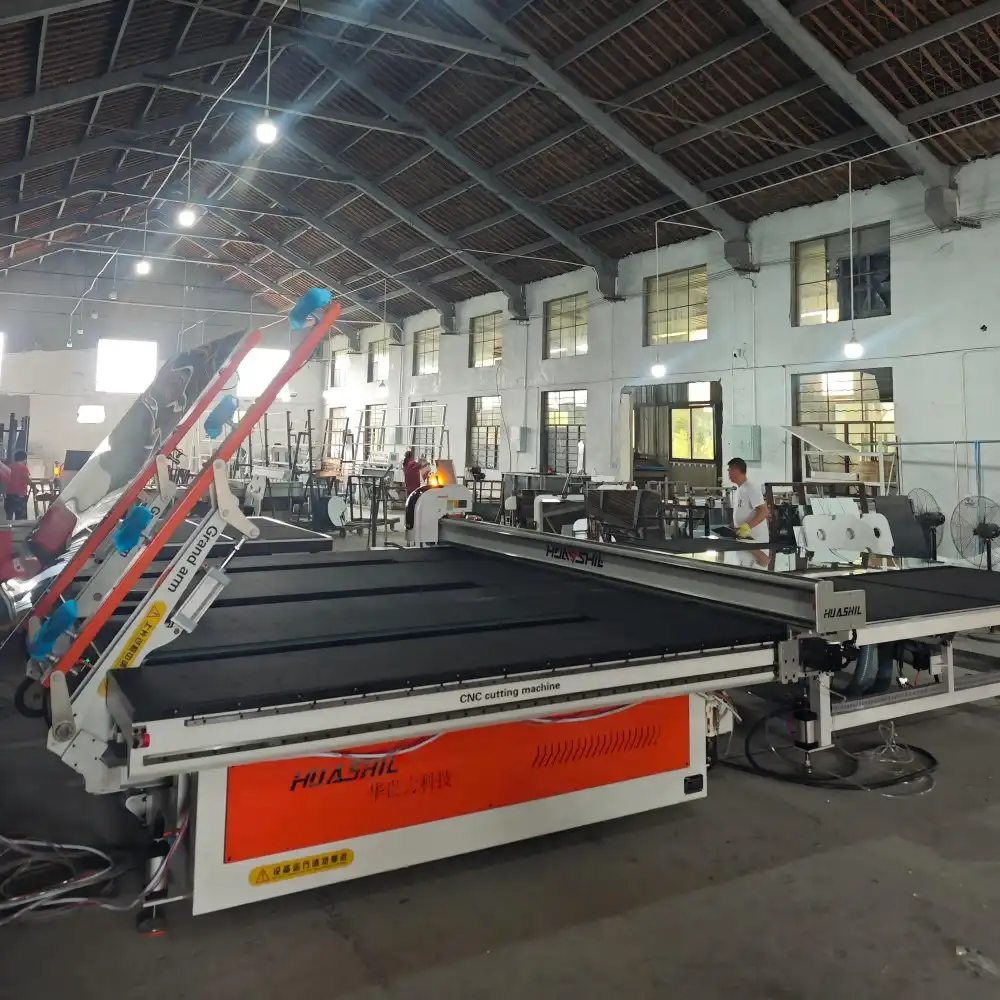
Laser-Guided vs. Mechanical Cutting
Mechanical cutting wheels are still the most used approach in production contexts because of their speed, cost-effectiveness, and established track record on ordinary float glass. Laser-guided systems are capable of contactless scoring with high accuracy in niche applications, but the expense of operation and complexity of maintenance make them less prevalent in large production environments.
Key Components That Define Performance
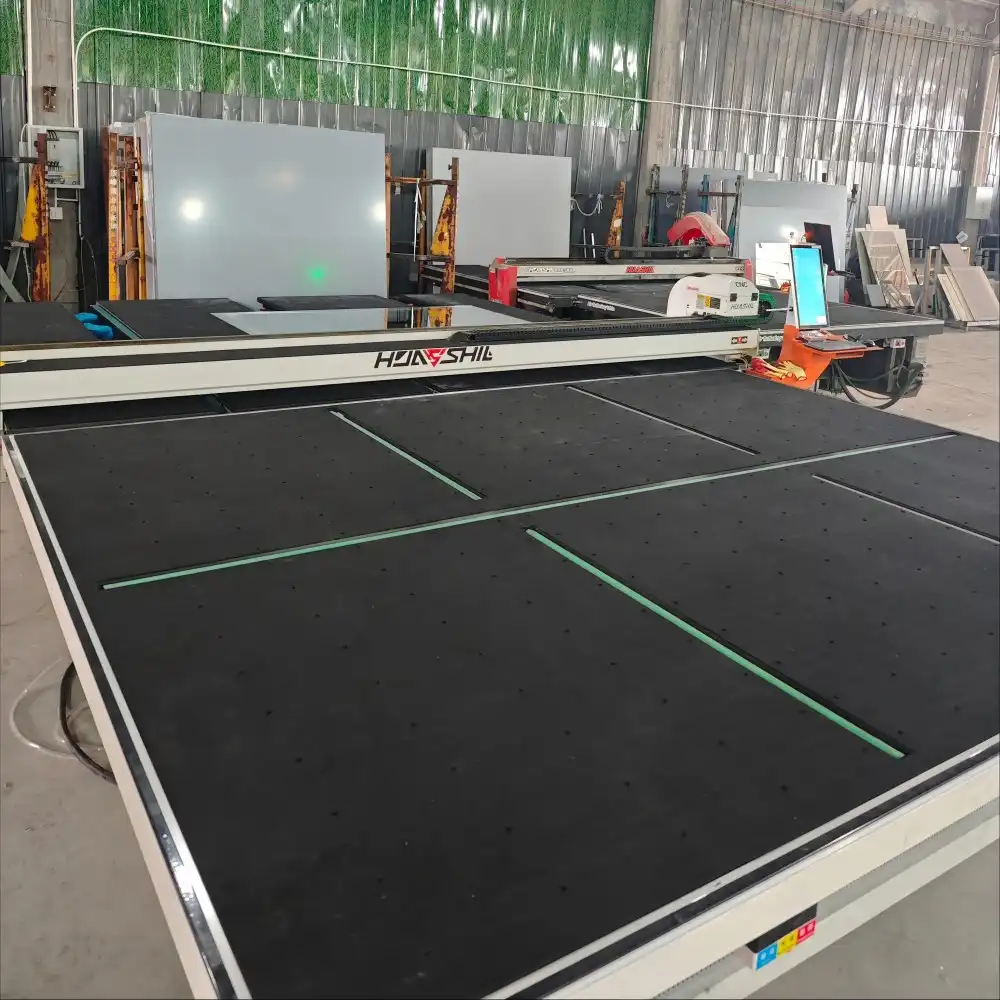
High-performance glass cutting systems generally consist of three integrated tables: a loading table, a cutting table, and a breaking table. The raw glass sheets are placed on the loading table, the scoring pattern is performed on the cutting table, and the cut pieces are broken on the breaking table. Three stages in this arrangement allow the process to proceed without bottlenecks.
How to Choose the Best Float Glass Cutting Machine for Your Production Line
Selecting the right float glass cutting machine requires matching specifications to your actual production demands, not just purchasing the highest-spec equipment available.
Define Your Production Requirements First
Start with sheet volume per shift, glass thickness range, and the largest glass size your line will process. For example, if you process large architectural panels, you need a machine that handles sheets up to 4200 × 2800 mm. Machines with a smaller maximum glass size will immediately create a bottleneck.
Critical Decision Metrics
Before you buy, here are some more things than size capacity to think about:
- Cutting accuracy: Dimensional tolerance directly impacts subsequent manufacturing. For architectural glass, the tolerances are often within ±0.5 mm.
- Cycle speed: For high-volume operations, you need equipment that can process several sheets per hour without compromising score quality.
- Automation degree: 2+2 station arrangement (may be customized according to production needs) with 2 operators or loading arms on each side, balancing throughput and floor space.
- Software integration: Optimization software, such as Optima, may compute the most material-efficient cutting patterns, directly minimizing glass waste and saving on raw material costs.
- After-sales support: The availability of spare parts and the response time are more important than the original price of the equipment for long-term operating stability.
These criteria assist you to go beyond spec-sheet comparisons and get to genuine production results.
Why the HUASHIL HSL-LSX4228 Stands Out
HUASHIL's HSL-LSX4228 is specially designed for large-volume flat glass production. The three-table system – loading, cutting, and breaking – works as one integrated line. The machine is offered in above-ground and subterranean rail versions, allowing plant managers freedom in designing the floor layout. Each side has four large arms, and the 2+2 station configuration may be customized to your personnel for production. This machine combines capacity and material economy in one package, with a max glass size of 4200 × 2800 mm and built-in Optima optimization software.
Optimizing Performance and Maintenance of Your Cutting Equipment
Common Performance Challenges in High-Volume Settings
Even carefully defined float glass cutting machines have problems when maintenance is inconsistent. The most common problems are: departure of the score line from the cutting wheels used, contamination of the table surface resulting in sliding of the glass, and software mistakes caused by obsolete optimization settings. Catch these issues early, and you avoid shutdowns in production.
Maintenance Best Practices
A good maintenance program preserves your investment and maintains uniform output quality. Here are the critical maintenance tasks that every production team should take:
- Daily: Check cutting wheel holders for dirt and debris. Check lubrication levels on the scoring head. Check table surface for dirt and debris.
- Weekly: Test cut pressure calibration, check rail track for dirt or wear, check breaking table alignment
- Monthly: Proactive change of cutting wheels, not reactive; audit optimization software configuration to current glass stock dimensions.
- Following these measures may greatly decrease unexpected downtime and increase the life of your equipment. For high-volume operations, an unanticipated two-hour halt means lost output and delayed shipments.
Safety and Compliance
Glass cutting equipment must be in compliance with the requirements established in the CE and OSHA regulations for industrial machinery. Ensure adequate PPE is being used by operators, emergency stop functions are periodically checked, and guarding is in place around all moving parts.
Cost and Procurement Considerations
Understanding Total Cost of Ownership
The real investment is more than the buying price. Consider installation costs, operator training, rates of replacement of consumables (cutting wheels, lubricants), lead times for spare parts, and warranty coverage for glass cutting equipment. The machine that costs 15% less but has a 6-week spare parts delivery delay might cost a lot more during a 3-year manufacturing cycle.
Sourcing Channels and Risk Management
By purchasing directly from a manufacturer like HUASHIL, you get factory-level technical assistance, the ability to customize products via OEM, and a more transparent pricing structure. Local service is a benefit to authorized distributors. To safeguard your investment and avoid problems with customs clearance, ensure your supplier has all documents ready when importing from China: CE certification, test reports, and clear acceptance criteria for commissioning.
For foreign equipment orders, the usual arrangements are a deposit and a final payment, or a Letter of Credit (L/C), which are fair to both sides.
Future Directions in Glass Cutting Technology
The Limitations of Older Equipment
Traditional manual and semi-automatic equipment can’t meet today’s production rates or quality requirements. They are very operator-dependent, have variable quality of scores, and create a lot more glass waste.
Emerging Technologies Worth Watching
The glass processing sector is witnessing more use of AI-supported cutting pattern optimization, robotic glass handling, and real-time quality monitoring using machine vision. These technologies lower the level of human judgment and allow for quicker changeover to other glass types within a single manufacturing shift.
Preparing Your Facility for Next-Generation Equipment
You can't just buy new machines to upgrade to a completely automated line. Facilities should check floor load capabilities, power supply specs, and availability of compressed air. It is similarly vital to teach operators to fully exploit the efficiency benefits offered by these systems via the use of software interfaces like Optima.
Conclusion
The key to selecting the correct float glass cutting machine for high-volume production is to look at machine specs that fit your real-world production environment. HUASHIL HSL-LSX4228 is the solution for the basic needs of architectural glass plants, curtain wall fabricators, and furniture glass manufacturers: large format capacity up to 4200 × 2800 mm, integrated three-table workflow, configurable 2+2 station layout, and Optima optimization software for material efficiency. If you add in a manufacturer who offers real after-sales assistance, then you have a manufacturing asset for the long term, not simply a machine purchase.
FAQ
1. What is the difference between laser-guided and mechanical glass cutting?
Mechanical cutting wheels score the glass surface using controlled pressure, then the sheet breaks along the score line. This method is fast, cost-effective, and well-suited to standard float glass in high-volume settings. Laser-guided cutting uses a focused beam for contactless scoring, offering high precision for specialty glass. However, laser systems carry higher operating costs and are typically reserved for precision or decorative applications rather than mass production lines.
2. How often should cutting wheels be replaced in high-volume production?
Cutting wheel replacement frequency depends on daily sheet volume and glass thickness. As a general guide, most high-volume plants replace cutting wheels every two to four weeks on active production lines. Proactive replacement — rather than waiting for visible score quality degradation — prevents waste and reduces the risk of glass breakage mid-process.
3. What should I look for in after-sales support from a glass cutting machine supplier?
Prioritize suppliers who offer documented warranty terms, a clear spare parts inventory with stated lead times, and accessible technical support channels. Ask for references from existing customers in your production category. A supplier who provides remote diagnostics support and on-site commissioning assistance adds measurable value beyond the initial equipment sale.
Request a Quote for HUASHIL Float Glass Cutting Machines
HUASHIL has served glass fabrication plants and construction system integrators worldwide, delivering float glass cutting machine solutions built for real production demands. The HSL-LSX4228 is available for direct inquiry — our technical team will review your production requirements and provide a detailed proposal. Contact our float glass cutting machine supplier team at salescathy@sdhuashil.com to request specifications, pricing, and a product demonstration.
References
1. Glass International – Annual Review of Glass Processing Technology, 2023.
2. Construction and Building Materials Journal – Precision Fabrication Standards for Architectural Glass, Elsevier, 2022.
3. Glass Worldwide – Automation Trends in Flat Glass Production Lines, 2023.
4. International Journal of Advanced Manufacturing Technology – Optimization Algorithms in Sheet Material Cutting, Springer, 2021.
5. Glassman Europe Magazine – Procurement Guide for Glass Processing Equipment, 2022.
6. China National Standard GB/T 11614 – Float Glass Specification and Quality Classification, 2023.