




A semi automatic glass loading machine costs different amounts depending on glass size, table configuration, software, and options, so no single number fits every plant. Return on investment comes from labor savings, fewer broken sheets, faster loading, and less downtime, measured against purchase, installation, training, and maintenance costs. Most buyers calculate payback by dividing net investment by monthly net savings. We recommend matching the machine to your daily volume and sheet size before you compare quotes. The HUASHIL model handles glass up to 3660*2440 mm, roughly 144 by 96 inches, a familiar stock sheet size.
Introduction: Why Cost Alone Does Not Determine ROI
The price of a semi-automatic glass loading machine changes based on the type of glass, table configuration, software, and options chosen. This means that there is no one price that works for all plants. When you compare the prices of purchase, installation, training, and maintenance to the time and money saved on labor, broken sheets, loading times, and downtime, you can see that the investment is worth it. Most buyers figure out the payback by dividing the net investment by the net savings each month. Before you compare quotes, you should make sure that the machine fits your daily volume and sheet size. This model from HUASHIL can work with glass sheets up to 3660 mm x 2440 mm, which is about 144 inches x 96 inches.
Purchase Price Is Only One Line Item
A quote for a semi-automatic glass loading machine may look easy, but the bill is just the beginning. Along with the machine price, there are costs for shipping, setting up, wiring, teaching operators, and extra parts. Costs keep coming up, like regular upkeep and the time lost when a line stops. If your unit stops working a lot, it might cost more over three years than a stronger one that costs more. You should ask each seller for the same list of what's included so that you can compare deals that are the same. Payment terms are also important because a Letter of Credit or a deposit plus final payment can change when you get paid.
Total Cost of Ownership Covers More
Total cost of ownership, or TCO, is the sum of all the costs that come up over the life of a machine. Lisa Ellram, a researcher, came up with the idea in 1995 as a way to look at costs other than price, such as initial, ongoing, and usage costs. For glass-loading machines, that means keeping track of maintenance hours, worn-out parts, broken glass, and training time for new employees. The finance team likes TCO because it turns an idea into numbers that they can accept. People who run plants like it because it shows why uptime and the availability of spare parts are just as important as the price.
Who Benefits from This Guide
This guide is useful for more than one thing in the same purchase. Plant managers want quality and output to stay the same. Managers in engineering check the size, fit, and reliability of sheets. Managers in charge of buying things look at price, delivery, and warranty. Capital spending is approved by people in charge of money. Architectural glass and window makers, curtain wall integrators, shower door and furniture makers, and sintered stone fabricators are some of the people who buy from us. Different groups put different amounts of weight on the same machine. The sections that follow explain technical details, cost drivers, and payback math in simple terms that anyone can understand.
What Is a Semi-Automatic Glass Loading Machine?
Definition and Core Function
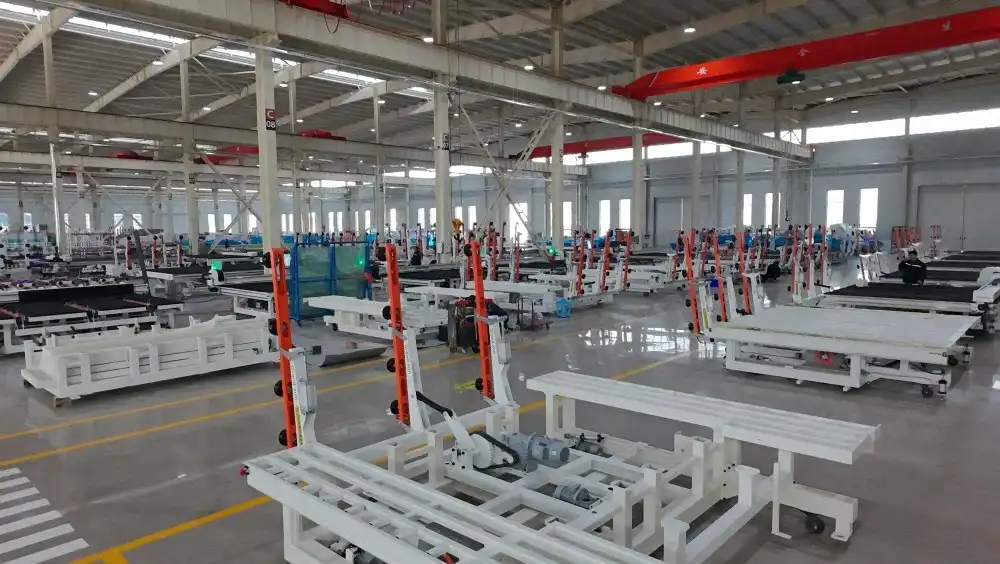
A semi automatic glass loading machine is useful because it's in the middle of a fully automatic line and a human-handling line. The heavy lifting and positioning of the glass pieces is done by the machine, while an operator leads and records each load. That split keeps the cost down compared to a fully automatic loader and takes away the most difficult work. During a normal cycle, the sheet is put down, checked to make sure it is stable, moved to the cutting station, and then safely released. This machine is often put ahead of CNC cutting, shaping, and general glass transfer in many companies.
How the Operator and Machine Share the Work
Think of the person operating the machine as the one making the choices and the machine as the muscle. The operator picks out the sheet, lines it up, and keeps an eye on the table, which lets people do their best work. It's important that the machine carry the weight because sheet weight goes up quickly. A sheet of 6 mm glass that is 3660 mm x 2440 mm thick weighs about 134 kg, which is about 295 lb. This is because glass has a mass of about 2,500 kg per cubic meter. Under ideal conditions, the NIOSH lifting equation says that the most weight that can be lifted is 51 pounds. This means that no crew should lift such a sheet by hand.
Where This Equipment Fits
Architectural glass is used for things like doors, windows, and curtain walls. Smart mirror glass, furniture glass, and artistic pieces with unique shapes are also made from it. Auto glass makers also work with custom shapes that need to be loaded carefully. A semi-automatic glass loading machine works well for shops that get a variety of orders throughout the day, as sheet sizes and cutting patterns change. It's useful for small and medium-sized businesses because it lets them load more things without having to pay for or set up a full automatic line. More technology can be added by plants as their production needs rise.
HUASHIL Semi-Automatic Glass Loading Machine Features
Flipped Cutting Table With Manual Loading
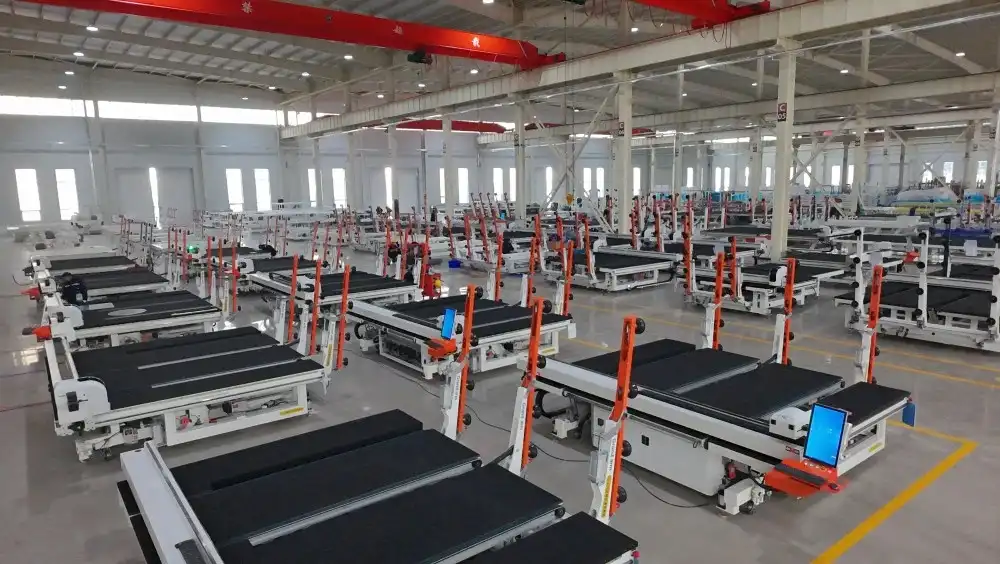
The HUASHIL design has a cutting table that can be turned over, and the glass is loaded onto it by hand. When the flip action is done, the table is ready to load, and the operator places the sheet on it by hand. This method lets the user directly decide where to put things and makes the process easy to teach. The table can hold sheets that are up to 3660 mm x 2440 mm, which is a lot of different stock sizes. When there are fewer automatic functions, there are also fewer things that need to be checked during regular maintenance.
Three Ejector Rods and Hand-Pushed Walking
Three ejector rods come with the semi automatic glass loading machine and work with the table while it's being loaded. Walking can be done without a remote control, which means workers don't have to keep an eye on as many devices on the floor. To give your shop more options, we can add walking wheels that can be pushed by hand. This way, the unit can be moved between positions by hand. These options make it easy for new employees to use the controls and cut down on the number of electronic parts that might need to be replaced. Before you order, please make sure with our engineers that this is exactly what you want because the options change what comes with the machine.
Optima Software and No Breaking Table
The cutting-layout tool Optima works with the machine and plans how parts will fit on each sheet so that there aren't too many scraps. Material waste costs you money, so better plans keep your profit margins high on every sale. It can also be set up without a breaking table, which takes away one station from the layout. With the help of software planning and a simpler line, a small group of people can handle full-size sheets with fewer steps. Ask our team to show you how Optima fits in with the orders you already have.
Cost Drivers, Payback, and Productivity Comparison
What Shapes the Price
There are a few options that can change the price of a semi-automatic glass loading machine. First comes the largest glass size, since frames for bigger tables need to be heavier. Next are table configuration, software, walking wheels that can be added, and custom requests from OEM or ODM projects. Shipping to the US, help with installation, and packages of spare parts all add to the landed cost. The term of the warranty is also important. So that your engineering and buying teams can look over the same scope, ask for a written price that lists all the items. Project plans are also affected by delivery times, so make sure you know the lead time before you sign.
A Simple ROI Calculation
Start with the money you'll save each year: better plans will save you time on work, keep things from breaking, and cut down on material waste. Take away the yearly costs that you don't need, like maintenance and spare parts. Then, figure out how long it will take to get your money back by dividing the total investment by the monthly net savings. This includes freight, installation, and training. In this case, if your plant cuts two hours of lifting work per shift, you would multiply that number by your loaded wage rate and the number of working days. Finance teams can also use net present value, a method that is explained in most books on corporate finance. This method compares future savings to money that can be spent now. When you make your numbers, don't use standards from the business.
Productivity Comparison: Manual, Semi-Automatic, and Fully Automatic
Manual loading is the cheapest up front, but it requires lifting teams, puts people at greater risk of injury, and can cause edge chips. The highest throughput is achieved with fully automatic loading, but it requires more money, floor space, and work to make it work with the other parts. A semi-automatic glass loading machine is in the middle. It offers mechanical support for a moderate cost and a quick decision-making process—often just a few weeks for a single machine. It takes three to six months to review and approve a full production line. This option pays for itself faster for many small and medium-sized shops because it does the hardest job first.
Conclusion
When buyers look at the total cost of ownership instead of just the price, a semi automatic glass loading machine is a good buy. The cost, shipping, setup, training, upkeep, and downtime of the equipment all affect the outcome. On the other hand, the return is driven by lower breakage rates, better material use, and less work. This machine is in the middle of manual handling and a fully automatic line. It works well for shops that get a variety of orders and don't have a lot of them. It has three ejector rods, Optima software, a turned cutting table, and no breaking table. The HUASHIL setup can handle sheets up to 3660*2440 mm. Finance teams can make clear decisions based on a simple payback formula that is based on data from the plant.
FAQ
1. What is the maximum glass size?
The largest piece of glass that the HUASHIL machine can handle is 3660*2440 mm, which is about 144 by 96 inches.
2. Does the machine need a remote control for walking?
No, you don't need a remote control to walk. We can add walking wheels that you can move by hand if you need to.
3. Is a breaking table required?
It doesn't need a breaking table because the configuration works as is.
4. How do I estimate payback?
How much you've invested is equal to your monthly net savings. Add up the costs of labor, broken items, and saved materials, then take away the costs of upkeep and replacement parts. To be sure, use your own plant data.
5. Which industries use this equipment?
Equipment that is partly automatic is used to load architectural glass, windows, curtain walls, furniture, shower doors, and smart mirrors.
Request a Quote for a HUASHIL Semi-Automatic Glass Loading Machine
Ready to get a quote on your next loading upgrade? Email HUASHIL at salescathy@sdhuashil.com with the size of your glass, how much you use every day, and your income. When people ask us to make OEM or ODM semi automatic glass loading machines, we happily do so. We share technical papers with engineers and make clear quotes with warranty terms for the buying and finance teams. We'll get back to you with a configuration that works for your plant.
References
1. Applications Manual for the Revised NIOSH Lifting Equation, National Institute for Occupational Safety and Health, 1994
2. Ergonomics: The Study of Work, Occupational Safety and Health Administration, 2000
3. Total Cost of Ownership: A Key Concept in Strategic Cost Management Decisions, International Journal of Physical Distribution & Logistics Management, 1995
4. Principles of Corporate Finance, McGraw-Hill Education, 2020
5. Occupational Outlook Handbook: Glaziers, U.S. Bureau of Labor Statistics, 2024
6. ANSI Z97.1 Safety Glazing Materials Used in Buildings, American National Standards Institute, 2015