




When selecting a float glass cutting machine, you will need to start by specifying your glass diameters, thickness range, daily production, and floor space. Then match them to the correct amount of automation, precision of cutting, software, and service support. Look at whole cycle time, not just the scoring speed. Look at overall cost of ownership, not just pricing. I would suggest that you ask each provider to do test cuts on your own glass before you sign. This tutorial leads you through each step and demonstrates how the HUASHIL HSL-LSX4228 operates in architectural, furniture, and shower door plants in the United States.
Start With Your Production Needs
What a Float Glass Cutting Machine Actually Does
Float glass is made by pouring molten glass into a bath of molten tin. In 1959, Pilkington made this procedure accessible to everyone. You will finish up with a flat, even sheet. The sheet is sliced into the correct sizes and may be used by a float glass cutting machine. A bridge slides a score wheel over the glass using a CNC. The sheet is then scored on the scorelines and forwarded to the next phase. A table only scores points for having a glass on it. Things are loaded, broken, and transported on a complete cutting line. Price and job demands are individual; thus, those who want to purchase anything should always compare two bids to make sure they obtain the proper one.
Define Your Glass Sizes, Thickness, and Output
Before asking pricing, jot down everything you know about your plant. Note the thickness of the sheets, daily square feet, variation of orders, and range of widths. Tell us your number of employees, floor area, and growth goals over the next several years. Then note the time it takes to load, position, score, break, and empty. You need only one piece to obtain speed. A business that does a lot of small orders requires competent layout software. In contrast, a plant that lives all day under huge lights requires a continual supply of equipment. This is a tiny form, so you will not need to purchase more machines than you need. It’s also straightforward to compare pricing from various vendors.
Match the Automation Level to Your Team and Budget
A cutting system might be manual, semi-automatic, or fully automatic and will include one or two tables. Hand tools are less costly and may be used for unique or low-volume operations, but they require more labor and do not necessarily provide the same results. Semiautomatic systems may be as exact as CNC systems, but the operator still has to perform certain tasks by hand. Fully automated lines speed up the process, make it safer, and eliminate the need for personnel. Single-table machines are cheaper and smaller, while double-table machines load quicker. Engineers care about fit and security. Plant managers care about production. Finance guys care about return. Find a level that works with all three categories before you narrow down your vendor choices.
Check the Specifications That Drive Performance
Accuracy and Machine Structure
It’s right because the complete float glass cutting machine is working, not just a section of it. Look at the straight lines, the servo drives, the software adjustment, the CNC control, and how sturdy the frame and bridge are. Record where the cutting is to be done, the thickest glass that can be cut, the tiniest piece that can be cut, the heaviest glass that can be cut, and how the wheel is set. This is what ASTM C1036 has to say about what quality of flat glass is acceptable in the US. It also depends on what quality of sheet is coming in for your results. Your team engineers should ask each supplier for a spec sheet and performance statistics. Then they should read each line and compare them.
Software, Nesting, and Waste Control
How much glass you lose depends on the program. The stacking program will print your cut list on each page, so you make efficient use of the glass and have usable leftovers. The task is done using software named Optima running on the HSL-LSX4228. What kind of software does the machine have to input cut lists, deal with scraps, and display production? Check to check whether it can interface with your ERP or MES so that everyone, whether in the office or on the work floor, can utilize the same data. Each sheet contains a combination of various sizes. Good planning tools are helpful for organizations that have a lot of small orders. Bring your own list of cuts to the exam.
The HUASHIL HSL-LSX4228 at a Glance
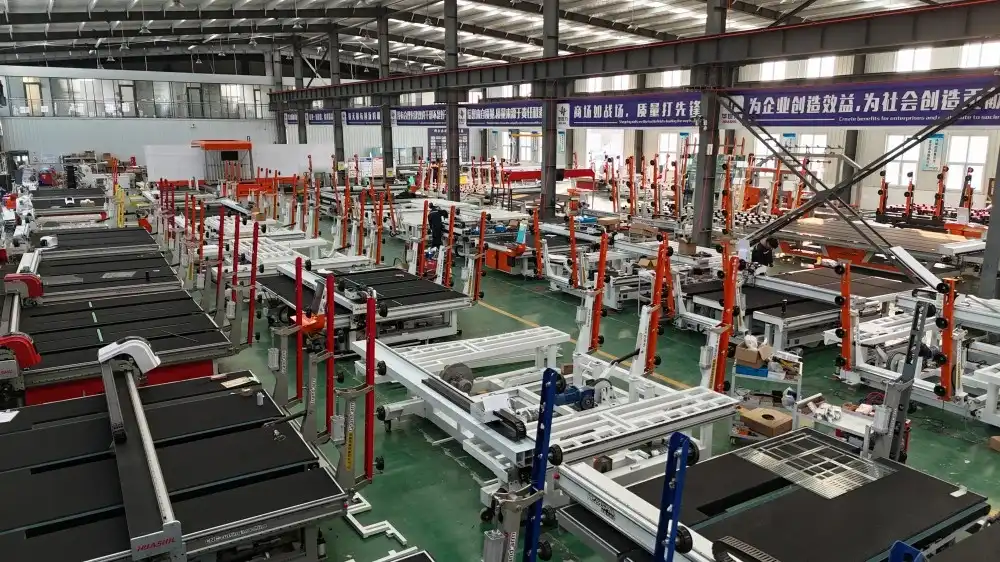
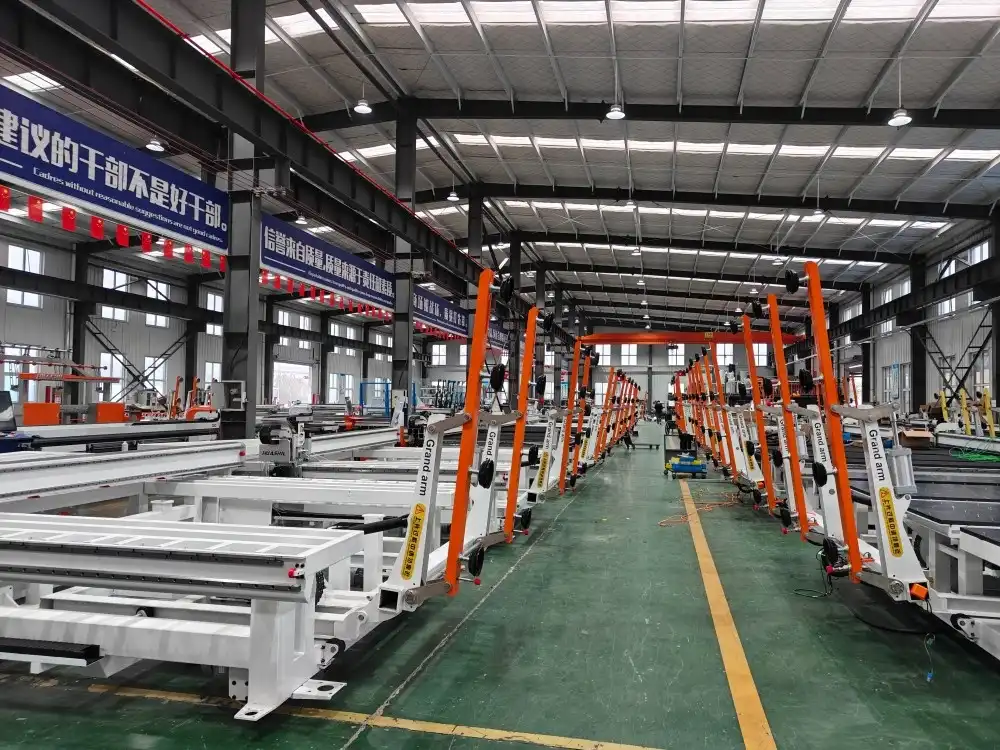
This is how I describe the HSL-LSX4228 to individuals who want to purchase it. This float glass cutting machine has 3 tables for loading glass, cutting glass, and breaking glass. For each phase in the glass flow, there is a table. It can take in glass up to 4200 mm x 2800 mm. The rail may be above ground or below ground, depending on your floor layout. You may configure the station to best suit your workflow. It is set up like 2+2. This layout is prepared using Optima software and provides four magnificent arms on each side. "We'll make sure the layout works for you before you decide what to do. Send us your floor layout and the sheet sizes.
Count the Full Cost and Choose the Right Partner
Total Cost of Ownership and Payback
One line in a bigger budget shows how much it costs to buy. It is important to add up the costs of the machine, its software, the tools for loading and breaking glass, the freight, taxes, setup, training, supplies, energy, repairs, downtime, and the glass that is thrown away. Then divide that number by the work that needs to be done to get the price per sheet or square foot. Most of the time, a more automated line costs more up front. However, it can save time, money, and work in the long run, so finance teams should plan for the cost to be recouped over a number of years. Ask for price lists so that you aren't caught off guard by landed costs. Most people pay for an export order with a letter of credit, a deposit, and the full amount at the end. When the terms are clear, it's easier to borrow money and buy things.
Supplier Experience and After-Sales Support
How tech-savvy a seller is, how well they make things, how much experience they have with your app, and how good their service is can tell you a lot about them. Get references from places that cut sheets that are the same size and shape. Look over installation guides and videos of machines that have already been set up. Go to the factory or a trade show if you can to see a live show. At Shandong Huashil Automation Technology Co., LTD., we make, sell, and ship mechanical tools to people all over the world. We also take our machines to trade shows like Glasstech Asia to show them off. Before choosing a provider, you should find out about their guarantee, how long it takes to get spare parts, remote help, and training. This is because downtime costs a lot more than a small price difference. Learn about OEM and ODM for full lines.
Safety Standards and Documentation for US Buyers
Safety paperwork should be seen as something that US plants buy. A set of rules called ISO 12100 tells us how to look at and lower risks in float glass cutting machine design. Industrial machinery in the US must follow NFPA 79 when it comes to electricity. Also, OSHA gives rules on how to keep tools safe. You should get shipping papers, electrical drawings, a user manual, and a risk assessment from the seller. Also, check to see if the power strip works with your plant. These papers may be needed by your inspector or your insurance company, so you should ask for them early on. These people should also be taught how to stop in an emergency and safely work with glass. Forms that are turned in early help your team plan the installation so that nothing comes up at the last minute.
Plan Maintenance and Make the Final Decision
Daily and Periodic Maintenance
Even if the system is running well, it is necessary to keep up. Make sure you clean the table every day, remove any broken glass, check the cutting oil, look at the wheel, wipe off the sensors, and check the air pressure. Lubricate the guides sometimes, inspect the belts and pneumatic systems, align the axes, and keep a duplicate of the software. Sometimes a cut goes bad because the wheel is worn, the pressure is improper, the table is dusty, the speed is too fast, or the glass is damaged. Having a detailed maintenance plan helps keep the quality of the cuts consistent from shift to shift,” he says. When the vendor quotes you a price, ask for a maintenance package. This way your team can immediately plan for staff and additional parts.
Spare Parts and Operator Training
For technology to operate, it requires parts and humans. Ask the supplier about what spare components to have on hand. They might be cutting wheels, sensors, belts, servo parts, or hydraulic parts. Also, check to see how soon they ship to the US. Check the software’s version notes to see if there are any changes. Then learn how to educate others on how to operate the machine, handle glass, replace the wheels, shut it off in an emergency, and cure small problems. By training your staff prior to launch, they may begin work sooner, making fewer errors. When you deal with HUASHIL, you may chat to our experts regarding warranties, replacement parts, and technical assistance before you make an order. There can thus be no dispute.
A Practical Buying Checklist
This brief list will help you choose when you are ready. What kind of glass, how thick, how large the sheets are, how much is manufactured each day, the forms, the changes, the floor area. Second, decide whether you want a single or double table and a machine that is completely automated, partially automatic, or manually controlled. Third, develop a list of the characteristics you require, such as data linkages, the ability to break, load, stack, and sort. Fourth, be sure that the rates you get are extremely detailed, i.e., equipment specifications, age of machine, accessories, setup, training, warranty, and shipping conditions. 5. Get each provider to cut you a piece of glass as a test. Bye! You may now see the size, pricing, expansion potential, and support. One machine may be taken down in a few weeks, but a whole line can take three to six months.”
Conclusion
Here are some things you should know about your company before buying a float glass cutting machine. The floor area, daily production, order mix, and sheet sizes are as follows. Those facts have been determined based on the proper amount of automation and table structure. The accuracy of the machine is determined by the frame, guides, motor drives, and CNC control. Software like Optima that nests the pieces together wastes less glass. It has three tables, 2+2 stations, four grand arms on each side, and the glass dimension is not greater than 4200 × 2800 mm. It looks at whether these things are present in a single model. There is more to it than pricing. Supplier experience, safety papers, replacement parts, and training and maintenance are all vital. With a documented list and test cuts on your own glass, it is simple to make a fair and unambiguous decision.
FAQ
1. What is the maximum glass size for the HSL-LSX4228?
The HSL-LSX4228 can handle glass that is up to 4200 mm x 2800 mm. If your sheets are beginning to get too big, please send us your cut lists. We are going to go over them with you.
2. Which software does the HSL-LSX4228 use?
The program Optima is used to do the planning and nesting. You can give us your own cut list and ask our team to show you how it works. This way you can see how the orders are put on each sheet.
3. How long does it take to choose a cutting machine?
A single machine usually shuts down after a few weeks. Most of the time, setting up a full production line or a custom system takes three to six months. This is because there needs to be a technical study, a visit to the site, and approval of the budget. Getting your glass information together early makes the process go faster.
Contact HUASHIL for a Float Glass Cutting Machine Manufacturer Quote
Are You Ready to See What You Can Do? For many years, the HUASHIL company has been making and exporting float glass cutting machines. They are known for their stable quality and helpful customer service. We'll help you find a good setup, like the HSL-LSX4228, if you email salescathy@sdhuashil.com with the sizes of the glass you want to use and how much you want to make.
References
1. Pilkington, L.A.B. "The Float Glass Process," Proceedings of the Royal Society of London, 1969.
2. ASTM International, "ASTM C1036: Standard Specification for Flat Glass," 2021.
3. International Organization for Standardization, "ISO 12100: Safety of Machinery – General Principles for Design – Risk Assessment and Risk Reduction," 2010.
4. National Fire Protection Association, "NFPA 79: Electrical Standard for Industrial Machinery," 2024.
5. Shelby, J.E., "Introduction to Glass Science and Technology," Royal Society of Chemistry, 2020.
6. Occupational Safety and Health Administration, "Concepts and Techniques of Machine Safeguarding," 1992.