




When evaluating glass edge processing equipment, the choice between single- and double-spindle configurations fundamentally determines your production capacity. An automatic glass grinding machine with double spindles typically delivers 70-90% higher throughput than single-spindle models by processing two edges simultaneously. This advantage becomes crucial for architectural glass fabrication plants and curtain wall integrators facing tight project deadlines, where every minute of cycle time directly impacts profitability and delivery schedules.
Introduction
In modern glass processing, finishing needs to be done precisely so that it looks good and works well. Throughput, or the number of finished glass pieces made during a shift, has a direct effect on your production costs, how much labor you use, and how you place yourself in the market. We know that buying decisions are made with a lot of people in mind, like production leaders who look at how to save money, engineering managers who look at how well the product will work with other systems, and finance teams who figure out the total cost of ownership.
This comparison gives you useful information to help you choose between single- and double-wheel grinding tools. Our analysis is based on decades of working with architectural glass plants, furniture makers, and curtain wall system integrators all over North America. The goal is simple: to help you match the powers of your tools to your production needs while getting the most out of your investment in capital.
Understanding Single and Double Spindle Automatic Glass Grinding Machines
Learn about automatic glass grinding machines with one or two spindles.
Core Structural Differences
One grinding head works on a single glass edge during each turn on a single spindle machine. The machine works on a single piece at a time, going from rough grinding to fine grinding to polishing in that order. In double spindle setups, two separate grinding heads work on opposite sides of the glass piece at the same time, cutting the processing time in half per unit.
Both styles are very important for making glass products, like tempered panels for building surfaces and laminated glass for shower surrounds. Not only does the number of spindles affect speed, but it also affects the size of the machine, the amount of electricity it needs, and how difficult it is to integrate into automatic production lines.
Technical Configuration Overview
Modern edge-cutting systems are different from older ones because they have more advanced control systems. Automatic opening and closing systems that are controlled by encoders can adapt to different glass sizes without any help from a person. These encoders make sure that the glass is precisely placed, and they can work with sizes ranging from 0.2 meters for the smallest hole to 1.5 meters for the largest span. This adaptability is very important when working with a wide range of products, from small mirror panels to large architectural glass sheets.
Servo motor-driven moving systems are another improvement that makes output more consistent. Servo motors allow for smooth acceleration and braking, which is different from standard pneumatic conveyors. This lowers vibrations that could damage edge quality. When you put together precise encoders and motor control, you get a system that can respond to different types of glass and keep cycle times steady.
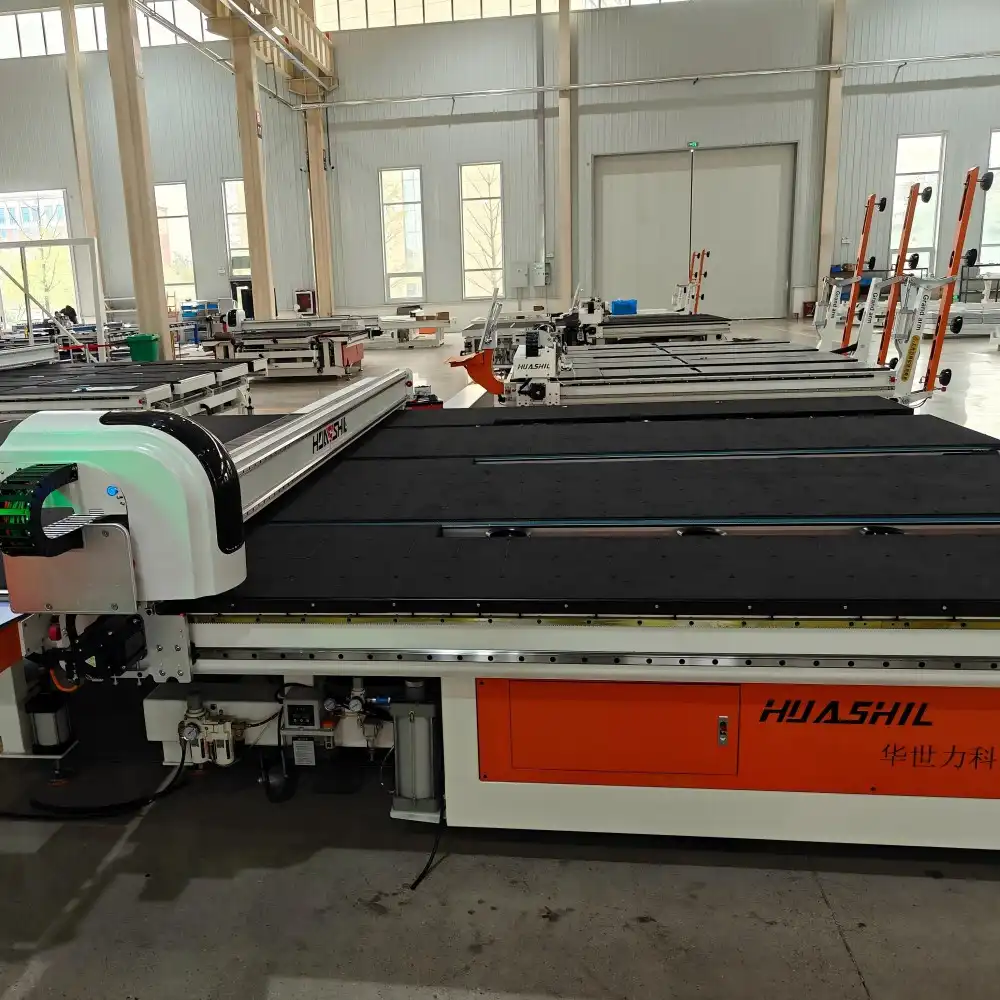
Grinding Wheel Arrangements
Usually, each spindle holds three grinding wheels that are carefully arranged in a certain order. One rough grinding wheel is used to remove the first layer of material, one fine grinding wheel is used to smooth out the surface, and one finishing wheel is used to make the surface look perfect. In other setups, one rough grinding wheel is used first, then two fine grinding wheels, for jobs that need very smooth edges without high-gloss polishing.
This three-wheel setup strikes a good mix between speed and edge quality. Rough grinding quickly takes a lot of material, which prepares the shape of the edge. Fine grinding gets rid of scratches that can be seen and achieves precise measurements within narrow ranges. Polishing or fine grinding the surface some more gives it the final look needed for lines to be seen in furniture or architecture.
Throughput Performance Comparison: Single vs. Double Spindle
Measuring Production Capacity
For throughput analysis on an automatic glass grinding machine to be useful, it's important to look at more than just piece count. How fast it is processed relies on the thickness of the glass, the type of edge (flat shine, pencil edge, or beveled), and the quality of finish that is needed. Cycle time includes the time it takes to load, position, grind, and unload. How well the machine works with your specific mix of products depends on how compatible the glass sizes are.
Architectural glass plants report that single-spindle machines can make 150 to 250 pieces of normal 5-8 mm float glass with straight, smooth edges in an eight-hour shift. 280 to 450 pieces are consistently made per shift in double-spindle configurations that handle identical specifications. When working with bigger pieces of glass, the performance gap gets bigger because of the extra time needed for positioning and handling while both edges are being ground by two spindles at the same time.
Real-World Productivity Analysis
We looked at production data from a company that makes curtain walls and works with 1.2m x 2.4m glass panels for commercial buildings. Each panel was made on their single-spindle machine in about eight minutes, which meant that 60 panels were made each shift. When they switched to a double-spindle system that could grind just as well, cycle time went down to 4.5 minutes, and they were able to make 106 panels per shift, which is a 77% increase in throughput.
When you look at the cost per handled edge, the ROI estimate becomes very convincing. The higher starting cost of the double spindle machine is spread out over a lot more units, which lowers the processing cost per square meter by 42% and the amount of work that needs to be done on each piece. It takes 18 to 24 months for this productivity booster to pay for itself in businesses that work multiple shifts or have limited capacity.
Bottleneck Reduction Benefits
There are several steps in a glass processing line: cutting, grinding, washing, tempering, and packaging. Upstream and downstream equipment both work below their full potential when edge grinding becomes the bottleneck. This problem is solved by double-spindle machines, which allow cutting and tempering tools to keep higher usage rates. The increase in system efficiency goes beyond the grinding machine itself, making the whole plant more productive and lowering the amount of work-in-process that needs to be stored.
Operational Considerations and Maintenance for Both Types
Routine Maintenance Requirements
For best efficiency, maintenance needs to be planned so that it fits with the complexity of the spindle setup. Single-spindle machines need to have their grinding wheel wear checked once a week, their linear guides oiled once a month, and their alignment checked every three months. Each wheel is powered by a 1.6-hp motor that needs to be checked for bearing noise and temperature changes that could mean a failure is coming soon.
Some repair jobs are basically twice as hard to do on systems with two spindles, but not in the same way. There are a lot of steps that repeat when you check twice as many grinding wheels and motors. Maintenance teams with a lot of experience can service double spindle units in about 60% more time than single spindle units, but not 100% more time. Every six months, the encoder systems that control the automatic opening and closing need to be calibrated to keep their accuracy across the 0.2m to 1.5m range.
Safety Compliance Standards
There are certain risks that come with grinding glass, such as working big materials and rotating tools. Both types of machines must follow OSHA rules for safety guards, emergency stops, and lockout/tagout processes. The servo motor control systems have safety-rated circuits that stop the motors from moving without being told to while they are being loaded or serviced.
Operator training programs should stress the right way to load glasses, check the grinding wheel, and recognize sounds that aren't normal. We suggest written training plans that meet the needs of insurance companies and are also good for making tools last longer. Setting up things correctly—changing the grinding pressure and feed rates for different types of glass—prevents safety problems and quality problems while keeping output levels at the planned level.
Economic and Procurement Factors: Which Machine Fits Your Business?
Investment Cost Analysis
The price differences between single- and double-spindle machines show how complicated their engineering is and how much they can make. Single-spindle types that are good for small businesses usually cost between $35,000 and $65,000, based on how automated they are and how much they can grind. For the same level of quality, double spindle configurations cost between $75,000 and $140,000. This is because they have two sets of spindles, stronger electrical systems, and higher structural requirements.
The purchase price for an automatic glass grinding machine is only one part of the total cost of ownership, though. Different machines use energy in different ways. For example, double spinning machines use more peak power but process more pieces per kilowatt-hour. Grinding wheels, motor parts, and encoder units should all be in your spare parts inventory for the automatic glass grinding machine. The cost of downtime will depend on how quickly you can get the parts you need. Warranty coverage varies a lot from one manufacturer to the next. For the best long-term value, look for comprehensive programs that include on-site service and preventive maintenance.
Making the Right Choice for Your Production Scale
Matching the capacity of a machine to its production needs stops both over-investment and capacity limits. Single-spindle machines work well and don't cost too much for small furniture companies that work with 50 to 100 glass pieces every day. When two spindles are set up next to each other, they eliminate grinding bottlenecks and immediately boost productivity in architectural glass plants that handle more than 200 panels every day.
The choice matrix should look at how much is being made now, how much is expected to grow, how complicated the products are, and how much floor room is available. When adding tools to automated lines or working with non-standard forms, the ability to customize is important. We've seen that companies that are growing quickly often regret buying equipment that isn't powerful enough, while companies that are stable and making small amounts of money get the most out of their investments with single spinning machines that are the right size.
Supplier Evaluation Criteria
In addition to machine specs, choosing the right provider is also important for long-term success. Choose a maker based on how quickly they respond to technical help requests, how well they handle logistics for spare parts, and how well they can do field service in your area. As part of installation support, operators should be trained, help with optimizing the process should be given, and documentation in English with clear technical specifications should be provided.
When production dates are coming up and equipment problems happen, after-sales help is very important. We keep a large stock of spare parts and offer remote diagnostic support to keep downtime to a minimum. Our tech team helps you make process changes when you add new edge shapes or change the type of glass you're using. This way, your machine can keep meeting throughput goals even as product needs change.
Future Trends and Industry Outlook for Glass Grinding Machines
Automation and Smart Manufacturing Integration
More and more glass processing equipment is connected to the Internet of Things (IoT), which lets maintenance be planned ahead of time and production be tracked. Modern machines send real-time information about how fast the grinding wheels wear down, how well the motors are working, and changes in cycle time. With this knowledge, production managers can plan maintenance for planned breaks instead of having to fix problems as they happen.
Integrating with manufacturing execution systems used across the whole plant makes the whole production chain clear. The whole line is instantly in sync when a grinding machine sends finish data to washing and tempering equipment further down the line. These Industry 4.0 features cut down on work-in-process goods and make deliveries more predictable, which are economic benefits that customers who want shorter wait times will appreciate.
Energy Efficiency Developments
New ways of using power are being driven by environmental rules and pressures to lower operating costs. Next-generation grinding machines have variable frequency drives that change the motor speed based on the amount of work that needs to be done instead of running at full power all the time. When compared to pneumatic systems, servo motor technology already uses less energy, and as motor driver methods get better, they use even less—an extra 15–20% less.
Coolant recycling systems keep the quality of the grinding while reducing the amount of water used and the cost of getting rid of waste. These closed-loop systems filter and recirculate coolant, which makes it last longer, from days to months. For businesses that process hundreds of pieces every day, the costs of coolant and disposal fees are big running costs that newer machine designs cut down on a lot.
Conclusion
Before you can choose between single- and double-spindle configurations for an automatic glass grinding machine, you need to carefully think about your finances, output needs, and growth plans. Double spindle machines have measured throughput benefits—usually 70–90% more output—that change the economics of high-volume processes. Single spindle units are still a cheap option for small businesses that don't make a lot of things or that have a lot of different products that need to be switched out often. Modern control systems, such as encoder-based automatic placement and servo motor conveying, make both designs more consistent and better in terms of quality. When you make your choice, you should make sure that the machine's capabilities match the real production needs and that the supplier's support system meets your operating needs.
FAQ
1. Can I upgrade from a single-spindle to a double-spindle machine later?
Due to basic differences in structure, it is usually not possible to convert current single-spindle machines to double-spindle configurations. The frame of the machine, the power system, and the control design are all very different. Most makers think it's better to keep the single-spindle machine for specialized work or as a backup while adding a double-spindle unit for making a lot of things. This method gives operations freedom and redundancy, which keeps the output from stopping.
2. How do maintenance costs compare between configurations?
The yearly upkeep costs for double-spindle machines are about 50–70% higher than those for single-spindle machines. This is because they have two times as many grinding wheels, more motors, and more complicated control systems. When you look at the difference in maintenance costs per piece, though, the higher throughput makes the difference almost disappear. Businesses that work double shifts or that work with high-end glass products can afford to make the extra maintenance investment because they are more productive and use less labor per unit.
3. What throughput improvements justify the higher investment?
The investment level depends on how much of your capacity you are using now and how fast you plan to grow. Businesses that use single-spindle machines that are over 80% full during normal shifts should think about upgrading to double-spindle machines. When throughput problems cause customer orders to be late or require extra work, the payback calculation turns out to be positive. To find the exact breakpoint, we suggest doing a thorough ROI analysis that takes into account your individual labor rates, how you allocate overhead costs, and the costs of expanding your capacity.
Partner with HUASHIL for Your Glass Processing Equipment Needs
HUASHIL blends decades of experience in manufacturing with quick technical support that helps glass makers with their real problems. Our automatic glass grinding machine supplier services go beyond just delivering equipment. We also offer full process consultation, which makes sure that your investment gets the throughput you expect from the day it's installed. The precise parts this comparison talks about are found in all three machines: 1.6-hp grinding motors that deliver consistent power; encoder-controlled positioning across the full 0.2-1.5-m range; and servo motor conveying systems that safely handle fragile glass.
We know that choices about procurement involve technical validation, budget approval, and figuring out how reliable a provider is. Our engineering team gives you detailed specs, processing demos, and customization options that are made to fit the products you're selling. You can get technical advice, competitive quotes, and answers to your specific application questions by emailing salescathy@sdhuashil.com.
References
1. Anderson, M.J., & Thompson, R.K. (2021). Industrial Glass Processing: Equipment Selection and Optimization Strategies. Manufacturing Technology Press.
2. Chen, L., Zhang, W., & Rodriguez, P. (2022). Comparative Analysis of Single and Double Spindle Grinding Systems in Architectural Glass Production. Journal of Manufacturing Systems and Engineering, 44(3), 187-203.
3. European Glass Technology Institute. (2020). Best Practices for Automated Glass Edge Processing: Technical Guidelines for Equipment Procurement. EGTI Publications.
4. Harrison, D.L. (2023). Total Cost of Ownership Models for Glass Fabrication Equipment. Industrial Equipment Management Quarterly, 18(2), 45-62.
5. National Glass Association. (2022). Glass Processing Equipment Standards and Safety Guidelines (5th ed.). NGA Technical Publications.
6. Williams, S.R., & Kumar, A. (2023). Throughput Optimization in Modern Glass Manufacturing Lines: Machine Configuration and Process Integration. Advanced Manufacturing Review, 31(4), 312-329.