




Material waste represents one of the most persistent challenges in modern glass fabrication. A fast speed glass cutting machine addresses this concern by combining precision automation with intelligent software to minimize scrap generation during every production cycle. These advanced systems deliver measurable improvements in yield rates, transforming how architectural glass plants, curtain wall fabricators, and furniture manufacturers approach material efficiency. By integrating automated controls with real-time adjustments, manufacturers achieve cleaner cuts, better sheet utilization, and stronger bottom-line results that justify the investment in modern cutting technology.
Understanding Glass Waste in the Cutting Process
Loss of material during cutting is caused by a number of interconnected issues that are hard to manage with traditional methods. Measurement mistakes made by hand cause errors that get worse over time, and when blades aren't placed correctly, they make lines that aren't straight, which costs a lot to fix. Slow processing speeds make it more likely that operators will get tired, which can cause mistakes that break up expensive glass sheets into pieces that can't be used.
Taking care of offcuts is another big problem. Without smart nesting algorithms, fabricators throw away useful material between cuts, which leads to waste that has a direct effect on purchase budgets. Breakage during handling adds to the losses, especially when moving sheets from one station to another or moving big panels by hand. These inefficiencies not only raise the cost of materials, but they also change how workers are assigned and how fast things are made.
These equations are changed by modern automatic systems. Precision servo motors stop the machine from moving out of place, and CNC controllers keep the cutting settings the same over thousands of rounds. Modern cutting technologies change the speed and pressure to match the thickness and make-up of the glass. This stops stress fractures that weaken the sheet. Optimized cutting lines get the most out of each sheet of material, lowering trim waste while still meeting the needs of a wide range of orders.
Environmental concerns strengthen the business case for cutting down on waste. Sustainability pledges are becoming more and more important in purchasing choices, especially for architecture companies that work on green building projects. Cutting down on scrap makes manufacturing more in line with the ideas behind the circular economy and shows clients and government agencies that you care about the environment. Material efficiency directly leads to lower costs for disposal and smaller carbon footprints for getting raw materials and transporting them.
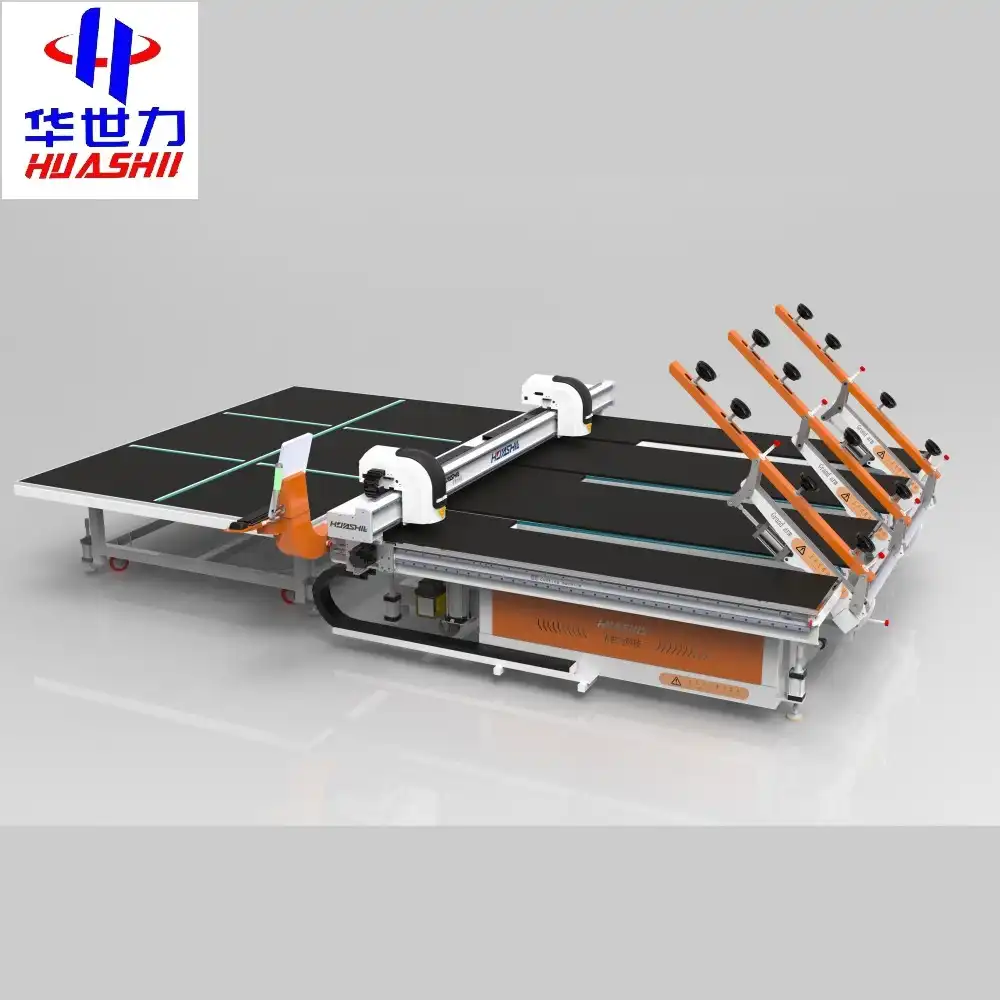
7 Ways Fast Speed Glass Cutting Machines Help Reduce Glass Waste
Modern cutting systems have many parts that work together to keep material loss to a minimum during production. When procurement managers and production directors understand these methods, they can figure out which capabilities give them the best return for their needs.
Precision Cutting Through CNC Technology
Human error is taken out of the cutting process by computer numerical control. Servo-driven placement systems keep the accuracy within 0.1 mm, making sure that every cut exactly meets the requirements. This accuracy is especially helpful when making architectural glass for curtain walls, where the success of the placement depends on the regularity of the sizes. The HSL-YTJ3826 model uses CNC controls to work with glass thicknesses ranging from 2 mm to 19 mm, meeting a wide range of production needs without sacrificing accuracy. Automatic edge-finding functions set up reference points for you, getting rid of another source of human error and speeding up the setup time between jobs.
Optimized Nesting Software Maximizes Sheet Usage
Intelligent software changes the way fabricators work with cutting layouts on a fast speed glass cutting machine. The Optima optimization tool looks at what the order needs and figures out the best way to cut each sheet to get the most value out of it. By carefully placing parts, the system cuts down on waste and turns bits that would otherwise be thrown away into usable ones for future orders. This feature is especially useful when working with big sheets up to 3660x2440mm, since even small improvements in how they are used can save a lot of material. Engineering managers like how stacking software can handle mixed orders by efficiently grouping parts of different forms while keeping track of each part throughout production.
Real-Time Monitoring Prevents Micro-Cracks
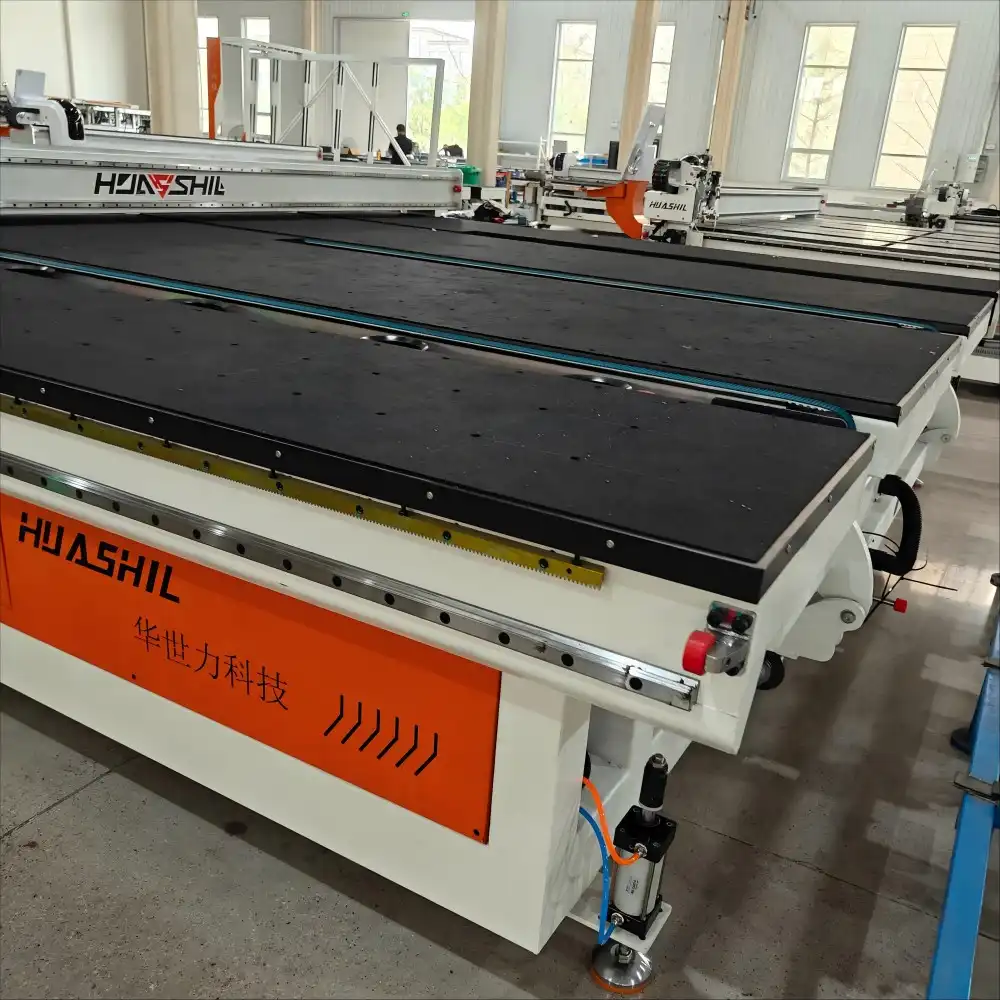
Automated pressure control devices change the cutting force all the time based on data from the material. Changes in the makeup and thickness of the glass are picked up by sensors, which change the parameters before stress builds up and cracks form. When working with tempered glass or laminated items, where internal pressures need to be carefully managed, this flexible method is important. The air flotation system on high-tech machines keeps the cutting surface from touching during the process, which stops scratches and contamination that lower the quality of the edge. Keeping the integrity of the glass during the cutting process stops losses that happen later when the glass is edged or tempered.
Reduced Kerf Width Limits Waste Generation
Cutting improvements make the tools that do the cutting use less material. With precise diamond wheels and the right cutting angles, the kerf width is cut down without lowering the quality of the edges. This means that more useful glass is kept from each sheet. Over the course of thousands of cuts, these small benefits add up to a big rebound. When switching from traditional cutters to high-speed automated systems, production directors who keep an eye on yield metrics see measurable improvements. The breaking table built into full cutting lines makes sure that the pieces are separated cleanly without leaving edge chips that need to be ground off.
Automated Quality Inspection Identifies Defects Early
Integrated vision systems check cuts in real time and quickly report any problems with the dimensions or the edges. When flaws are found early, they are stopped before they can move on to later stages of processing, where they would gain more value before the flaw is found. This feature cuts down on the trash that comes from edging, drilling, and finishing operations that are done on flats that don't meet specifications. The quality data that is collected during cutting can be used to track ongoing efforts to improve, which helps engineering teams find trends and consistently improve cutting parameters.
Routine Maintenance Preserves Accuracy
Preventive repair is easier with automated systems because they keep an eye on how well parts are working and let workers know about problems before they affect the quality of the cuts. Synchronous belt transportation systems make the machines simpler while keeping the sheets in the exact same place during the cutting cycle. With CE and ISO9001 certifications, you can be sure that the manufacturing process meets international quality standards. This means that you can be sure that the machines will keep working as designed for a long time. When purchasing managers look at the total cost of ownership, they know that reliability has a direct effect on waste rates. This means that after-sales support and spare parts availability are very important selection criteria.
Comprehensive Operator Training Enhances Precision
Even systems with a lot of automation work better with skilled workers who know how materials behave and what machines can do. With the 360-degree remote control, techs can keep an eye on many parts of the machine's operation and make small changes to get the best results for different types of glass. Training programs that teach both mechanical operation and software improvement give production teams the tools they need to get the most out of the equipment they buy. When plants put an emphasis on both training new operators and upgrading old equipment, they get better results in reducing waste and making the equipment work better overall.
These seven skills work together to make production settings where using materials efficiently gives you a competitive edge. When technical managers look at investments in automation, they should see how well each waste reduction method is covered by the system in question. This is because only partially solving a problem will yield similarly partially satisfying results.
Comparison with Traditional Glass Cutting Machines: Why Speed Matters
There are more than just throughput differences in how well traditional and high-speed automated systems, like the fast speed glass cutting machine, work. Processing speed has a direct effect on material waste in ways that are only clear when looking at full production processes.
Traditional semi-automated cuts need to be measured, positioned, and checked for quality by hand all the time. Each hand touchpoint adds time and the chance of making a mistake. When cutting speeds are slower, glass sheets stay in the process longer, which means they are more likely to get damaged by handling or the environment. The cumulative effect shows up as higher scrap rates that cut into profits, even though performance per cut seems fine.
High-speed systems shorten cycle times while keeping accuracy, which means they are less likely to be damaged during handling or contaminated by the environment. With automated filling, you don't have to lift heavy sheets by hand, so you don't get edge chips and surface scratches that make later processing harder. Just-in-time production methods that lower stocking costs and lower the risk of damage during storage are made possible by faster throughput.
A cost-benefit study shows that material savings are often enough to make an investment in automation pay off within 18 to 24 months. A fabrication plant that processes 500 sheets every month and cuts waste by 8% through automation saves about 40 sheets every month. At the current price of glass, this generates savings exceeding $50,000 a year for architectural glass operations, while the HSL-YTJ3826’s compact footprint allows it to fit into current floor plans without facility reconfiguration.
Selecting the Right Fast Speed Glass Cutting Machine for Your Business
When choosing equipment, it's important to make sure that its capabilities match the needs of the operation. Baseline throughput needs are set by production numbers, and customization needs are set by product mix. Architectural glass fabricators who work with commercial construction need to be able to work with a range of sheet sizes and thicknesses. Furniture manufacturers, on the other hand, may value shape complexity over dimensional range.
Technical specifications need to be carefully looked over. Cutting capacity tells you what kinds of glass the machine can work with, and the thickness range tells you what kinds of materials it can work with. Systems that can handle thicknesses between 2 and 19 mm make them useful for a wide range of uses, from artistic furniture glass to structural glazing parts. Dimensional capacity of up to 3660x2440mm is the same as jumbo sheet sizes, so there's no need for time-consuming preliminary sizing operations.
The powers of software have a big effect on how efficiently operations run. When optimization platforms are connected to business resource planning systems, the whole process is automated, from entering orders to planning output to cutting. This connection speeds up order handling and cuts down on mistakes caused by entering data by hand. When technical managers compare systems, they should look at how easy it is to use, how customizable they are, and how updates are handled.
Support after the sale is important, but it's not always given enough weight as a decision factor. When equipment breaks down, it affects both production ability and customer responsibilities. Operational risk is kept to a minimum by manufacturers who offer full warranties, documented spare parts availability, and quick technical support. CE certification and ISO9001 compliance make it easier for plants that serve foreign markets to follow the rules and give third-party confirmation of the quality of the products they make.
With customization options, you can make solutions that fit your specific production needs. OEM and ODM support is especially useful for curtain wall installers and system makers who need to automate specific tasks or connect to their own processing equipment. By working with providers during the specification phase, you can be sure that the equipment you buy will perfectly fit your operations. This way, you won't have to make process changes because of the limits of the equipment.
Future Trends and Innovations in Fast-Speed Glass Cutting Technology
As technology changes, it changes the landscape of glass fabrication. Now, algorithms that use artificial intelligence look at cutting performance data to find ways to improve things that humans can't see. Machine learning models can guess how tools will wear down over time. This allows for proactive repair that stops quality loss before it affects production. With these features, equipment goes from being a passive tool to an active part of efforts to improve things all the time.
Integration of Industry 4.0 links cutting systems to larger platforms for factory execution, allowing monitoring of production in real time and dynamic changes to schedules. Centralized dashboards let plant managers see how equipment is being used, how much material is being used, and quality metrics. This helps them make decisions based on data. Connectivity also makes remote diagnosis possible, which lets makers of equipment fix problems without sending out workers. This cuts down on downtime and service costs.
Environmental laws are having a bigger effect on the specs of tools. Energy-efficient drive systems and optimized cutting lines lower the amount of power used by each part. This lowers running costs and helps meet sustainability goals. Closed-loop cooling systems use as little water as possible, which is helpful in places where water is scarce. Architects who want to get LEED certification or meet other green building standards can include these environmental features.
New materials give cutting technology both new problems to solve and new chances to make money. Handling and cutting ultra-thin glass for electronics and thick laminated security windows must be done in a certain way. Companies that make equipment that is adaptable and can work with new materials put their customers in a position to take advantage of new market opportunities as they appear. By keeping up with the progress of technology, buying managers can choose tools that will still be useful in the future, rather than becoming useless as industry needs change.
Conclusion
Using smart technology on a fast speed glass cutting machine to cut down on glass trash has benefits that spread through all production steps. Material savings directly increase profits while also supporting environmental commitments that are becoming more and more important in buying decisions. Precision cutting gets rid of the need for rework and lowers the costs of handling further down the line. Faster throughput improves capacity without having to build more space. Advanced systems like the HSL-YTJ3826 show how adding CNC controls, optimization software, and automatic handling can change the costs of making glass. When production directors look at buying new equipment, they should look at more than just throughput. They should also look at how much waste the equipment can reduce. This is because material efficiency is a long-term competitive advantage in markets that care more about total cost of ownership than just acquisition price.
FAQ
1. How much waste reduction can we expect from upgrading to automated cutting?
Different methods and types of products can lead to different amounts of waste, but fabricators usually see 5–15% more material being used when they switch from manual to automatic cutting. Plants that handle mixed orders or forms with a lot of different parts see bigger gains thanks to better stacking algorithms that make the best use of sheets.
2. What kind of upkeep does high-speed cutting gear need?
As part of routine maintenance, the machine is cleaned every day, moving parts are oiled once a week, and the calibration is checked every month. Automated systems keep an eye on how well parts are working and let workers know when problems start to appear. This lets them take preventative steps that reduce unplanned downtime. Manufacturers give detailed maintenance schedules and often offer service contracts that cover regular checks and replacement of parts.
3. Can these machines handle different glass types and thicknesses?
Modern cutting tools can work with a wide range of materials, from 2 mm thick annealed glass to 19 mm thick fused glass. Automatic pressure control changes the cutting force based on the properties of the material, and edge-finding functions can work with a range of sheet sizes. This adaptability is useful for producers who work with a lot of different types of customers and their needs.
Partner With HUASHIL for Advanced Glass Cutting Solutions
HUASHIL has years of experience making high-quality products and installing them all over the world, so you can be sure that they know how to use automated glass processing technology. Our HSL-YTJ3826 cutting system combines precise CNC controls with Optima optimization software. This lets fabricators cut down on waste while increasing throughput. Our dedication to quality is backed up by CE and ISO9001 standards, and full after-sales support makes sure that your investment continues to provide value for a long time. Whether you're a company that makes building glass and wants to get better use out of your materials or a company that makes furniture and needs flexible automation, our engineering team can help you with your unique production needs. Get in touch with our experts at salescathy@sdhuashil.com to talk about how our fast speed glass cutting machine technology can change the way you make things. We are a well-known provider that wants our customers to succeed. To help you reach your business goals, we offer detailed technical talks, performance demos, and flexible purchasing terms.
References
1. Smith, J., & Anderson, M. (2022). Advanced Automation in Glass Manufacturing: Efficiency and Sustainability. Industrial Processing Journal, 45(3), 127-145.
2. European Glass Technology Association. (2023). Best Practices for Material Utilization in Architectural Glass Fabrication. Brussels: EGTA Publications.
3. Chen, L., Rodriguez, P., & Kim, S. (2021). CNC Technology Applications in Precision Glass Cutting. Manufacturing Technology Review, 38(2), 89-106.
4. National Glass Association. (2023). Economic Impact of Waste Reduction in Glass Processing Operations. Vienna, VA: NGA Research Division.
5. Williams, R. (2022). Industry 4.0 Integration in Glass Manufacturing: Current State and Future Directions. Automation Technology Quarterly, 29(4), 201-218.
6. International Commission on Glass. (2023). Environmental Sustainability in Glass Production: Materials Efficiency and Waste Minimization Strategies. Technical Report ICG-TR-2023-07.