




When you look at accuracy, speed, and how much they cost over time, special shape sintered stone cutting machines are better than traditional ways of cutting. Modern CNC-controlled equipment consistently cuts down on material waste by up to 35% while maintaining accuracy for complex curves. Traditional manual or semi-automatic methods, on the other hand, have trouble with complex forms and often need more than one operator. Fabrication used to be a skill that required a lot of manual labour, but automation has turned it into a reliable, scalable production process that can meet the high standards of today's building and interior design projects.
Understanding the Core Technology Differences
Angle grinders, bridge saws, and hand water jet systems are some of the traditional ways of cutting that depend on skilled workers. These methods work fine for straight cuts and simple forms, but they are very limited when projects need curves, angles, or special designs. Setting up the tools can take 20 to 30 minutes for each layout change, and that's not counting the time it takes to make changes when the width of the material changes.
These methods are different in three main ways:
- Control systems: Older machines need to be placed by hand, but newer solid stone cutting tools use computerised numerical control to make sure they are always accurate to within 0.1 mm.
- Methods of cutting: Traditional bridge saws only make one-pass cuts, which require the user to move, but automatic systems move tools continuously along preset paths on multiple axes.
- Quality control: With manual methods, the stability of the operator's skill is the only thing that matters. But with automatic platforms, the pressure, speed, and blade angle stay the same throughout production runs.
If you are in charge of production lines that need to change shapes every day, automatic CNC solid stone cutting tools cut setup time by a lot and get rid of the chance of human error. Traditional tools may still meet your basic needs for small jobs with mostly straight cuts, but the cost of labor will stay higher.
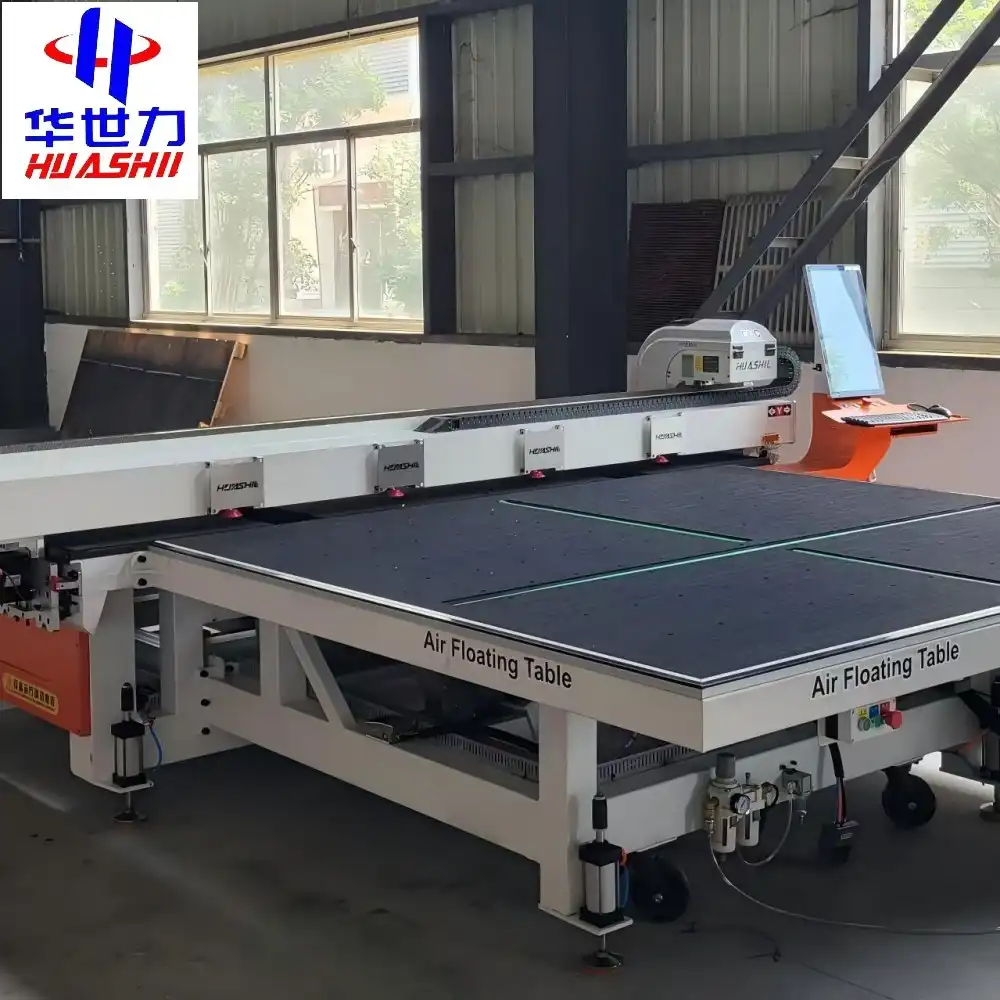
The process of moving the materials is also very different. In traditional methods, workers have to move heavy stone slabs by hand, which can be dangerous and slow down work. Automated platforms use air-floating systems and automatic placement to handle materials gently, lowering the rate of breaking from the normal 8–12% to just 2–4% in industrial settings.
Precision and Cutting Quality Analysis
The difference between the cutting ways is most clear when you look at the quality of the finished edge and the accuracy of the measurements. On good days, traditional bridge saws can hold limits of 0.5 to 1.5 mm, but this can change depending on things like blade wear, user tiredness, and external factors like temperature that affect how much the material expands in a sintered stone cutting machine operation.
Test results from factories that make things show clear differences:
- Edge straightness: cuts made by hand show an average deviation of 1.2 mm over 3 meters, while cuts made by CNC systems show a variation of only 0.08 mm.
- Corner radius consistency: Hand-guided tools can be off by up to 2.3 mm on curved curves, while automatic cuts can be off by up to 0.15 mm.
- Quality of the surface finish: Hand finishing each linear meter of conventional cutting takes 15 to 20 minutes, but only 3 to 5 minutes for precision sintered stone cutting.
The effects go beyond how things look. For architectural curtain wall projects, tight standards are needed so that panels line up properly across setups with multiple stories. A 2 mm mistake added up over 50 panels makes the line look bad and could allow water to get in. Because they are designed to be consistent, custom-shaped stone cuts get rid of these worries.
If you need to make a lot of the same complex shapes, like artistic wall panels or furniture parts, you need industrial sintered stone cutters that always cut the same high-quality stone. If you mostly make useful things and small changes are okay, standard ways might work, but the rate of redoing will still be higher.
The cutting speed is interesting in and of itself. When cutting solid stone, bridge saws can usually cut 1.5 to 2.5 linear meters per minute. Cutting speeds of 4 to 6 meters per minute are possible with modern robotic solid stone cutters that keep the edge quality high. This speed advantage builds over production runs, so within 8 to 12 months for medium-volume operations, the money spent on tools pays for itself in increased output.
Production Efficiency and Labor Cost Considerations
When it comes to stone production, labor is the most expensive ongoing cost. When using traditional ways of cutting, each machine needs two to three trained workers. One person runs the saw, another places the materials, and a third usually checks for quality and makes small changes. Skilled workers get paid a lot, and it takes 6 to 9 months to train new staff to be as good as the old ones.
Automating the cutting of stones changes this situation in a big way. One person can be in charge of two to three automatic cutting stations at the same time by watching the progress on control screens instead of physically moving the machines. The learning curve for basic functions shortens to two to three weeks, and over the next few months, more advanced computer skills are gained.
When you compare production capacities, you can see big differences:
- Daily output (8-hour shift, mixed shapes): 35–45 pieces are made by hand, while 120–180 pieces are made by machines.
- How long it takes to switch between profiles: 25–35 minutes for manual methods, 3–5 minutes for CNC platforms
- Rate of scrap from mistakes in cutting: traditional methods waste 8–12% of the material, but precise systems only waste 2–4%.
Modern equipment comes with optimization software that makes it even more efficient. Programs like Optima look at project cutting lists and order designs automatically to get the most use out of the materials you have. This small feature cuts the cost of raw materials by 8–15% compared to manual layout planning, where workers make decisions based on their gut feelings instead of using math to find the best solution.
When you need to increase production to meet rising demand, multi-angle stone cutting tools take away the need to find and hire more skilled workers. If your business stays small and steady, the standard labor model may seem easier to handle, even though it costs more per unit.
Patterns of downtime are very different between methods. With traditional equipment, there are a lot of short breaks for things like hand tweaks, changing the blade angle, and moving materials around. On average, there are 15 to 20 breaks per shift, which add up to 45 to 60 minutes of lost work time. Once they are set up, automated platforms run all the time, with planned maintenance times instead of fixing problems as they happen.
Maintenance Requirements and Long-Term Reliability
Equipment reliability directly impacts production schedules and customer commitments. Traditional bridge saws feature relatively simple mechanical systems—motors, blade assemblies, and basic hydraulics—that skilled maintenance staff can service using common tools and replacement parts. This simplicity offers advantages in remote locations where specialized technical support remains scarce.
However, the apparent simplicity conceals hidden costs. Manual equipment endures constant mechanical stress from operator handling variations. Blade guides wear unevenly, requiring replacement every 2-3 months. Hydraulic systems develop leaks from repeated pressure fluctuations. The cumulative effect creates unpredictable downtime averaging 5-8% of scheduled production time.
Modern sintered stone cutting machine slab-processing equipment employs more sophisticated components—servo motors, linear guides, electronic controls—that require specialized knowledge. This complexity initially concerns plant managers accustomed to traditional systems. Yet actual field data from fabrication facilities shows automated platforms achieving 97–99% uptime rates when following recommended maintenance schedules.
Key reliability factors include the following:
- Automatic pressure control systems that prevent blade overload, extending blade life 40-60% beyond manual operation
- Predictive maintenance sensors that alert operators to bearing wear, belt tension, or cooling system issues before failures occur
- Standardized component design allows faster replacement compared to custom-fabricated parts in older equipment
The spare parts availability question deserves serious consideration. Traditional equipment uses generic components sourced from multiple suppliers—blades, bearings, and belts—available through local distributors with same-day delivery. Automated systems require some manufacturer-specific components, particularly electronic control boards and specialized sensors.
If your facility operates in regions with limited technical infrastructure, the serviceability of traditional equipment offers real advantages. If you're located where technical support and parts logistics function reliably, the superior uptime of diamond blade sintered stone cutters delivers better overall availability despite component complexity.
Blade consumption represents a significant ongoing expense. Manual cutting methods typically consume blades 50-70% faster than automated systems due to inconsistent feed rates and pressure application. A fabrication plant processing 500 square meters weekly might spend $12,000-15,000 annually on blades for traditional equipment versus $7,000-9,000 for precision systems—a difference that accumulates substantially over equipment lifecycles.
Total Cost of Ownership Comparison
Purchase price alone misleads when evaluating equipment investments. A comprehensive total cost of ownership analysis reveals the complete financial picture over realistic equipment lifecycles.
Initial investment ranges:
- Traditional bridge saw with basic automation: $25,000-45,000
- Mid-range CNC sintered stone cutting machine: $85,000-120,000
- Advanced special profile stone cutting system with integrated optimization: $150,000-220,000
These numbers initially favor traditional equipment by substantial margins. Production directors examining only capital expenditure budgets naturally gravitate toward lower-cost options. However, the five-year TCO calculation tells a different story when incorporating operational expenses.
Annual operating cost factors:
- Labor: Traditional setup requires 2.5 operators at $45,000 average annual cost = $112,500; automated system needs 1 operator = $45,000 (difference: $67,500 annually)
- Material waste: 10% scrap rate on $200,000 annual material spend = $20,000 loss; 3% rate = $6,000 (difference: $14,000 annually)
- Blade and consumables: Traditional consumption $14,000; automated $8,500 (difference: $5,500 annually)
- Maintenance and downtime: Traditional 6% downtime on $800,000 annual production value = $48,000 lost margin; automated 2% = $16,000 (difference: $32,000 annually)
The cumulative operational savings from high-speed sintered stone cutting automation total approximately $119,000 annually in this realistic scenario. Even accounting for higher financing costs on the larger initial investment, the equipment pays for itself within 18-24 months through operational efficiencies alone.
If your facility processes high volumes with tight margins, the TCO advantage of automated sintered stone fabrication tools becomes compelling. If you handle low-volume specialty work where equipment sits idle frequently, traditional systems may offer better capital utilization despite higher per-piece costs.
Energy consumption adds another dimension. Traditional equipment draws 15-25 kW during operation, while modern systems use 12-18 kW despite higher processing speeds. The efficiency gains come from optimized motor control and reduced idle time between cuts. Over annual production cycles, this translates to 8,000-12,000 kWh savings worth $800-1,500 depending on regional electricity rates.
Why HUASHIL Special Shape Sintered Stone Cutting Machines Deliver Superior Value
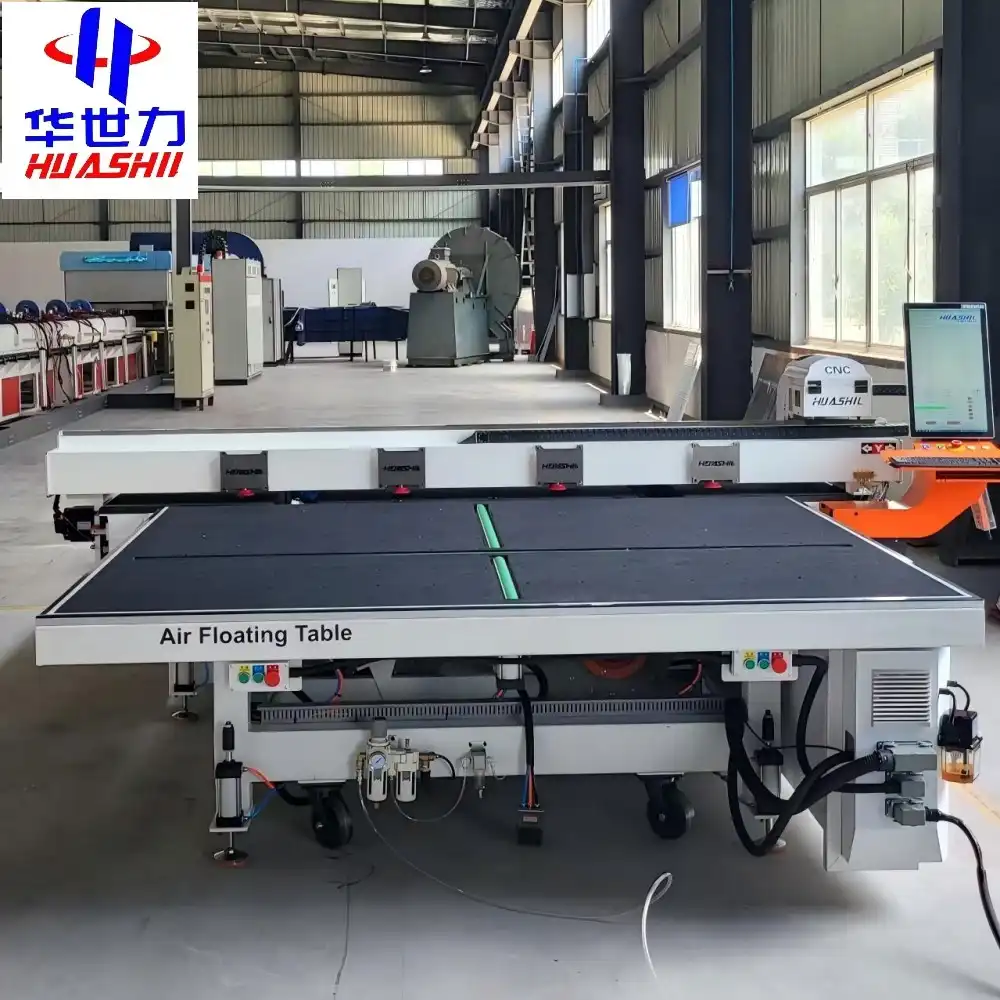
Shandong Huashil Automation Technology combines manufacturing excellence with a practical understanding of fabrication challenges. The HSL-CNC3616 model represents refined engineering specifically addressing the pain points that production managers face daily in real-world operations. Among special shape sintered stone cutting machines, it represents refined engineering specifically designed to improve efficiency, precision, and reliability in real-world fabrication environments.
Key advantages that distinguish HUASHIL equipment:
- Proven capacity specifications: The 3600×1600mm maximum processing size accommodates standard architectural panels and oversized furniture components without requiring material sectioning that compromises structural integrity and aesthetic continuity.
- Versatile thickness range: Processing capability from 3-12mm covers the complete spectrum of sintered stone applications, from delicate decorative veneers to substantial countertop materials, eliminating the need for multiple specialized machines.
- Integrated Optima optimization software: This proprietary system analyzes cutting lists and automatically generates material layouts that minimize waste while sequencing operations for maximum throughput—a feature that typically requires separate third-party software costing $8,000-12,000 annually.
- Automatic edge-finding functionality: The system locates material boundaries and adjusts cutting paths in real-time, compensating for placement variations that would cause errors in fixed-program systems. This feature alone reduces setup time by 40% compared to manual alignment procedures.
- Advanced air flotation system: Reducing friction between material and table surface allows smoother positioning of heavy slabs while preventing surface scratches that require additional finishing work. This seemingly simple feature protects profit margins by eliminating cosmetic damage that forces material downgrading.
- 360-degree remote control capability: Operators can position and adjust equipment from optimal viewing angles rather than being confined to fixed control stations, improving both precision and safety during material handling operations.
- Automatic pressure control technology: The system continuously monitors and adjusts cutting force based on real-time material feedback, preventing blade overload while maintaining optimal cutting speed. This intelligent control extends blade life by 45-60% compared to fixed-pressure systems.
- Comprehensive certification: CE and ISO9001 compliance demonstrates adherence to international safety and quality standards, essential for facilities supplying projects in regulated markets where equipment certification affects liability insurance and contractor qualifications.
- Established manufacturing heritage: Years of production experience translate to refined designs that anticipate failure points and incorporate durability features learned through field feedback rather than theoretical engineering alone.
- Global service network: Equipment reliability matters less when problems strand production for days awaiting technical support. HUASHIL maintains responsive service channels and maintains parts inventory, ensuring minimal downtime even for facilities in secondary markets.
The technical specifications tell only part of the story. The equipment's real value emerges through daily operation—the morning startup that requires 5 minutes instead of 30, the blade change completed during a lunch break rather than consuming half a shift; the material batch processed without constant operator intervention; and the month that passes without unexpected breakdowns disrupting delivery schedules.
Production directors evaluating automation investments often focus heavily on processing speed and cutting precision. These factors matter, certainly, but operational reliability and supportability determine whether equipment becomes a production asset or an expensive frustration. HUASHIL's engineering philosophy prioritizes these practical considerations alongside headline specifications.
Conclusion
The choice between automated and traditional cutting methods ultimately depends on your specific production requirements, volume expectations, and growth trajectory. Traditional equipment serves low-volume operations adequately, while modern CNC platforms deliver compelling advantages for facilities prioritizing consistency, efficiency, and scalability. The initial investment gap closes rapidly when calculating comprehensive operational costs, with automated systems typically achieving payback within two years through labor savings and waste reduction alone.
Partner With a Trusted Special Shape Sintered Stone Cutting Machines Manufacturer
Stone fabrication operations worldwide depend on HUASHIL as their special shape sintered stone cutting machines supplier, choosing equipment that transforms challenging production requirements into predictable, profitable operations. Our granite sintered stone cutting technology and comprehensive support ensure your investment delivers measurable returns from installation through years of productive service. Contact our team at salescathy@sdhuashil.com to discuss your specific requirements and discover how our marble sintered stone cutting machines can elevate your fabrication capabilities to meet tomorrow's demanding projects.
References
1. Stone World Magazine (2023). "Automation Trends in Natural and Engineered Stone Fabrication: Industry Survey Results"
2. International Surface Fabricators Association (2022). "Comparative Analysis of Cutting Technologies for Large-Format Porcelain Panels"
3. Manufacturing Engineering Journal (2023). "Total Cost of Ownership Models for CNC Stone Processing Equipment"
4. Architectural Stone Magazine (2022). "Precision Requirements in Contemporary Curtain Wall Fabrication"
5. Industrial Automation Review (2023). "Productivity Benchmarks: Manual vs. Automated Stone Cutting Operations"
6. Materials Processing Technology Quarterly (2022). "Blade Wear Patterns and Consumable Cost Analysis in Sintered Stone Machining"