




Advanced glass loader systems and glass sheet conveyors have changed the way factories handle fragile materials during production processes. Modern conveyor technology automates the moving of fragile sheets from storage to processing sites, which gets rid of major bottlenecks in the glass manufacturing process. These specialised systems speed up output and lower the risks of human handling. They are important for architectural glass plants and curtain wall makers that want to stay ahead in today's automation-driven industrial world.
Understanding Glass Sheet Conveyors and Their Role in Loading Processes
Glass sheet conveyors are a special kind of material handling equipment that was made to move fragile glass panels from one stage of production to the next. Unlike regular conveyors, these systems have padded wheels, air flotation technology, and precise sensors that are meant to keep the surface from getting micro-fractures and other damage while they're moving.
Types of Glass Conveyors Available
There are different kinds of conveyors on the market that can be set up to work with different sizes of operations. Smaller shops that only need to handle a small amount of material can use manual roller conveyors, while medium-sized businesses that need to speed things up a bit can use semi-automated belt systems. Fully automatic glass loader systems, like the HSL-SPT3624 type, let you use them without using your hands because they have customisable logic controls and can be controlled from a distance. They can handle glass sheets up to 3660x2440mm with amazing accuracy.
Challenges Without Proper Conveyor Systems
Production centres that don't have the right transportation systems have a hard time running their businesses. According to studies on the effectiveness of the glass business, breaking rates are 15–25% higher when handled by hand instead of automatically. When workers lift big glass pieces over and over, they are more likely to get hurt, and production slows down during times of high demand. These problems have a direct effect on profits because they cause wasteful use of materials, inefficient use of labour, and delays in order fulfilment.
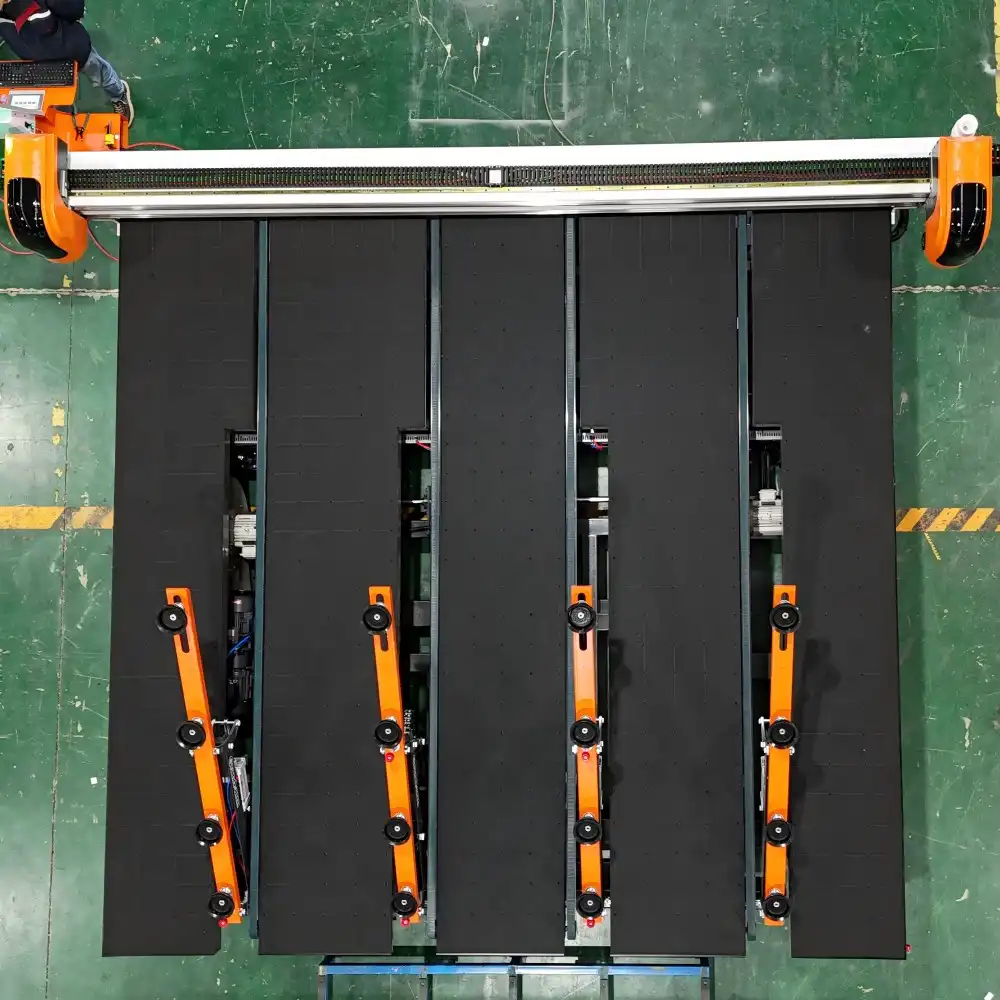
Key Features of Modern Glass Loaders
Modern automatic lifting systems use a number of different technologies to make them more reliable and effective. Air-floating devices cut down on friction when the glass moves, which pretty much eliminates surface scratches. Breaking tables makes it easier to separate sheets in a controlled way, and 360-degree remote controls let workers move equipment from a safe distance. Systems that have been certified by CE and ISO9001 show that they meet international standards for safety and quality. This gives buying managers faith in the investments they make.
Core Benefits of Using Glass Sheet Conveyors in Industrial Loading
Using smart transportation solutions changes business measures in a lot of different ways. Facilities that switch from human to automated glass handling consistently get better, and the benefits go beyond just less work for the workers.
Enhanced Operational Efficiency
Automated glass transport systems make it faster for materials to move around in production areas. Between the cutting stations, the edging equipment, and the packing areas, the conveyors move at speeds of 10 to 30 metres per minute. This steady flow gets rid of the need to wait between steps in the process, which raises the total score for tool efficiency. After building combined transport networks that work with cutting tables and washing stations, production managers say that output went up by 30 to 40 per cent.
Because there are fewer points of contact for dealing, there are also fewer points of need for quality control checks. When there are fewer physical moves, there are fewer chances for contamination or mismatch. This means that quality assurance teams can focus on more important inspection steps and less on regular handle checks.
Improved Safety and Material Protection
When big glass sheets are moved by machines instead of people, safety measures at work get a lot better. Lifting big panels comes with fewer ergonomic risks, which means fewer workers' compensation claims and lost-time events. Premium glass loader models, including the glass loader, have air-float systems that create a protected cushion that stops edge chips and surface abrasions. This keeps the purity of the material from raw stock to the final product.
Modern monitors can tell when the load isn't right before it does any damage. Weight distribution monitors make sure that the sheets are placed evenly, and visual systems check the positions of the sheets before they start to move. These safety measures protect both people and expensive items, which addresses two of the main concerns that procurement directors have when they look at capital equipment purchases.
Financial Returns and ROI
Several types of value are used to make the case for automatic glass lines. As soon as fewer workers handle material-moving jobs, labour costs go down. After automating the process, a normal architectural glass plant that processes 200 sheets of glass every day can move two to three full-time jobs to tasks that add value. Material saved from less damage usually pays for 10 to 15 per cent of the starting cost of the tools in the first year.
Curtain wall makers say that adding conveyors to custom cutting lines brings in especially good profits. When material flow is synchronised, the need for work-in-progress inventory goes down. This frees up capital that would have been stuck in cushion stock. When order response times are faster, rush projects can be accepted at higher prices, which creates income possibilities that rivals using human systems can't match.
Best Practices for Selecting and Implementing Glass Sheet Conveyors
Adopting a conveyor successfully needs a thorough evaluation that is in line with the needs of the business. We suggest an organised method that takes into account both the needs of the present and the ability to grow in the future.
Assessing Your Operational Requirements
Analysis of production amount is the basis for choosing the right tools. Semi-automated solutions may be enough for facilities that process less than 50 sheets per day, but fully automated glass loader systems that can work nonstop are needed for facilities that process more than 300 sheets per day. Sheet size ranges are just as important—equipment needs to be able to handle your biggest normal sizes plus an extra 10 to 15 per cent for orders that are too big sometimes.
Integration compatibility with machinery that is already in use should be given a lot of thought. Aligning the height of the conveyor with the cutting tables and shaping tools stops awkward changes that require people to handle the goods by hand. Communication methods between equipment operators allow them to work together in sync, so processes upstream immediately start conveyors downstream. When evaluating vendors, engineering managers should ask for full integration requirements so that they don't have to do any expensive adaptation work during installation.
Critical Evaluation Factors
The load capacity standards must be at least a little higher than what is needed for normal output. When working with standard 12mm architectural glass, equipment that is rated for a maximum glass thickness of 19mm works consistently, but it has trouble with uneven loads. Different speeds can be used to get the best results for different types of glass. For example, faster speeds are best for strong, hardened sheets, and slower speeds are best for fragile coated goods.
Infrastructure for after-sales help has a big effect on the long-term worth of tools. When a part fails, suppliers who keep extra parts in stock locally cut down on downtime. Technical help that is available during your work hours, including shifts on the weekends, which are popular in the glassmaking industry, keeps downtime from lasting too long. Procurement professionals should check service contracts to make sure they keep their promises about reaction times and parts availability.
Implementation and Maintenance Strategies
Professional fitting by factory-trained experts guarantees top performance right from the start. Properly preparing the groundwork, integrating the electrical systems, and initialising the measurements set the standard for operation, which is then maintained by in-house maintenance teams through regular care. We suggest making preventive maintenance plans that include times to clean every day, lubricate once a week, and check the sensor accuracy every three months.
In addition to learning how to use equipment properly, operators are taught how to fix common problems, spot early signs of component wear, and use a glass loader. Facilities that spend fully on training programmes have 40% fewer unexpected shutdowns than facilities that only offer basic training. Documentation tools that keep track of repair tasks and performance measures let you make choices based on data about when to change parts and how to improve the process.
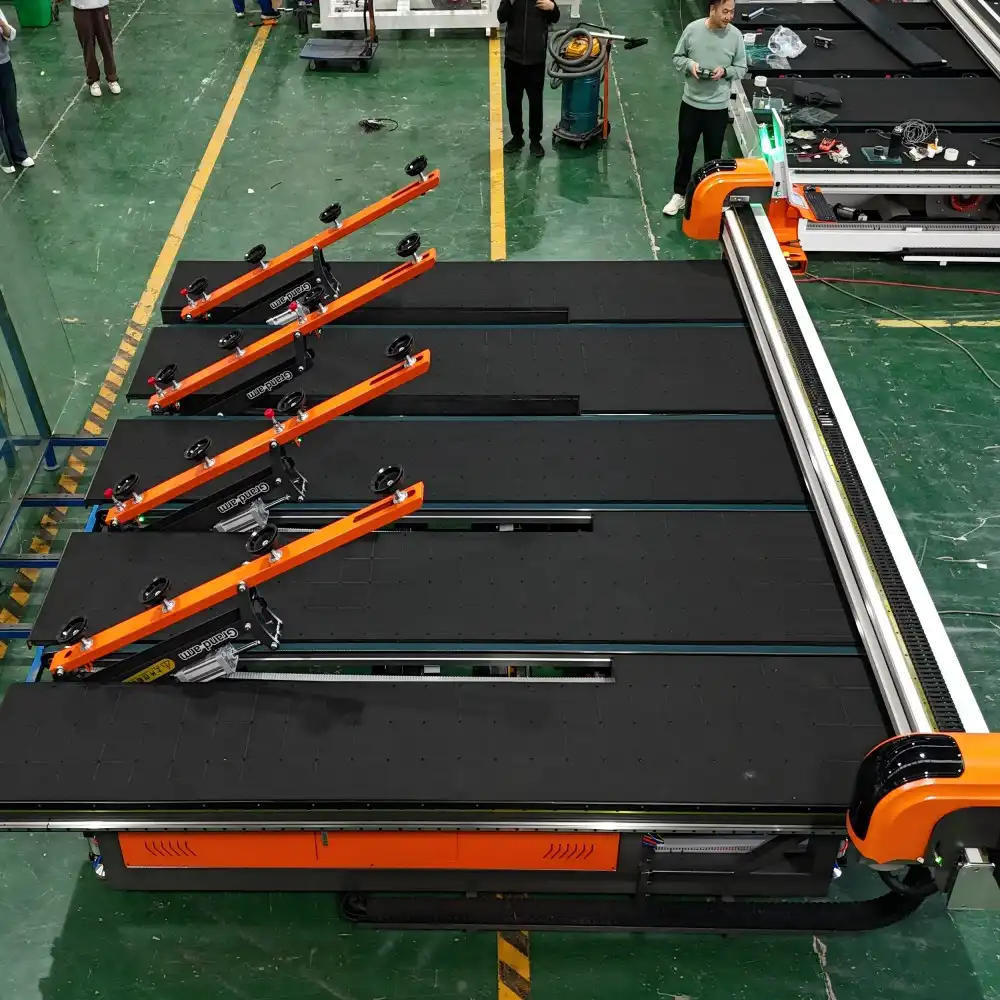
Why Choose HUASHIL Glass Loader Solutions?
Shandong Huashil Automation Technology represents a manufacturing enterprise combining engineering excellence with customer-focused service. Our glass loader systems reflect years of refinement based on real-world feedback from architectural glass producers, curtain wall integrators, and furniture manufacturers across global markets.
Technical Superiority and Automation Features
The HSL-SPT3624 model exemplifies our commitment to practical innovation. Its air flotation system creates a frictionless transport surface that eliminates contact-related damage while maintaining precise positional control. The integrated breaking table streamlines workflow by combining sheet separation and loading functions in a single footprint, conserving valuable floor space in crowded production environments. Remote control operation through 360-degree wireless systems allows operators to manage multiple loading stations from central positions, improving supervision efficiency while maintaining safety distances during automated cycles.
Compliance with CE and ISO9001 standards demonstrates our adherence to international quality management systems. These certifications provide procurement managers with objective validation of manufacturing processes and quality control procedures, reducing evaluation uncertainty when comparing alternative suppliers.
Integration Capabilities and Customisation
Our engineering team collaborates with system integrators to develop tailored solutions matching specific production line architectures. Whether you operate standalone cutting stations or fully integrated processing lines, our glass loader equipment adapts through customisable conveyor lengths, height adjustments, and control system interfaces. This flexibility particularly benefits curtain wall fabricators requiring specialised handling for oversized panels and furniture manufacturers processing varied glass shapes.
OEM partnerships receive dedicated engineering support for prototype development and testing. We understand that system integrators need reliable component suppliers capable of meeting demanding project timelines. Our established supply chain and quality control protocols ensure consistent delivery performance, helping your projects maintain schedules and budgets.
Comprehensive Support Infrastructure
Technical assistance extends throughout equipment lifecycles, from pre-purchase consultation through decades of operational support. Our customer service team addresses enquiries regarding specifications, integration planning, and performance optimisation. Installation support ensures proper commissioning, while ongoing technical guidance helps maintenance teams address operational questions and troubleshooting needs.
Spare parts availability through strategically positioned inventory reduces downtime exposure. Critical components ship within 48 hours for standard items, with emergency expediting available for production-critical situations. This responsive support infrastructure particularly benefits plant managers and production directors accountable for maintaining uptime targets and delivery commitments.
Future Trends in Glass Sheet Conveyors and Loading Automation
The glass processing industry continues evolving towards higher automation levels and data-driven optimisation. Understanding emerging trends helps procurement professionals make investment decisions that remain relevant as technology advances.
Advanced Technologies Reshaping Glass Handling
Artificial intelligence applications now optimise loading sequences based on production schedules and material characteristics. Smart glass loader systems analyse historical performance data to predict optimal conveyor speeds for different glass types, balancing throughput against breakage risk. Predictive maintenance algorithms monitor vibration patterns, motor current draw, and sensor readings to identify component degradation before failures occur, scheduling replacements during planned downtime rather than emergency stoppages.
Internet connectivity enables remote monitoring and diagnostics, allowing equipment suppliers to provide proactive support. Plant managers access real-time performance dashboards tracking throughput rates, utilisation percentages, and maintenance requirements across multiple production lines, including through glass loaders. This visibility supports data-driven decisions about capacity allocation and process improvements that manual tracking methods cannot match.
Preparing for Next-Generation Systems
Scalability considerations influence current equipment selections as facilities plan for future growth. Modular conveyor designs allow incremental capacity additions without wholesale system replacements. Control systems accepting firmware updates accommodate evolving automation standards and communication protocols, protecting investment value as industry practices advance.
Workforce development deserves attention as automation sophistication increases. Operator roles transition from manual labour towards equipment supervision and data interpretation. Technical training programmes preparing employees for these evolving responsibilities reduce resistance to automation adoption while building organisational capabilities that support continuous improvement initiatives.
Conclusion
Glass sheet conveyors have become indispensable assets for manufacturers seeking competitive advantages through operational excellence. Modern glass loader systems deliver measurable improvements in efficiency, safety, and profitability while addressing the material handling challenges inherent in glass fabrication. HUASHIL's proven technology, combined with a comprehensive support infrastructure, provides procurement professionals with reliable solutions backed by manufacturing expertise and customer commitment. As automation trends accelerate, investing in advanced conveyance systems positions facilities for sustainable growth and market leadership.
FAQ
1. How do glass conveyors minimise material breakage?
Advanced glass loader systems employ multiple protective mechanisms that reduce breakage rates significantly below manual handling levels. Air flotation technology creates a cushioning effect that prevents direct contact between glass surfaces and conveyor components, eliminating micro-fractures from abrasion. Precision sensors detect improper loading angles or weight distribution issues before initiating movement, preventing stress concentrations that cause edge chips. Controlled acceleration and deceleration profiles avoid sudden forces that could exceed glass strength limits, particularly important when handling thin architectural panels.
2. What factors should procurement teams evaluate before purchasing?
Capacity matching represents the starting point—equipment must handle your maximum glass dimensions and thickness ranges with comfortable margins. Integration compatibility ensures seamless connection with existing cutting tables, edging machines, and downstream equipment without requiring extensive adaptation. Vendor support infrastructure, including spare parts availability, technical assistance responsiveness, and training resources, significantly impacts long-term ownership costs and operational reliability. A total cost of ownership analysis should encompass installation expenses, maintenance requirements, and expected useful life alongside the initial purchase price.
3. Can automated glass loaders integrate with existing production lines?
Modern conveyor systems feature flexible interfaces that accommodate diverse production environments. The HSL-SPT3624 model offers adjustable height settings, customisable conveyor lengths, and multiple control system options that match common industry equipment. Programmable logic controllers communicate with upstream and downstream machinery using standard industrial protocols, enabling synchronised operation without proprietary lock-in. Engineering support during implementation planning helps identify potential integration challenges and develop solutions before installation begins.
Partner with HUASHIL for Advanced Glass Loading Solutions
HUASHIL delivers proven automation technology that transforms glass handling operations for architectural fabricators, curtain wall integrators, and furniture manufacturers. Our HSL-SPT3624 glass loader manufacturer expertise combines air flotation precision, remote operation convenience, and CE-certified safety standards in robust equipment designed for demanding production environments. Procurement managers seeking reliable suppliers find responsive support, transparent pricing, and comprehensive after-sales service that protects equipment investments throughout operational lifecycles. Contact our team at salescathy@sdhuashil.com to discuss your specific requirements and discover how our glass loader solutions optimise your production workflows while reducing costs and improving quality outcomes.
References
1. Glass Processing Industry Association. (2022). Automation Standards and Best Practices for Glass Fabrication Facilities. Industrial Press.
2. Manufacturing Technology Research Institute. (2023). Material Handling Systems: Design, Implementation, and ROI Analysis. Technical Publications.
3. Wilson, R., & Thompson, J. (2021). Safety Engineering in Glass Manufacturing: Equipment Standards and Compliance. Safety Science Publishers.
4. International Glass Review. (2023). Global Trends in Glass Processing Automation and Industry 4.0 Integration. Industry Analysis Report.
5. Chen, M., & Rodriguez, A. (2022). Predictive Maintenance Strategies for Industrial Conveyor Systems. Maintenance Engineering Journal, 47(3), 156-174.
6. European Committee for Standardization. (2021). CE Certification Requirements for Glass Processing Equipment: Technical Standards and Compliance Guidelines. Standards Documentation Series.