




Cutting glass quickly and correctly is still one of the hardest things for production managers and plant leaders to do in the manufacturing world. A
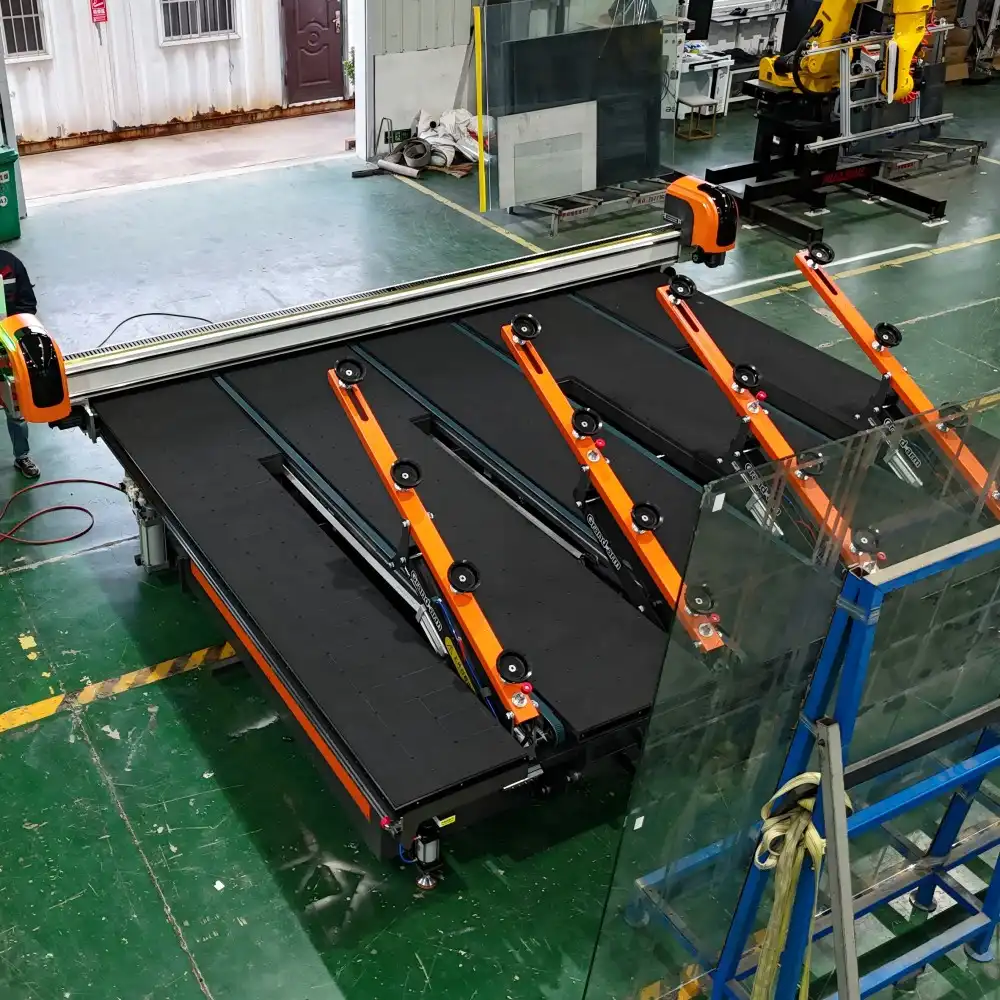
takes flat sheets of glass and cuts them into exactly measured pieces that can be used for furniture, smart screens, building walls, and car windows. Modern automatic glass cutting systems use advanced scoring tools, optimised cutting patterns, and built-in breaking tables to get the most out of the material and lose as little as possible. As the building and car industries in the US increase production needs, procurement managers need to know the basics of glass processing equipment when they look at capital investments that will affect production efficiency for years to come.
Understanding Glass Cutting Lines: Basics and Components
Modern glass cutting assembly lines are very complex machines that use both mechanical accuracy and software intelligence to turn big sheets of glass into finished parts with little help from humans. Over the past ten years, these systems have changed a lot. What used to be labour-intensive human tasks have been turned into streamlined computerised processes that make both output and accuracy much better.
Core Components and Their Functions
The filling table is where people or machines put the raw glass sheets to start the process. This part has suction cups or moving systems that can safely move sheets without damaging the surface. The score head, which has diamond or carbide wheels, is mounted on the cutting table. It makes controlled crack lines across the surface of the glass. Breaking tables use exact pressure along scored lines to break glass into clean pieces. Edge polishers, cleaners, and packing systems are some of the other parts that can be added to make full production processes.
Operational Sequence in Modern Systems
Glass comes into the line at the filling station, where the sizes are checked against the orders for production. Optimisation software looks at each sheet to find the best way to cut it. This lowers the amount of waste, which is usually between 8 and 15 per cent when done by hand but only 3 to 6 per cent with more advanced systems. The score head goes along precise rails that can be above or below ground. It can make fracture lines at speeds of up to 120 metres per minute. Then, breaking arms split the pieces into their own parts, which are sent to later steps to be finished on the edges and checked for quality.
Manual Versus Automated Configurations
Handheld measuring, marking, and scoring tools are used on manual cutting lines, which are best for small workshops that only need to handle about 50 sheets of glass every day. Automated systems use computerised controls to cut complicated patterns without constant supervision. This makes them perfect for places that handle more than 200 sheets per shift. When working on building projects that need hundreds of identical window units, the difference in output becomes clear: automated lines keep the same level of accuracy over thousands of cuts, while human methods introduce small differences that add up over time and affect the final assembly.
These basic parts are what make production efficient. They have a direct effect on labour costs, material waste, and quality stability, which procurement managers must look at when comparing equipment providers.
Comparing Glass Cutting Technologies and Solutions
To choose the right cutting technology, you have to weigh your short-term budget needs against long-term running costs, production volume needs, and quality standards specific to your target markets. We looked at performance data from different system setups to help tech managers choose tools based on facts.
Automation Levels and Their Business Impact
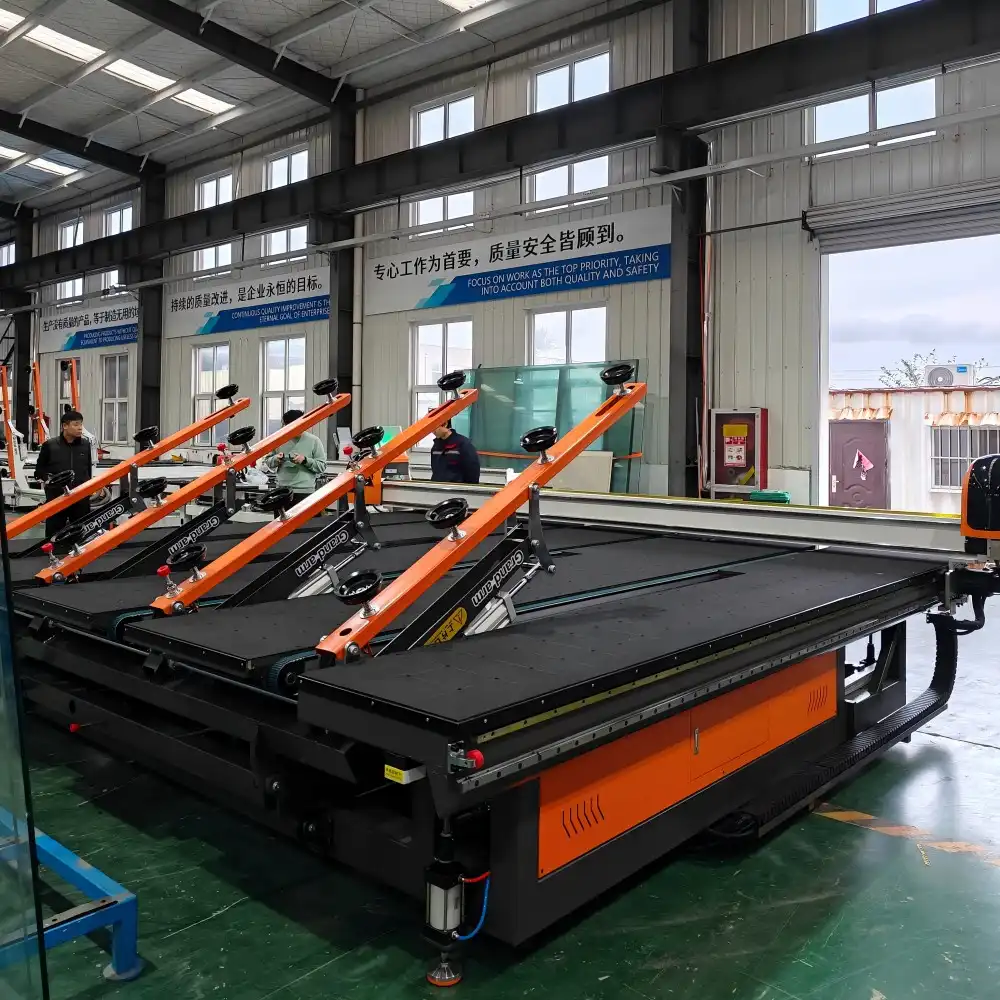
Beginner semi-automated systems have both hand loading and computerised cutting. They are a good balance for mid-sized makers who want to increase work without spending a lot of money ($80,000 to $150,000). The HSL-LSX6133 model is a fully automated system with three separate tables for loading, cutting, and breaking. It is controlled by Optima optimisation software, which figures out the best cutting routines in real time. This set-up can handle glass sheets that are up to 6100 mm x 3300 mm, which means it can be used for full-size building panels and car windscreens that are too big. Each side has six "grand arms" that apply controlled breaking force. This lets multiple pieces be worked on at the same time to get the most work done.
The 2+2 station layout lets workers create their own breaking patterns, which is especially helpful when handling mixed orders with both standard and speciality forms. Different facility plans can be accommodated by above-ground and below-ground rail choices. Above-ground systems make it easier for repair workers to get to buildings, while below-ground designs lower the overall line height in buildings with limited headroom.
Energy Efficiency and Operating Costs
Modern cutting lines, including glass cutting lines, use 15 to 25 kW of energy when they are actively cutting, which adds up to big electricity costs over multiple shifts. When compared to older designs that used constant-speed motors, newer equipment with variable-speed motors and clever rest modes uses 20–30% less energy. To find the total cost of ownership, you have to add up these working costs along with the upkeep needs. For example, automatic systems usually need to be serviced every 2,000 hours of use, while hand equipment needs to be adjusted once a week.
Technology Comparison: Mechanical Versus Laser Cutting
Laser cutting systems are perfect for artistic glass and other speciality uses because they can cut shapes and designs with great accuracy. But their high initial costs ($300,000 to $600,000) and slow cutting speeds (10 to 15 metres per minute) make them impractical for making a lot of building glass. Mechanical scoring is still the standard way to make straight cuts and easy forms. It's also the most cost-effective way to make 80% of glass products, which are rectangular and have standard angles.
When buying teams look at these factors, they can better match the capabilities of tools with the needs of production. This makes sure that investments pay off in the form of lower labour costs and better material utilisation.
Maintenance, Troubleshooting, and Optimising Glass Cutting Line Performance
The amount of time that your equipment is up and running directly affects whether your production plan meets customer promises or causes costly delays that hurt your relationships with clients. We've made repair plans using information from sites that work multiple jobs and handle a wide range of products.
Preventive Maintenance Schedules
Cleaning every day gets rid of the cutting oil and glass chips that build up on the tracks and bearings. This stops the bearings and rails from wearing out too quickly, which lowers their accuracy. It's important to grease the moving parts once a week to keep them running easily. This is especially true for the carriage parts that hold the cutting heads. Cutting wheels should be checked once a month, and worn-out wheels should be changed before they make the cut less good. Keep a close eye on the scorehead assembly, as even small scratches can change how cracks spread, leaving rough edges that need more work.
Calibration every three months makes sure that the placement accuracy stays within the allowed range, which is usually ±0.2mm for building uses and ±0.1mm for car glass. Recording all upkeep tasks creates useful trend data that finds repeated problems before they lead to sudden breakdowns.
Common Issues and Practical Solutions
When breaking patterns aren't constant, it's usually because the score pressure isn't balanced or the breaking arms are worn out and need to be adjusted or replaced. When pieces of glass build up under cutting tables, they block sensor beams, which causes fake safety stops that stop production. Most software problems are caused by old optimisation methods that don't take into account the current sizes of glass products. These problems can be fixed by regular software changes from equipment makers.
When fixing goes beyond simple changes, hiring factory-trained experts keeps people from making fixes that cause new problems by accident. A lot of companies offer online troubleshooting services that let technicians reach system settings through safe connections. This way, problems can be found without having to wait for techs to travel.
Performance Optimisation Strategies
Changing the cutting speed based on the thickness of the glass increases output without lowering quality. For example, speeds of up to 120 metres per minute are fine for 3 mm glass, but 60 to 80 metres per minute are needed for clean breaks in 12 mm sheets. The advanced systems that are built into the Optima software look at past production data to improve cutting patterns all the time. It learns which setups produce the least amount of waste for the different types of products that your facility routinely works with.
Real-world data from curtain wall makers shows that better cutting patterns cut down on scrap from 9.5% to 4.2%, making projects with limited material costs more profitable. These changes are made to thousands of sheets every year, and the money saved on materials alone often pays for the purchase of new tools within 18 to 24 months.
By using these upkeep and optimisation techniques, you can protect your investment and make sure that the system always works at a level that meets customer quality expectations and delivery promises.
How to Choose and Procure the Right Glass Cutting Line?
Equipment selection decisions for a glass cutting line carry multi-year consequences that affect production capacity, product quality, and competitive positioning. We've guided numerous plant managers through this evaluation process, identifying critical factors that separate successful investments from problematic purchases.
Defining Your Production Requirements
Begin by quantifying current production volume and realistic growth projections over the equipment's expected 10-15-year service life. A facility processing 800 square metres daily needs substantially different capabilities than one handling 200 square metres, impacting decisions about automation level, cutting speed, and number of processing stations. Material specifications matter equally—architectural glass fabricators primarily cutting 4-6mm annealed glass face different requirements than automotive suppliers processing laminated assemblies or furniture manufacturers working with tempered glass.
Product mix complexity influences optimisation software requirements. Facilities producing standardised window sizes benefit from basic nesting algorithms, while those handling custom architectural projects need advanced optimisation that accommodates irregular shapes and varied thicknesses within single production runs.
Critical Decision Metrics
Cutting precision directly affects downstream processing requirements and final product quality. Architectural applications typically require ±0.3mm tolerance, achievable with most modern automated systems. Automotive glass demands ±0.15mm precision to ensure proper fit within vehicle assemblies, necessitating premium equipment with enhanced positioning controls. Production speed specifications should reflect realistic operating conditions rather than theoretical maximums—sustainable continuous operation typically runs at 70-80% of rated capacity.
After-sales support quality significantly impacts long-term satisfaction with equipment purchases. Evaluate suppliers based on spare parts availability, technical support response times, and training programmes that prepare your maintenance team to handle routine service independently. Documentation quality matters tremendously—comprehensive manuals with detailed troubleshooting flowcharts minimise downtime when issues arise outside normal business hours.
Purchasing Models and Supplier Selection
New equipment purchases provide the latest technology, full warranties, and customisation options but require substantial capital allocation ($120,000-$400,000 depending on automation level and size capacity). Leasing arrangements reduce initial cash requirements while providing upgrade flexibility as technology evolves, which is particularly attractive for mid-sized operations cautious about technology obsolescence. Certified pre-owned equipment offers 40-60% cost savings with remaining useful life, suitable for facilities entering new product categories or testing market demand before committing to new equipment.
Partnering with established glass cutting line manufacturers ensures access to engineering expertise that helps specify optimal configurations for your applications. Reputable suppliers provide factory acceptance testing, installation supervision, and operator training that accelerate productive operation after equipment commissioning.
These selection criteria create a framework for comparing suppliers systematically, ensuring your investment delivers anticipated productivity improvements and quality enhancements that justify the capital commitment.
Future Trends and Innovations in Glass Cutting Technology
Technology evolution continuously reshapes competitive dynamics within glass fabrication, creating opportunities for forward-thinking operations while challenging those maintaining outdated equipment. We've tracked emerging developments that will influence procurement decisions over the coming five years.
Smart Manufacturing Integration
IoT-enabled cutting lines collect real-time performance data—tracking metrics like cutting speed, material consumption, maintenance intervals, and quality defects. This data feeds predictive maintenance algorithms that forecast component failures before they occur, scheduling preventive service during planned downtime rather than responding to unexpected breakdowns. One architectural glass fabricator reported a 23% reduction in unplanned downtime after implementing IoT monitoring, directly improving on-time delivery performance that strengthened customer relationships.
Artificial intelligence enhances optimisation software capabilities beyond simple nesting algorithms. Advanced systems analyse historical production data to identify patterns in material waste, discovering inefficiencies that human operators overlook. Machine learning algorithms continuously refine cutting sequences, adapting to your facility's specific product mix and glass inventory characteristics.
Sustainability and Energy Efficiency
Environmental regulations increasingly influence equipment specifications as governments mandate reduced energy consumption and waste generation. For a glass cutting line, modern glass cutting systems incorporate variable-frequency drives, intelligent power management, and waste heat recovery that collectively reduce energy costs by 25-35% compared to equipment designed a decade ago. These efficiency improvements directly benefit operating budgets while supporting corporate sustainability initiatives that resonate with environmentally conscious clients.
Market Dynamics and Supplier Response
Growing construction activity in smart city developments drives demand for specialised architectural glass with enhanced thermal and acoustic properties. Automotive electrification creates new requirements for lightweight glass designs that extend vehicle range. These market shifts prompt equipment suppliers to develop flexible systems capable of processing diverse materials and thicknesses without extensive reconfiguration.
Modular equipment designs allow incremental capacity expansion as production volumes grow, avoiding the waste of purchasing oversized systems or the bottleneck of undersized equipment. Customisation capabilities become increasingly important as fabricators differentiate themselves through speciality products rather than competing solely on commodity pricing.
Conclusion
Selecting and operating glass cutting equipment represents a strategic decision affecting production efficiency, product quality, and competitive positioning for years beyond the initial purchase. Modern automated glass cutting lines deliver measurable advantages through reduced labour costs, improved material utilisation, and consistent precision that manual methods cannot match. The HSL-LSX6133 configuration with its three-table design, Optima optimisation software, and flexible 2+2 station setup exemplifies current capabilities available to procurement managers evaluating capital investments. Success requires balancing technical specifications against budget constraints while prioritising supplier reputation, after-sales support, and upgrade pathways that protect long-term value. As smart manufacturing technologies and sustainability requirements reshape industry standards, equipment decisions made today must accommodate tomorrow's operational demands.
FAQ
1. What determines whether automated or manual cutting systems suit our operation better?
Production volume represents the primary decision factor—facilities processing fewer than 50 sheets daily often find manual systems economically sufficient, while operations exceeding 150 sheets per shift benefit substantially from automation. Product complexity matters equally: standardised rectangular cuts suit manual methods, whereas custom architectural projects with varied dimensions justify automated optimisation software that minimises waste.
2. How frequently should glass-cutting equipment receive maintenance service?
Daily cleaning and weekly lubrication form the foundation of preventive care, taking approximately 30 minutes per shift. Comprehensive inspections every 2,000 operating hours verify component condition before wear affects performance. Scoring wheels typically require replacement every 400,000 linear metres of cutting, varying with glass thickness and hardness. Facilities running multiple shifts should schedule quarterly calibration to maintain positioning accuracy within specification.
Partner With HUASHIL for Advanced Glass Cutting Solutions
HUASHIL combines decades of automation expertise with comprehensive support services designed specifically for glass fabrication operations across architectural, automotive, and furniture industries. Our HSL-LSX6133 glass cutting line delivers the precision and throughput your production demands require, backed by responsive technical support and readily available spare parts that minimise downtime risks. As an established glass cutting line supplier, we provide complete installation, operator training, and ongoing consultation that ensures your investment achieves anticipated productivity improvements. Contact our team at salescathy@sdhuashil.com to discuss your specific production requirements and receive a detailed proposal outlining how our solutions optimise your glass processing operations for a measurable competitive advantage.
References
1. Glass Processing Industry Association. (2023). Automated Glass Cutting Systems: Technical Standards and Performance Benchmarks. Industry Technical Publication.
2. Morrison, R. & Chen, L. (2022). Precision Manufacturing in Architectural Glass Fabrication. Journal of Industrial Processing Technology, 45(3), 178-195.
3. United States Department of Energy. (2023). Energy Efficiency Guidelines for Glass Manufacturing Equipment. Industrial Technologies Program Report.
4. Anderson, K. (2021). Comparative Analysis of Glass Cutting Technologies in Commercial Applications. Manufacturing Engineering Quarterly, 38(2), 67-82.
5. International Glass Processing Standards Committee. (2022). Quality Control Protocols for Automated Glass Cutting Lines. Technical Standards Publication.
6. Williams, T. & Zhang, H. (2023). Maintenance Optimization Strategies for Industrial Glass Processing Equipment. Production Management Review, 29(4), 112-128.
